

 From
From Bismuth, government secretary deny reported plan for Haredi enlistment via emergency regulation
 Add ToI as a Preferred Source on Google
Sam Sokol is a former political correspondent at The Times of Israel. He was previously a reporter for the Jerusalem Post, Jewish Telegraphic Agency and Haaretz. He is the author of "Putin’s Hybrid War and the Jews"
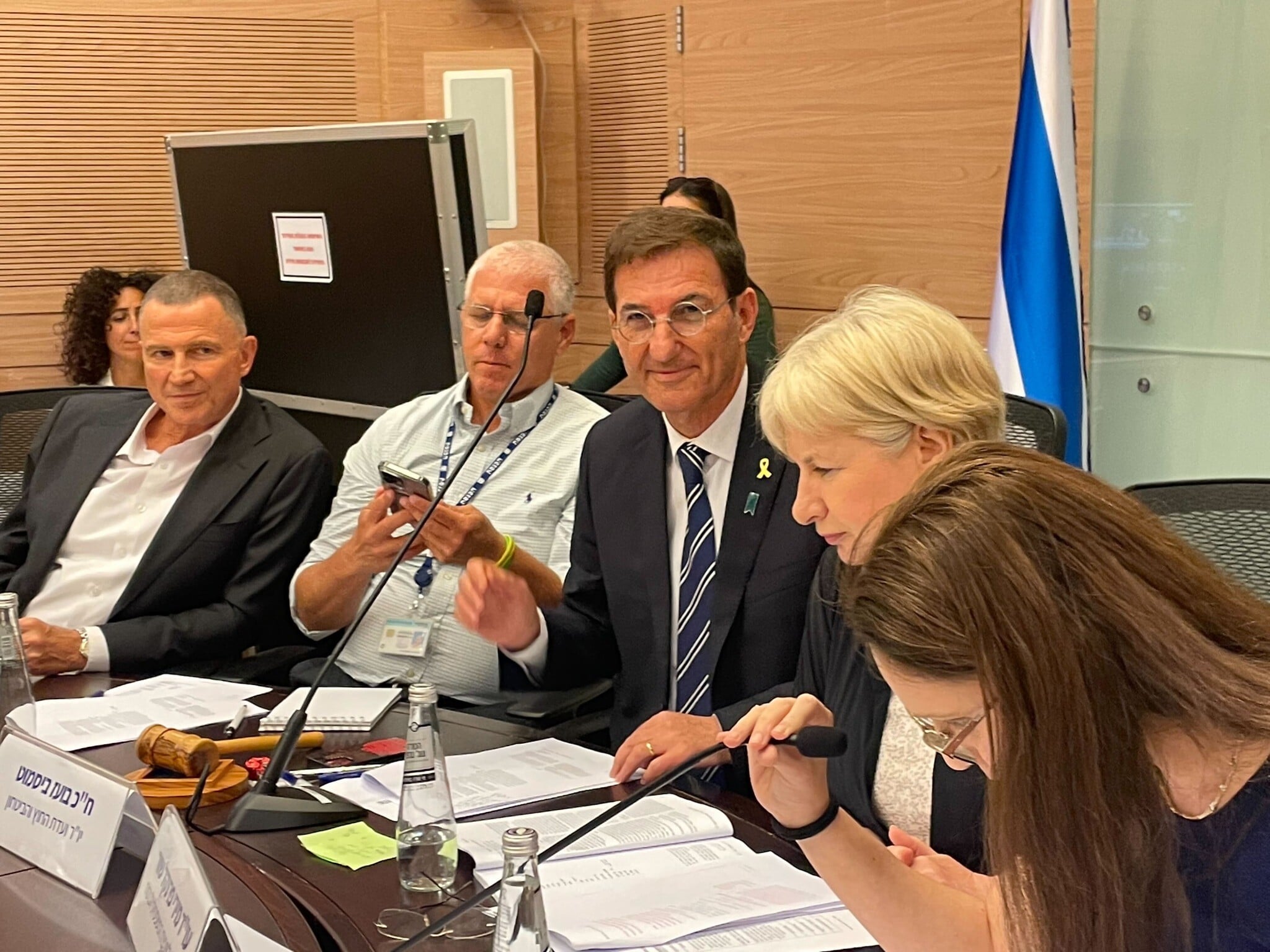
Government Secretary Yossi Fuchs denies knowledge of a plan attributed to Knesset Foreign Affairs and Defense Committee chairman Boaz Bismuth involving the approval of a wartime “emergency regulation” that would allow for the immediate drafting of enough soldiers to fill the military’s manpower shortage while also lifting sanctions on ultra-Orthodox draft evaders.
“There was no such proposal,” Fuchs tells the committee, repeating a denial made to The Times of Israel several minutes earlier during a break in the committee’s proceedings.
According to a Monday report by the Walla news site, Bismuth supports the adoption of such a measure for a period of one year, during which an unspecified number of Haredim would be drafted “according to the needs of the army.”
At the same time, enforcement against Haredi draft dodgers would be halted, according to the reported plan. This would include an end to recent arrest operations by military police, which have roiled the ultra-Orthodox community, leading to declarations of “war” and protests across the country.
The reported plan would also provide for the resumption of yeshiva funding that was cut off last year in the wake of a High Court of Justice order barring the government from providing money for students eligible for IDF enlistment. The Attorney General’s Office has also ordered a halt to daycare subsidies for the children of draft evaders.
Responding to demands for clarification from lawmakers, Bismuth says that he has held meetings with many people involved in the issue since taking over the committee in late July.
Pressed by opposition lawmakers, Bismuth says that if they want to conscript Haredim, they need to drop the issue and move on to their planned discussion of a proposed conscription bill.
“The Foreign Affairs and Defense Committee is the official address for updates on the conscription law issue. This is where the discussions are taking place and where the decisions are made,” he says, repeating verbatim part of a statement released by his office earlier this week.
The statement reads: “There is an understanding that in the current reality, in the midst of war, the need for soldiers is urgent and necessary, while a permanent law is a long and complex process. Therefore, temporary solutions adapted to this period are also being examined, in order to provide an immediate response to security needs, while at the same time continuing to advance a comprehensive and stable arrangement of the conscription law with cooperation and responsibility.”





The Times of Israel Community.