

Netanyahu, holding out hope for Litzman, to assume health portfolio — report
If health minister follows through with resignation over Sabbath railway works, PM said resolved not to appoint a new cabinet member in his place
 Add ToI as a Preferred Source on Google
Prime Minister Benjamin Netanyahu will reportedly take over the Health Ministry if current Health Minister Yaakov Litzman on Sunday follows through on his promise to resign.
According to a report Saturday night on Hadashot news (formerly Channel 2), Netanyahu is planning to hold on to the cabinet position, rather than appoint a new minister, because he hopes Litzman may yet change his mind or quickly return.
The TV report also said Netanyahu would leave Litzman’s appointed senior officials at the ministry in place.
Litzman, head of the coalition’s ultra-Orthodox United Torah Judaism party, announced Friday that he was quitting his post in protest over infrastructure work on rail lines that is being carried on Shabbat.
Hours later, in response to the announcement, Netanyahu said that hoped Litzman would withdraw his resignation.
“The prime minister greatly values Minister Litzman, and hopes he will not quit the government,” said a statement issued on Netanyahu’s behalf.

His statement clarified that, even if Litzman does formally tender his resignation from the cabinet on Sunday, UTJ will not be bolting the coalition, and Netanyahu’s governing majority will thus remain intact.
“The heads of the factions have clarified that they do not intend to leave the coalition,” the statement said, noting that the government would work to find the “best solution” it can to the crisis “to both respect the Sabbath and ensure safe, ongoing public transport.”
Netanyahu’s government “is the best for the people of Israel in all respects,” the statement asserted, and “seeks to find a golden path in order to continue its strong, stable governance.”
MKs from UTJ and its constituent ultra-Orthodox Ashkenazi parties have tended not to take ministerial positions in the governments in which they serve, preferring to limit themselves to posts such as committee heads — a reflection of a certain ambivalence regarding the secular Jewish state. Litzman himself entered the current coalition as a deputy minister in 2015 before taking up his ministerial position.
Welfare Minister Haim Katz, whose ministry is the country’s chief labor regulator, announced on Friday morning that he had authorized the work on the train lines to be carried out on the Jewish day of rest because failure to do so could endanger lives.
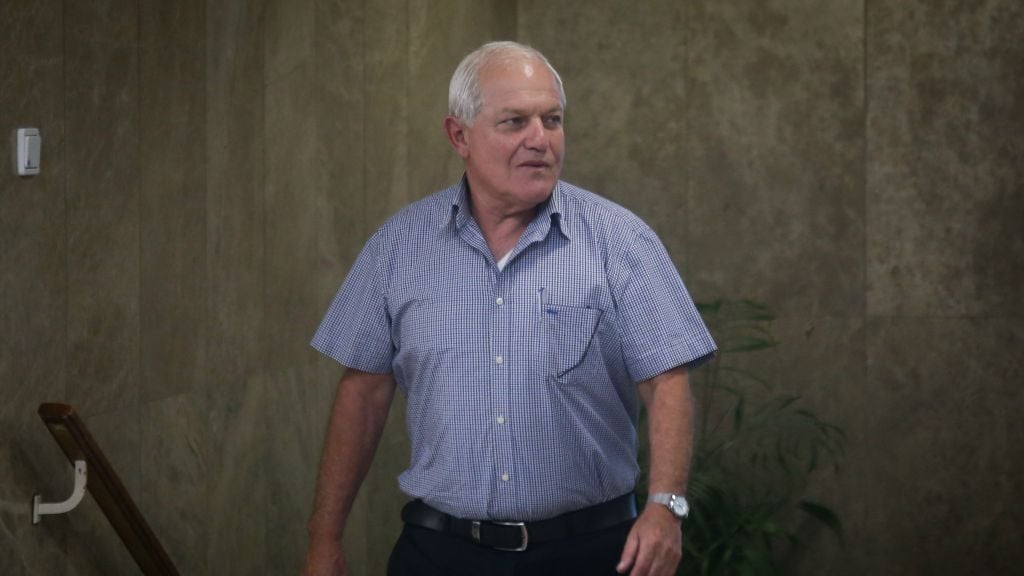
“After thorough examination, I authorized only essential work to ensure the safety of rail traffic, and if it were not carried out it could endanger lives,” Katz announced. “This decision reflects full consideration for the feelings of the religious public, on the one hand, and maintaining the routine of the train passengers on Sunday.”
“For the past year, every weekend I have weighed the needs of the railways against the sanctity of Shabbat and it has passed quietly,” Katz told Israel Radio, adding that he didn’t know why this Shabbat had suddenly become an issue that required Litzman to quit.
Shortly after Katz’s comments, Litzman told Netanyahu he was quitting and would formally submit his letter of resignation on Sunday. He had spoken to his religious leader, Rabbi Yaakov Aryeh Alter, the head of the Ger Hasidic movement, who ruled that it was not permissible to do the work on Shabbat.
In the ultra-Orthodox newspaper “Hamodia” which is put out by Litzman’s Agudath Israel movement, he wrote, “We, as senior partners in the coalition, also have matters which are important to us… For the sake of the obligation to preserve the Jewish values of the state, we are in the government, influencing it.”
The statement suggested the party plans to continue to influence the government — that is, that it would not quit the ruling coalition even after Litzman resigns.
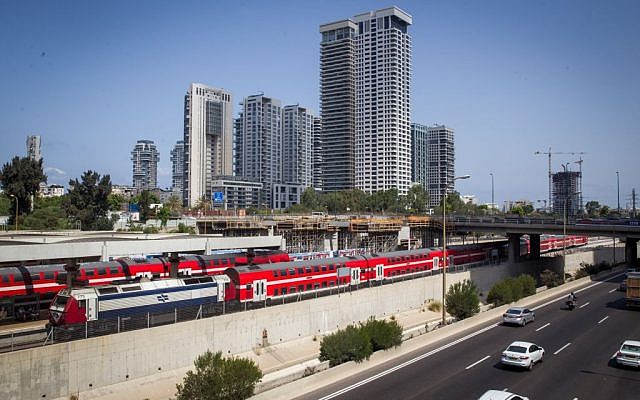
According to reports, the infrastructure work scheduled for the coming weekend is complex and requires the participation of over 100 Jewish workers, a particularly thorny issue for ultra-Orthodox parties.
The Jerusalem-Tel Aviv fast train would be set back four months were work not carried out on Saturdays, sources in Israel Railways told Hadashot news.
In the past, similar crises were solved through one-time compromises that saw the use of non-Jewish workers only, but that is reportedly not possible for the upcoming project due to the nature of the work, which involves upgrading the train signaling system and requires specific employees with certain technical skills who cannot be readily replaced.
According to Army Radio, the work also will draw on the skills of German engineers who arrived in Israel to work on the signaling system over the weekend.










The Times of Israel Community.