

Post-Oct 7, archaeologists’ CSI skills gave families closure. An exhibit reveals how
A new collection at the Israel Antiquities Authority campus in Jerusalem showcases the painstaking identification of victims and documentation of destruction sites
 Add ToI as a Preferred Source on Google
Rossella Tercatin is The Times of Israel's archaeology and religions reporter.
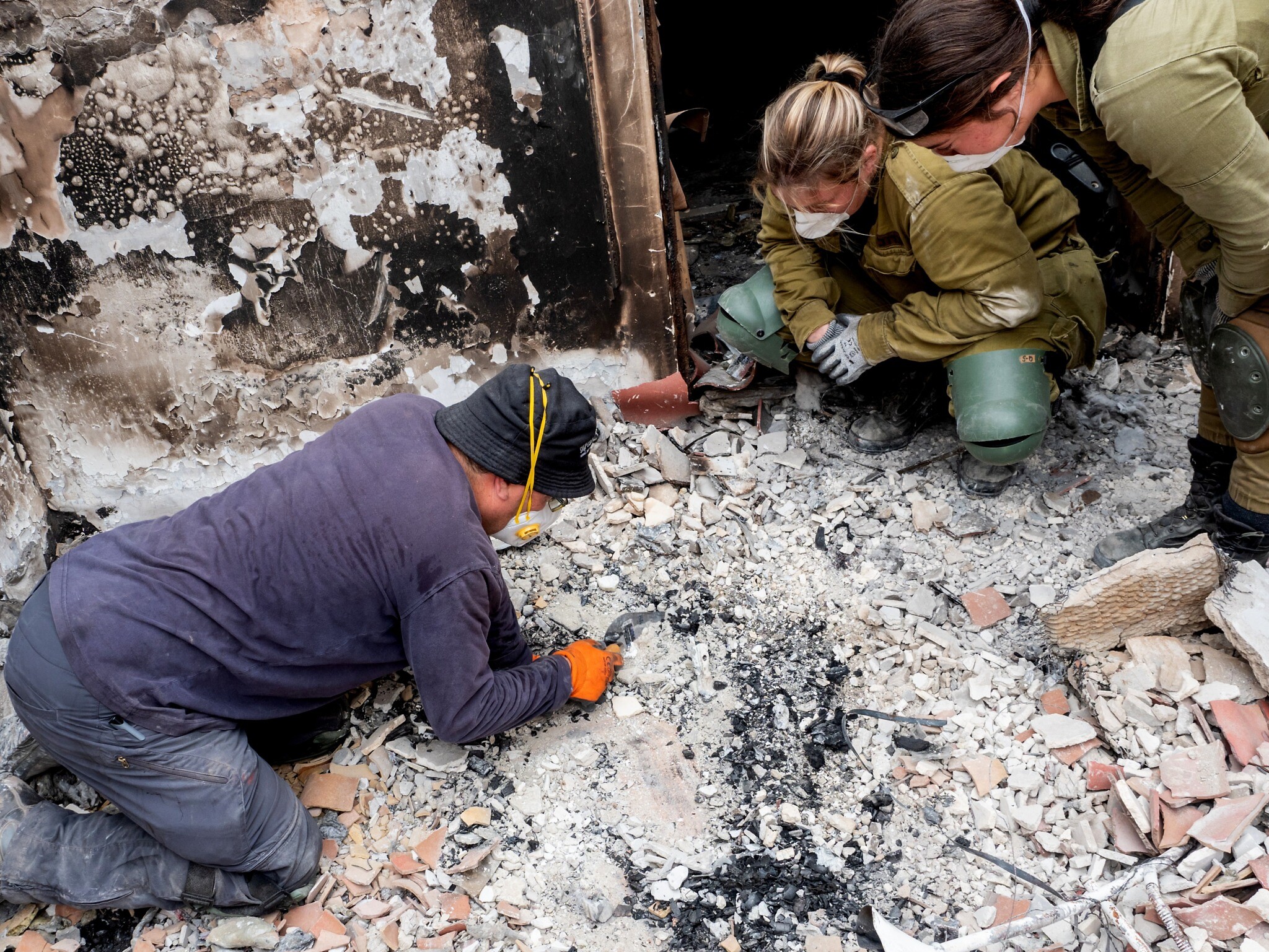
When Assaf Peretz, an archaeologist and field photographer at the Israel Antiquities Authority (IAA), entered the first house he had been assigned to examine at Kibbutz Be’eri about two weeks after the October 7, 2023, Hamas atrocities, his heart sank.
“The children’s room looked exactly like the room of my eldest child,” Peretz said, describing the furniture and stuffed animals still neatly in place, despite the devastation. “At that point, one of my colleagues came to me and told me that I needed to make a mental switch, otherwise I would not be able to continue. I did, and from that moment, I worked as if I were out for an academic excavation.”
Peretz was among dozens of archaeologists who, in the aftermath of the Hamas onslaught that killed some 1,200 people in southern Israel, combed through massacre sites to help identify victims’ remains. Even as these archaeologists performed their work, authorities were still struggling to determine who had been killed or kidnapped, and numerous people remained unaccounted for.
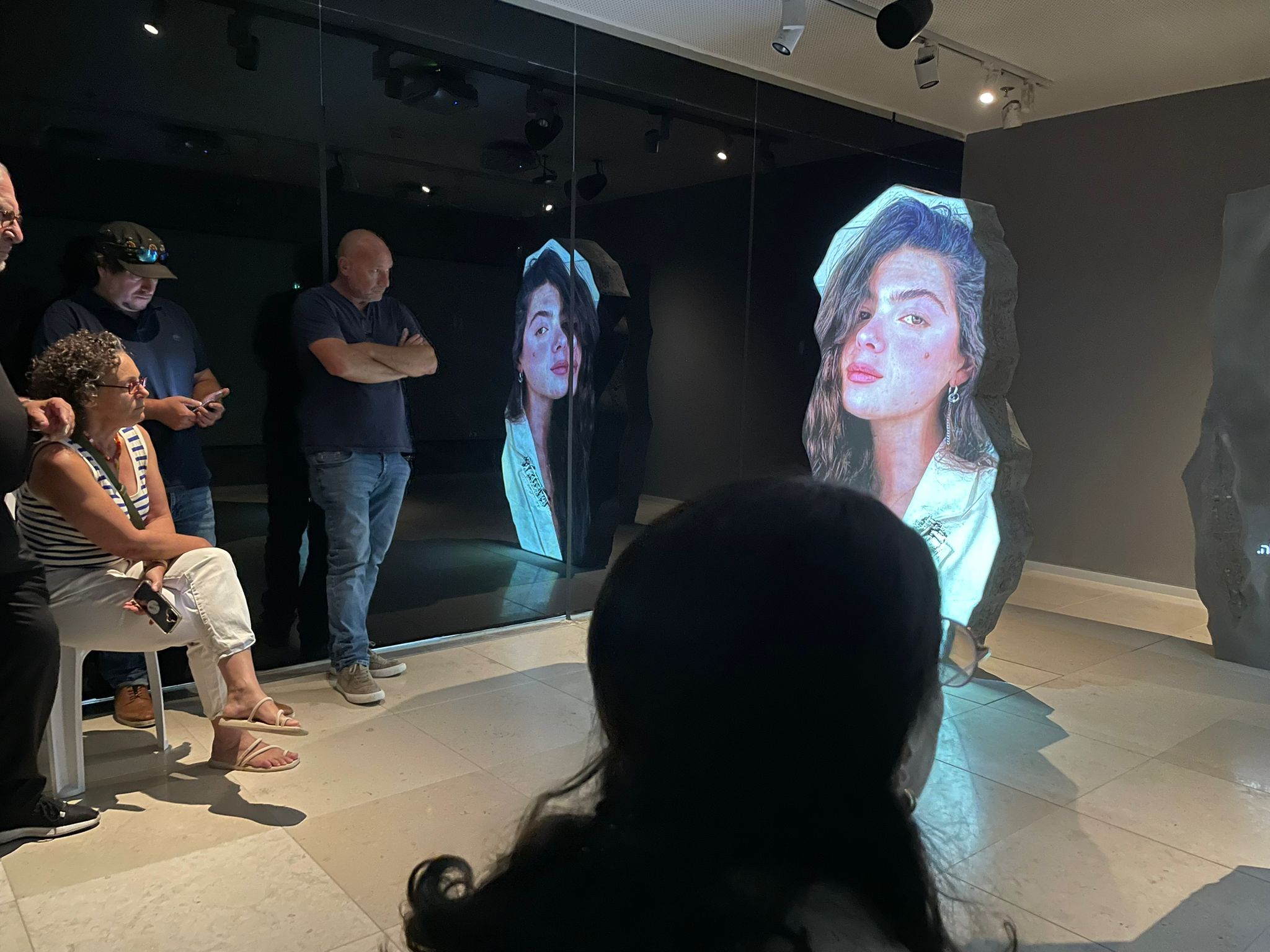
Peretz spoke to The Times of Israel on the sidelines of the inauguration of “Rising from the Ashes: Archaeology in a National Crisis,” an exhibition at the Jay and Jeanie Schottenstein National Campus for the Archaeology of Israel in Jerusalem.
Spread across three rooms with multiple audiovisual installations, the exhibition highlights the work of experts both in the field and in laboratories — work that included taking millions of photographs and hours of footage to document the destruction. The final room focuses on IAA staff’s outreach to evacuees nationwide, offering lectures and workshops for both children and adults.
“During my career as an archaeologist, I have excavated hundreds of graves and photographed thousands,” Peretz said. “In 2022, I excavated the largest cemetery from the Late Roman/Early Byzantine periods in the northern Negev [Desert]. Because of that expertise, after October 7, I got a call asking if I would come to the Gaza envelope.”
Peretz recalled that at first he was hesitant, fearing the impact the experience would have on his mental health, but then he decided to join.
“The next day, I was in Be’eri,” he said. “At first, it was pure shock — the stench of burned and rotting bodies seemed to assault me, to wrap around me. It felt like being punched in the face.”
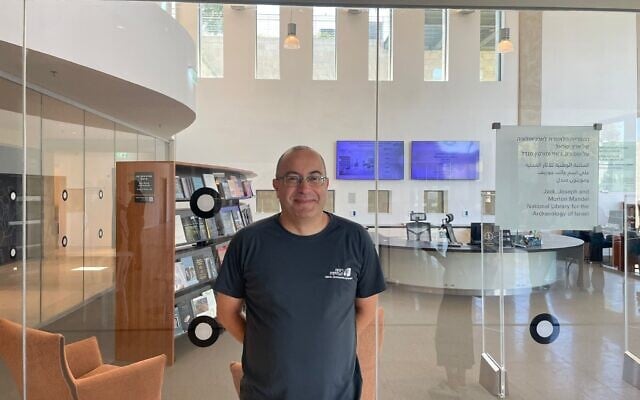
The expertise of Peretz and his colleagues proved crucial.
“We’re trained to recognize bones, even the smallest fragments, no matter their state of preservation, amid ashes and debris,” he said. “That’s exactly what we did.”
The first hall of the exhibition showcases stories of the 16 individuals identified through IAA findings.
Speaking to The Times of Israel in November 2023, IAA archaeologist Joe Uziel — who also volunteered in Gaza envelope communities — said they had recovered remains belonging to 60 individuals; at the time, only about 10 had been identified.
At the exhibition’s inauguration, Peretz noted that many of the remains — often charred or tiny bone fragments — could not be identified because no DNA could be extracted. Others, he added, belonged to Hamas terrorists killed in the fighting.
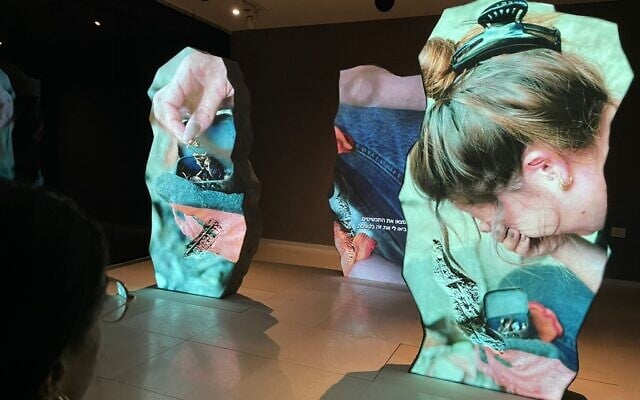
In some cases, the archaeologists were able to recover personal belongings of the victims.
“In one house — burned almost entirely to the ground — we found about 15 photographs in the safe room,” Peretz said. “There were 15 pictures from a family vacation. Outside, on the lawn, we discovered some drawings the grandchildren had made for their grandparents.”
“How those pictures and drawings survived the fire, I have no idea,” he added. “But we returned them to the family. They told us it was all they had left of their parents and grandparents.”
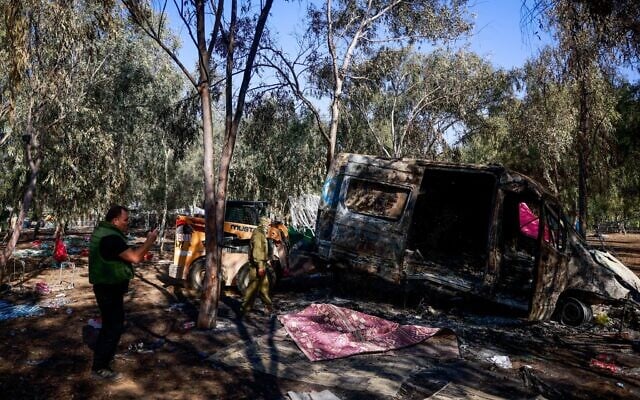
In at least one case, a victim was identified thanks to a burned object found at the site of the Supernova music festival, where Hamas terrorists killed over 360 partygoers.
Weeks after October 7, the family of 25-year-old Shani Gabay still did not know of her fate. The family had last heard from Shani after terrorists wounded her as she was trying to flee. Shani’s remains had not been found, and her parents presumed she had been kidnapped.
“Shani was considered missing for 47 days,” her mother, Michal Gabay, recalled at the exhibition’s inauguration. “For 47 days, we lived in uncertainty — was she kidnapped, was she killed?”
“Our greatest fear was that she would become a new Ron Arad,” she added, invoking the Israeli Air Force navigator who bailed out over southern Lebanon in 1986 and whose fate remains unknown, though he is presumed dead.
IAA deputy director Moshe Ajami spotted the moon-shaped necklace Shani had been wearing that day while examining the ruins of a destroyed ambulance. Around 20 people had taken shelter inside before Hamas terrorists fired a rocket-propelled grenade that obliterated the vehicle, killing 18.
DNA tests on the necklace confirmed Shani’s identity, alongside that of another young woman whose remains had been buried weeks earlier. This led to a reexamination of the remains, and some were confirmed to be Shani’s.
“Only a few of Shani’s remains were found — two teeth, a vertebra, and another bone,” Gabay said.
“Thanks to Moshe, who found the necklace, we are not another Ron Arad family,” Gabay said. “We were able to close the circle and give her a dignified burial in our town, surrounded by all who loved her.”
Speaking with The Times of Israel, Ajami recalled his initial fear of meeting Shani Gabay’s family.
“At first, I was worried because what I found meant their child was dead — while they were likely still holding onto hope that she was alive,” he said. “But when we met, they thanked me for helping them to have closure.”
When asked how he felt working at the Supernova site — after hundreds had searched without success — Ajami said emotions had no place.
“We worked like machines,” he said.
At the event, both Michal Gabay and her youngest daughter, Nitzan, Shani’s sister, wore replicas of Shani’s necklace.
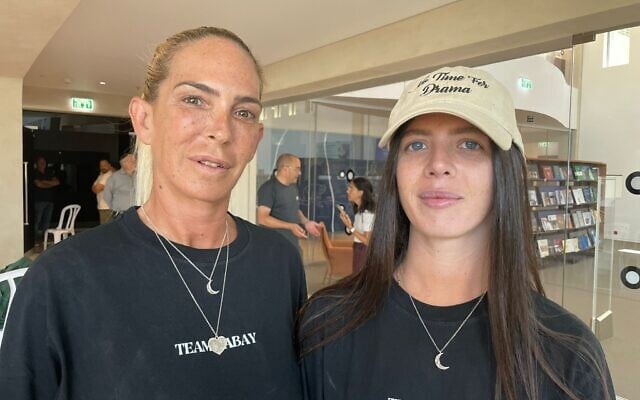
“Today, we all wear Shani’s moon-shaped necklace, which is also sold to raise funds for a charity we founded in her name,” Nitzan Gabay told The Times of Israel.
She explained that the charity supports causes Shani cared deeply about, including animal welfare and environmental protection.
“More than anything, Shani loved life, so every day we wake up thinking of what Shani would have wanted from us, and we set out to do it,” Nitzan said.
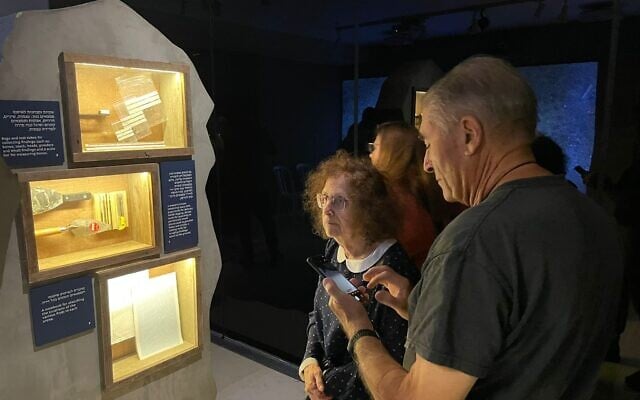
Together with videos featuring stories and testimonies from victims’ family members and archaeologists, the exhibition also features the experts’ tools, including sifters and dental tools designed for searching narrow spaces, such as gunshot holes and other types of cracks.
Documenting the destruction for posterity
As the archaeologists finished scanning the sites for victims’ remains or possessions, the IAA began another project to preserve the memory of October 7 for posterity.
The experts documented each house, neighborhood, and community through pictures, footage, and other technological means, and created 3D models of the destruction sites in the IAA labs.
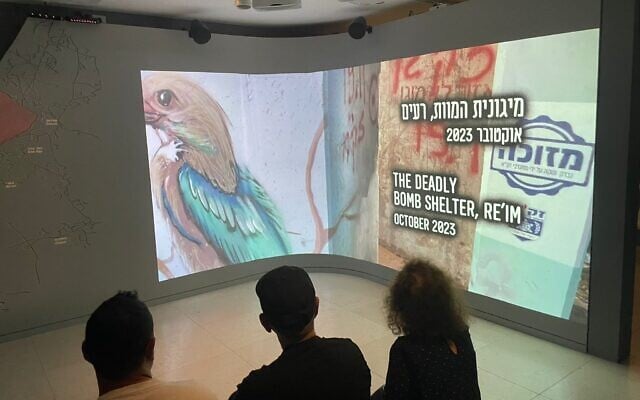
“It is important to emphasize the purpose of this project,” said the exhibit’s project director, Leora Berry, as she led a group of reporters through a hall where visitors can see and interact with several such 3D models, and listen to the voices of experts as well as of October 7 survivors.
“We are already seeing how the whole area is coming back to life, as it should be; it is being rehabilitated, and the destroyed areas will soon disappear under the new buildings,” she said. “This operation is vital — not only for research and investigation, but also as an essential testimony for those who doubt the horrors that unfolded in Israel on October 7.”






The Times of Israel Community.