

Retired High Court judge urges ex-colleagues to overrule nation-state law
In impassioned interview, Salim Joubran says he would ‘definitely’ nullify legislation, saying it creates ‘superior and inferior classes’ in society
 Add ToI as a Preferred Source on Google
Michael Bachner is a news editor at The Times of Israel

Retired Supreme Court judge Salim Joubran on Tuesday launched a rare public broadside against the recently passed nation-state law, and called on his former colleagues on the country’s highest bench to overturn the controversial legislation.
Joubran, the first Arab to have a permanent spot in Israel’s top court, and who retired a year ago at the age of 70, said his decision to grant a rare public interview was sparked by his opposition to the bill.
“After the nation-state law was legislated I couldn’t hold back and keep silent any longer,” he told Israel Radio. “I have decided to speak out against this bad and unnecessary law.”
Alleging that the law creates “a superior class and an inferior class,” Joubran, who oversaw the 2015 Knesset elections, decried its failure to include the word “equality.”
Defenders of the law have argued that other basic laws have enshrined equality as one of Israel’s core values, and that the nation-state law puts Jewish values and democratic values on equal footing.
Critics, however, say the law effectively discriminates against Israel’s Arabs and other minority communities.
“This law doesn’t add any any honor to Israel’s lawbook, and in my opinion is should be nullified as quickly as possible,” Joubran said. “The law will add to the discrimination already existing against the Arab population. The Arab society is an asset that can be an important part of the state’s economic growth — if it is regarded the way it should be.”
“We thought that the time has finally come and that in such an important basic law the state would take care of equality,” he added. “But it seems like our leaders and some of the lawmakers have decided to ignore many things, like the Declaration of Independence which speaks of equal rights for all citizens. How can such a document be ignored?”
The left-wing Meretz party on Tuesday petitioned the High Court of Justice against the law, with party leader MK Tamar Zandberg calling it “an act of sabotage against Israeli law that replaced equality with racism.”
In the appeal, the party argued that the law, a quasi-constitutional “basic law,” contradicts a previous basic law, the Basic Law: Human Dignity and Liberty passed in 1992.
High Court rulings have found that the 1992 law’s guarantee of a right to “human dignity” for all amounts to a guarantee of equality, even though the term “equality” does not appear in any Israeli basic law.
Last week, Israeli Druze leaders, including three Knesset members, petitioned the High Court of Justice against the legislation, saying it was an “extreme” act that discriminated against the country’s minorities.
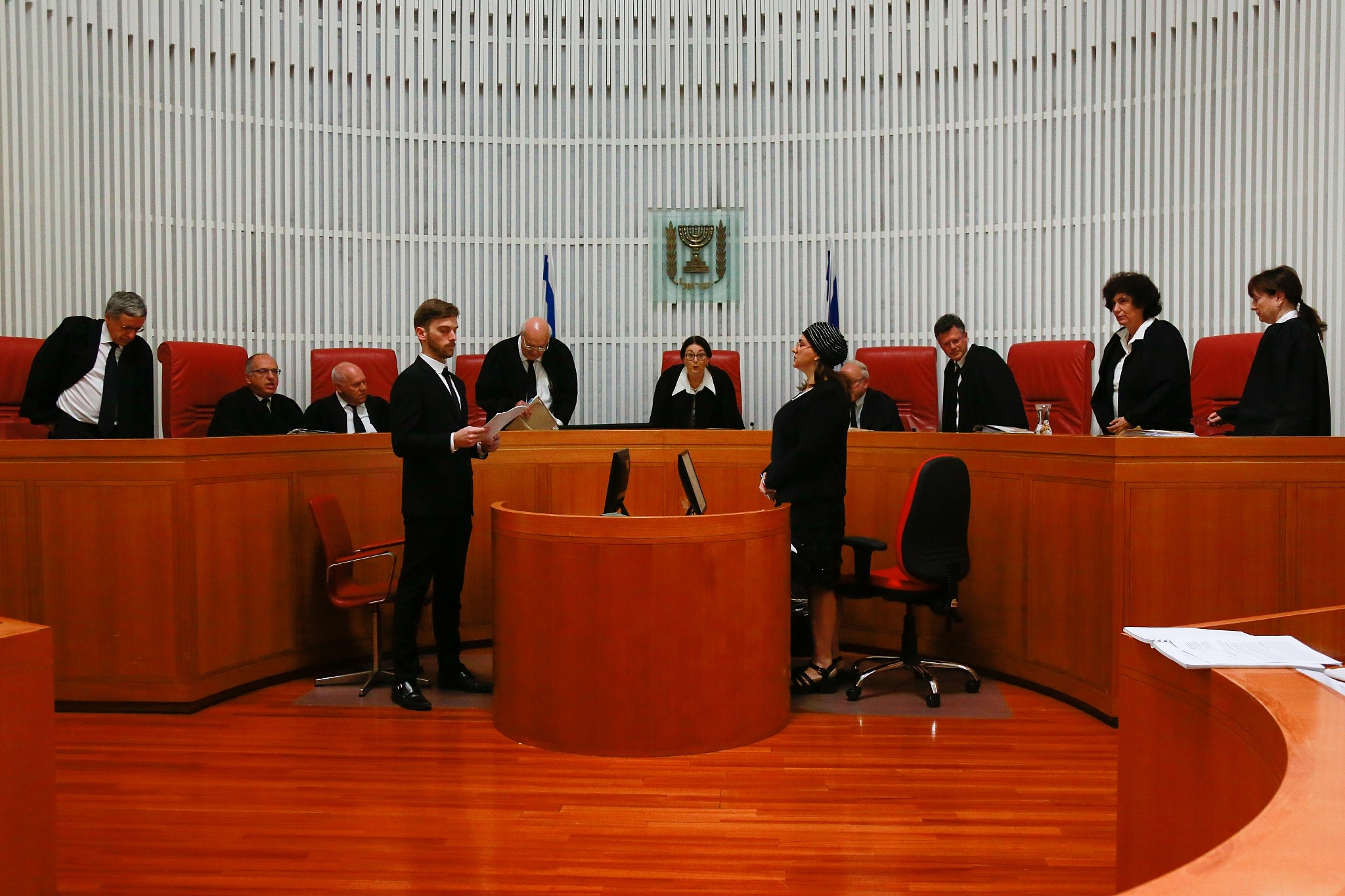
“Had I been sitting in court, I would definitely overturn that law,” Joubran said, adding a not-so-subtle appeal to the current High Court judges who will discuss the appeals: “We have decent and professional judges and I hope they will consider it.”
Justice Minister Ayelet Shaked of the right-wing Jewish Home party, a backer of the nation-state law, has noted that the High Court likely does not have the power to overturn a basic law, by definition, as basic laws make up the constitutional baseline against which judges can determine whether other laws may be struck down.

Joubran also lamented the fact that the nation-state law downgrades the Arabic language from one of Israel’s official languages to one with “special status.”
“What was done here is very grave,” he said. “Arabic is my mother tongue; I am proud of it. Almost two million people in Israel speak it and it was an official language. Suddenly, an MK envisions it not being an official language but instead having special status.
“Can anyone explain to me the genius in that definition? There is an intention to hurt the Arab community by targeting what’s most important to it. When you hurt its language, you hurt its ego, its culture, its heritage. It’s a shame these things happen.”
During the interview, Joubran also slammed another law passed earlier this month that grants surrogate parenthood rights only to mothers, leaving out gay men who seek to have children via surrogacy. That law, which Prime Minister Benjamin Netanyahu has insisted would be amended to include gay men in a future Knesset session, sparked LGBT rights protests around the country.
“This is very grave. It grants one group a legal status, and excludes another group due to its identity. Exactly what is happening with the nation-state law,” Joubran charged.
He also decried what he called an “all-out offensive” on the Supreme Court, on Police Commissioner Roni Alsheich, on State Comptroller Yosef Shapira and on Attorney General Avichai Mandelblit — all of whom have been slammed by Netanyahu and his loyalists for criticism of the government or for their involvement in determining whether to press corruption charges against the premier.

The nation-state law — which for the first time enshrines Israel as “the national home of the Jewish people” and says “the right to exercise national self-determination in the State of Israel is unique to the Jewish people” — has sparked widespread criticism from Israel’s minorities, the international community and Jewish groups abroad.
The law became one of the country’s basic laws, which, similar to a constitution, underpin Israel’s legal system and are more difficult to repeal than regular laws.
The law also declares that Jerusalem is the capital of Israel, sets the Hebrew calendar as the official calendar of the state, and recognizes Independence Day, days of remembrance, and Jewish holidays.










The Times of Israel Community.