

Residential areas in Ukraine bombarded, but Russian advance on Kyiv appears to stall
Speculation over Putin’s mental state abounds, amid reports of frustration with slow pace of invasion; huge convoy outside Kyiv may be stuck without fuel, food as morale depletes
 Add ToI as a Preferred Source on Google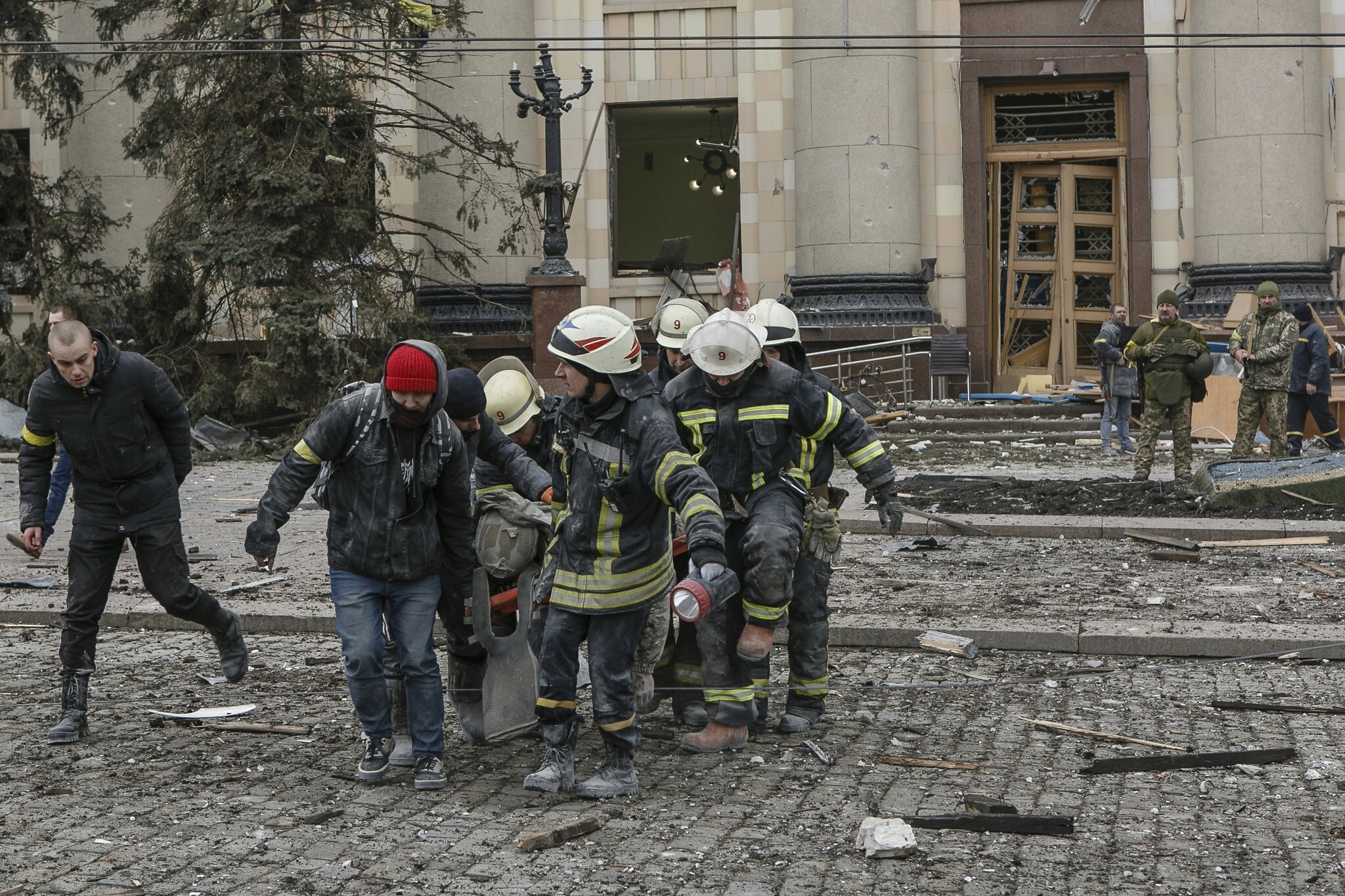
KYIV, Ukraine — Russian forces escalated their attacks on crowded urban areas Tuesday, bombarding apartments, hospitals, the central square in Ukraine’s second-biggest city and Kyiv’s main TV tower in what the country’s president called a blatant campaign of terror.
“Nobody will forgive. Nobody will forget,” President Volodymyr Zelensky vowed after the bloodshed on the square in Kharkiv.
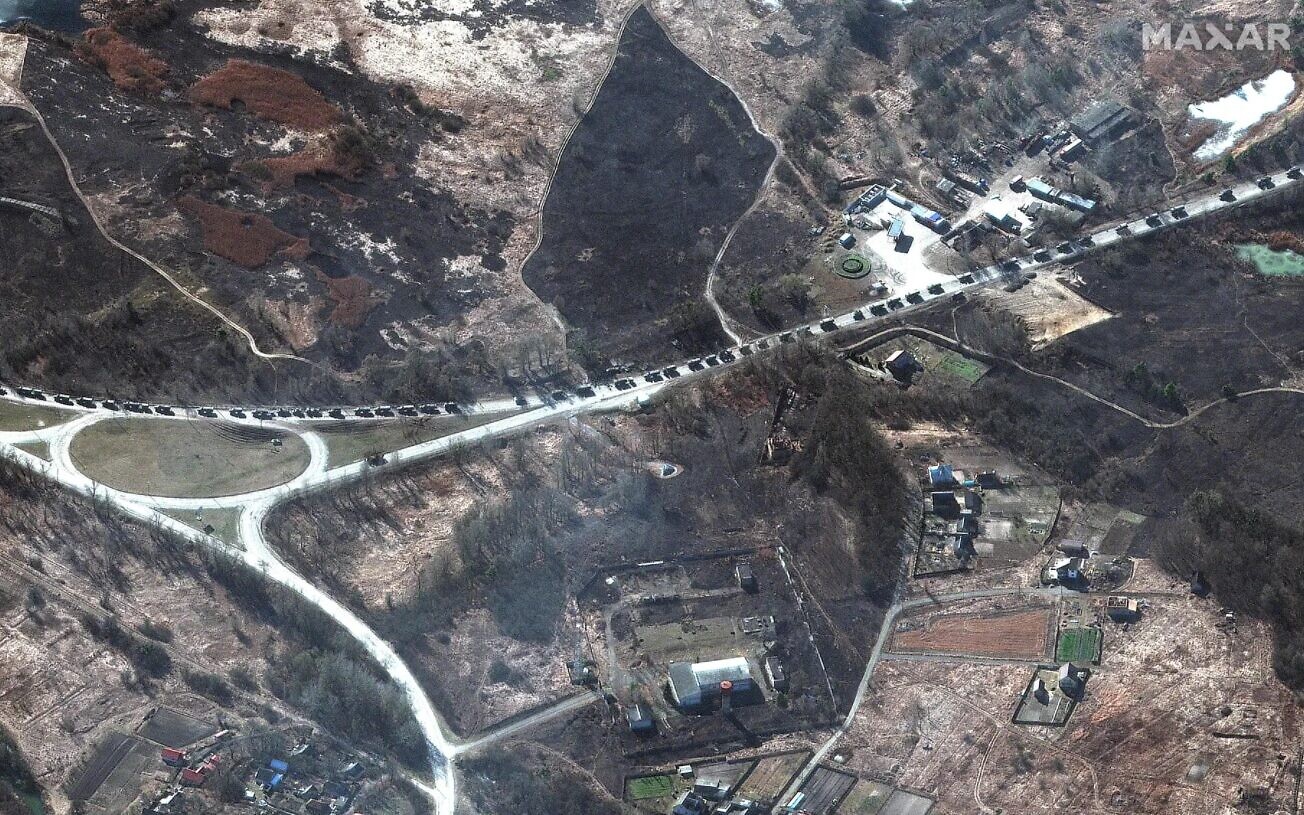
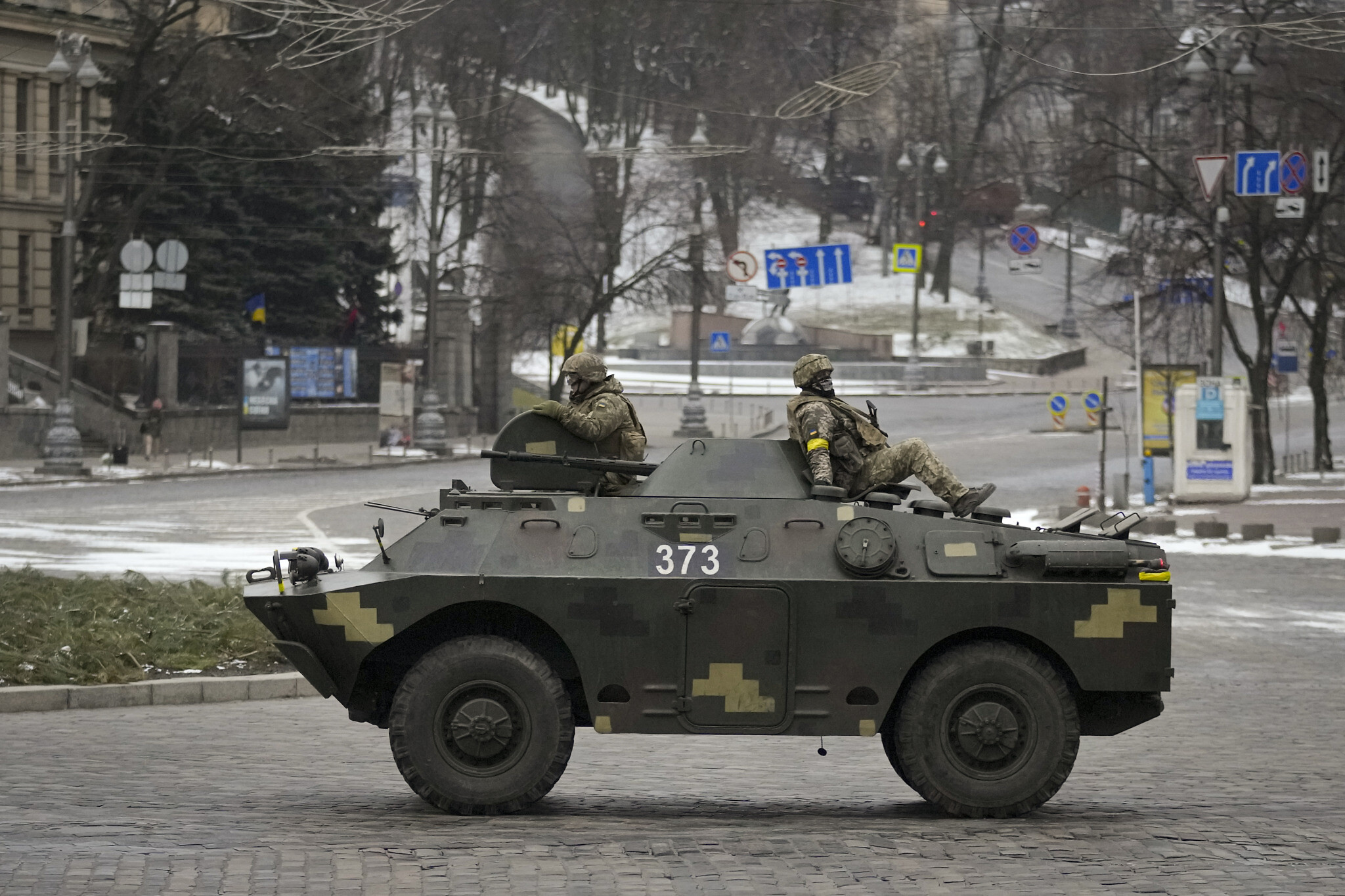
But there were also continued signs that the Russian advance was experiencing setbacks, with a massive 40-mile-long convoy of Russian tanks and other equipment north of Kyiv appearing to pause, according to a US defense official.
Kyiv has been bracing for several days for an expected Russian onslaught on the capital, home to 3 million people, amid fears that Putin may attempt to push out Ukraine’s government and install a Kremlin-friendly regime.
The convoy of armored Russian vehicles, tanks, artillery and support was 25 kilometers (17 miles) from the center of Kyiv early Tuesday morning and stretched about 65 kilometers (40 miles), according to satellite imagery from Maxar Technologies.
US officials, speaking on condition of anonymity, said Russia’s offensive may have gotten bogged down by logistical issues, including a lack of food and fuel, depleting moral.
Overall, the Russian military has been stalled by fierce resistance on the ground and a surprising inability to completely dominate Ukraine’s airspace.
The immense convoy, with vehicles packed together along narrow roads, would seemingly be “a big fat target” for Ukrainian forces, the senior Western intelligence official said on condition of anonymity.
“But it also shows you that the Russians feel pretty comfortable being out in the open in these concentrations because they feel that they’re not going to come under air attack or rocket or missile attack,” the official said.
Ukraine’s Defense Ministry said in a statement Belarussian troops had concentrated close to the countries’ border, as Belarussian President Alexander Lukashenko announced he was sending more troops to the border.
Ukraine said at the end of the day Tuesday there has been significant aircraft activity in the past 24 hours and “a column of vehicles with food and ammunition” approaching, though it was unclear if the column was being sent to resupply the Russians. Lukeshenko claimed his troops were not being sent to take part in the fighting as it was “not their job.”
In the US, President Joe Biden used his first State of the Union address Tuesday evening to vow to make Putin “pay a price” for the invasion. Biden highlighted the resolve of a reinvigorated Western alliance that has worked to rearm the Ukrainian military and adopt tough sanctions.

He also announced that the US is closing its airspace to Russian planes in retaliation for the invasion, according to two people familiar with the decision. They spoke on the condition of anonymity to discuss the speech in advance.
Biden claimed that the Russian leader had miscalculated the Western response, saying that “Putin was wrong. We were ready.”
The comments came as the US media was awash in attempts to get into Putin’s head, with some suggesting he had lost grip on reality.
“We don’t believe he has a realistic understanding of what’s going on,” a diplomat told NBC news. The station reported that US officials thought he was lashing out at subordinates and his inner circle in bursts of anger over the slow pace of the Russian advance.
Former Director of National Intelligence James Clapper told CNN that Putin was behaving “differently” than his normal cold and calculating self.
“His speeches as of late have been unhinged and he has been anything but emotionless,” he said.
“Has he gone of the deep-end, is he crazy? I don’t think so, but I think he’s getting frustrated,” he added, noting Russia’s increasing isolation and the state of the invasion of Ukraine.
A sign of that frustration appeared to be Russian forces’ increasing willingness to target civilian infrastructure, as they pressed their assault on towns and cities around the country, including the strategic ports of Odesa and Mariupol in the south.
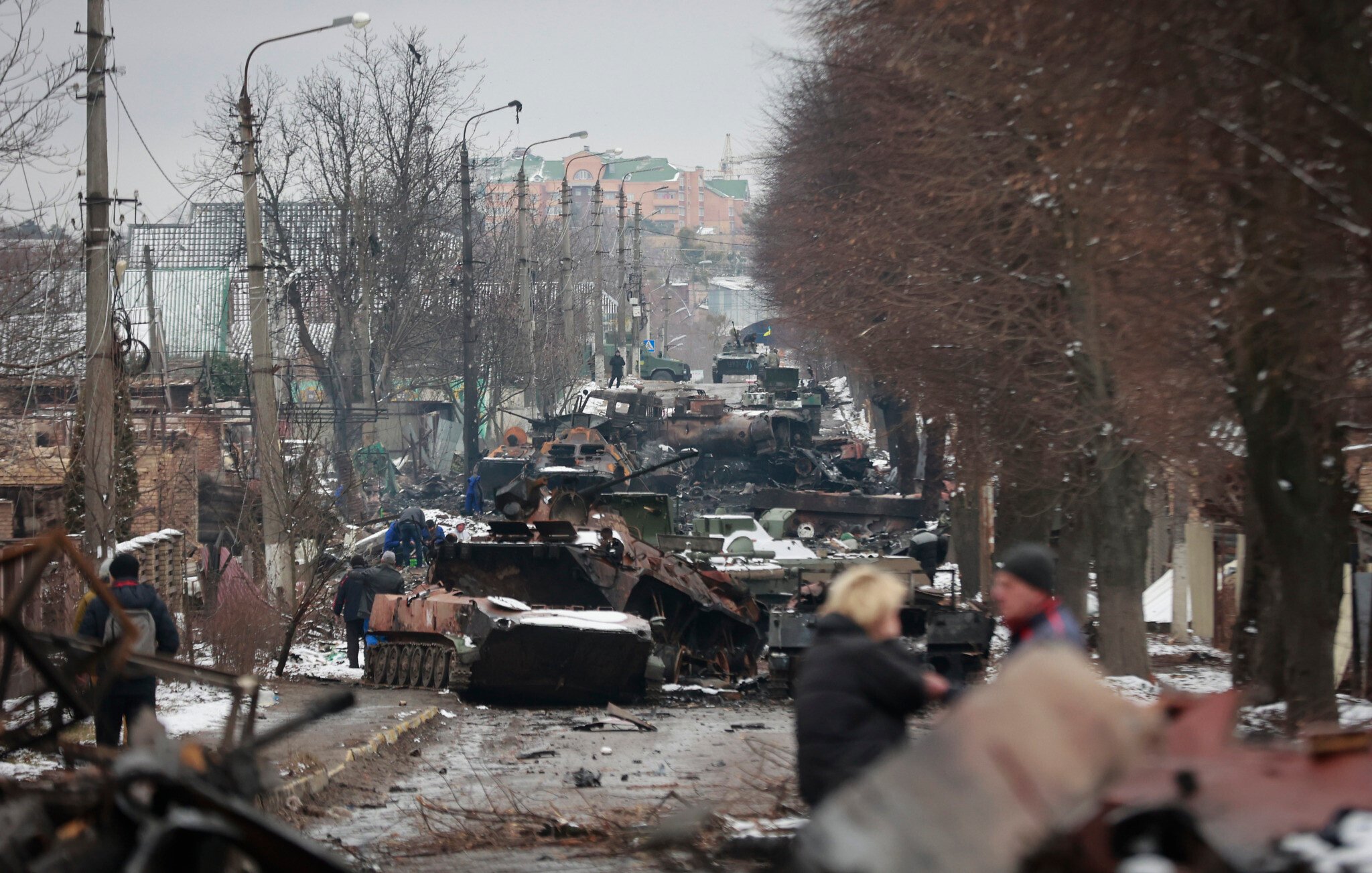
Day 6 of the biggest ground war in Europe since World War II found Russia increasingly isolated, beset by the sanctions that have thrown its economy into turmoil and left the country practically friendless, apart from a few nations like China, Belarus and North Korea.
In Zhytomyr, a city about 140 kilometers (85 miles) west of Kyiv, a Russian airstrike hit a residential area near a hospital late Tuesday, Mayor Serih Sukhomlin said in a Facebook video. Ukraine’s emergency services said the strike killed at least two people, set three homes on fire and broke the windows in the hospital.
A maternity hospital also suffered damage from shelling in Buzova, outside Kyiv.
In Borodianka, west of Kyiv, video video showed apartment buildings almost totally destroyed by Russian shelling.
https://twitter.com/muyixiao/status/1498832417225953287
Powerful blasts could also be heard Tuesday night in central Kyiv. People on the ground reported car alarms were set off by the blasts, a first in the central part of the capital city where Russian forces are encroaching.
Ukrainian authorities also said Russian forces had blocked Kherson, a major port on the Black Sea. Ihor Kolyhayev, the mayor of the city located on the estuary of the Dnieper River, said Tuesday that it has been sealed by the Russian troops. Kolyhayev’s statement confirmed Monday’s Russian military claim that it has sealed the city while pressing its offensive in the south.
As the fighting in Ukraine raged, the death toll remained unclear. One senior Western intelligence official estimated that more than 5,000 Russian soldiers had been captured or killed. Ukraine gave no overall estimate of troop losses.
The UN human rights office said it has recorded 136 civilian deaths. The real toll is believed to be far higher.
Zelensky said 16 children had been killed around Ukraine on Monday, and he mocked Russia’s claim that it is going after only military targets.
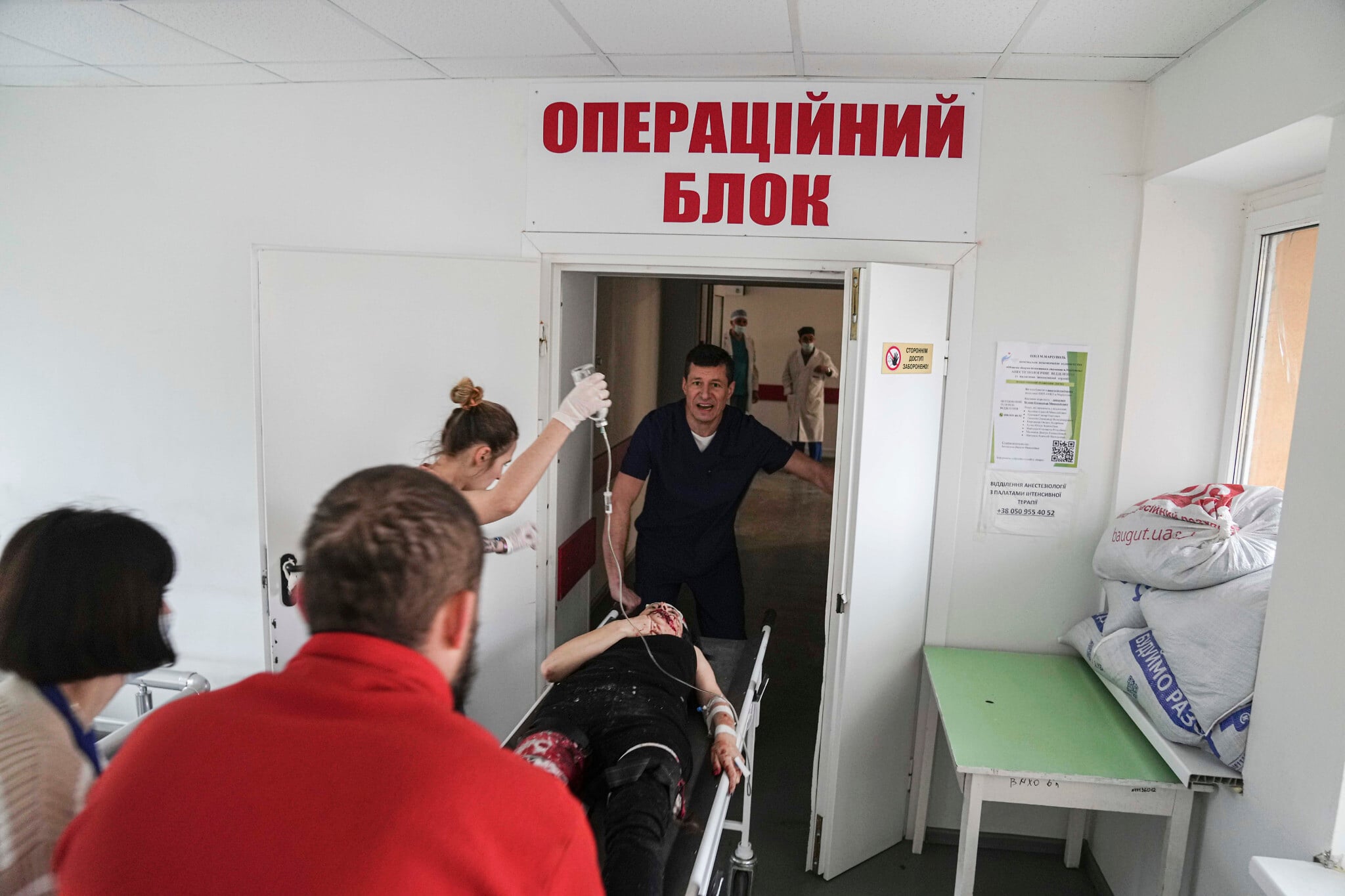
“Where are the children? What kind of military factories do they work at? What tanks are they going at?” Zelensky said.
Human Rights Watch said it documented a cluster bomb attack outside a hospital in Ukraine’s east in recent days. Local residents also reported the use of such weapons in Kharkiv and the village of Kiyanka, The Kremlin denied using cluster bombs.
Cluster bombs shoot smaller “bomblets” over a large area, many of which fail to explode until long after they’ve been dropped. If their use in Ukraine is confirmed, that would represent a new level of brutality in the war and could lead to even further isolation of Russia.
Britain’s Defense Ministry said it had seen an increase in Russian air and artillery strikes on populated urban areas over the past two days. It also said three cities — Kharkiv, Kherson and Mariupol — were encircled by Russian forces.
Many military experts worry that Russia may be shifting tactics. Moscow’s strategy in Chechnya and Syria was to use artillery and air bombardments to pulverize cities and crush fighters’ resolve.
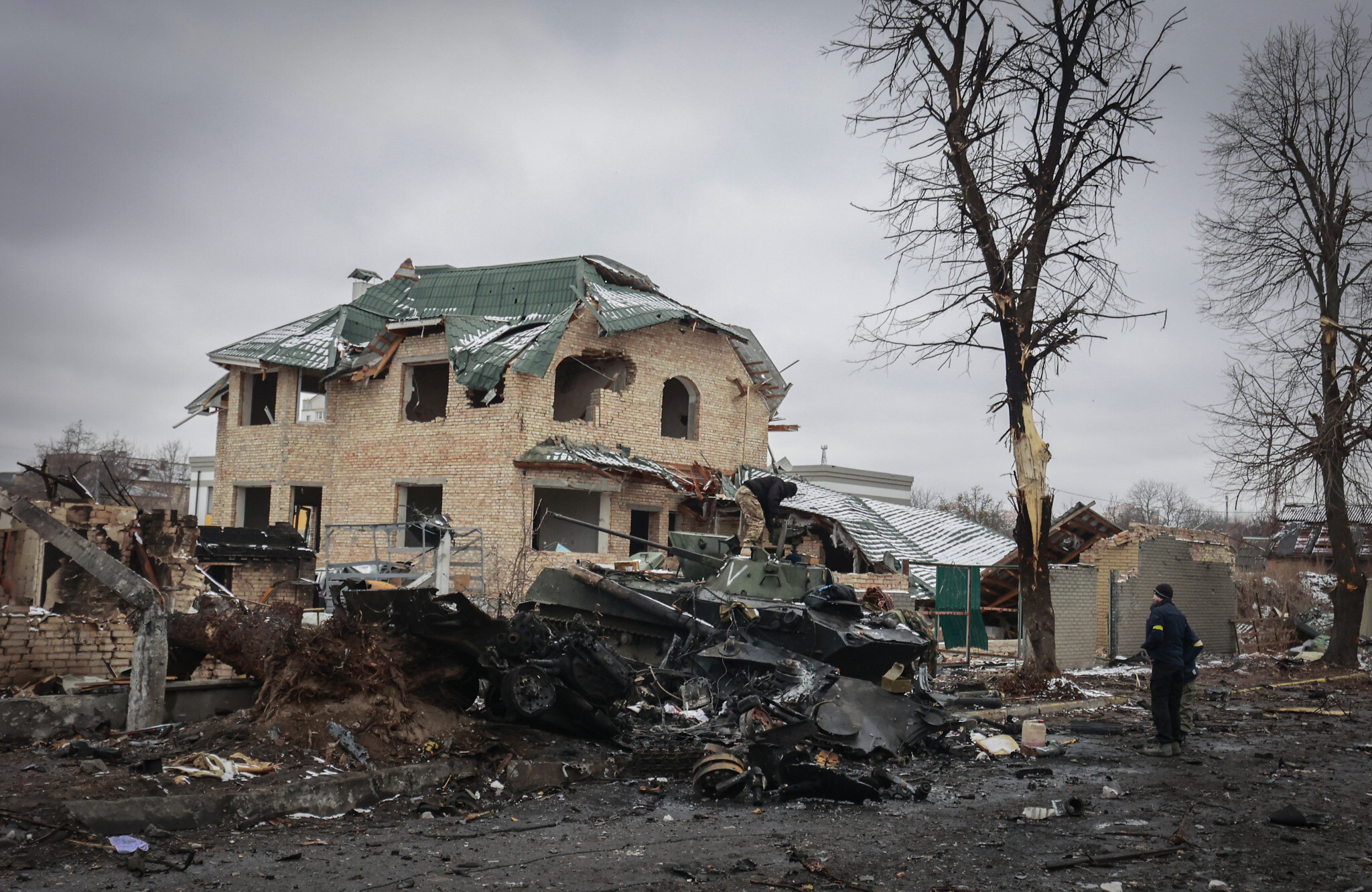
Ukrainian authorities said five people were killed in the attack on the TV tower, which is a couple of miles from central Kyiv and a short walk from numerous apartment buildings. A TV control room and power substation were hit, and at least some Ukrainian channels briefly stopped broadcasting, officials said.
The bombing came after Russia announced it would target transmission facilities used by Ukraine’s intelligence agency. It urged people living near such places to leave their homes.
Zelensky’s office reported that the powerful missile attack had caused damage to the Babyn Yar Holocaust memorial site, adjacent to the tower. A spokesman for the memorial said a Jewish cemetery at the site, where Nazi occupiers killed more than 33,000 Jews over two days in 1941, was damaged, but the extent would not be clear until daylight.
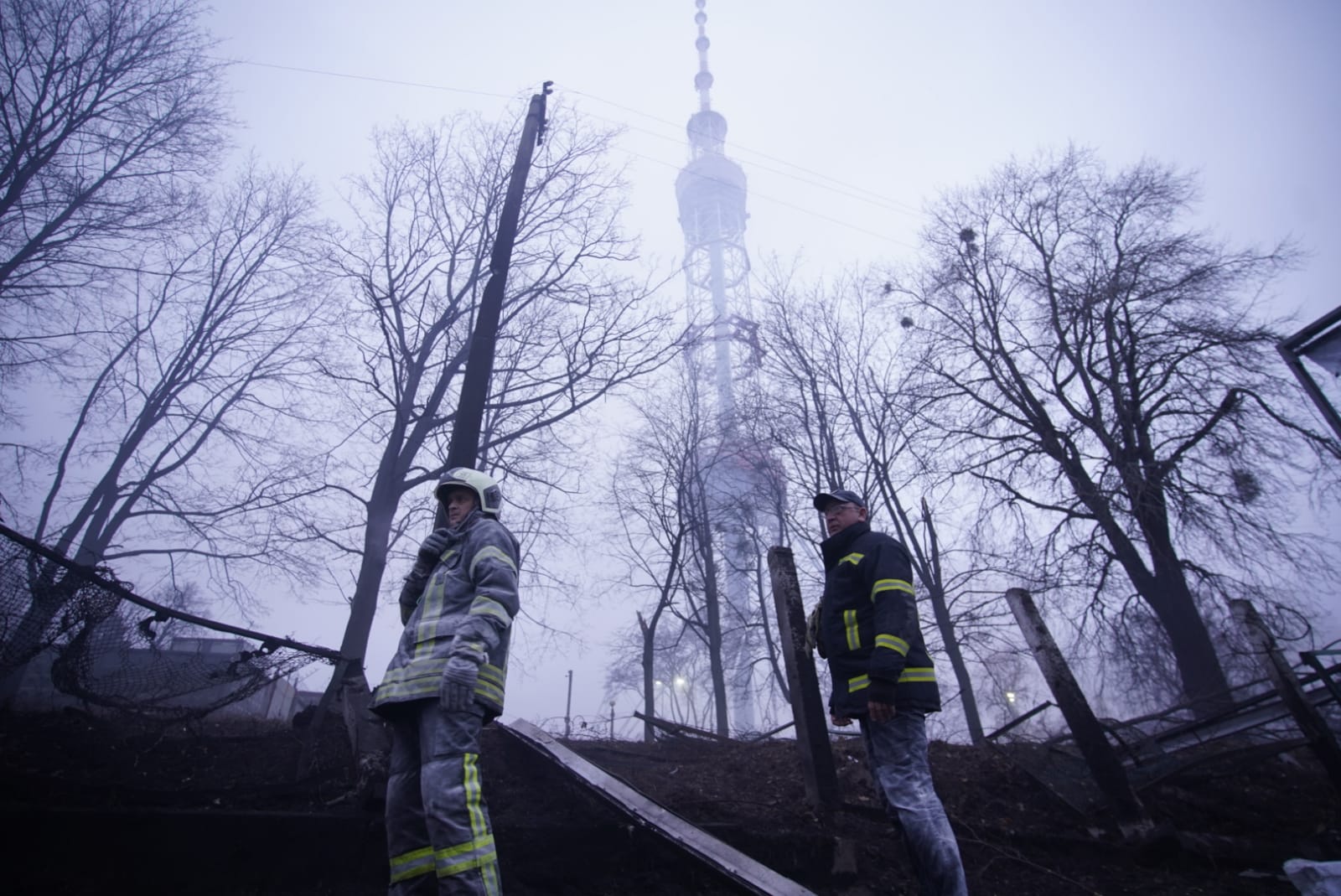
In Kharkiv, with a population of about 1.5 million, at least six people were killed when the region’s Soviet-era administrative building on Freedom Square was hit with what was believed to be a missile. On Tuesday night, reports indicated that Russian forces were
The Slovenian Foreign Ministry said its consulate in Kharkiv, located in another large building on the square, was destroyed in the attack. The entrance to the consulate was between a jewelry store and a bank.
The attack on Freedom Square — Ukraine’s largest plaza, and the nucleus of public life in the city — was seen by many Ukrainians as brazen evidence that the Russian invasion wasn’t just about hitting military targets but also about breaking their spirit.
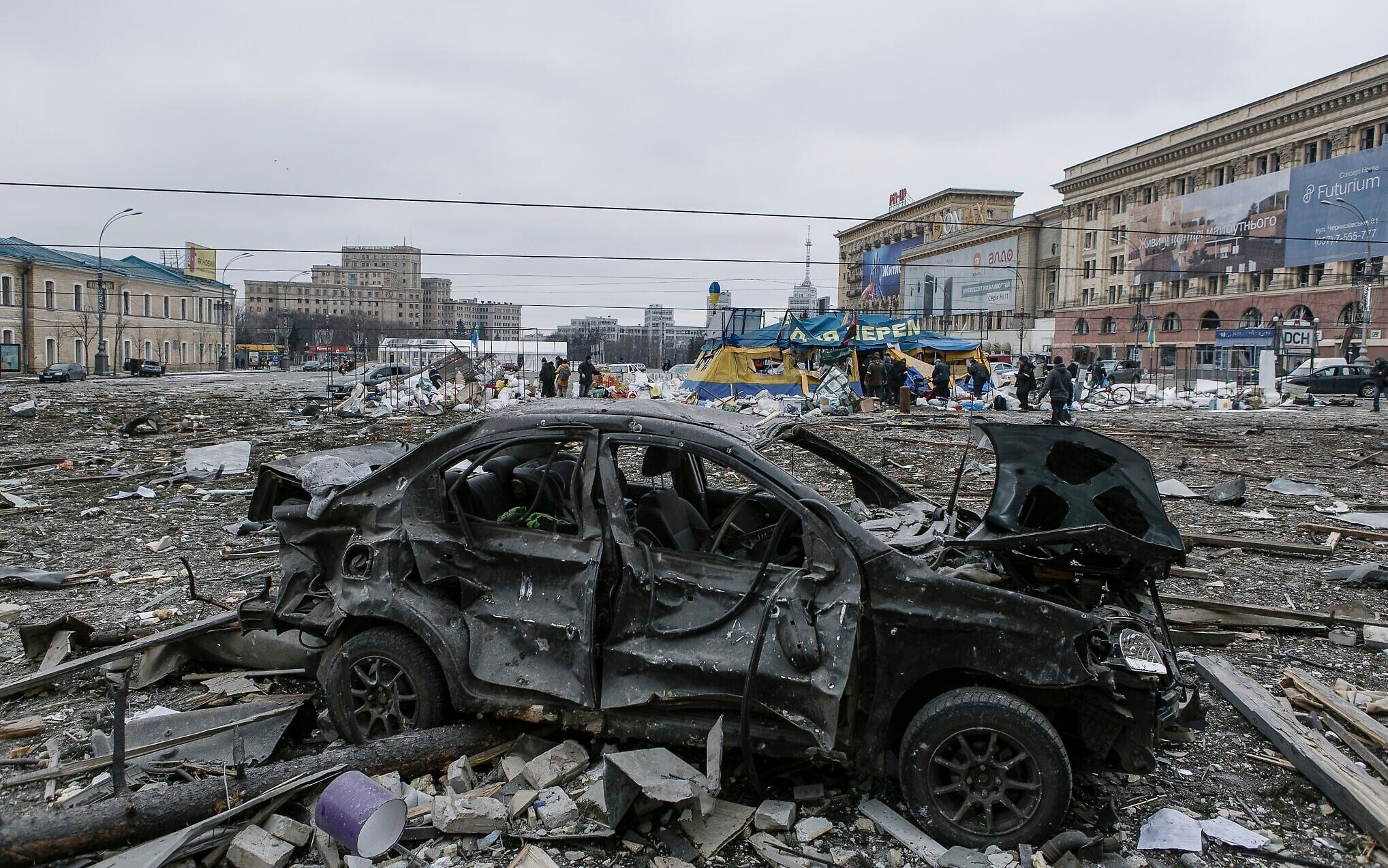
The bombardment blew out windows and walls of buildings that ring the massive square, which was piled high with debris and dust. Inside one building, chunks of plaster were scattered, and doors, ripped from their hinges, lay across hallways.
“People are under the ruins. We have pulled out bodies,” said Yevhen Vasylenko, an emergency official.
Zelensky pronounced the attack on the square “frank, undisguised terror” and a war crime. “This is state terrorism of the Russian Federation,” he said.
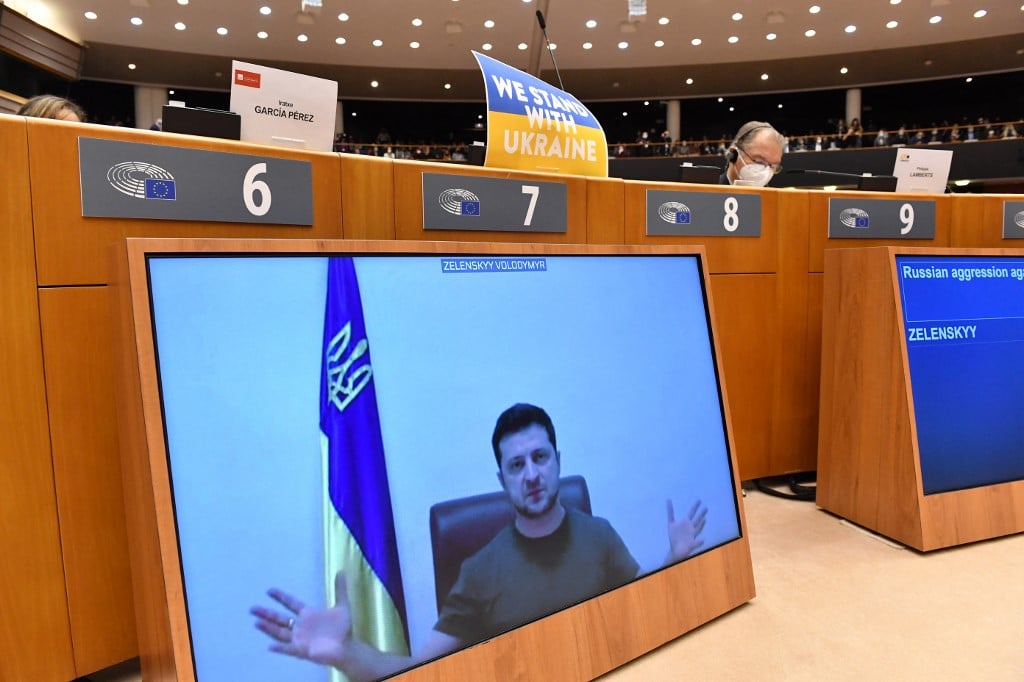
In an emotional appeal to the European Parliament later, Zelensky said: “We are fighting also to be equal members of Europe. I believe that today we are showing everybody that is what we are.”
The first talks between Russia and Ukraine since the invasion were held Monday, but ended with only an agreement to talk again. On Tuesday, though, Zelensky said Russia should stop bombing first.
“As for dialogue, I think yes, but stop bombarding people first and start negotiating afterwards,“ he told CNN.
Ukrainians have used whatever they had to try to stop the Russian advance. On a highway between Odesa and Mykolaiv in southern Ukraine, residents piled tractor tires filled with sand and topped with sandbags to block convoys.
Moscow made new threats of escalation, days after raising the specter of nuclear war. A top Kremlin official warned that the West’s “economic war” against Russia could turn into a “real one.”
Inside Russia, a top radio station critical of the Kremlin was taken off the air after authorities threatened to shut it down over its coverage of the invasion. Among other things, the Kremlin is not allowing the fighting to be referred to as an “invasion” or “war.”
Roughly 660,000 people have fled Ukraine, and countless others have taken shelter underground. Bomb damage has left hundreds of thousands of families without drinking water, UN humanitarian coordinator Martin Griffiths said.
“It is a nightmare, and it seizes you from the inside very strongly. This cannot be explained with words,” said Kharkiv resident Ekaterina Babenko, taking shelter in a basement with neighbors for a fifth straight day. “We have small children, elderly people, and frankly speaking it is very frightening.”







The Times of Israel Community.