

Shas rabbi pans Likud MK for putting wife’s death above Knesset vote on Shabbat
David Yosef accuses Yehudah Glick of following ‘twisted religion’ for staying away from planned vote on convenience store closures because he had just buried his wife
 Add ToI as a Preferred Source on Google
Sue Surkes is The Times of Israel's environment reporter
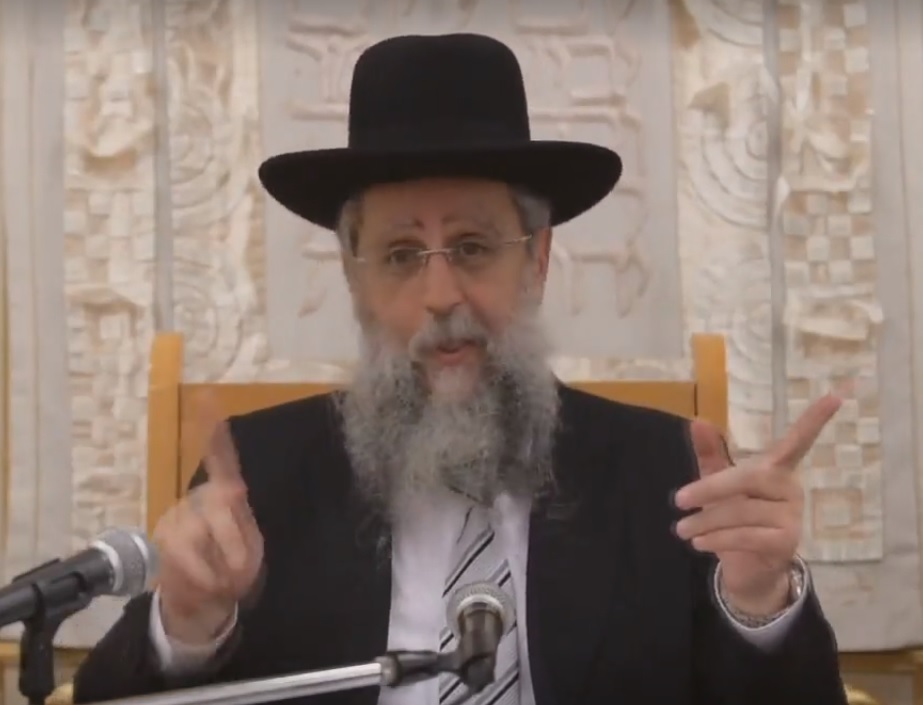
A senior member of the ultra-Orthodox Shas Party’s spiritual governing body has accused Likud lawmaker Yehudah Glick of following a “twisted religion” for failing to attend a Knesset vote hours after burying his wife.
Rabbi David Yosef, a member of the party’s Council of Torah Sages and a son of Ovadia Yosef, the late spiritual leader of Shas, used his weekly address — a recorded version of which was obtained and broadcast Wednesday by the ultra-Orthodox website, Kikar HaShabbat — to attack Glick, who is known for his campaigns to expand Jewish access to the Temple Mount in Jerusalem.
Glick resisted calls to take a break from his mourning earlier this month and help the coalition to muster a majority for a controversial bill to close minimarkets on Shabbat, the Jewish day of rest that runs from Friday evening until Saturday night.
He later criticized the attempts to force him to come to the Knesset as “out-of-place” and “uncalled for.”
The Shabbat bill was voted into law a week later. Shas leader Aryeh Deri, who is interior minister, later apologized for his efforts to bring Glick to the Knesset hours after the funeral. Deri has also said he has no intention of enforcing the new law.
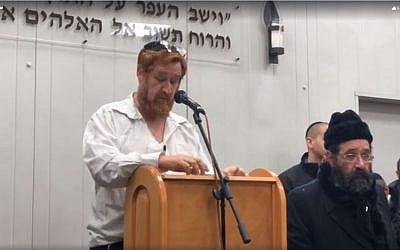
But Yosef said he believed Glick would have come running to the Knesset if the subject of the vote had been the Temple Mount.
“Yehudah Glick is a person who ascends the Temple Mount, he fights for [Jews to be able to ascend] the Temple Mount, for which the Lord will not forgive him… If it had been about the Temple Mount, he would certainly have come within the shiva period, but when the subject is the sanctity of the Sabbath, what is it for a person like that, the sanctity of the Sabbath?”
Shiva is a seven-day mourning period after a Jewish funeral, which a person whose direct relative has died spends at home receiving visitors who offer condolences.
A Jewish presence on the top of the Temple Mount, where the Jewish temples once stood, is opposed by ultra-Orthodox Jews for a variety of reasons, but in recent years, has been increasingly supported by nationalist Zionist Jews such as Glick.
In his sermon, Yosef went on to apparently refer to Deri, saying, “How is that everyone’s been falling about and shouting ‘they hurt him, they hurt him’? They’re harming the holiness of the Sabbath! They’re harming the Creator, Blessed be He! And they come and say harm is being done to this person? To this person whose only religion is the Temple Mount, he has a twisted religion….that man. Of course he would have come to vote. There’s no question of Jewish law here.”
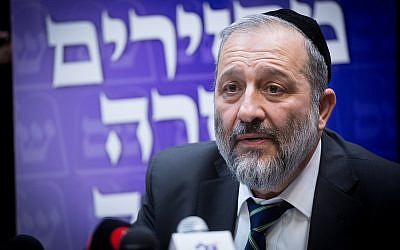
Not knowing whether the coalition would be able to muster the majority needed to pass the so-called minimarkets bill on the day of Yaffa Glick’s burial, without Glick’s attendance, Deri contacted the head of the Har Hevron Regional Council to ask him to check with the rabbi of Otniel, the West Bank settlement where Glick lives, “whether Jewish law could allow for Glick to leave the shiva in order to vote.”
It was only after the Otniel rabbi ruled that Glick could not abandon his mourning that Deri agreed to postpone the vote, Hadashot TV news reported at the time.
After his actions were widely panned as insensitive, Deri said that he was sorry “if I hurt my friend Yehudah’s feelings.”
Continuing his sermon, Yosef said of Glick and his followers, “They’ve made themselves a new religion, the Temple Mount religion, which qualifies for Karet [a form of punishment for serious crimes in Jewish law which involves cutting the perpetrator off from his people both in life and after death]. And what about the holy Sabbath? Nothing.”
Then, appearing to contradict the Otniel rabbi’s ruling, Yosef used a story from the lifetime of his late father to claim and illustrate that Jewish law had nothing to say about whether mourning superseded Knesset obligations.
“There was once a vote in the Knesset,” he said. “If you remember, when [Menachem] Begin was prime minister and there was a peace agreement with Egypt, and he brought this law to the Knesset, there was one MK who was sitting shiva , and he called my father and asked if he was allowed to vote and [my father] told him that he was.
“This was an issue that in any case had a majority [in favor], it did not need a mitzva [good deed], they could have managed without him, but here [in the case of the minimarkets law], the vote was very close.”
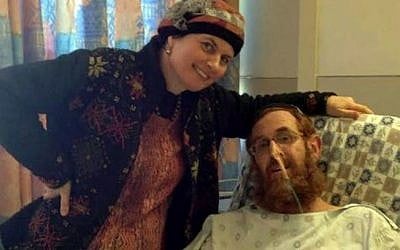
The timing of the funeral for Yaffa Glick, who died after suffering a severe stroke and coma, caused a mini-crisis in the government, with the coalition initially refusing to postpone the vote and the opposition saying it would not allow any of its lawmakers to bow out to offset Glick’s absence, even though such a move is a customary gesture of courtesy in such cases.
With the coalition’s Yisrael Beytenu party opposing the bill, Glick’s vote was necessary to ensure a majority.
The bill eventually passed the Knesset by 58-57 votes last week, with Glick’s presence and support, despite an opposition attempt to filibuster the legislation and fierce criticism of the measure from some corners of the ruling coalition.
The new law grants the interior minister the power to oversee and reject local ordinances relating to whether businesses may remain open on Shabbat.



The Times of Israel Community.