

Tucked among archaeological artifacts, new pieces show artists’ reactions to October 7
Jerusalem’s Bible Lands Museum puts contemporary art next to ancient objects, filling spaces left empty in galleries as treasures were hastily moved to safe spaces amid war
 Add ToI as a Preferred Source on Google
Jessica Steinberg, The Times of Israel's culture and lifestyles editor, covers the Sabra scene from south to north and back to the center
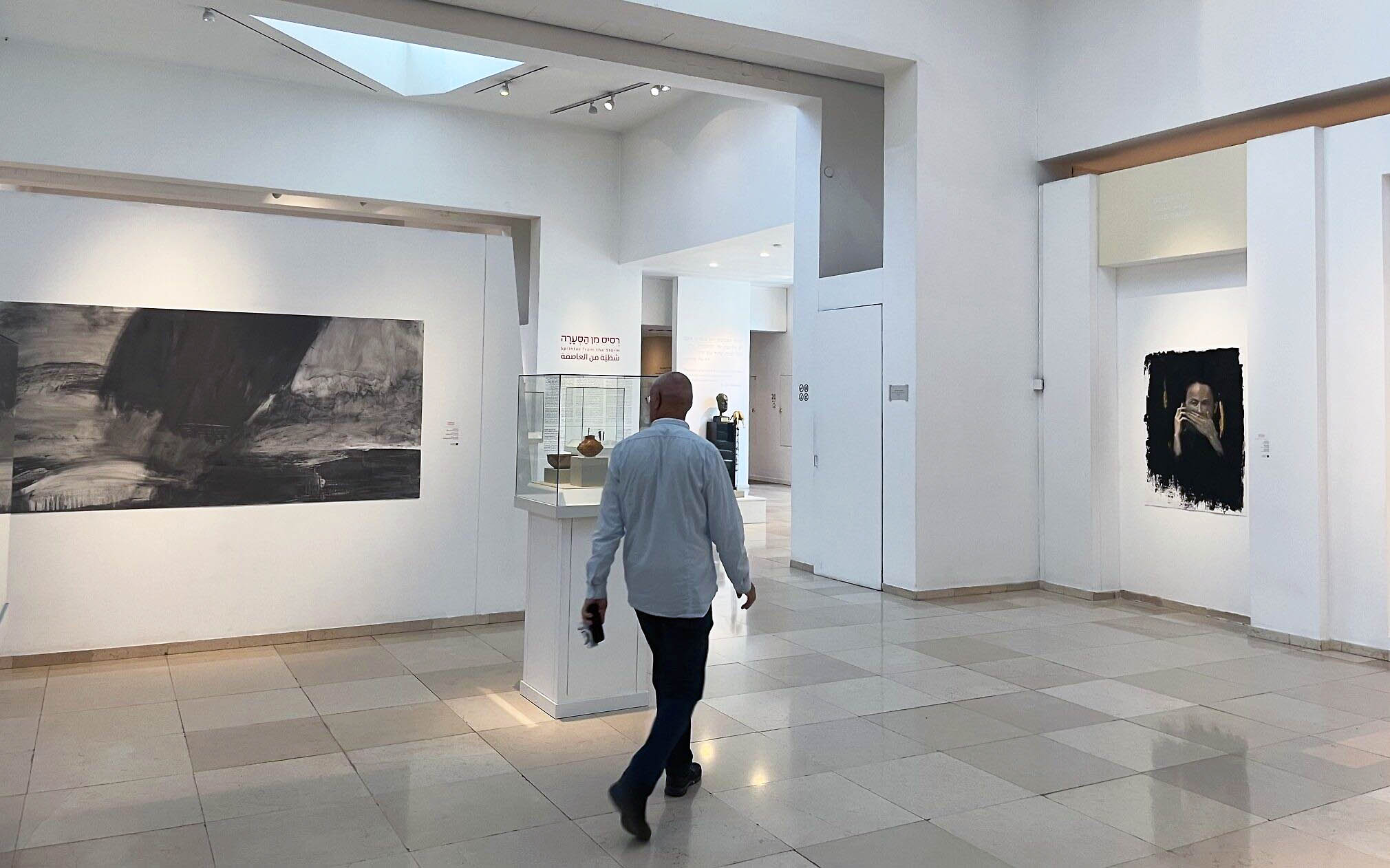
Like many Israeli museums, Jerusalem’s Bible Lands Museum rushed to put its most valuable items into storage after Hamas terrorists attacked the Gaza border area on October 7, to protect the institution’s artifacts.
Some 75 objects were put into safekeeping, said Risa Levitt, executive director of the Bible Lands.
By the third week of October, the museum opened its doors to displaced families with free workshops and activities, a move that ended up bringing hundreds of people through the museum’s doors. It also set up a temporary school for special needs children who had been evacuated.
The art workshops were done in partnership with artists from the Sam Spiegel Art Studio, situated in the nearby neighborhood of Talpiot.
That partnership opened the way to a different kind of exhibition at the museum, works by the studio’s artists as they reacted to the difficult, life-altering events of October 7.
The result is “Splinter from the Storm,” which opened February 2 and closes April 30, curated by Noa Arad Yairi, with artistic direction by Yael Boverman-Attas and input from Levitt and the museum’s curatorial department.
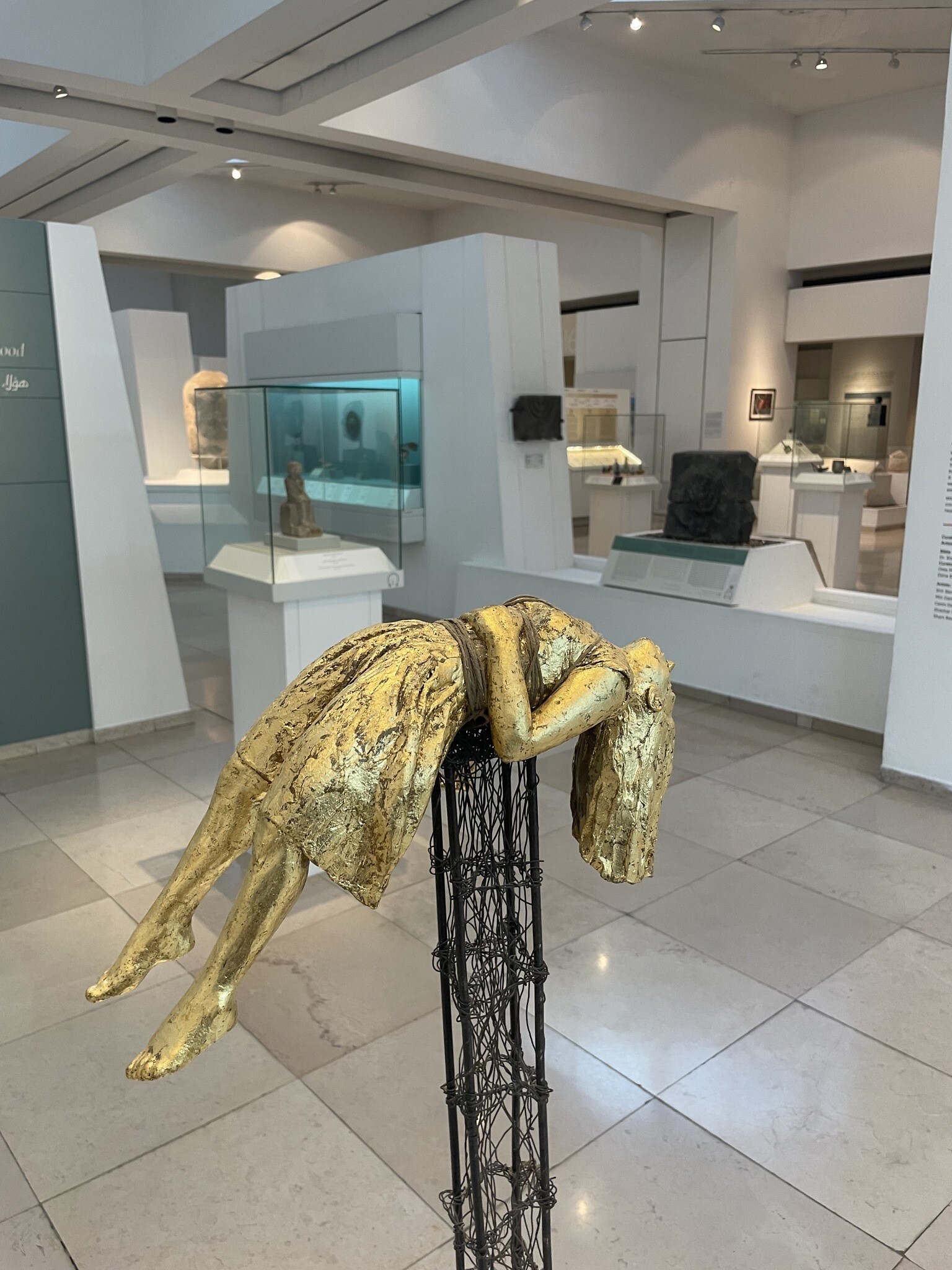
These pieces of art were temporarily placed in the Bible Lands Museum permanent galleries — some of them in vitrines and on walls left empty when other pieces were put into storage for safekeeping.
“It made so much sense to me because these pieces, the modern pieces, really speak to the pain and the emotion and the shock and the violence,” said Levitt.
The museum staff ended up scattering about 38 artworks among the permanent galleries of the museum. QR bar codes are placed near each piece to let viewers read what the artist was thinking about when creating the artwork, many of them made after October 7.
There is a dark, disturbing portrait by the exhibit’s curator, Noa Arad Yairi, titled “October 2023,” in one of the first galleries.
Nearby are two sculpted heads — one from the pre-patriarchal world and a self-portrait featuring the shock and pain of October 7, also by Arad Yairi, titled “When Home Doesn’t Feel Safe Anymore” — facing one another.
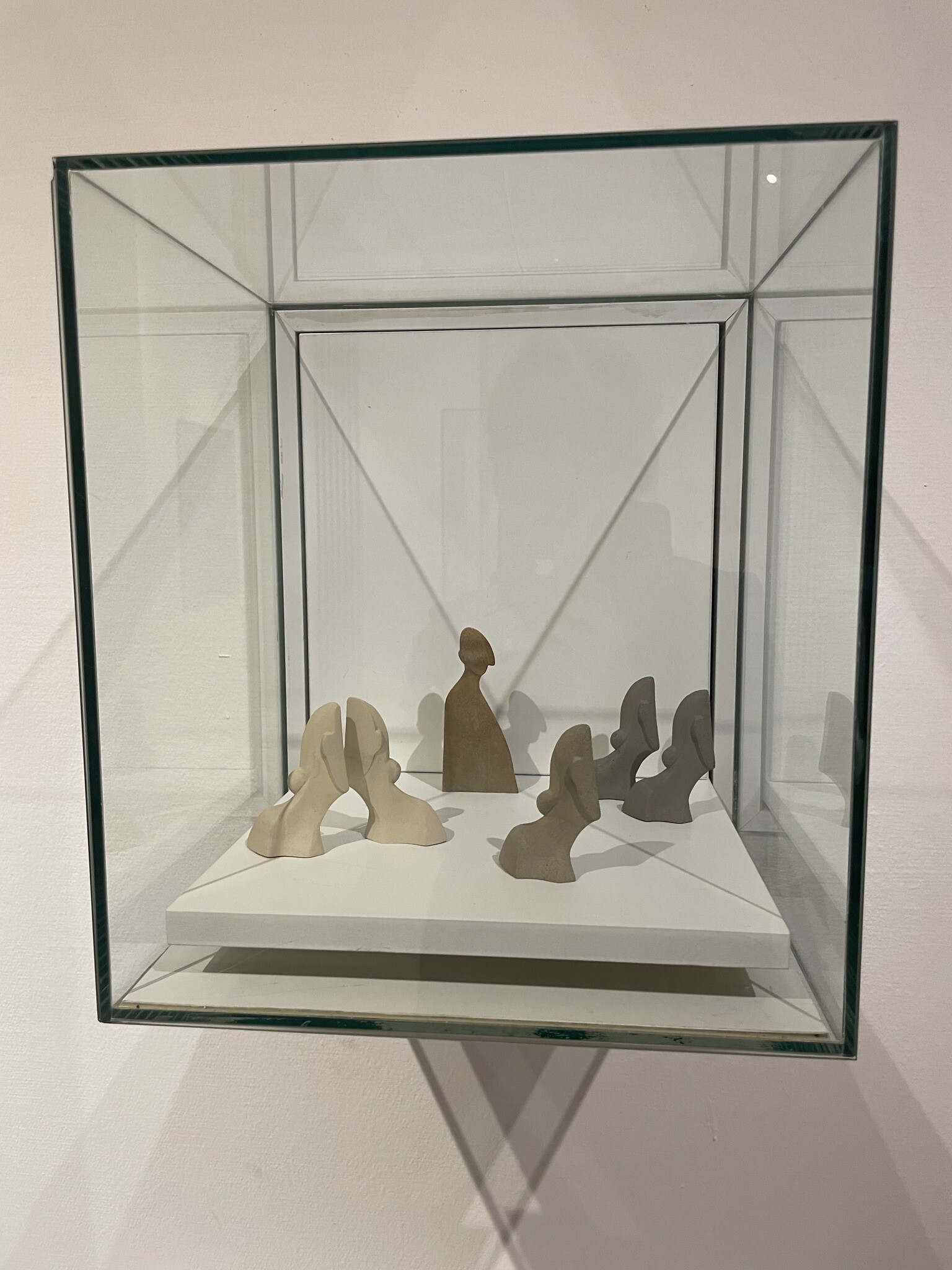
A glass vitrine of small ceramic heads, by Yaara Leiter from 2018, fits seamlessly into another gallery of ancient artifacts, while Sara Beninga’s charcoal, acrylic and oil painting of a female warrior is hung in the Age of Warfare gallery.
There were curatorial decisions about which contemporary artwork fit into the various galleries of artifacts, said Levitt, and yet the effect of scattering these modern pieces in the permanent galleries was a logical extension of the museum’s collection.
“We have so much material here in the ancient Near East and the history of Israel that speaks to war, conquests, violence, prisoners, you name it,” said Levitt. “These kinds of things have happened before. But somehow when we talk about the destruction of the Temple or the Roman invasion or the Assyrian invasion, they’re just like these building blocks of our history.”
The October 7 attacks, by contrast, are recent, raw and visceral.
The exhibit includes several short video documentaries and photographs, including one made in Sderot in May 2023, showing what life looked like there after yet another ceasefire.
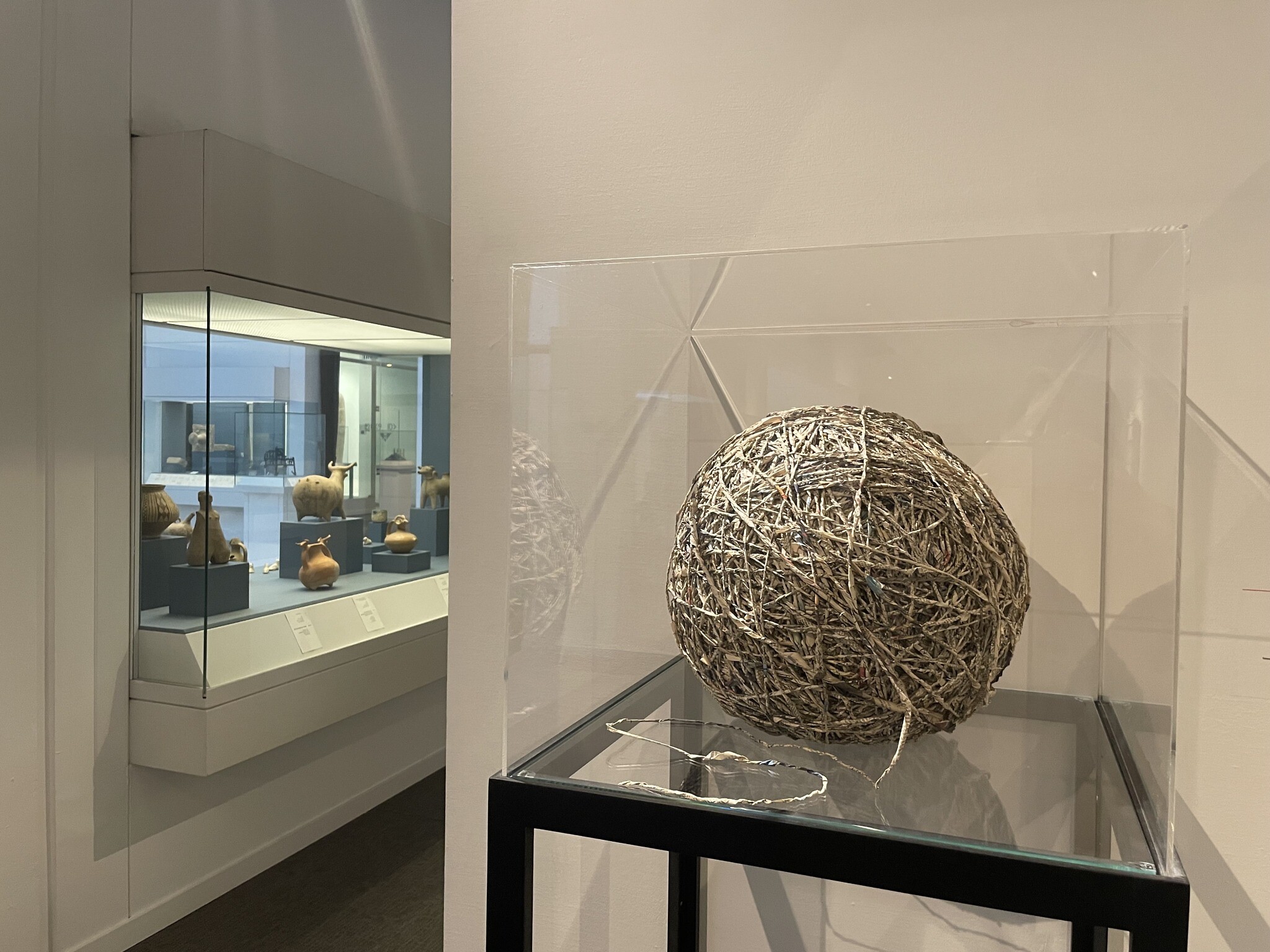
Marleene Rubenstein’s “Revolve” is a massive ball made from newspaper obituaries twisted into strips, theoretically growing in size with every war, attack and conflict.
At the very end is Shir Ben Elul’s black-and-white acrylic on canvas “The Virtues of Hope,” where hope is like a phoenix rising from the ashes of loss.
The decision to mix the contemporary with the ancient was unusual but it made sense, said Levitt, a professor of Hebrew Bible and student of ancient archaeology who directed the Jewish studies program at San Diego State before moving to Israel a year ago to assume this new position.
As part of her work, Levitt is constantly thinking about what a museum can be, she said, and its position as a place of healing and conversation and creativity, “as a center of culture in Jerusalem, not just archaeology.”





The Times of Israel Community.