

Yisrael Beytenu to oppose Haredi draft law if vote bumped up
United Torah Judaism said to be holding budget approval hostage in order to push through law allowing ultra-Orthodox to avoid enlistment
 Add ToI as a Preferred Source on Google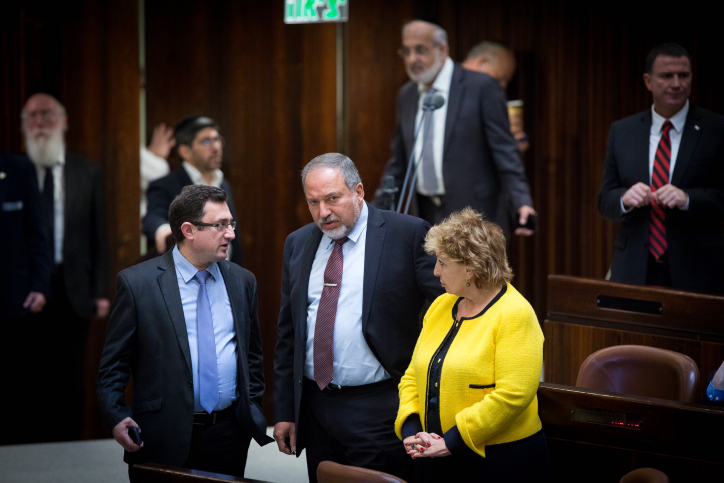
The Yisrael Beytenu coalition party on Monday threatened to vote against a proposed bill granting ultra-Orthodox students military draft exemptions, should Haredi lawmakers bring it to a preliminary reading this week.
In a letter to coalition chairman Likud MK David Amsalem, Yisrael Beytenu MK Robert Ilatov demanded that the proposed legislation be first approved by ministers before being brought to the chamber for an initial vote.
Ultra-Orthodox lawmakers, meanwhile, were seeking to expedite the legislation and bring it to the plenum on Wednesday for its preliminary reading. They were leveraging their support for the 2019 state budget — set for its final votes in the coming weeks — on the passage of their bill. The draft bill would still require another three plenary votes before becoming law.
“In the event the bill does not go through the required process, the entire Yisrael Beytenu party, including Immigration Minister Sofa Landvar will vote against the law,” Ilatov wrote. The right-wing party represents five lawmakers, out of the 66 coalition MKs in the 120-seat Knesset.
The Defense Ministry, which is run by Yisrael Beytenu leader Avigdor Liberman, is formulating its own version of the ultra-Orthodox draft law.
The coalition party leaders were set to discuss the new enlistment legislation during their weekly Sunday meeting, but the issue was not raised as UTJ’s Yaakov Litzman skipped the meeting to attend the funeral of Rabbi Shmuel Auerbach, the influential leader of a fiercely anti-draft offshoot of Lithuanian ultra-Orthodox Jews.
The looming showdown between secular stronghold Yisrael Beytenu and ultra-Orthodox parties could pave the way for a fresh crisis in the government, already plagued by mounting corruption investigations against Prime Minister Benjamin Netanyahu.
According to Hebrew media reports on Friday, the rabbinical council that governs much of the decision-making in the United Torah Judaism party reportedly instructed its lawmakers to vote against the budget — the passing of which is a high priority of the prime minister and Finance Minister Moshe Kahlon, who want to secure it as early as possible — as long as the army exemption law is not promoted.
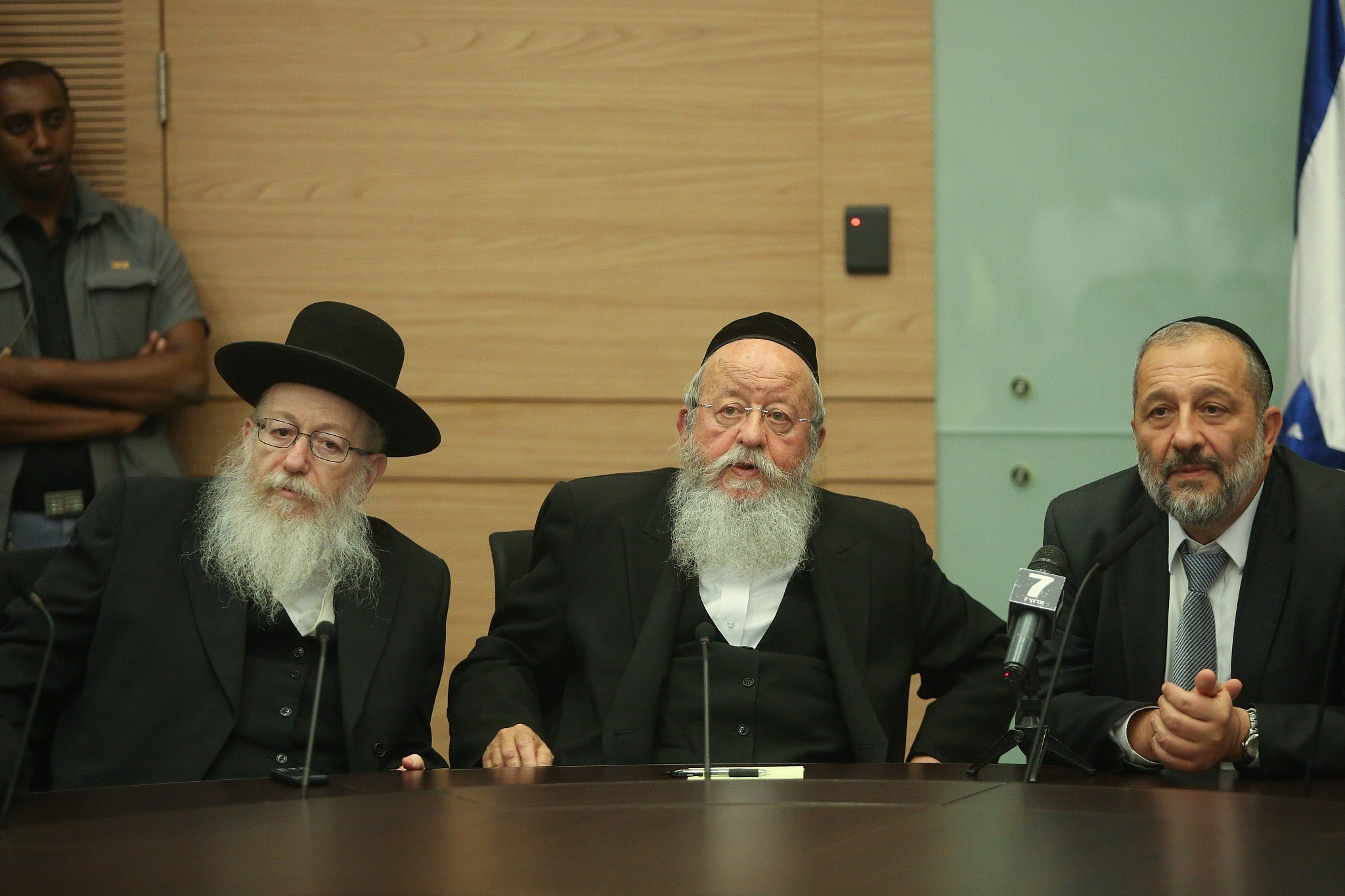
In September 2017, the High Court of Justice struck down the law exempting ultra-Orthodox men engaged in religious study from military service, saying it undermined the principle of equality before the law.
However, the court suspended its decision for a year to allow for a new arrangement to be put in place, giving the government the option to pass a new law.
A UTJ official confirmed to Ynet that the party was trying to take advantage of the opportunity created by Netanyahu’s bid to push the budget through quickly. The prime minister is hoping to steady his coalition amid a series of corruption scandals that have threatened to push him from power.
Earlier this month, UTJ and fellow ultra-Orthodox party Shas reportedly threatened to bring down the government, after Netanyahu told them he would not currently support a new version of the military draft law.
Senior Knesset sources told Israel Radio at the time that a new draft exemption law was not going to be advanced in the near future, since the High Court ruling that nixed the previous version gave the government until September to come up with an alternative. They said the issue would take a backseat until the 2019 budget is approved by the Knesset.
Ultra-Orthodox ministers and their parties have in the past used the threat of bolting the government to gain leverage on legislation that enforces religious principles, most recently over legislation that prevents local municipalities from permitting mini-markets to open on Saturdays unless they gain approval from the interior minister. Since the current interior minister is Shas leader Aryeh Deri, the law effectively gives the ultra-Orthodox party power over the Saturday shop licenses.
During the political wrangling to pass the so-called mini-market law, which was opposed by Yisrael Beytenu, Deri threatened to resign if it were not brought for a Knesset vote. The law passed, although Yisrael Beytenu broke coalition ranks and voted against it.
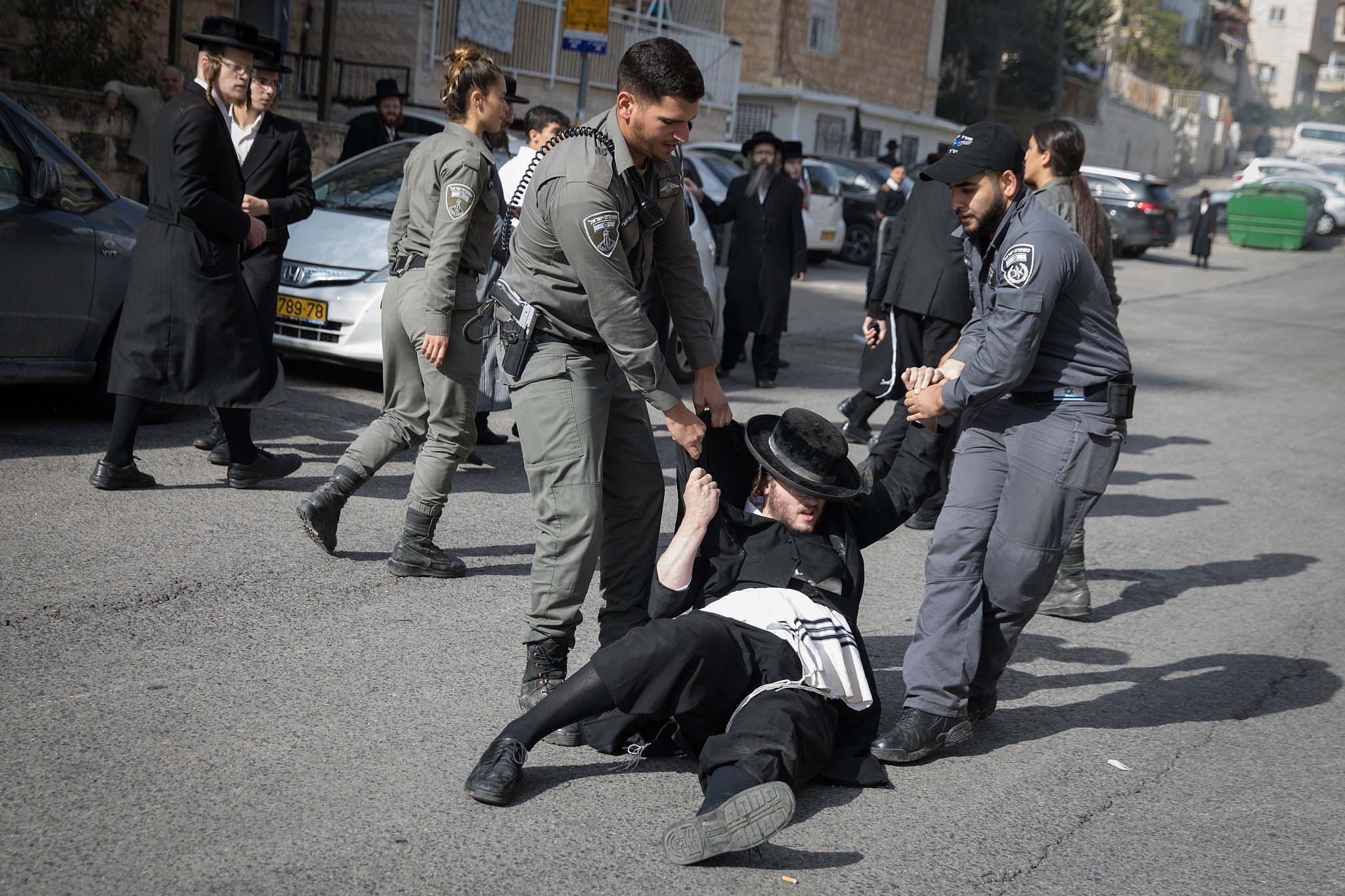
Deputy Health Minister Yaakov Litzman, the head of UTJ, resigned as health minister in November 2017, protesting work on the national rail network that was carried out on Shabbat. He returned, but only under the title of deputy minister, as part of a compromise deal with Netanyahu and other coalition parties to push some pet measures, while leaving others to the side. The military draft was not directly included in that pact.
The issue of ultra-Orthodox enlistment has been a contentious one in Israel, revolving around a decades-old debate as to whether young ultra-Orthodox men studying in yeshivas, or seminaries, should be called up for compulsory military service, like the rest of Israel’s Jewish population. After reaching the age of 18, men must serve for 32 months and women for 24.
Netanyahu is facing possible indictments in two separate corruption scandals, while two additional scandals have entangled several people close to him. His coalition partners have thus far stuck by him, but some analysts have predicted Netanyahu may be pushed into calling early elections to shore up support as his legal woes pile up.
Times of Israel staff contributed to this report.









The Times of Israel Community.