

On uprising anniversary, Egypt warns against rallies
Five years after Mubarak was ousted, Sissi vows harsh response to unrest, posthumously decorates policemen killed in terror attacks
 Add ToI as a Preferred Source on Google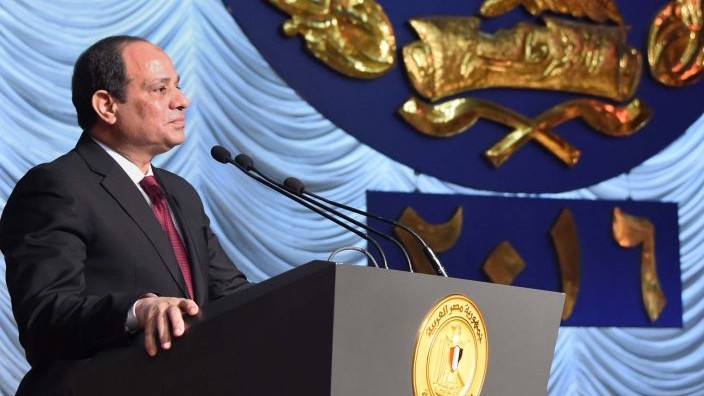
CAIRO — Egypt’s president, speaking ahead of next week’s anniversary of the 2011 uprising that toppled longtime ruler Hosni Mubarak, vowed on Saturday to unleash a firm response to any unrest and to press ahead with the fight against the country’s Islamic militants.
Abdel-Fattah el-Sissi spoke at a ceremony marking Police Day, which falls on Jan. 25, the day the uprising began five years ago.
He posthumously decorated nearly 40 policemen killed in militant attacks, including eight generals and three colonels. Most of the widows who received the medals were accompanied by their children, including infants. Sissi, his eyes frequently welling up, carried the infants, hugged and kissed older children and posed with them for photos. He allowed several family members, including a boy no older than 12, to briefly address the large gathering.
Addressing the nation, Sissi said of those killed in terror attacks: “Don’t let their blood go in vain and, by the way, we will not allow that ourselves, and I am saying that so everyone listens and takes note,” he said.
“The security and stability of nations are not to be toyed with,” he said, adding that the security of Egypt was the responsibility of all Egyptians, not just the police and the army. Sissi delivered his 30-minute address standing in the middle of the families of the policemen killed in terror attacks, with the sound of crying babies occasionally heard in the background.
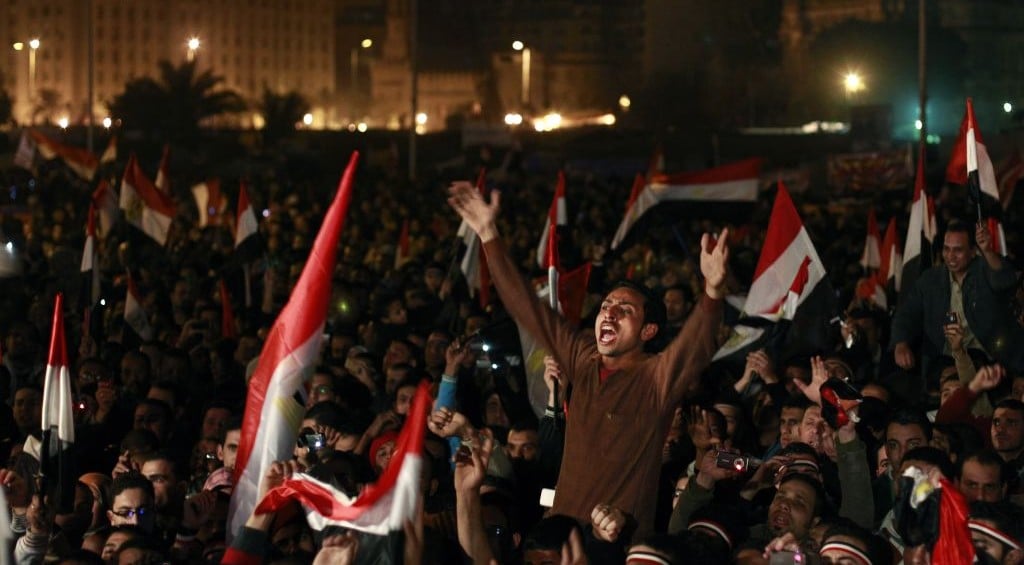
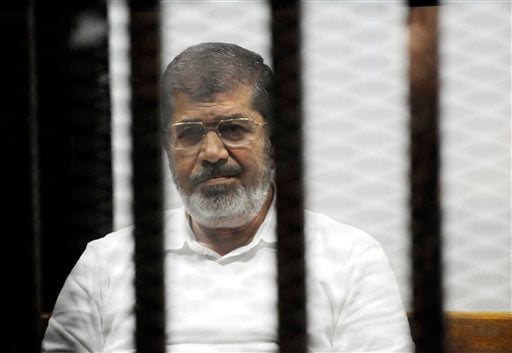
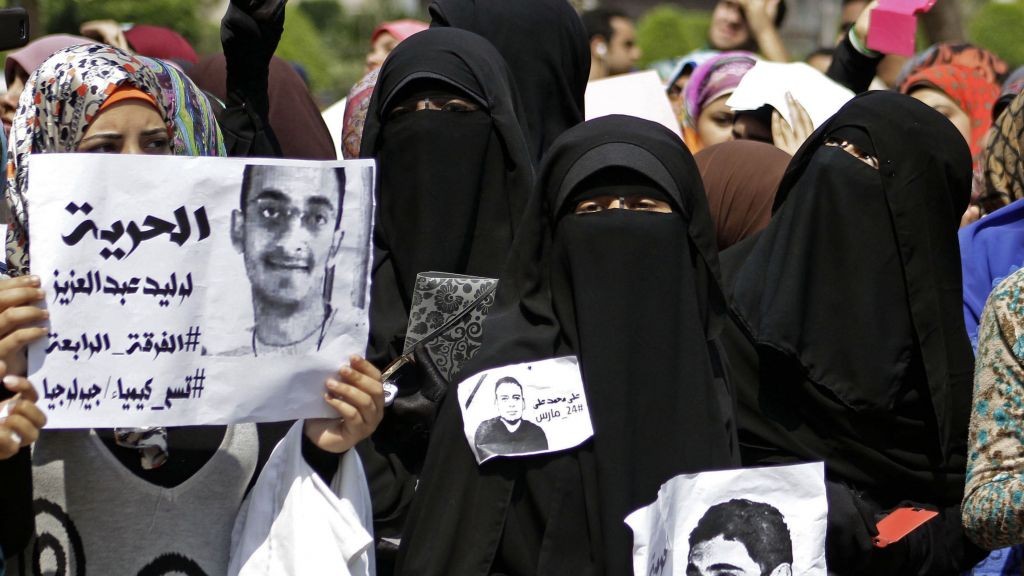
Sissi, who as military chief overthrew in 2013 Islamist President Mohammed Morsi, has presided over a sweeping crackdown on dissent, jailing thousands of Islamists and scores of secular, pro-democracy activists who fueled the 2011 uprising. He was elected to office in 2014 with a landslide.
Sissi made no mention of the January 2011 uprising in his comments. He has in the past paid tribute to the uprising, just as he has done to the so-called “June 30 revolution,” the day in 2013 when millions of Egyptians demonstrated on the streets against the rule of Morsi and his Muslim Brotherhood. However, some of Sissi’s supporters in the media and in politics have taken to publicly vilifying the 2011 uprising as an attempt by foreign powers to weaken Egypt through local saboteurs.
The nearly two-hour ceremony, with its many emotional moments and high praise for police, confirmed the president’s panache for populism, but also appeared to send a multitude of political messages. Foremost among these is that Sissi has endorsed the nation’s highly militarized police force, paying no heed to growing complaints by rights activists that it has gone back to Mubarak-era practices like torture, random arrests and the use of excessive force.
The high praise of the police for their role in the fight against the militants and securing stability also signal the complete return of respectability to a force that melted away in the face of the 2011 uprising’s protesters and took at least two years to fully shoulder its responsibilities again.
The posthumous decorations also offered a rare insight into the heavy toll endured by the police in the fight against the militants. Hundreds of army soldiers have been killed by the militants too, but the military has been secretive recently about its losses.
Egypt has been battling Islamic militants in Sinai for years, but attacks against security forces have significantly increased in frequency after Morsi’s ouster and later spread to the mainland, with assassinations and bombings. The latest of these came Thursday when a bomb killed six people, including three policemen, in Cairo’s twin city of Giza. The Egyptian affiliate of the extremist Islamic Group claimed responsibility for the attack.
The president spoke a day after the army said it would beef up security measures to safeguard vital installations and “confront any attempt to violate the law, impact the nation’s security and stability.” The announcement came amid an ongoing crackdown on dissent ahead of Monday’s anniversary. Authorities have visited and searched as many as 5,000 apartments in the past 10 days, primarily in central Cairo, seeking to prevent protests. The administrators of several Facebook pages suspected of links to the Brotherhood have been detained and accused of using social media to call for protests.
Most secular and liberal pro-democracy activists are not expected to take to the streets on Monday to mark the anniversary, with many saying that doing so would only add to the number of protesters killed or detained by police. Morsi supporters, however, have been calling for protests, but these are likely to be restricted to neighborhoods where they maintain a heavy presence, not landmark squares or main streets.
Police have shown zero tolerance for anti-government street demonstrations since Morsi’s ouster and, in view of Sissi’s comments Saturday, are not likely to change that policy on Monday. However, there are fears that militants might take advantage of the anniversary to stage attacks against security forces.
Copyright 2016 The Associated Press.





The Times of Israel Community.