

Berlin denies it expressed understanding for Israel’s rejection of Iran deal
Merkel only appreciated Jerusalem’s ‘general concerns’ about Iran, German sources say; Israeli official responds: Fake controversy about a distinction without a difference
 Add ToI as a Preferred Source on Google
Raphael Ahren is a former diplomatic correspondent at The Times of Israel.
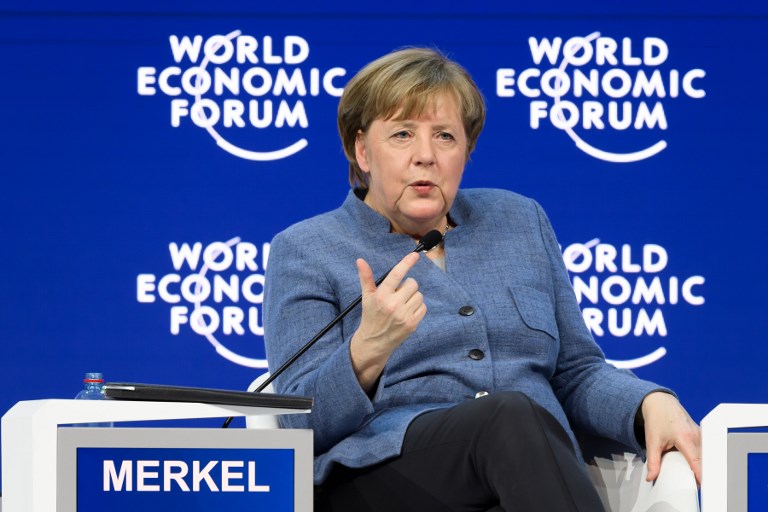
Berlin on Wednesday evening denied Prime Minister Benjamin Netanyahu’s claim that German Chancellor Angela Merkel expressed understanding for Israel’s opposition to the nuclear deal.
“She understands Israel’s general concerns regarding Iran,” German diplomatic sources told The Times of Israel, referring to Iran’s ballistic missiles program and its problematic activities in the region. However, Germany stands fully behind the nuclear deal, which it achieved together with the five permanent members of the United Nation Security Council in 2015, the sources maintained.
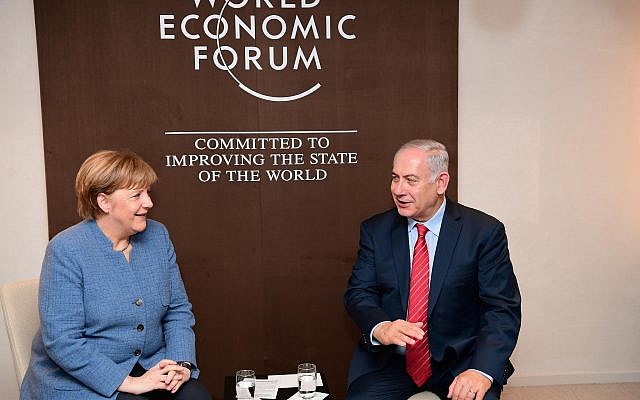
After meeting with the chancellor on the sidelines of the World Economic Forum, in Davos, earlier on Wednesday, Netanyahu told reporters that Merkel had “said that she understands our concerns regarding the nuclear agreement, even though she does not necessarily agree with the way in which we want to deal with it.”
Jerusalem rejected the German sources’ clarification. “This a fake controversy about a distinction without a difference,” a senior Israeli official told The Times of Israel.
Addressing Israeli reporters minutes after he left the room where he met Merkel, Netanyahu described their conversation as “important,” indicating that their discussion focused on Iran.
“I said that, in my view, the only existing option at the moment is to put in real — not cosmetic — changes that will prevent Iran from going nuclear, which would otherwise be assured by the agreement as it stands,” the prime minister said.
The Europeans “will hold discussions among themselves, and with the US,” Netanyahu said regarding the future of the Iran deal, adding that Merkel “understands that this touches on our concerns, the things that could threaten our very existence.”
The German chancellor has “proven this commitment in the past at various opportunities. I am satisfied that our positions have been well-understood,” he said.
Convincing world leaders to push for changes to the Iran deal is one of the key objectives of Netanyahu’s current trip to Davos. “I will tell them that in the coming weeks, they will have a last opportunity to try and introduce real — not cosmetic — changes in the dangerous nuclear agreement with Iran,” he said Tuesday, as he boarded his plane en route to Switzerland.
“In any case, with or without an agreement, our policy is to prevent the terrorist regime in Iran from arming itself with nuclear weapons, which would endanger us, the Middle East, and the entire world.”
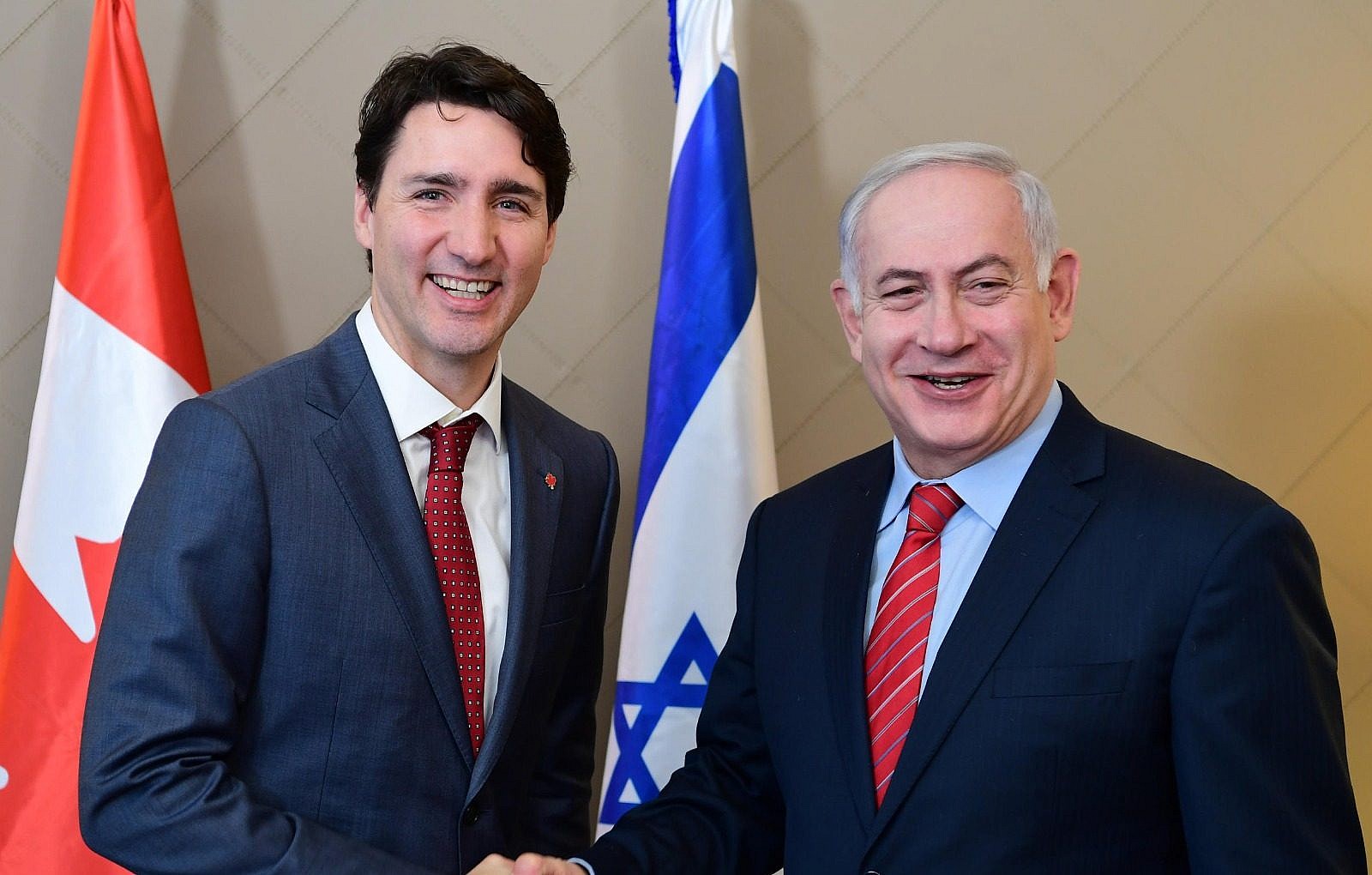
In his meetings Wednesday with Canadian Prime Minister Justin Trudeau, Belgian Prime Minister Charles Michel, Swiss President Alain Berset, and other leaders, he “discussed the nuclear agreement with Iran and called on the leaders to utilize the opportunity that has been created in the wake of US President Donald Trump’s declaration,” according to a readout provided by his office.
The nuclear deal was negotiated and agreed upon by Iran on the one side and the US, Russia, China, France, Britain, and Germany — the so-called P5+1. Out of the six, only Washington has misgivings about the deal, with the administration threatening to tear it apart, unless substantial changes are made to it.
“And just know that in President Trump’s recent decision to announce that the waiver that he would sign on sanctions under the Iran nuclear deal would be the last one,” US Vice President Mike Pence said in Jerusalem on Tuesday.
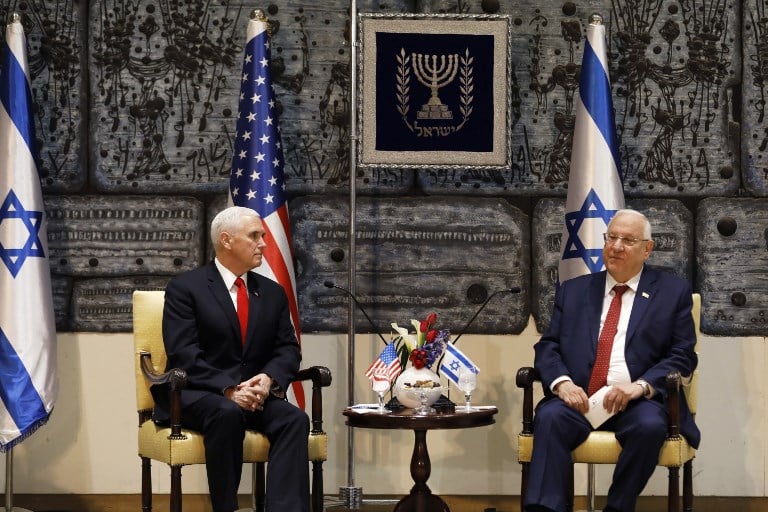
“We are sending a signal to our European allies that the time has come for changes in the Iran nuclear deal that will ensure that the sunset provisions in the deal are completely eliminated, and that punitive sanctions will be available for many years to come, to prevent Iran from obtaining a nuclear weapon — and you have our commitment to work closely with our allies around the world to achieve that,” Pence said.
“If our allies will not join us, President Trump has made it clear we will withdraw from the Iran nuclear deal immediately. But we hope in the months ahead to able to strengthen it, to contribute to the security of the region, Israel’s security, and the security of American interests as well.”
Germany, however, considers the nuclear deal a “major success, and a key building block of the global non-proliferation architecture,” according to the Foreign Ministry in Berlin.
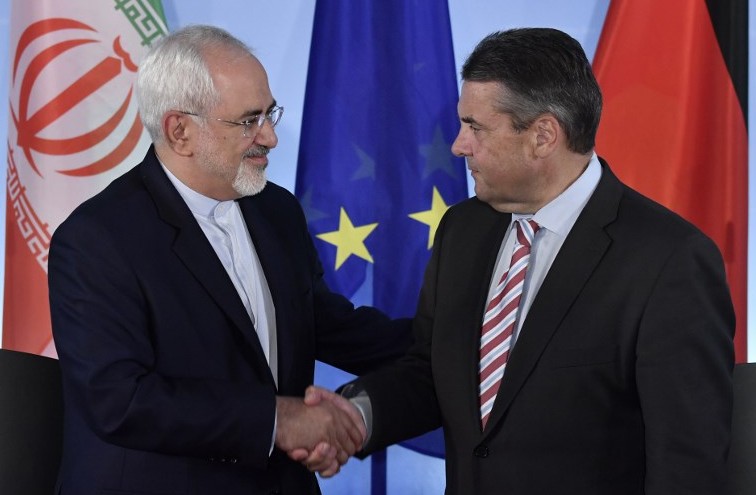
“We firmly believe that the nuclear agreement needs to be upheld. It is in the European interest. It is in the international community’s interest,” German Foreign Minister Sigmar Gabriel said earlier this month. “If the only agreement that has prevented a region from developing nuclear weapons were to be sunk now, it would be a devastating signal for all others.”
However, Gabriel, who is due in Israel next week and set to meet Netanyahu, has repeatedly acknowledged that “Iran’s role in the region is problematic,” the Foreign Ministry website states. “In his view, these other topics need to be dealt with, while keeping the nuclear agreement separate and not putting its successes at risk.”
On January 11, the foreign ministers of Germany, Britain, and France, as well as European Union foreign policy czar Federica Mogherini, met with Iran’s Foreign Minister Javad Zarif in Brussels. All sides vowed to fight to keep the Iran in place, and pledged to launch a “structured dialogue on regional issues” with the Islamic Republic.
Jacob Magid contributed to this report from Davos, Switzerland.










The Times of Israel Community.