

Defying fears, freed hostages return to Be’eri to plead for the release of the rest
Seven survivors of the massacre stand amid the ruins of their homes in a moving event and concert
 Add ToI as a Preferred Source on Google
Canaan Lidor is a former Jewish World reporter at The Times of Israel
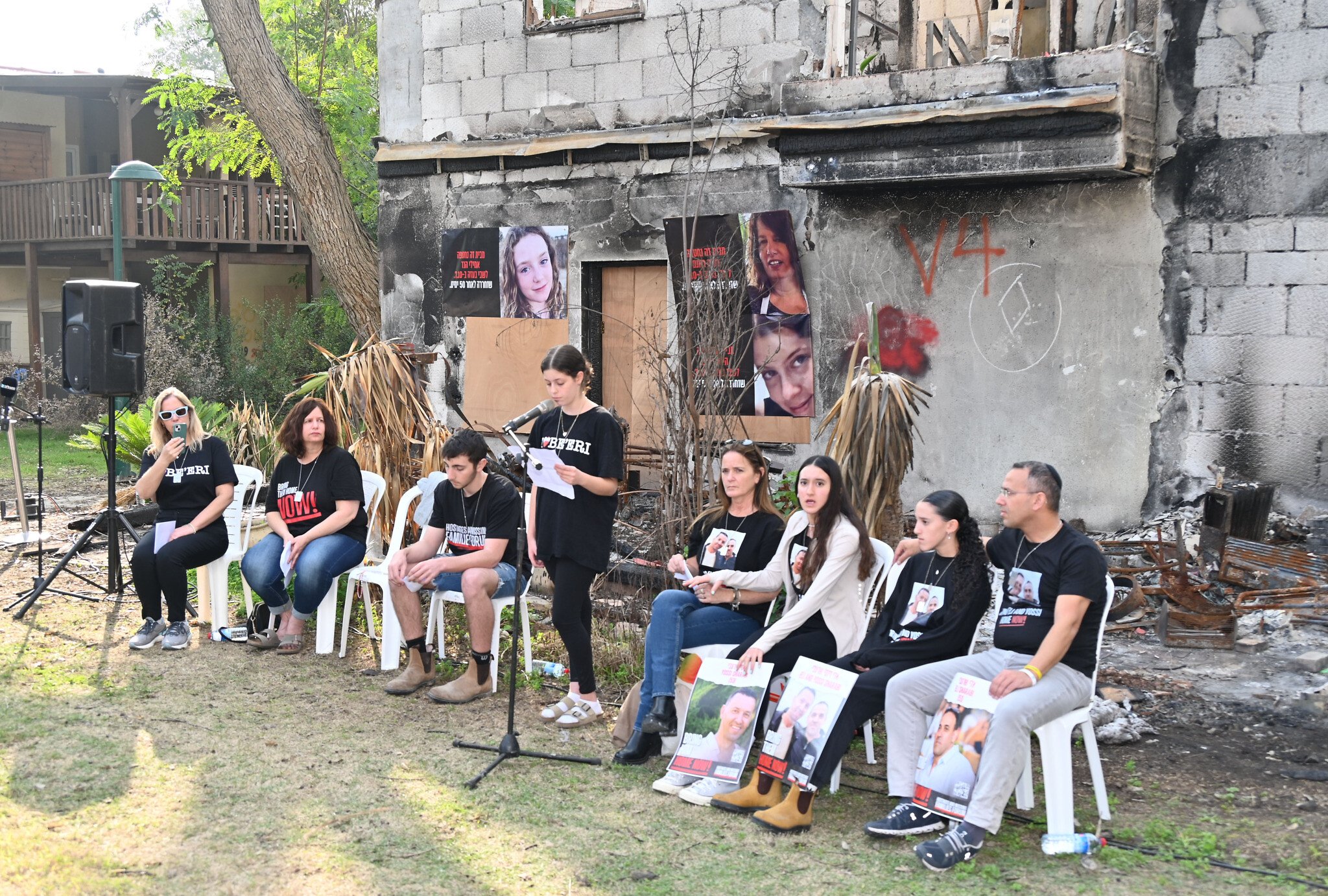
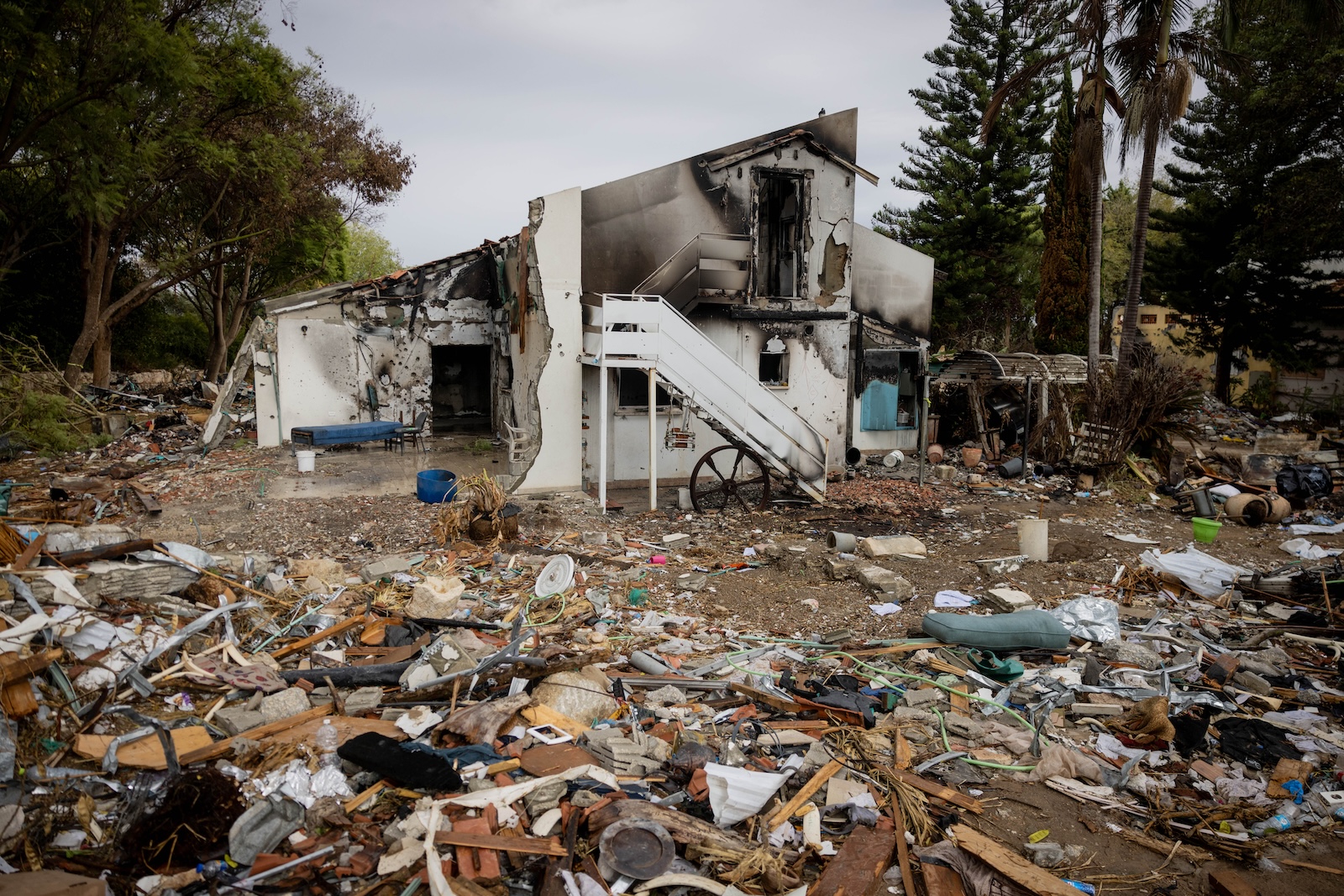
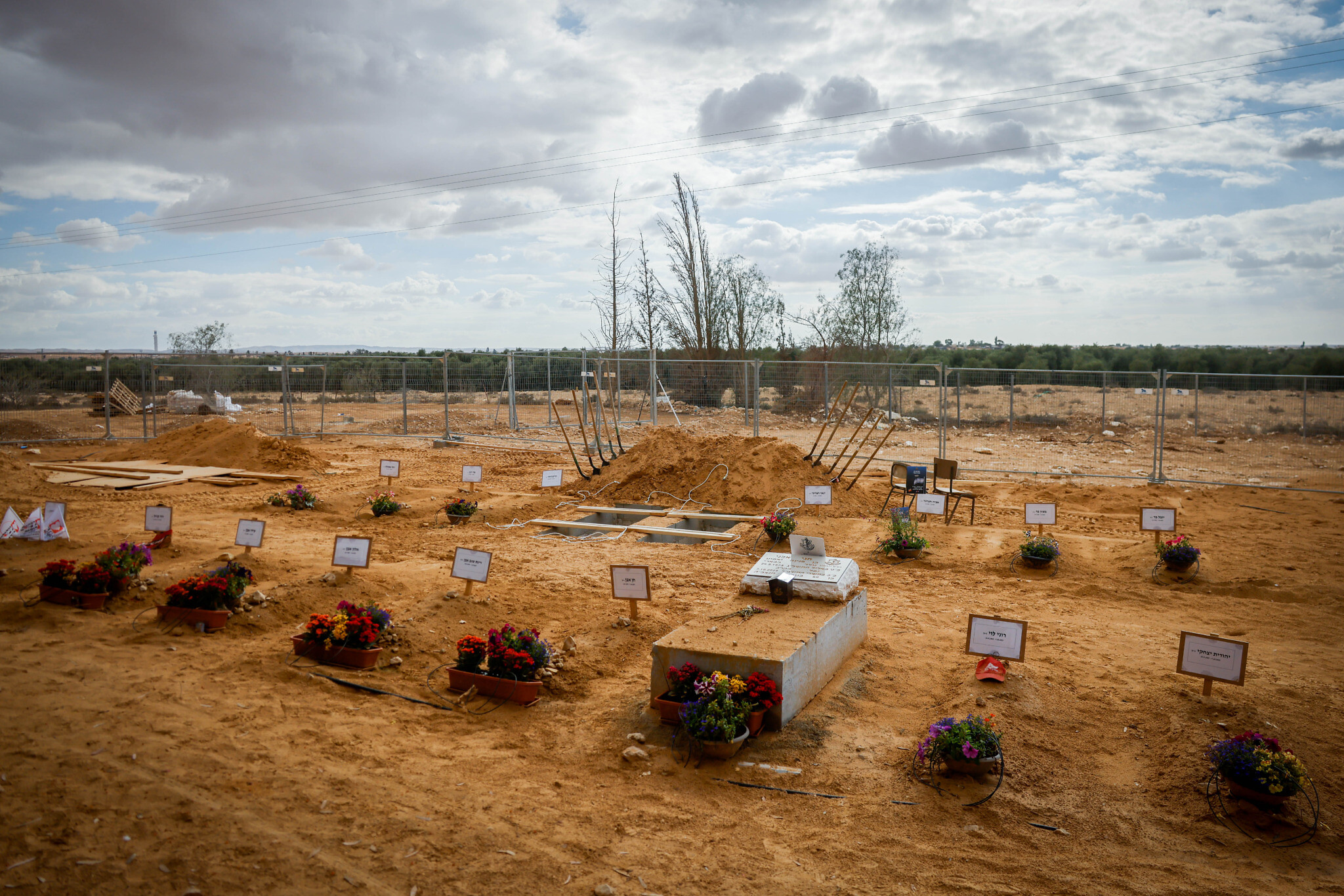
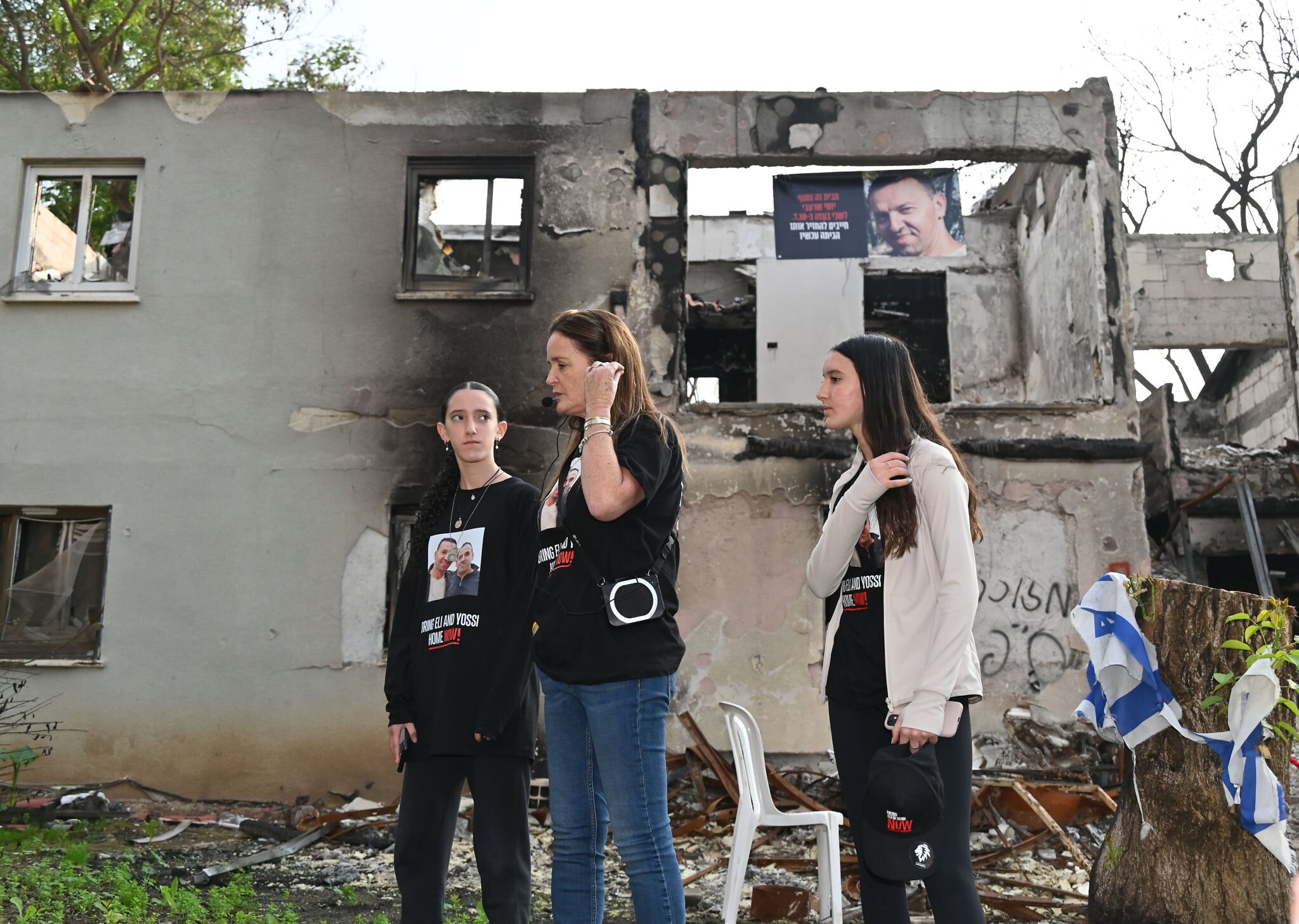
Returning to Kibbutz Be’eri was visibly frightening for the Sharabi sisters Oren, 12, and Ofir, 13, who grew up here and survived the October 7 massacre along with their mother Nira. It was their first time back since Hamas terrorists stormed their formerly tranquil home alongside the Gaza border and took their father hostage.
Their mother hugged her daughters reflexively as they flinched at each loud bang produced by a nearby IDF artillery unit bombing Gaza.
“It’s the kibbutz where I grew up with my family and friends, but after all we went through, it’s difficult to be here, and I was afraid to come,” Oren told journalists at a press conference held at Be’eri Monday. “But I’m coping with the fear because the scariest thing is my father Yossi remaining a hostage in Gaza.”
The tour was part of a PR push by families of hostages pressing the government to prioritize retrieving them, even at the expense of its military goal of crushing Hamas.
The event’s backdrop – a torched residence – was meant to drive home the message about the hostages. It also underlined the scale of the kibbutz’s destruction and how deeply it is impacting a community still holding its breath.
The Sharabi sisters, whose father Yossi and uncle Eli are both presumed to be held hostage in Gaza, were among seven survivors who spoke to journalists on Monday.
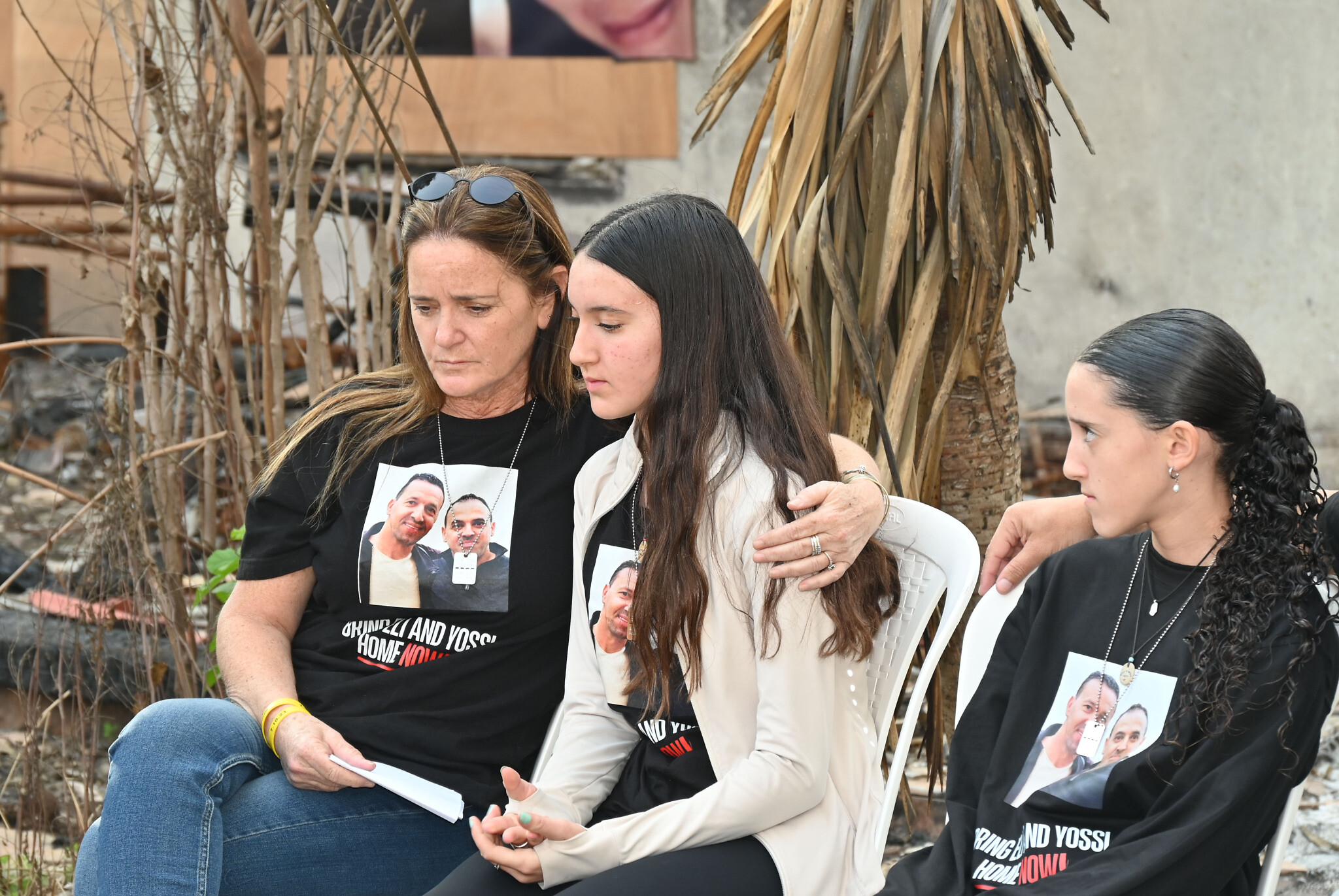
“On Friday, October 6, Dad promised me we’d play soccer together on Saturday evening. We used to play a lot of soccer together. He trained me and would come to all of my team’s matches,” Oren said. “But on Saturday morning, we woke up to a different world.”
Oren proceeded to describe her uncle and father’s attempts to prevent Hamas terrorists from opening the safe room where the family had holed up. Eventually, “three terrorists entered. I was hiding under the blankets. I heard a gunshot. I was sure they’d shot Dad. But they killed Shoko, our dog. I heard the terrorists laugh. They told us to follow them.”
Oren, Ofir and Nira watched as the terrorists tied up their father and a neighbor before loading them onto a car.
“I remember Dad didn’t take his eyes off Mom the whole time,” Oren recalled.
“My dad means everything to me,” Oren added. “Time is precious,” she urged.
Miri Gad Mesika, the spokeswoman of Be’eri and a survivor of the October 7 massacre, urged the government to act to “bring back now” all the hostages, including the 10 taken from Be’eri who are still in Gaza.
The survivors at the Monday press conference, including three who had returned from captivity, did not say how the government should do this. Asked about this, Mesika said: “The ‘how’ we leave to the war cabinet.”
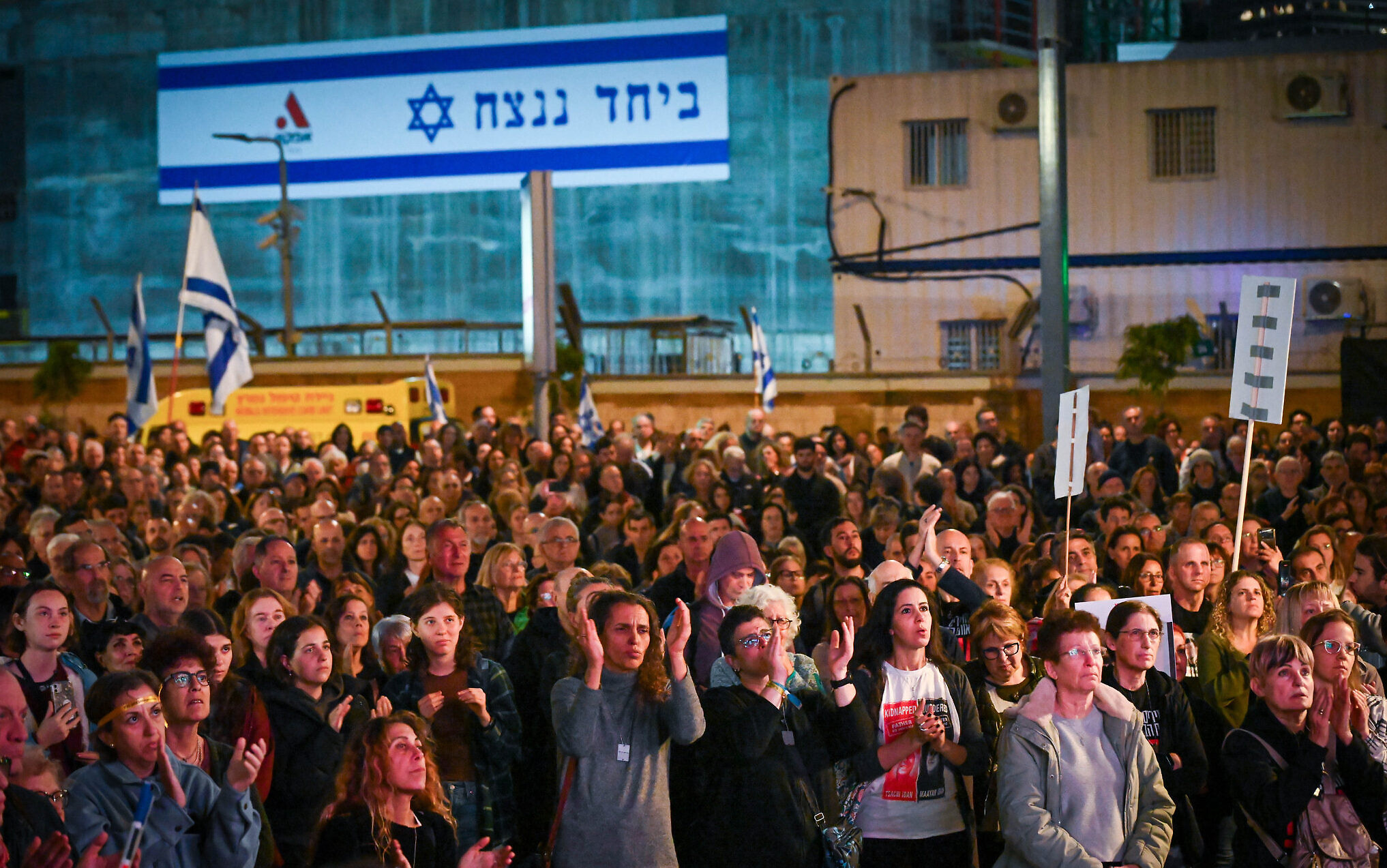
The Hostages and Missing Families Forum, the group that organized the press conference, stages weekly rallies in Tel Aviv featuring speakers who urge the government to accept Hamas’s precondition of a ceasefire for a second prisoner swap, similar to the one that took place at the end of November. Another group of families, Tikvah, opposes this, arguing for the hostages’ release through military action.
The press conference took place in the front yard of the destroyed home of Raaya and Hila Rotem, who were abducted on October 7 and released in that swap. During the weeklong truce negotiated by Qatar, the United States and Egypt, Hamas released 105 hostages and Israel freed 240 Palestinian prisoners.
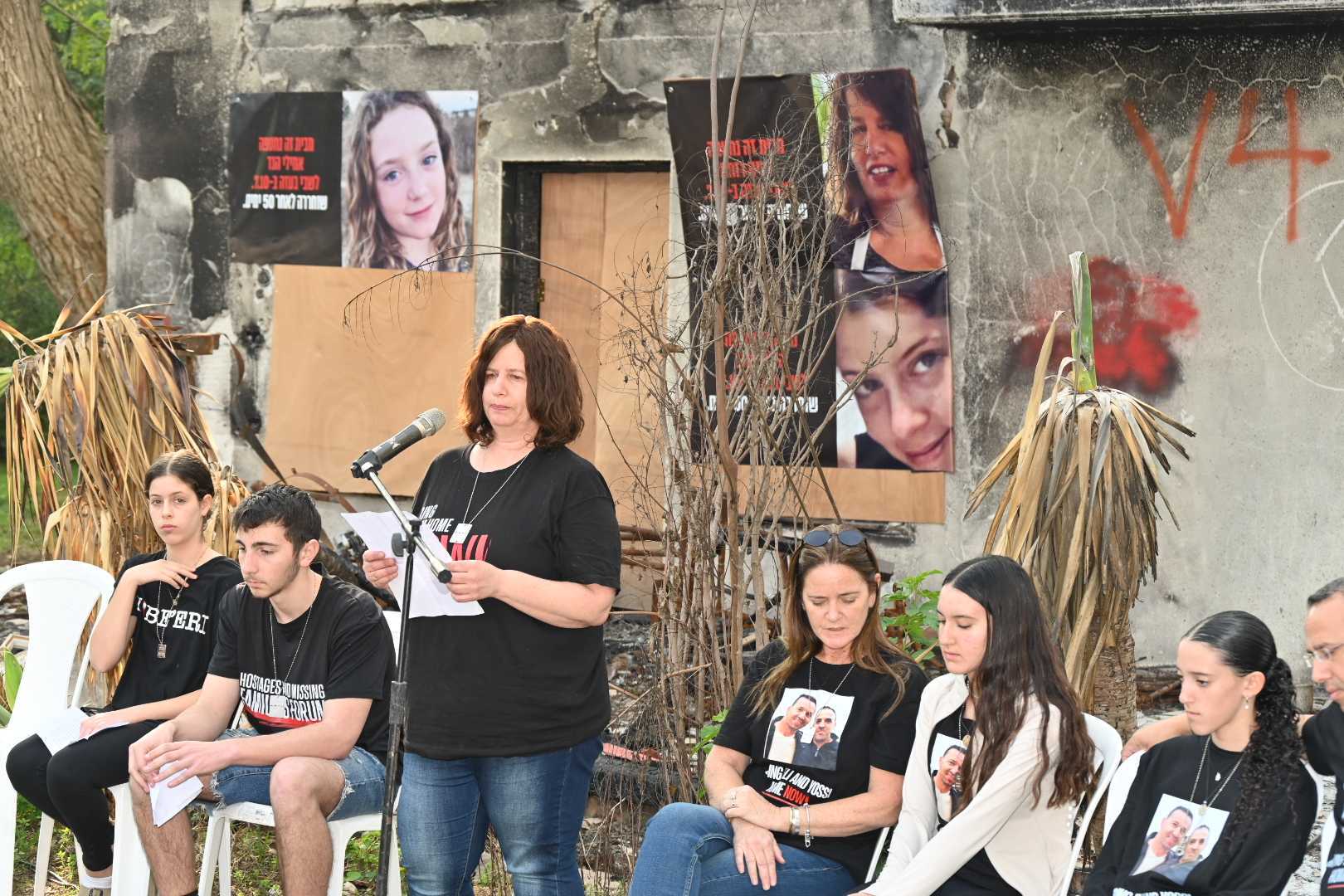
Raaya Rotem, 54, recalled sharing an orange in captivity when food and even water were scarce: “We divided it among the hostages, each one got a slice.”
This, said Rotem, who was released on November 29, “makes you realize that time is running out for the hostages. Food is running out. Water is running out.” The terrorists’ patience is also wearing thin, she added.
While being driven by the terrorists into Gaza on October 7, Raaya was struck by the absence of Israeli security forces. “The road was completely open. No aircraft. No tank. No troops. When I saw the fence, I realized this was it. We’re going into Gaza,” she said.
Her daughter, Hila, 13, who was released on November 25, recalled being asked by other hostages on the bus back to Israel whom she expected would greet her.
“I thought of my uncle Yaya but I assumed he’d been murdered. So I said other names,” she told the journalists in front of what is left of her home, a charred mess covered with molten plastic and soot. Her uncle survived, she noted in a written speech whose jarring content contrasted with her self-contained, even-toned delivery.
Earlier on Monday, survivors from Be’eri, most of whom are living temporarily in hotels in the Dead Sea area, received bad news. The army had confirmed the death of Ilan Weiss, a member of the kibbutz’s civilian defense squad. He had been presumed captive but his remains were identified, 87 days after his murder in Be’eri.
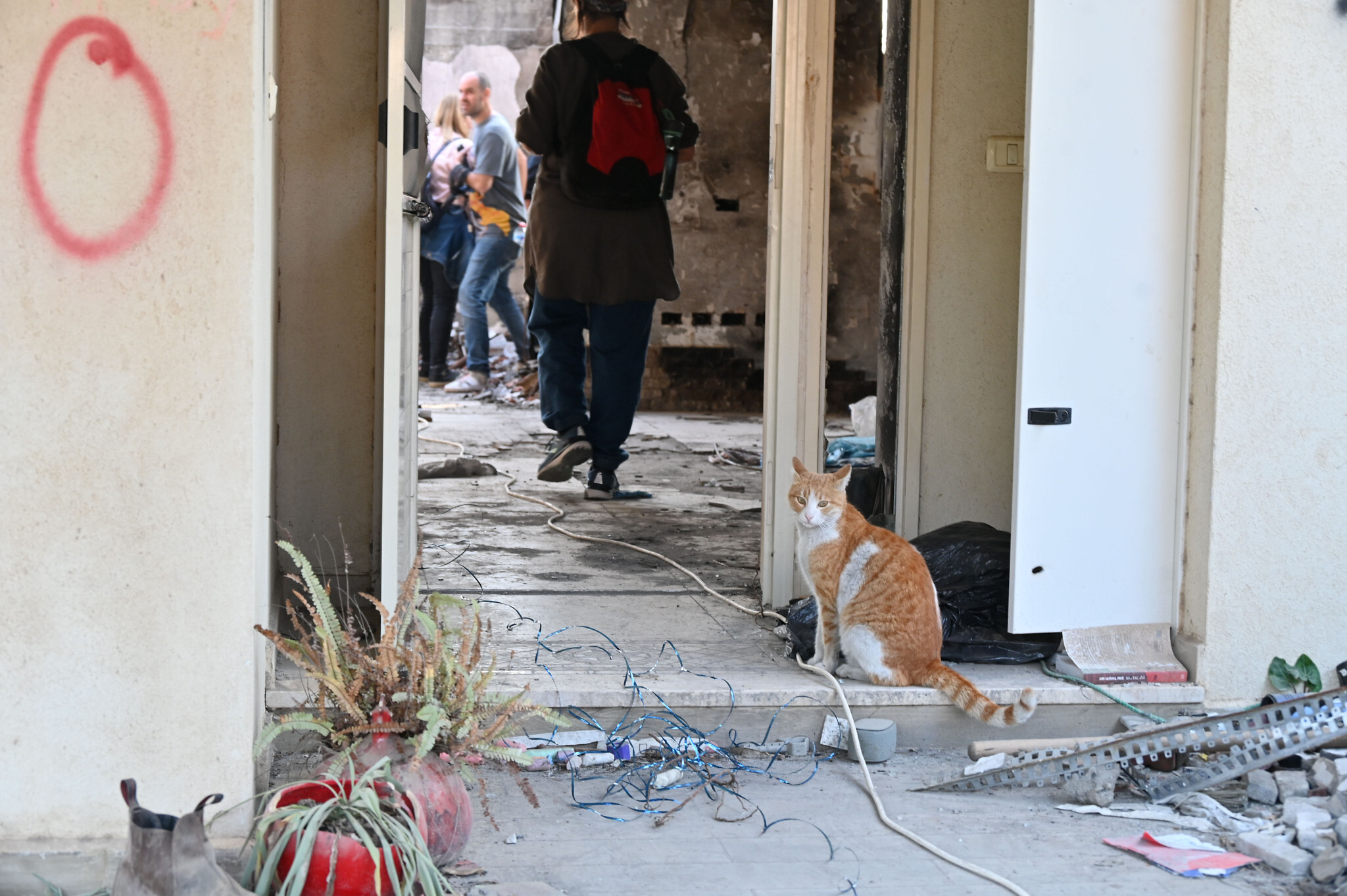
The terrorists who overran Be’eri — the largest kibbutz in the Tekuma Region near Gaza with about 1,200 residents – murdered 95 people there and abducted another 30, Mesika said.
In total, the invading force of about 3,000 terrorists murdered some 1,200 people in Israel, and perpetrated war crimes and atrocities that included abducting 240 people, raping women, maiming civilians, torching houses, mutilating bodies and even killing pets and farm animals for sport.
Israel launched a massive military campaign whose stated goals are toppling Hamas and retrieving the hostages. Palestinian sources have said that at least 28,000 people have died in the fighting. The figures cannot be independently corroborated and are thought to include the thousands of terrorists that the Israel Defense Forces says it has killed.
Egyptian and Qatari officials are reportedly working to secure a second ceasefire and prisoner swap.
Of the seven survivors who spoke to journalists on Monday, three – the Rotems and 16-year-old Amit Shani — were released hostages. Shani mentioned feeling “abandoned” by the state when he was held hostage.
“We were abandoned once, and the hostages must not be abandoned again,” Shani said, urging action to retrieve them.
The journalists also visited the Sharabi residence, which was not damaged in the attack. An open board of backgammon, its pieces dusty, stood on the dining area table, underlining how abruptly life froze to a halt in Be’eri, which was established in 1946. Many of the yards here still have sukkot, ceremonial huts from the holiday of Sukkot, which ended on October 6.
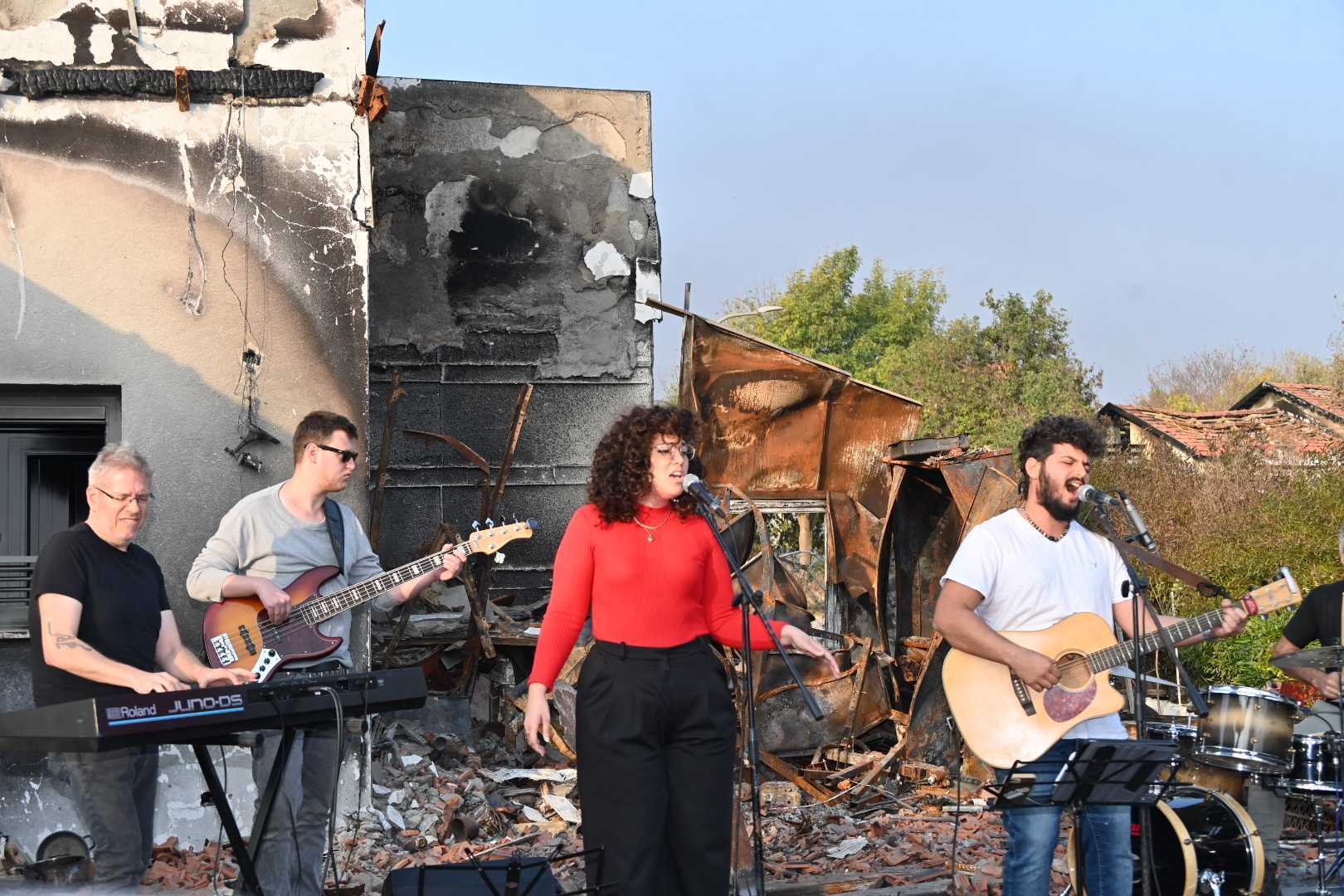
The final station on the journalists’ visit to Be’eri was the burnt remains of the residence of Yehudit and Shmulik Weiss, whom the terrorists murdered. Shmulik was gunned down on the spot. Yehudit was wounded, taken to Gaza and killed there, their son Daniel said. They had five children.
A musician, Daniel neither conveyed a political message nor made demands. Instead, atop the ruins of the house where he grew up, he and a band performed a professional concert featuring several well-known songs about resilience and peace.
At the start of one of them, “Ani Gitara” (I’m a Guitar) by Naomi Shemer, he told a tearful audience of journalists that the guitar on which he was playing was the first one that his father bought him. He added the words “mother, father,” before the closing line: “I say thank you.”
Holding back tears, Weiss choked up only in the short introductions in between songs. He sang and played powerfully, shaking his fist while performing a song about fortitude whose refrain is “We must keep playing.”
The organizers brought Miri Aloni, a legendary folk singer, to sing with Weiss. They performed “Prachim BaKaneh,” or “Flowers in the Barrel,” a song about longing for peace that mentions Gaza and Rafah.
Weiss ended the concert with “Yamim Shel Sheket,” “Days of Quiet,” a song he described as a prayer and encouraged his listeners to join in. Amid thuds from Gaza, the audience of about 50 people softly sang the closing line: “We can rise up. The end of the world is over.”


The Times of Israel Community.