

India-inspired musician praises the divine with ‘Hallel’
Shye Ben-Tzur, who has collaborated with Radiohead’s Johnny Greenwood, brings his new album to Jerusalem
 Add ToI as a Preferred Source on Google
Jessica Steinberg, The Times of Israel's culture and lifestyles editor, covers the Sabra scene from south to north and back to the center
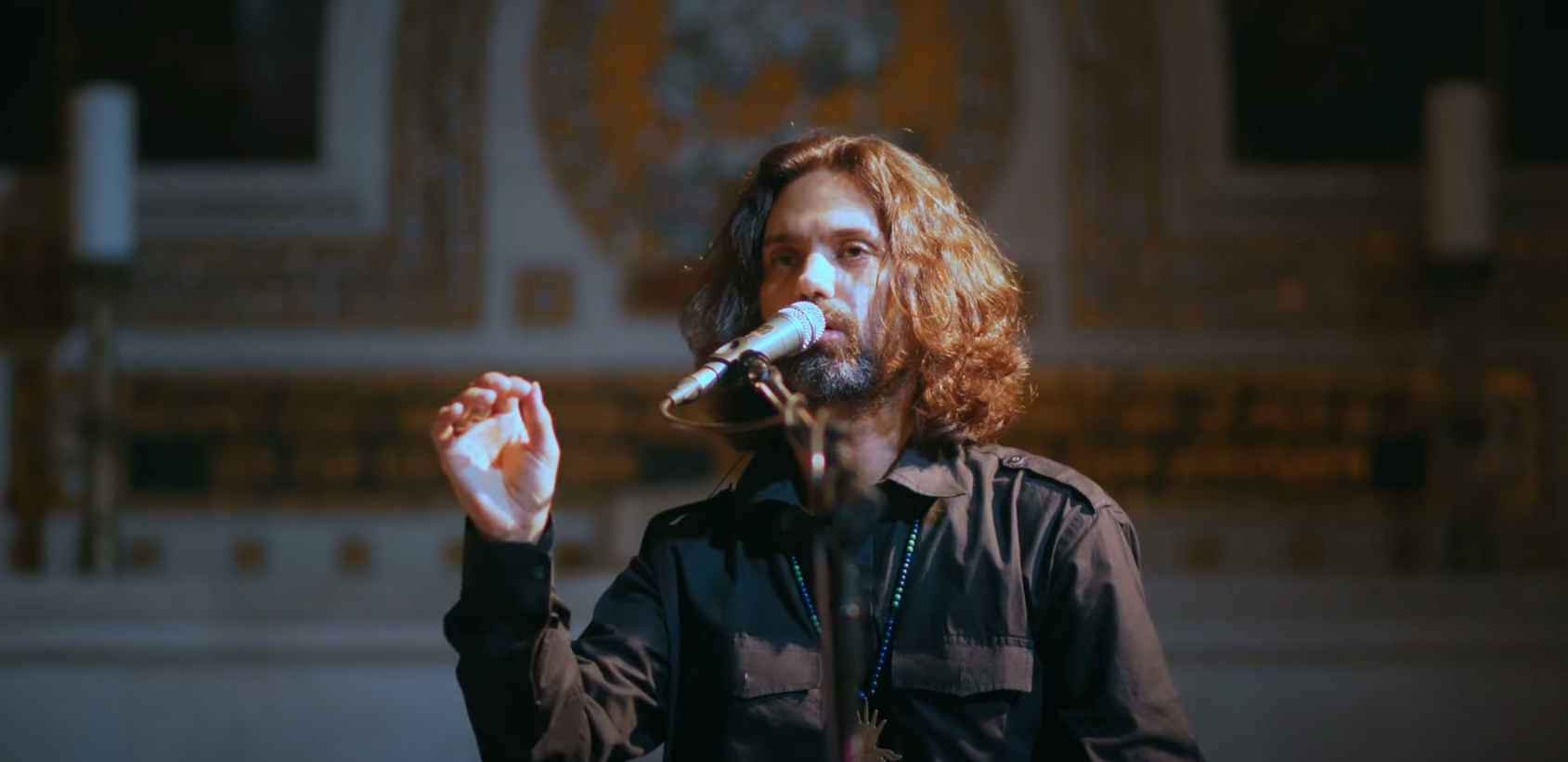
Over the years, musician Shye Ben-Tzur has collaborated (and performed) with Radiohead’s Johnny Greenwood, composed devotional music with Sufi Indians for two decades, and is now back in Israel seeking another kind of spiritual, musical path.
His new project is called “Hallel,” the Hebrew term for praise, and Ben-Tzur and his musical partners will perform from this new album of spiritual sounds and words on July 13 at Jerusalem’s Confederation House, under the management of Efi Banaya.
His music is far from the mainstream, said Ben-Tzur, even when he worked with Radiohead’s Greenwood creating the critically acclaimed album “Junun,” with the recording process filmed by director Paul Thomas Anderson.
“Johnny has his music which is unbelievable and some of it is iconic from a success point of view, but he also does very interesting and challenging collaborations of music,” said Ben-Tzur.
There’s a similar kind of experience with “Hallel,” and the Jerusalem concert, which Ben-Tzur will be performing with Ben Eilon, a percussionist who has spent time in Senegal working with African rhythms.
“That’s a big inspiration for me and a completely different flavor than Indian music, but he’s able to comprehend Indian rhythm and adjust it to his kind of drumming,” said Ben-Tzur.
Like Ben-Tzur’s other works, “Hallel” offers a different musical direction, one that’s been inspired by the 20 years that he lived in India, composing and performing with his band from Rajasthan.
Many of Ben-Tzur’s musical colleagues were traditional musicians with Sufi backgrounds, who practice spiritual rituals with music.
It’s a world that inspired Ben-Tzur, and one that he still pines for.
Ben Tzur and his wife, who is Indian, came back to Israel during the COVID pandemic, and while they’ve since returned to visit India, that sense of distance has pushed him to explore different types of music and to include Hebrew along with poetry in Urdu and Hindi, both of which he speaks.
There were also differences between Indian music and Western music that Ben-Tzur wanted to explore at this point.
The use of harmony tends to be less pronounced in Indian music, which made him look for different sound textures and songs that lean toward Indian aesthetics.
He began playing with a loop, a repeating section of sound material, along with different repetitive phrases, using them to unfold the music of “Hallel,” with words and spiritual motifs that channel “inner conversations with the divine,” said Ben-Tzur.
As it came together, Ben-Tzur thought about recording these new sounds in a different kind of space, one that would lend a sense of vibrancy, and Jerusalem’s Augusta Victoria Church was available.
“I love sitting in churches. I love that kind of silence, the way a flute sounds in a church,” he said. “I was fortunate that they let me use their sacred space to sing songs which are sacred for me, and to sing songs that are approaching the divine in a way that goes beyond religion, and in Hebrew. That felt very deep.”
The project was filmed in the church by Ben Kirschenbaum, who turned it into a film that allows viewers to experience the intensity of the music and poetry in one go, said Ben-Tzur.
“You do something that attracts people who feel it charges them, and it charges you back,” he said.
Tickets for Shye Ben-Tzur, July 13, Confederation House at Bimot.










The Times of Israel Community.