

Assad says ready for truce if ‘terrorists’ don’t use it to regroup
Russia vows to continue supporting Syrian regime as fighting continues, ceasefire remains elusive
 Add ToI as a Preferred Source on Google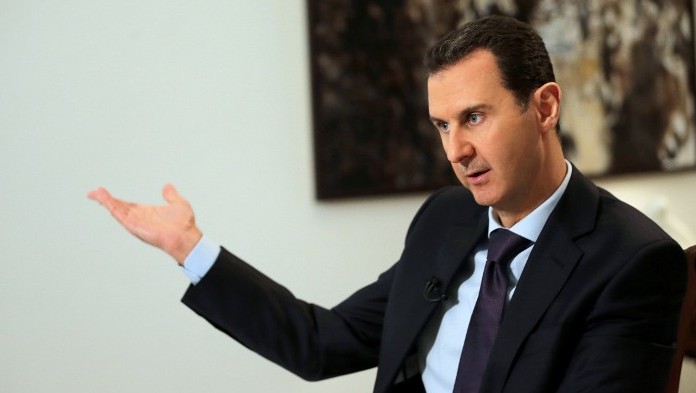
Syrian President Bashar Assad said Saturday his government was ready for a truce with rebel groups if “terrorists” did not use the ceasefire to their advantage, Reuters reported.
“We have said that we are ready to stop military operations, but the issue relates to more important factors…such as preventing terrorists from using it to improve their positions,” an official government media outlet quoted Assad as saying.
He added that “other countries, especially Turkey, (must be) prevented from sending more terrorists and weapons, or any kind of logistical support” to rebels.
Russia pledged Saturday to continue backing Syrian government forces against “terrorism,” as a key opposition group said it would support a proposed truce only if regime supporters ceased fire.
World powers have been pushing for a so-called cessation of hostilities to pave the way for renewed negotiations to end Syria’s war nearly five years after it began.
But the truce has proved elusive so far, failing to emerge by Friday as originally proposed, even as fighting intensified on the ground amid rising tensions between Russia and opposition backer Turkey.
Russia said UN-led talks on the ceasefire scheduled for Saturday had been postponed to an unspecified later date, raising fresh concerns about whether the truce could be implemented.
Russian and US officials met on Friday to try to hammer out the details of the proposed ceasefire, but have yet to outline any concrete proposals.
The head of the key High Negotiations Committee (HNC) opposition umbrella group said in statement that it would agree to a temporary truce only if regime backers halted fire.
Riad Hijab said any ceasefire must be reached “with international mediation and with guarantees obliging Russia, Iran and their sectarian militias and mercenaries to stop fighting.”
On the ground, there is little sign that the parties to the increasingly complicated conflict are preparing to halt operations.
Turkey again shelled Kurdish-led forces on Saturday, a day after the UN Security Council rejected a Russian bid to halt Turkish military action in Syria.
Moscow expressed “regret” that the resolution had been rejected, and said it was “concerned at the growing tension at the Syrian-Turkish border.”
Turkey has been firing artillery rounds into Syria’s northern Aleppo province for the past week, in a bid to stem the advances of a Kurdish-led coalition that has seized territory from rebels.
Ankara is a key backer of the Syrian opposition, and is fiercely opposed to both Assad’s regime and the powerful Syrian Kurdish People’s Protection Units (YPG) militia.
Meanwhile, Syrian regime forces have also advanced in Aleppo province, backed by air strikes by Russia which began an aerial campaign in support of the government in September.
On Saturday, government troops seized 18 villages around the road east from Aleppo city towards the Islamic State group stronghold of Raqa, the Syrian Observatory for Human Rights monitor said.
The advances secure the regime’s grip on some 40 kilometres (25 miles) of the highway, which passes by the Kweyris military airport that government forces recaptured with Russian help in November.
US Secretary of State John Kerry on Saturday urged that a ceasefire be agreed as soon as possible, in a phone conversation with Russian Foreign Minister Sergei Lavrov.
“Secretary Kerry also restated his deep concern over the indiscriminate nature of continued bombing by Russian military aircraft and the lives being lost as a result,” State Department spokesman John Kirby said.
Moscow said Saturday it would continue “to provide assistance and help to the armed forces of Syria in their offensive actions against terrorists.”
The most recent attempt to find a political solution collapsed earlier this month, with UN envoy Staffan de Mistura initially proposing a February 25 date for talks to try to resume.
He acknowledged on Friday that the date was no longer “realistically” possible, and that at least 10 days of preparations were still needed.





The Times of Israel Community.