

As US and Israel again battle Islamic Republic, the goal is regime change and the stakes could not be higher
When the assault is over, Trump promises, Iranians will be able to take over their governance; the ayatollahs have other plans; much of the world order hangs on the outcome

 Add ToI as a Preferred Source on Google
David Horovitz is the founding editor of The Times of Israel. He is the author of "Still Life with Bombers" (2004) and "A Little Too Close to God" (2000), and co-author of "Shalom Friend: The Life and Legacy of Yitzhak Rabin" (1996). He previously edited The Jerusalem Post (2004-2011) and The Jerusalem Report (1998-2004).
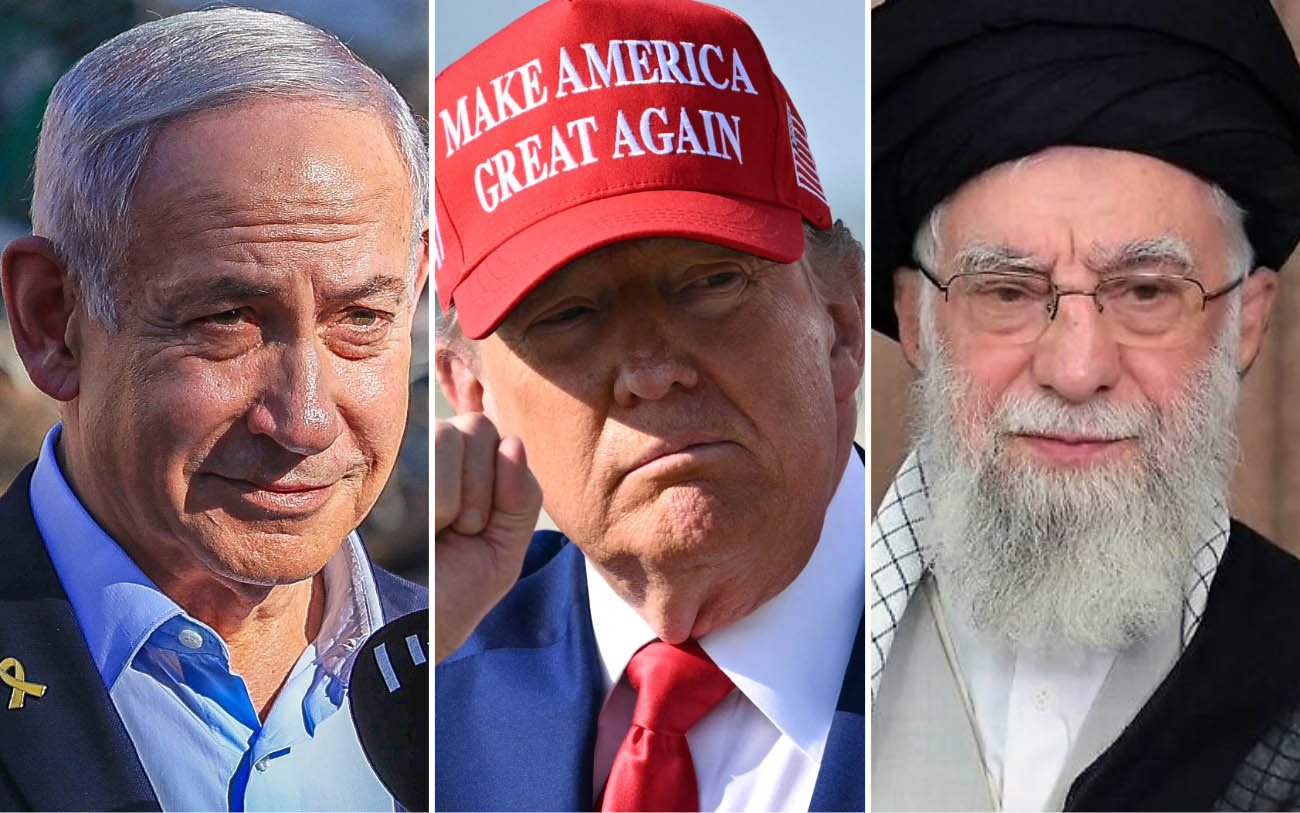
Last June’s 12-day war against Iran, led by Israel, caused immense damage to Iran’s nuclear and ballistic missile programs and its military command structure. Innumerable key commanders and nuclear officials were killed. Ballistic missile production facilities, launchers and stores were blown up.
The United States delivered the final major blow when it bombed three major Iranian nuclear facilities. Declining to target Iran’s Supreme leader Ali Khamenei or to openly seek the regime’s ouster, US President Donald Trump then imposed a ceasefire. He repeatedly declared that Iran’s nuclear program had essentially been “obliterated” and discounted the likelihood that the Islamic Republic would attempt to restart it.
In fact, while that war briefly destabilized the regime, and gave fresh hope to its domestic opponents, the leadership recovered and reorganized. The Islamic Republic began rehabilitating its missile production capabilities. According to the Israeli military, it moved to “fortify, shield, and conceal its nuclear program”; according to Trump, it attempted to rebuild the program.
Crucially, as the IDF said in a statement on Saturday, the regime “did not abandon its plan to destroy Israel.”
The attack launched by the US and Israel on Saturday appears to be an assault of a different and larger order, including the targeting of Iran’s prime leadership, and has a far larger goal this time, namely the fall of the regime.
More than six weeks after he vowed that “help is on its way” for Iranians who were being gunned down in their thousands for again protesting the regime, Trump promised Iranians, as the attack began, that “the hour of your freedom is at hand.”
Well aware of domestic opposition, including from within his own base, he framed the attack as essential to protecting America — declaring that the regime’s “menacing activities directly endanger the United States, our troops, our bases overseas, and our allies throughout the world.”
And he indicated the firm intention to deprive the ayatollahs of all their essential assets.
He cited the regime’s sponsorship of terror, including the Hamas-led October 7 massacre in southern Israel, and promised, “We are going to ensure that the region’s terrorist proxies can no longer destabilize the region or the world.”
He promised to destroy Iran’s missiles and “raze” its missile industry. He swore to “annihilate their navy.” And he vowed to “ensure that Iran does not obtain a nuclear weapon. It’s a very simple message. They will never have a nuclear weapon.”
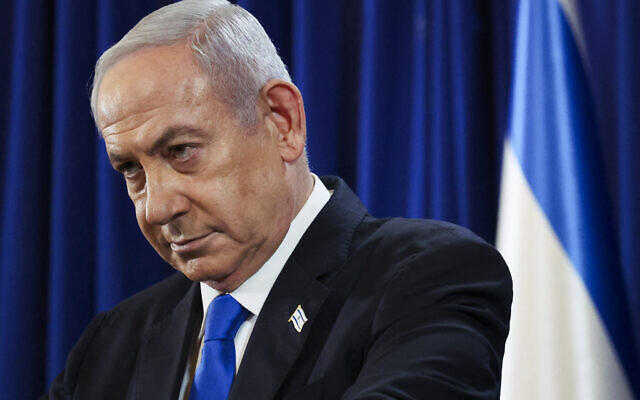
In his own first remarks, issued, doubtless by agreement, a short while after Trump had released his video statement, Israel’s Prime Minister Benjamin Netanyahu similarly underlined that this is an operation designed “to remove the existential threat” posed by the Islamic Republic, and “create the conditions” for Iranians to change their destiny.
Trump had made clear in recent days that he was “not happy” with the progress of last-ditch negotiations with Iran — initially aimed to ensure it had no route to the bomb, and ultimately to also tackle its missile program and proxies — and that “sometimes” you have to use force. The weeks of gradual amassing of forces could have left little doubt for the regime that the US was preparing for war.
There may have been elements within the regime leadership that advised a more conciliatory approach to the negotiations, rather than the repeated insistence on an ostensible right to enrich uranium and on limiting the initial talks solely to the nuclear program. If so, the obdurate line evidently prevailed.
It may well be that the regime doubted that Trump would follow through on his threats of military action, amid the domestic pressures and his own oft-stated desire to stop wars, not start them. It may have concluded that it would be better to absorb an American-Israeli strike than to humiliate and weaken itself by accepting the demands being put to it. It may be believed that it can survive this conflict, too, and emerge more or less intact, with the US and Israel revealed as strategically ineffectual.
As of this writing, it has opted to widen the fighting, striking at US bases in US-allied states in the region and, naturally, targeting Israel. Soon, we will see whether its various proxies will join the fighting.
The question is whether this time will be different — whether, as Trump put it, a regime that “has chanted ‘Death to America’ and waged an unending campaign of bloodshed and mass murder targeting the United States, our troops and the innocent people in many, many countries,” is now about to fall.
One difference since last June, of course, is that the regime “just recently killed tens of thousands of its own citizens on the street as they protested,” as Trump noted on Saturday. Where former presidents Obama and Biden failed to come to the aid of the Iranian people, this US president is giving every indication that he will do what he can to enable them to take control of their country.
“Stay sheltered. Don’t leave your home. It’s very dangerous outside. Bombs will be dropping everywhere,” he told Iranians. But “when we are finished, take over your government. It will be yours to take. This will be probably your only chance for generations.”
“No president was willing to do what I am willing to do tonight,” he went on. “Now you have a president who is giving you what you want… Now is the time to seize control of your destiny.”
For the Iranian public oppressed at home, for the Israeli nation targeted by Iran’s proxies and by direct attack, and, yes, for a world that the ayatollahs have terrorized for almost half a century, the stakes could not be higher.






The Times of Israel Community.