

Assad’s crimes ‘miraculously’ forgotten after Israeli strikes
President ‘will never respond to Israeli attack,’ writes one Arab columnist. ‘He still might,’ opines another, hopefully
 Add ToI as a Preferred Source on Google
Elhanan Miller is the former Arab affairs reporter for The Times of Israel
With Russian and US foreign ministers set to meet at the Kremlin Tuesday in what Arab media is calling “the last chance” to bridge differences on Syria, the Syrian opposition is more divided than ever, with attempts by some to oust provisional opposition prime minister Ghassan Hitto.
“‘Last chance’ talks in Moscow today, and failure paves the way to arm the opposition,” reads the lead headline in London-based daily Al-Hayat, reporting that Secretary of State John Kerry will conduct lengthy talks with his Russian counterpart Sergei Lavrov on a political solution to the Syrian crisis.
But according to Qatari news channel Al-Jazeera, the US Senate is already preparing to discuss arming “some” rebel groups next week.
“The Syrian coalition is searching for alternatives to Hitto,” reads the headline of Saudi-owned A-Sharq Al-Awsat. The daily reports that members of the opposition will try to find a consensus candidate to replace Hitto during the “Coalition Opposition meetings in Istanbul next week.”
“The position of prime minister of the provisional government is sensitive and should be agreed upon by all forces,” a source in the Syrian opposition tells the daily, speaking from Turkey. “Despite Hitto’s activity, there was no agreement on his appointment from the start.”
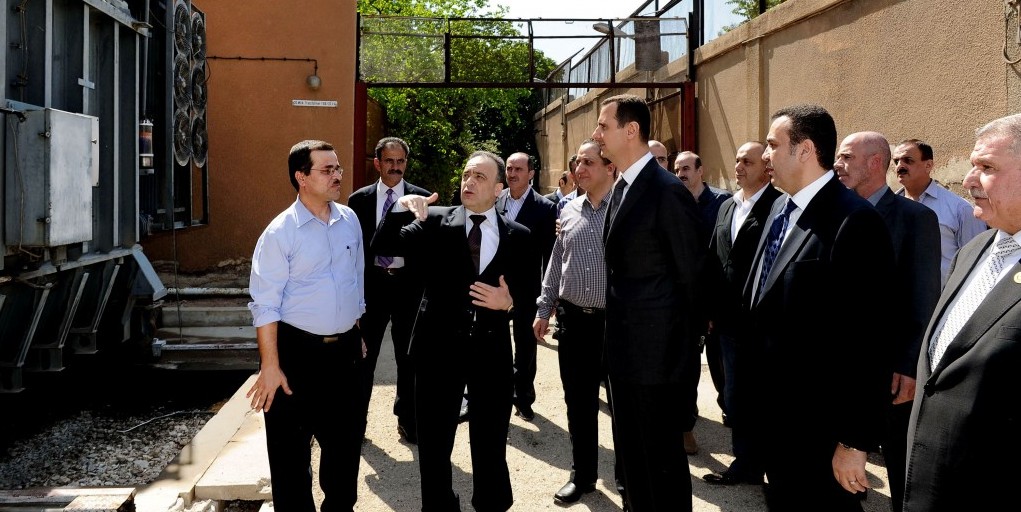
Meanwhile, Arab columnists are heavily weighing in on the incendiary issue of Israel’s reported airstrikes on Syria over the weekend.
Al-Hayat columnist Hazem Saghiyeh writes that the lack of a Syrian response to the Israeli attacks proves one simple truth: that the Syrian regime and its army “are designed to control the Syrian people and prevent them from attaining freedom.”
“When Israel bombs 40 targets in Damascus’ suburbs in one go, and when this is the third attack of its kind within months … with no Syrian response, this unquestionably means two things: Syria will not respond, neither tomorrow nor the day after, regardless of the lie of choosing the right time and place. Secondly, even if it wanted to respond, it is not equipped to do that, neither tomorrow nor the day after.”
Sagghiyeh claims that opposition assertions to the effect that Israel actually attacked in order to assist President Bashar Assad are both ridiculous and counterproductive.
“When Syrian oppositionists say that the Israeli attacks were meant to cover up the regime’s crimes, they are doing nothing but renewing their affiliation with these lies, even if from a different political standpoint. By doing so, they dissuade us from reaching the deep conclusions with which the time has come to fortify our minds. Nationalism and [Arab] pan-nationalism in their most egregious forms — both Baathist and non-Baathist — are nothing but ways to humiliate the Arab nations and prevent them from progressing. This is what took place in 1967, and is what happens today on a larger scale.”
A-Sharq Al-Awsat columnist Mushari Al-Thaidy notes that the Israeli attack “miraculously” caused Arab nationalists to “forget” Assad’s crimes against his own people.
“All the elders of the nationalist camp have forgotten — along with a handful of ‘new Brotherhood’ people, and of course the Shiite groups which were supportive from the start — they all forgot the story of Bashar, and his patron along with Hassan Nasrallah: Mr. Khamenei in Tehran. All this because Israel entered the arena.”
True to form, Al-Quds Al-Arabi editor Abdel Bari Atwan, one of those Arab nationalists mentioned by the previous two writers, continued on Tuesday to stick to the old narratives, just as described.
“The possibility of a Syrian response is still open, in addition to being legitimate within the principle of self-defense,” writes Atwan hopefully, in an op-ed titled “a reading of the day after the Israeli strike.”
“But the longer this reply is delayed, the greater the loss … of public opinion [for Syria]. This is where the dilemma of the Syrian regime lies, and the state of embarrassment [Assad] is experiencing internally and externally.”






The Times of Israel Community.