

Aussie TV: Zygier ‘unwittingly sabotaged’ Mossad plan in Lebanon
Mossad sources dismiss report that 30-year scheme to retrieve 3 soldiers’ remains went awry when agent exposed informant’s identity to Hezbollah
 Add ToI as a Preferred Source on Google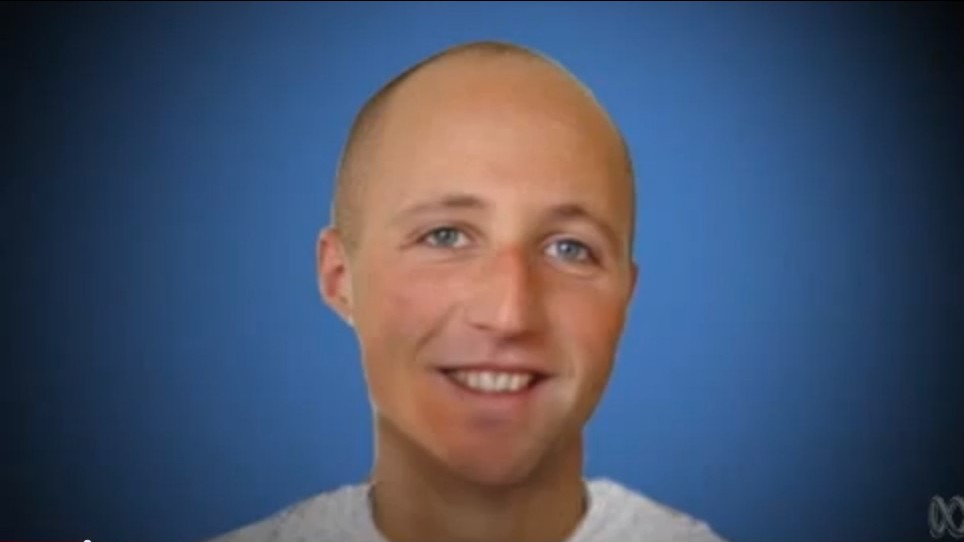
The Melbourne-born Mossad agent who killed himself in a high-security prison cell in Ramle in 2010 was jailed after unwittingly sabotaging a 30-year operation to bring home three Israeli soldiers’ bodies from Lebanon, ABC News Australia reported Tuesday.
The news report appeared to shed light on some of the unanswered questions surrounding Ben Zygier’s transgressions, which could have seen him jailed for 22 years for espionage and treason, according to ABC’s news site.
However, former Mossad agents told Israel’s Channel 10 news later Tuesday that the ABC report was “nonsense,” and that the Zygier case had nothing to with the case of the three soldiers, believed killed in the Battle of Sultan Yacoub in 1982.
A Lebanese man told ABC, which originally broke the story that Zygier was the mysterious “Prisoner X” whose fate was under censorship, that Israel had undertaken a complex operation to exhume the bodies of three — Zachary Baumel, Yehuda Katz and Tzvi Feldman — who were reported missing in action during the First Lebanon War.
The three are believed to have been killed by Syrian forces in the Battle of Sultan Yacoub, which took place near Lebanon’s Bekaa Valley — and although some witnesses claimed the soldiers were “paraded through the streets of Damascus, [the] Mossad believed their graves were in Lebanon,” the report said.
Siad al-Homsi, a former mayor of the Lebanese village of Saadnayel in the Bekaa Valley, claimed he was recruited by the Mossad in 2007 after being lured to China by agents “under the pretense of a mayoral convention,” according to the report.
Once in Beijing, he was contacted by a Syrian man who was trying to return the soldiers’ bodies — and after several visits to Thailand caught on that the Mossad was behind the operation.
“[Homsi] was a valued recruit for Mossad,” the ABC News report stated. “As a leader of Lebanese forces during operations against the Israelis in the Bekaa Valley, Mr. Al-Homsi was well-connected with a thorough knowledge of battles during the Israeli invasion.”
But, in May 16, 2008, Homsi was arrested by Lebanese forces and was accused of spying for the Mossad. He was jailed for 15 years, but only served three.
Israel has never retrieved the bodies of the three soldiers, and they are still officially classified by the IDF as “missing in action.”
A previous investigation by Der Spiegel magazine and Australian Fairfax Media had painted Zygier as a failing spy who was desperate to win back the Mossad’s respect. He therefore went on a rogue mission to try to impress the agency, and inadvertently exposed the Mossad’s Lebanese contacts to a Hezbollah operative. Tuesday’s Australian report took the narrative forward, indicating that the rogue operation derailed Israel’s painstaking bid to retrieve the remains of its fallen soldiers.
According to the Der Spiegel report, Zygier, who was apparently recruited by the Mossad spy agency in 2003, was sent to Europe in 2005 to infiltrate companies that were dealing directly with Iran. Zygier’s mission was to try to gain access to potential informants in Iran and Syria. However, after two years, during which he was employed in the accounting division of a company, Zygier was recalled to Israel without having achieved substantial results.
Zygier, disappointed, was assigned a desk job but still hoped to find his way back into the field, Der Spiegel reported. Apparently acting on his own initiative, he began trying to recruit informants in Lebanon to spy on the Hezbollah terror organization. He contacted an affiliate of the group in a Balkan state and tried to recruit him. However, the Hezbollah activist succeeding in turning the tables and duped Zygier into providing information that eventually led to the arrest of al-Homsi and a string of other informants in Lebanon.
Meanwhile, after spending a year behind a desk, Zygier asked for permission to continue his academic studies in Melbourne, and in 2008 he began a graduate degree in Monash University. During the period of his studies, Zygier was apparently indiscreet about his activities with the Mossad, which eventually learned he was leaking details of his service, some of them inaccurate. Zygier was called back to Israel to face an investigation during which details of his unauthorized solo Hezbollah operation came to light. He was subsequently arrested, incarcerated under strict secrecy, and charged with what one of his lawyers said were “serious” crimes.
Israeli authorities reportedly sought a lengthy prison sentence for the offenses. A plea bargain invlving a 10-year term was under discussion when Zygier, who was 34 and married with two children, took his own life by hanging himself with a bed sheet in the shower on December 15, 2010.
Amid myriad speculations and theories regarding the Zygier case and his alleged crimes, none of which suggested deliberate treason, Israeli authorities have remained tight-lipped over the precise details of the story.




The Times of Israel Community.