

Egypt’s economy breathes
Qatar, Libya hand over a combined $5 billion to Cairo; Tunisian school brutally attacked for refusing entry to veiled schoolgirl
 Add ToI as a Preferred Source on Google
Michael Bassin is a founding member of the Gulf-Israel Business Council, a co-founder at ScaleUpSales Ltd, and the author of "I Am Not a Spy: An American Jew Goes Deep In The Arab World & Israeli Army."
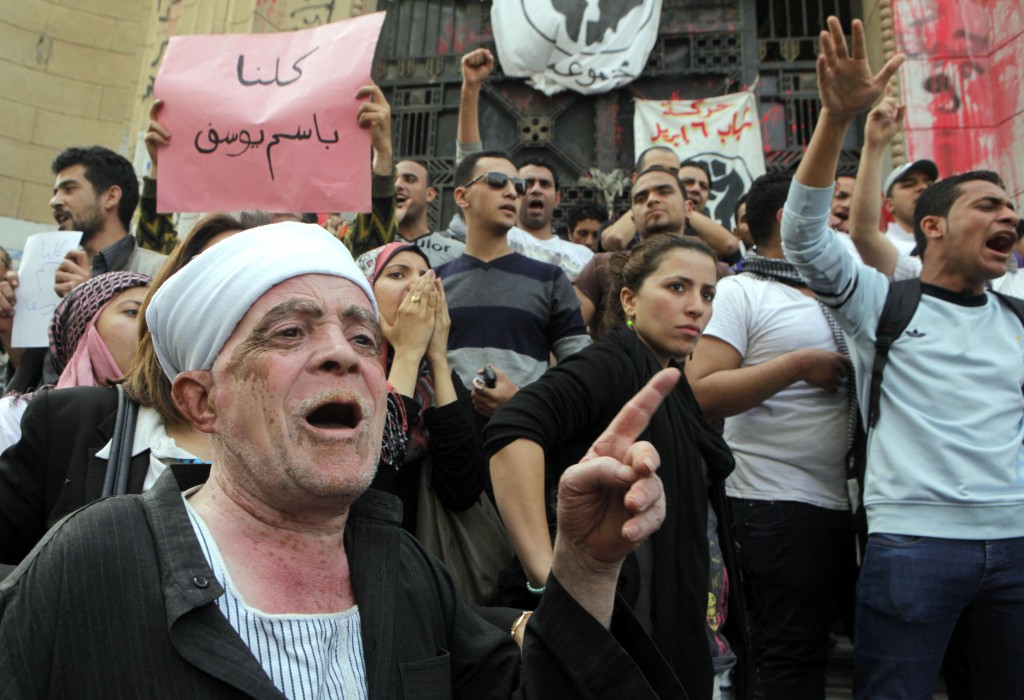
Cash-strapped Egypt finally got some relief yesterday when Qatar announced that his country would buy $3 billion worth of Egyptian treasury bonds and provide Egypt with natural gas “whenever necessary.” Libya quickly followed suit, lending Egypt $2 billion that will be interest-free for up to 5 years, Arab dailies report.
However, Arab commentators are debating whether these gestures will provide a basis for economic stability or whether they will instead amplify Egypt’s long-term financial troubles.
The Saudi-owned A-Sharq Al-Awsat reports that Qatari Prime Minister Hamad bin Jassim bin Jaber Al Thani announced the purchase of Egyptian bonds after a long and emotional working lunch with Egyptian Prime Minister Hisham Qandil. The move is part of a major effort to give the International Monetary Fund the confidence to grant Egypt a $4.8 billion loan and assuage the fears of potential investors. Qatar will also allow Egyptian businesses to build branches in the desert peninsula without the need to register with a local sponsor for period of 10 years.
“Qatar is proving that it seeks to support Egypt,” said Gamal Bayoumi, the secretary-general of the Arab Investors Union. “The purchase of treasury bonds is a form of aid and should be seen as a confidence-building measure. China assisted the Greek economy with the purchase of treasury bonds too.”
Bayoumi went on to say he believes Qatar’s move will help stabilize the Egyptian currency markets and improve Egypt’s credit ratings. Despite the popular move, Qatar is not asking for any special status in its relations with Egypt.
Qatari Crown Prince Sheikh Tamim bin Hamad Al Thani pointed out to the Doha-based media network Al-Jazeera that “the power of Egypt is directly related to the power of the Arab people at large. Qatar has a duty to Egypt before God and before the Egyptian people.”
The Cairo-based daily Al-Masry Al-Youm reports that the Qatari move is already having a powerful and positive effect on the Egyptian stock exchange by restoring purchasing power. The paper goes on to note that the $2 billion loan from Libya will give the Egyptian government more wiggle room to avoid fuel shortages and deflect rising food costs.
Still, not everyone is convinced Qatar and Libya’s aid will help Egypt long-term. A few are warning that the quick injection of cash may even exacerbate the current crisis.
According to an article in the Dubai-based Al-Arabiyya, Abdul Khaliq Farouk, the director for the Nile Center for Economic and Strategic Studies, warns that Egypt’s acceptance of Qatari and Libyan aid is a method that’s been tried and tested by successive Egyptian governments to cover the shortfall in the state budget. Farouk explains that the deficit negatively affects the foreign exchange reserves, which in turns affects the price of the local currency in Egypt.
“This pattern of borrowing will not bring Egypt to safety, but paves the way for greater economic disaster,” Farouq said. He stressed that due to Qatar and Libya’s actions, the Egyptian pound will become artificially stronger and scare away investors.
Tunisian Salafists fight (literally) for education
Salafists in militants in Sidi Bouzid, Tunisia, went on a violent rampage on a local school yesterday upon learning that a veiled young woman was prevented from attending class by the school’s secular administrators.
Tensions in Tunisia between staunch secularists and hardline Islamists have run high since the ousting of former dictator Zine El Abidine Ben Ali in January 2011. According to the London-based pan-Arab daily Al-Quds Al-Arabi, shortly after the veiled girl was sent home, hundreds of Salafists smashed cars in the school’s parking lot and tried to kill the principal by beating him with sticks and stones. The principal, seriously injured in the attack, was hospitalized.
In total, seven people were wounded. The incident comes just weeks after a university professor in Tunis was accused of slapping a veiled woman who insisted on her right to enter his classroom.
Islamists charge that the highly secular Ministry of Education is stripping them of their right to an education and that they will bring their fight to all of Tunisia.








The Times of Israel Community.