

Israeli farmers complain loss of Jordan land leases could kill livelihood
Denied access to crops, ‘we will not be able to survive here,’ one Tzofar resident says of Amman’s declared intention not to renew peace deal annex
 Add ToI as a Preferred Source on Google
Farmers on Monday voiced concern over Jordan’s intention not to renew parts of its landmark peace treaty with Israel that leased out two small border areas for agriculture, as Jordanians on the other side of the border welcomed the decision.
Jordan’s King Abdullah II announced Sunday that he plans to pull out of annexes from the 1994 peace agreement that allowed Israel to lease Ghamr, known in Israel as Tzofar enclave, and the northern enclave of Baqura, or Naharayim, for 25 years. The leases expire next year.
His decision reflects what have become cool relations between the kingdom and Israel. Last week saw a large protest against renewing the agriculture lease. Amman has faced intense pressure to cancel the lease agreement with Israel, including from 80 lawmakers who signed a letter to the government urging the move.
Eran Baron, an Israeli farmer in the border village of Tzofar, said that farmers like him have invested lots of resources in the enclave, along the southern border near Aqaba.
He said he has not yet heard of any formal change in the current arrangement, but if denied access to his crops, he said “we will not be able to survive here.”
The head of Central Arava Regional Council, Eyal Blum, said Sunday the development would harm Israeli farmers.
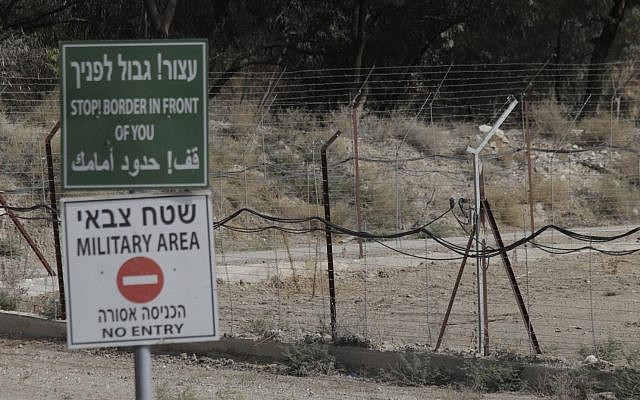
According to Blum, around 30 Israeli farmers will lose some 250 acres of land if the areas revert to Jordanian control. Blum said the council was in contact with the Prime Minister’s Office and the Foreign Ministry about the matter.
The two parcels of land are just a few square kilometers that have been used by Israelis for decades. But they hold symbolic meaning for Jordan.
While Jordan remains committed to its peace agreement, Israel’s second with an Arab country, relations are limited largely to behind-the-scenes security ties and some environmental cooperation.
According to Israeli officials, the decision is significant, as it marks a Jordanian desire to effectively reduce diplomatic ties with Israel.
In the Jordanian capital, Amman, resident Jehad Mahmoud Abu Gosh praised the king’s decision.
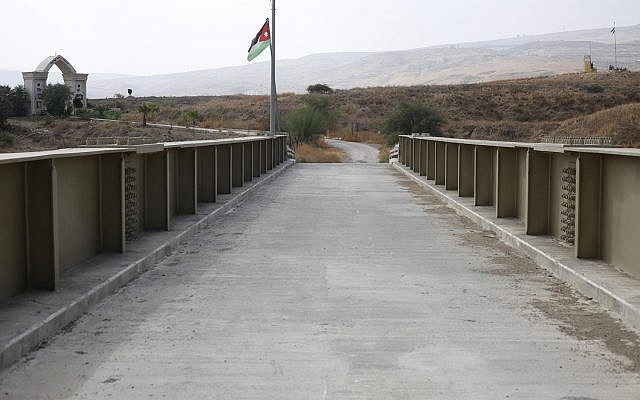
“Maybe Israel will not like it but this decision is very good. These are Jordanian lands and they are back to us. So it gives us hope and now we have something for us,” he said.
Jordan has grown critical of Israel due to a standstill in peace efforts with the Palestinians and differences over Jerusalem, where Jordan serves as custodian of Islamic shrines.
Relations deteriorated last year after an Israeli guard at the Israeli embassy in Amman shot and killed two Jordanians, saying one, a teenager, had tried to attack him with a screwdriver and that a second person was hit in the crossfire.
Israeli Prime Minister Benjamin Netanyahu infuriated the Jordanians by arranging a hero’s welcome for the guard. Diplomatic relations were repaired only gradually.
Netanyahu has said he will try to renegotiate the lease arrangements.
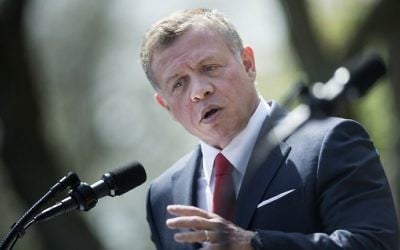
Earlier this month, Jordan’s newly appointed ambassador to Israel, Ghassan Majali, arrived in the country and presented his credentials at the Foreign Ministry, taking a step toward restoring ties between the shaky allies.
Naharayim includes within its boundaries the Isle of Peace tourist spot, a man-made island and hydroelectric power plant at the confluence of the Jordan River and the Yarmouk River.
In 1997, a group of seventh and eighth graders from a Beit Shemesh girls school were on a field trip to the island when a Jordanian soldier opened fire on them, killing seven and injuring six. The shooter, Ahmed Daqamseh, was apprehended by other Jordanian soldiers.
A Jordanian court later deemed Daqamseh mentally unstable and sentenced him to life in prison. He was released after nearly 20 years in prison and is considered a hero by many in Jordan.




The Times of Israel Community.