

 From the Liveblog of
Thursday, October 23, 2025
From the Liveblog of
Thursday, October 23, 2025
As he departs Israel, Vance calls initial Knesset vote on annexing West Bank ‘very stupid political stunt; I personally take some insult’
 Add ToI as a Preferred Source on Google
Lazar Berman is The Times of Israel's diplomatic reporter
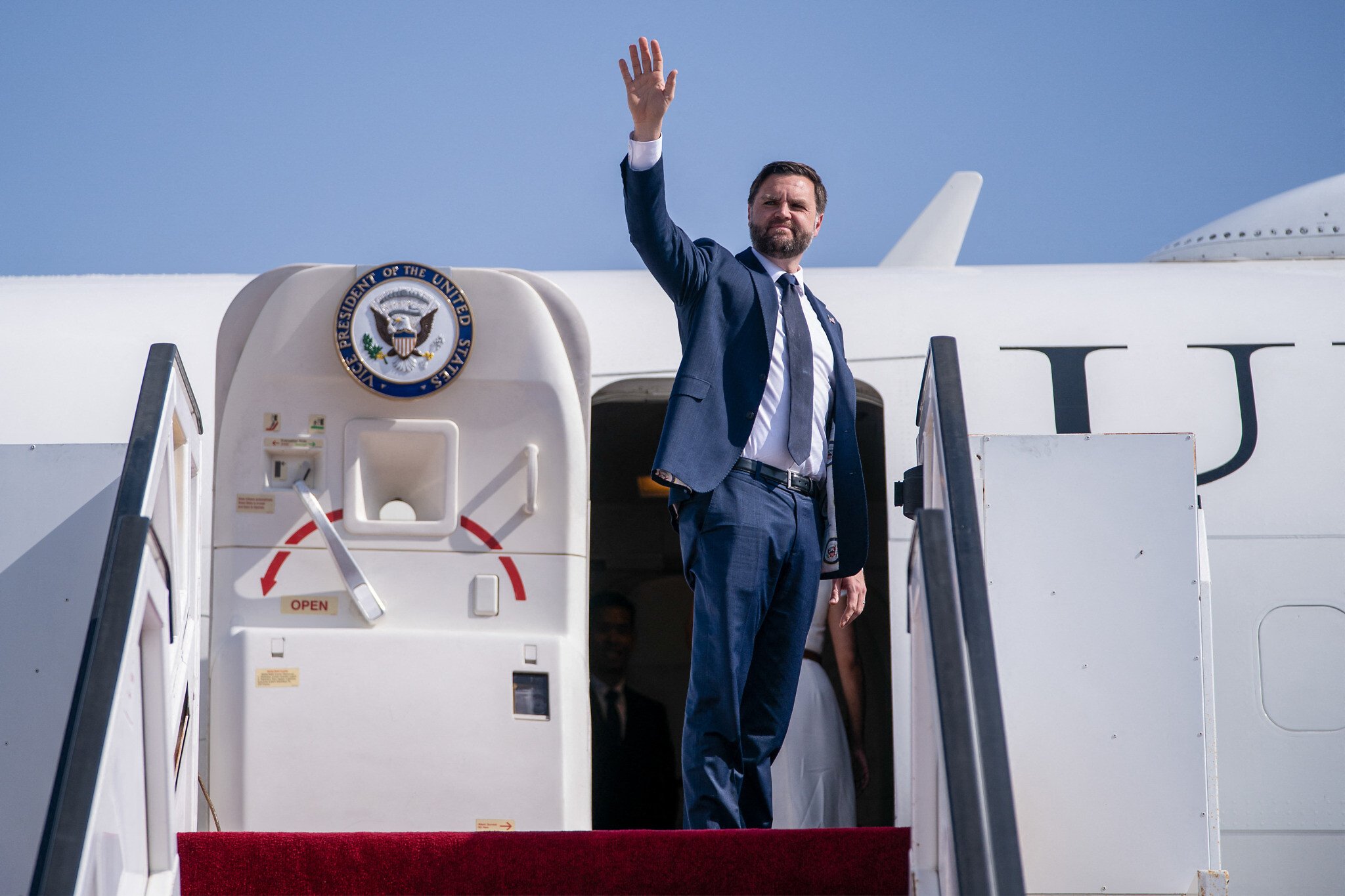
Speaking at Ben Gurion Airport after a two-day trip to Israel, US Vice President JD Vance says that yesterday’s preliminary Knesset vote on annexing the West Bank offended him and was “very stupid.”
The vote was “weird,” he says in response to a question, adding that he was “sort of confused by that.”
Vance says he was told it was a “political stunt, that it had no practical significance” and “it was purely symbolic,” but that “if it was a political stunt, it was a very stupid political stunt, and I personally take some insult to it.”
“The West Bank is not going to be annexed by Israel,” he says. “The policy of the Trump administration is that the West Bank will not be annexed by Israel. That will continue to be our policy, and if people want to take symbolic votes they can do that, but we certainly weren’t happy about it.”
Asked about the ceasefire in Gaza, Vance says that “right now, we can say with confidence that Israel is respecting the ceasefire, Hamas is respecting the ceasefire.”
“There are exceptions,” says Vance. “There are little exceptions that break out here and there. That would be expected when these parties have been at war for two years. But so far, the ceasefire is actually holding, the peace is actually holding and now we’re trying to figure out how to make it stick over the long term.”
“Our message is — do whatever you can do work with us to make this peace stick,” he says to Israel.
The new International Security Force “is now going to take the lead in disarming Hamas,” says Vance.
“That’s going to take some time, and it’s going to depend a lot on the composition of that force,” he continues. “There are certain countries who I expect will be quite good at it, and there are other countries that can play a role but I don’t think are going to be quite as useful. But a lot of that depends on which forces actually come to bear and how we’re actually able to implement phase two of the peace plan.”
“We can always pick up the phone and call Hamas, at least through an intermediary, when we want to,” says Vance when asked if there have been recent conversations with the terror group. “But most of our communication has been with our Gulf Arab friends and, of course, with the Israelis about what this international security force is going to look like. That is not primarily a Hamas conversation. That’s a conversation between us, the Saudis, the Emiratis, the Qataris, and other folks who are going to be involved in this in one form or another.”



The Times of Israel Community.