

Amid ruins of Damascus camp-city, Palestinian refugees recall horrors of Assad’s regime
Mahmud Khaled Ajaj describes torture he faced in Syrian prison while Haitham Hassan al-Nada recounts being shot, left for dead as a deserter for not wanting to fight in Syrian army
 Add ToI as a Preferred Source on Google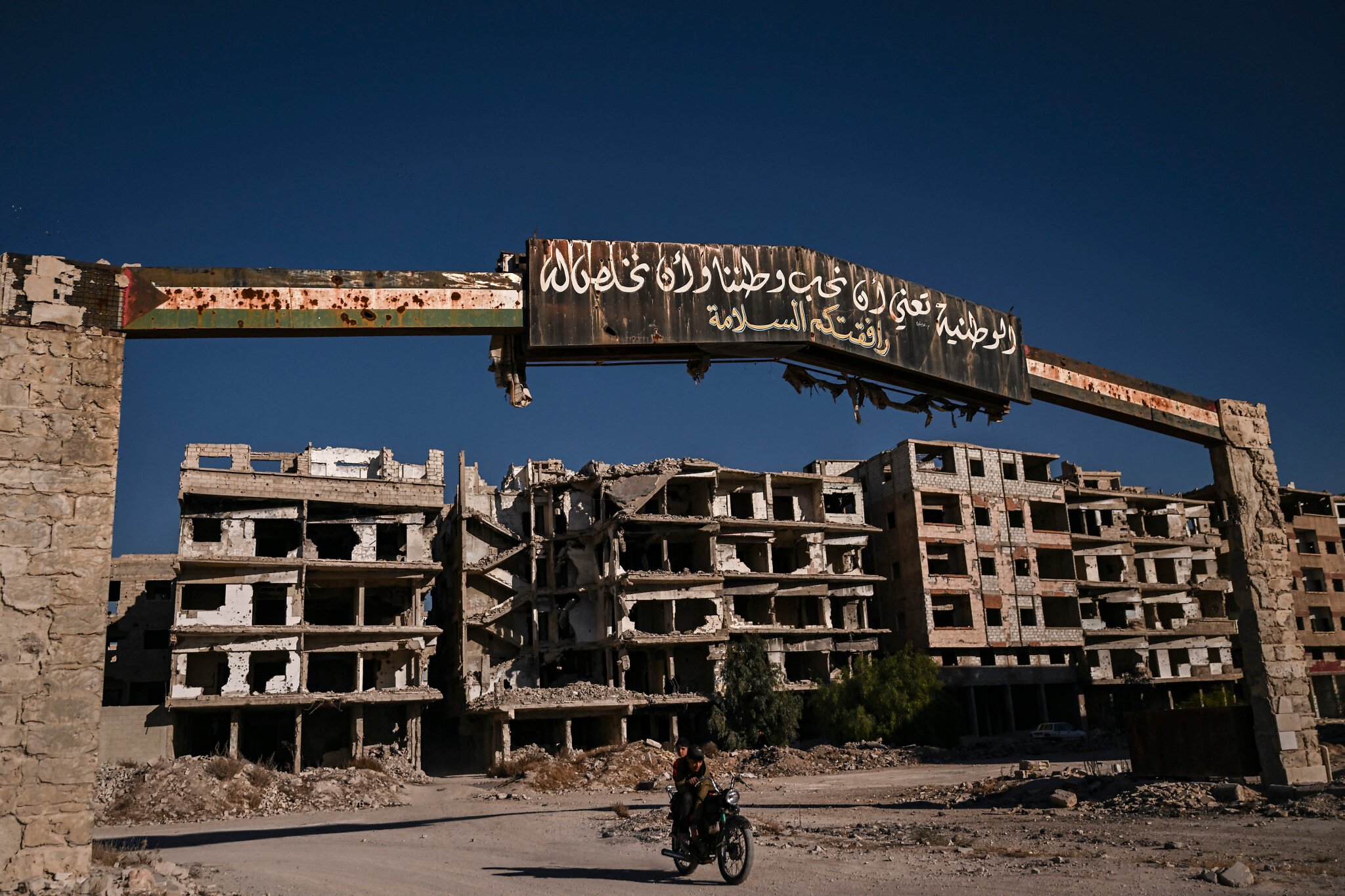
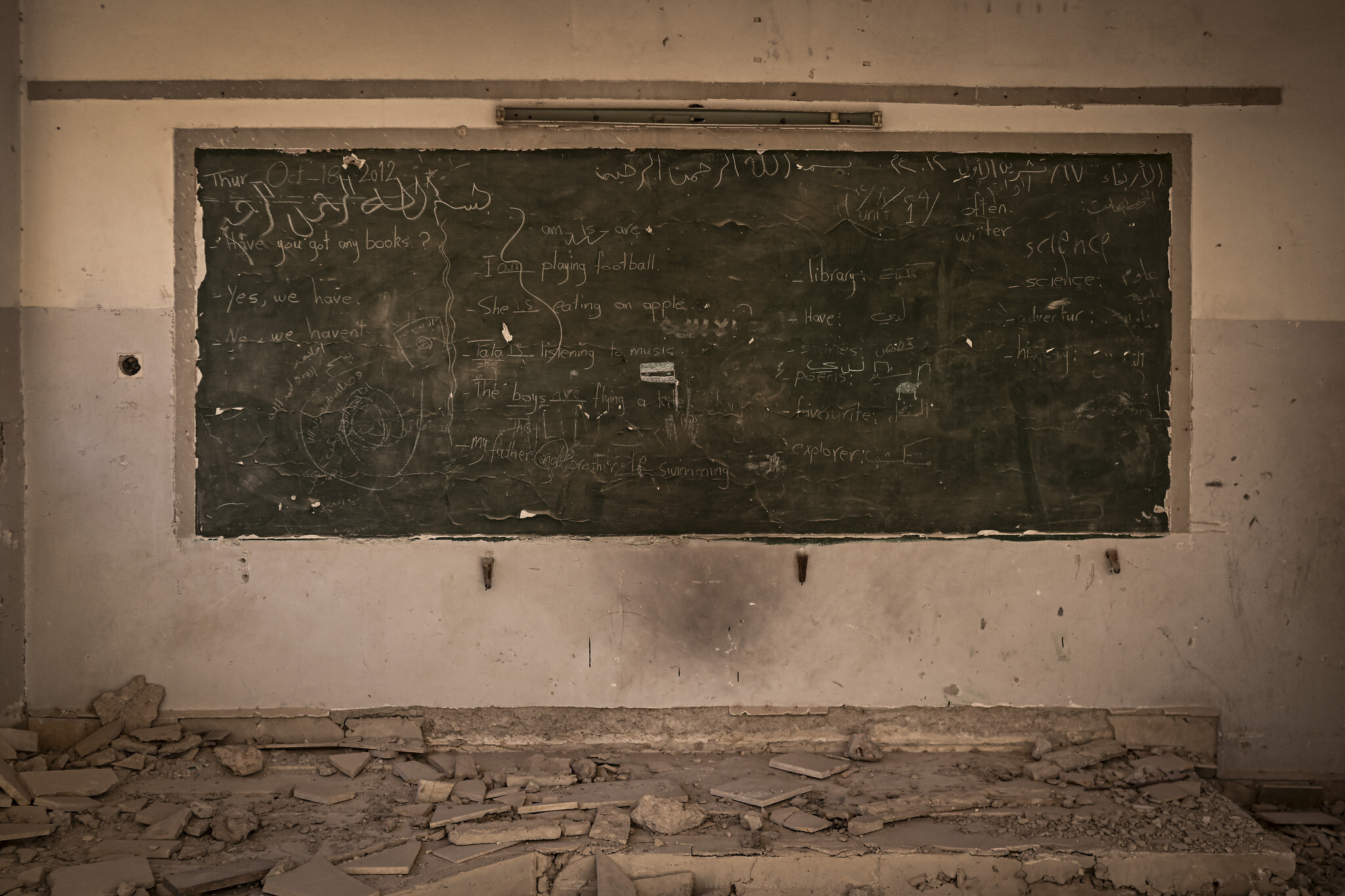
YARMUK, Syria (AFP) – School lessons ended in Syria’s biggest Palestinian refugee camp on October 18, 2012, judging by the date still chalked up on the board more than a decade later.
“I am playing football”; “She is eating an apple”; “The boys are flying a kite” are written in English.
Outside, the remaining children in the Damascus suburb of Yarmuk now play among the shattered ruins left by Syria’s years of civil war.
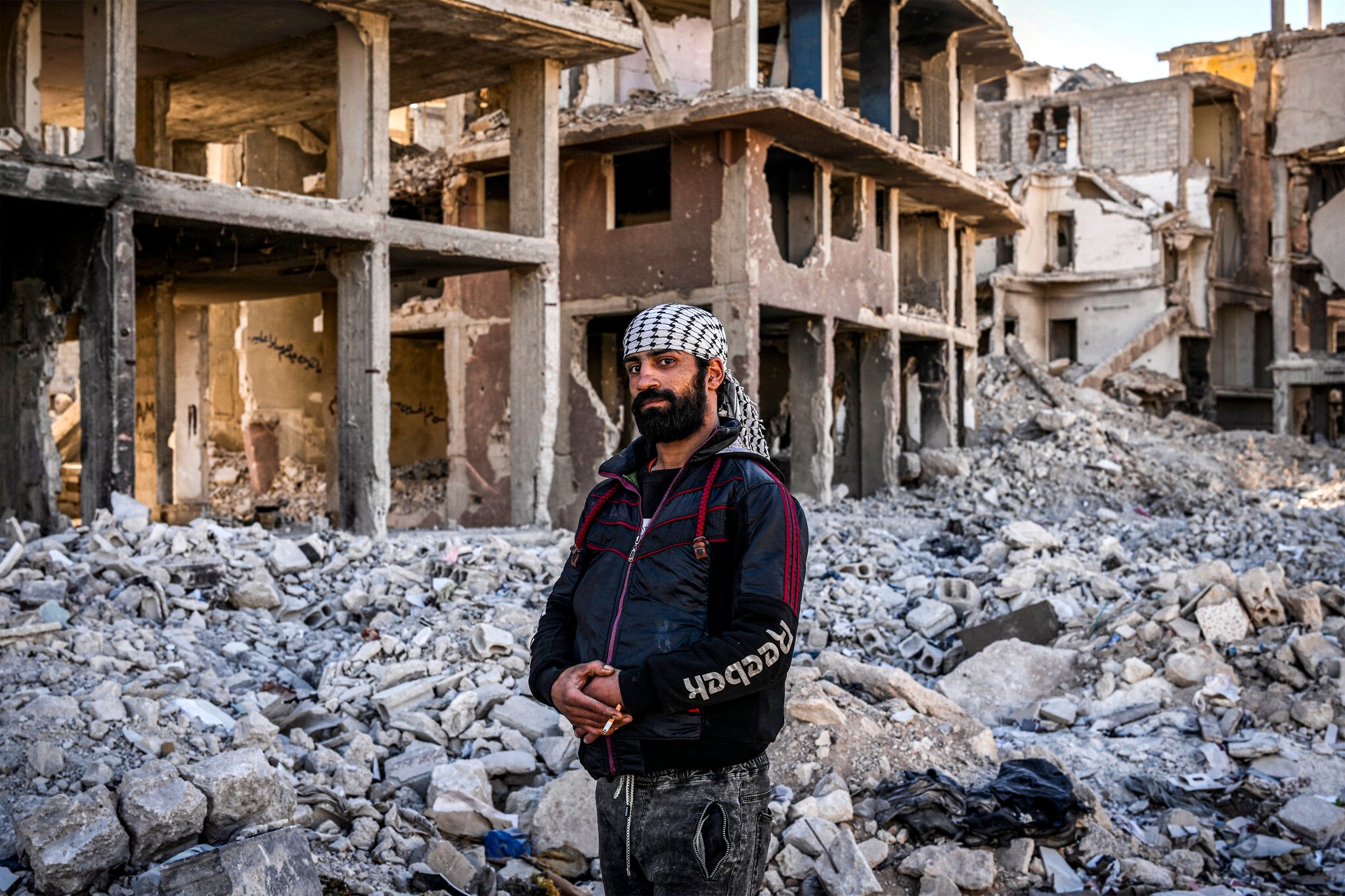
And as the kids chase through clouds of concrete dust, a torture victim – freed from jail this month when rebels toppled Bashar al-Assad’s government – hobbles through the rubble.
“Since I left the prison until now, I sleep one or two hours max,” 30-year-old Mahmud Khaled Ajaj told AFP.
Since 1957, Yarmuk has been a 2.1-square-kilometre (519-acre) “refugee camp” for Palestinians displaced during the founding of the modern Israeli state.
Shattered city
Like similar camps across the Middle East, over the decades it has become a dense urban community of multi-storey concrete housing blocks and businesses.
According to the United Nations agency for Palestinian refugees, UNRWA, at the start of Syria’s conflict in 2011 it was home to 160,000 registered refugees.
Rebellion, air strikes and a siege by government forces had devastated the area and left by September this year only 8,160 people still clinging to life in the ruins.
With Assad’s fall, more may return to reopen the damaged schools and mosques, but many like Ajaj will have terrible tales to tell of Assad’s persecution.
The former Free Syrian Army rebel fighter spent seven years in government custody, most of it at the notorious Saydnaya prison, and was only released when Assad’s rule ended on December 8.
Ajaj’s face is still paler than those of his neighbors, who are tanned from sitting outside ruined homes, and he walks awkwardly with a back brace after years of beatings.
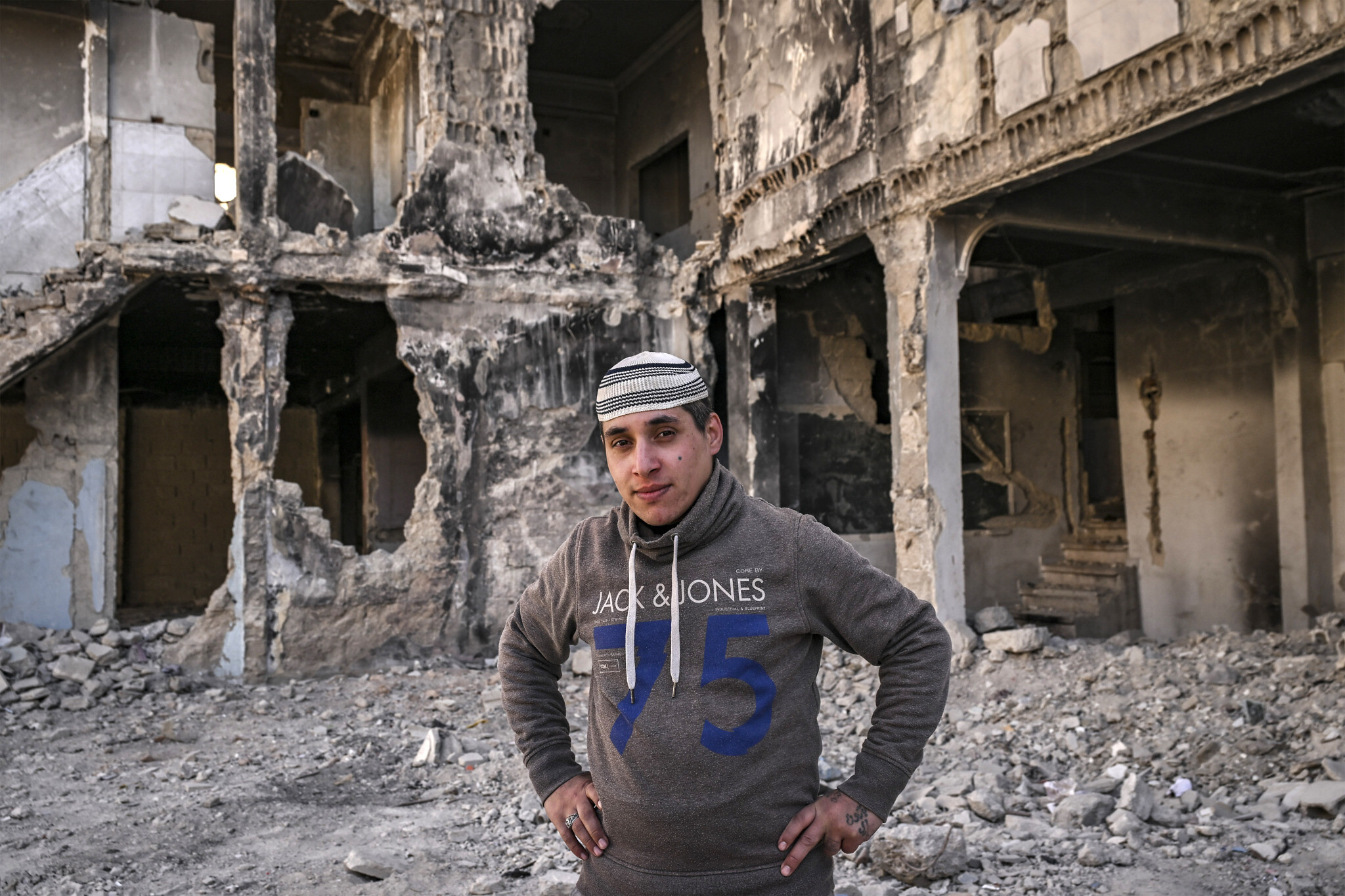
At one point, a prison doctor injected him in the spine and partly paralyzed him – he thinks on purpose – but what really haunts him is the hunger in his packed cell.
“My neighbors and relatives know that I had little food, so they bring me food and fruit. I don’t sleep if the food is not next to me. The bread, especially the bread,” he said.
“Yesterday, we had bread leftovers,” he said, relishing being outside after his windowless group cell and ignoring calls from his family to come to see a concerned aunt.
“My parents usually keep them for the birds to feed them. I told them: ‘Give part of them to the birds and keep the rest for me. Even if they are dry or old I want them for me.'”
As Ajaj spoke to AFP, two passing Palestinian women paused to see if he had any news of missing relatives since Syria’s ousted leader fled to Russia.
The International Committee of the Red Cross has documented more than 35,000 cases of disappearances under Assad’s rule.
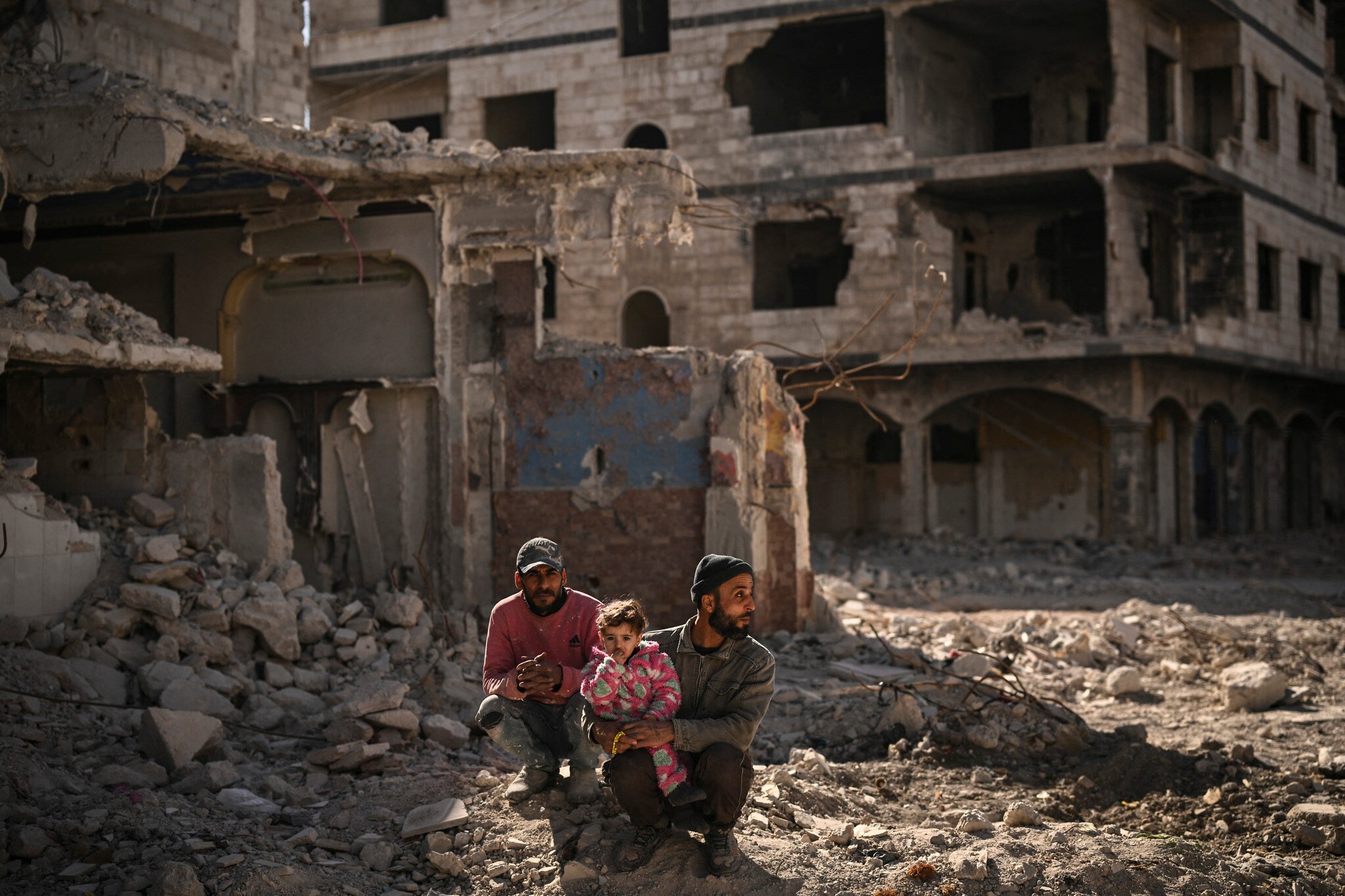
Ajaj’s ordeal was extreme, but the entire Yarmuk community has suffered on the frontline of Assad’s war for survival, with Palestinians roped into fighting on both sides.
Bullets lodged
The graveyard is cratered by air strikes. Families struggle to find the tombs of their dead amid the devastation. The scars left by mortar strikes dot empty basketball courts.
Here and there, bulldozers are trying to shift rubble and the homeless try to scavenge re-usable debris. Some find work, but others struggle with trauma.
Haitham Hassan al-Nada, a lively and wild-eyed 28-year-old, invited an AFP reporter to run his hand over lumps he says are bullets still lodged in his skull and hands.
His father, a local trader, supports him and his wife and two children after Assad’s forces shot him and left him for dead as a deserter from the government side.
Nada told AFP he fled service because, as a Palestinian, he did not think he should have to serve in Syrian forces. He was caught and shot multiple times, he said.
“They called my mother after they ‘killed’ me, so she went to the airport road, towards Najha. They told her ‘This is the dog’s body, the deserter,'” he said.
“They didn’t wash my body, and when she was kissing me to say goodbye before they buried me, suddenly and by God’s power, it’s unbelievable, I took a deep breath.”
After Nada was released from the hospital, he returned to Yarmuk and found a scene of devastation.





The Times of Israel Community.