

Pennsylvania’s Josh Shapiro comes out swinging on antisemitism. But is it good for the Jews?
US Jews may welcome a presidential candidate who centers his Judaism. But if he’s forced to determine when Israel criticism becomes antisemitism, his focus on faith could backfire

 Add ToI as a Preferred Source on Google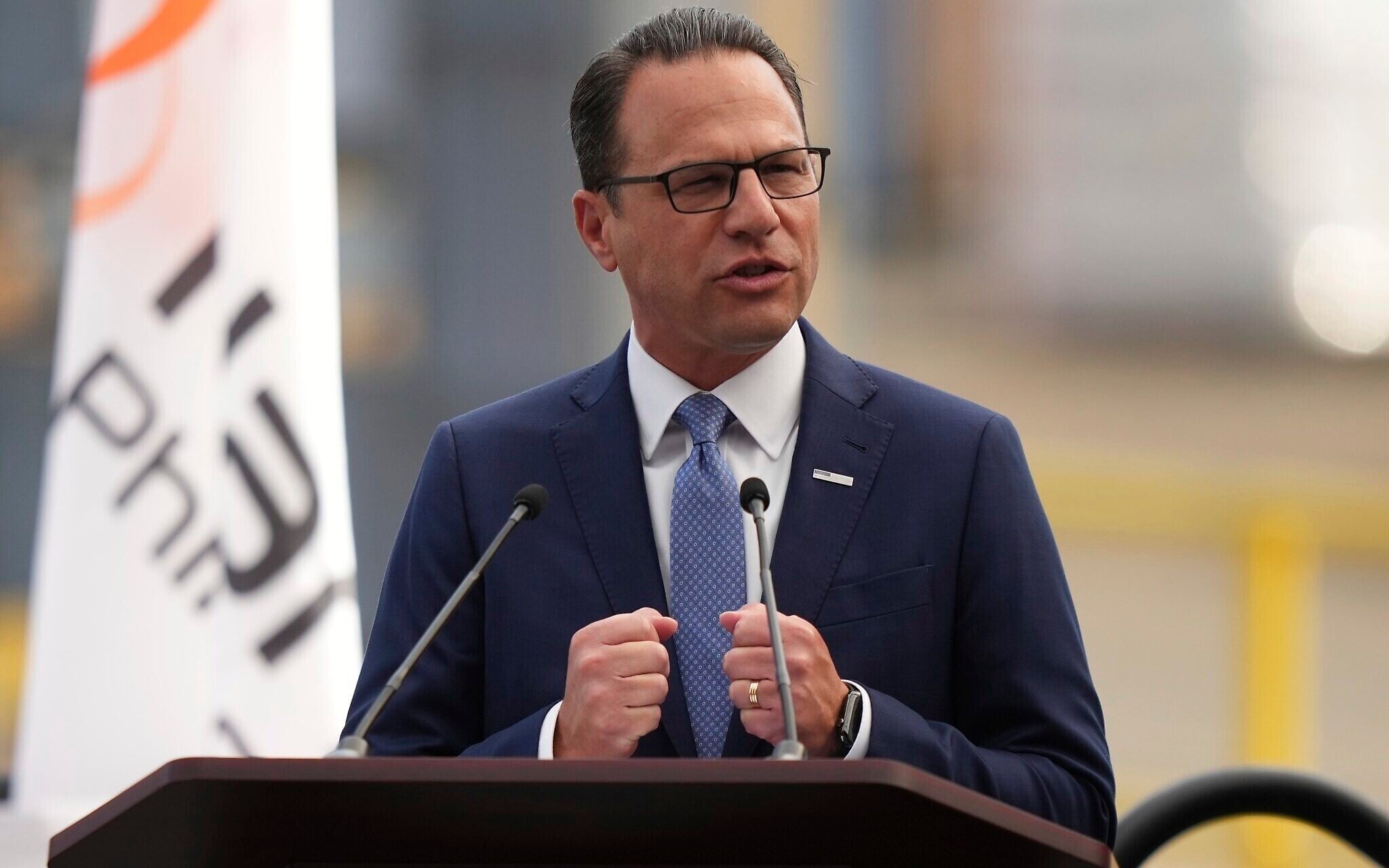
In one sense, it’s no surprise that Josh Shapiro insinuated, in an upcoming memoir, that Kamala Harris’s staff asked him antisemitic questions.
Shapiro, the Jewish governor of Pennsylvania, has always worn his Judaism on his sleeve. He’s highlighted his family’s Shabbat dinners in a campaign ad, was sworn in on three Hebrew Bibles, and reportedly begins his memoir, which will be released on Tuesday, describing the antisemitic arson attack on his residence last Passover.
In that book, “Where We Keep the Light: Stories from a Life of Service,” Shapiro also recalls the vetting process for Harris’s running mate in the 2024 election, and recounts, with incredulity and offense, being asked if he had ever been “a double agent for Israel.”
Shapiro is widely assumed to be eyeing a run for US president in 2028, and the book suggests that when he hits the national campaign trail, he’s going to continue centering his Judaism. It also indicates that he’s not going to be shy about calling out antisemitism, even in his own party.
For American Jews, that will be something of a shift. Recent Democratic primaries have included prominent Jewish candidates, but not since Joe Lieberman’s presidential campaign in 2004 has there been a serious contender who placed his Jewish observance at the heart of his public persona. For Jews, or at least for the majority of Jews who vote Democrat, that could be a welcome sight and a reminder in a time of rising hostility of the promise America has historically held for its Jewish citizens.
But it could also be a trap, both for Shapiro and American Jewry. A willingness to accuse political rivals of antisemitism inevitably means that Shapiro will have to make calls about what constitutes prejudice against Jews, an especially thorny question when it comes to anti-Israel criticism. Campaigning for support among Democrats who are increasingly liable to criticize his support for Israel, Shapiro will have to wrestle with whether to make his Jewish identity part of his defense, and what that would mean for American Jews.
If he’s forced to opine on whether statements from his critics, or even from fellow candidates, are antisemitic, Shapiro’s public embrace of his Judaism could turn from an asset into a liability, and might make the question of American Jewish belonging more of a political football than it already is.

Shapiro has taken two tacks when discussing his religion in public: He almost always frames it in positive, uplifting terms, and he endeavors to make it accessible to the vast majority of voters who aren’t Jewish.
That’s why his Jewish references mix particularism with a broader appeal. He talks about being Jewish a lot, but tends to refer to his “faith,” a word used mostly by Christians. He’s fond of a famous line from Pirkei Avot, a Jewish rabbinic text, but has called it “scripture,” another word more commonly found in Christian discourse.
This isn’t to say that Shapiro is dishonest about his Judaism. Far from it. As he’s ascended the political ranks, he’s remained involved in his Jewish community, sent his kids to the same day school he attended, and marks Shabbat and holidays. After the arson attack in April, he printed the Torah’s priestly blessing, in Hebrew, in a New York Times op-ed, surely one of the few instances when Hebrew text has made it into that newspaper.
My faith teaches me that no one is required to complete the task — but neither are we free to refrain from it.
Lori and I spent yesterday with the Jewish Relief Agency and their team of volunteers to deliver food and home supplies to our neighbors in Philly. We’re grateful for… pic.twitter.com/LZCABHAznS
— Governor Josh Shapiro (@GovernorShapiro) January 20, 2025
Shapiro is far from the only Democrat who’s taken to openly discussing his religion. Sen. Raphael Warnock is a Baptist pastor. James Talarico, running for Senate in Texas, is studying to be a minister.
But those candidates are members of America’s majority religion. There are other outwardly Jewish Democrats — Chuck Schumer, for example — but none who have raised presidential chatter quite like Shapiro has. For the Jewish presidential aspirant, talking about faith — as natural for Christian candidates as kissing babies at an Iowa donut shop — can become a challenge when seeking an everyman appeal.
“There aren’t a whole lot of folks who pray like me,” he told The Atlantic for a profile last month while talking about Pennsylvania communities. The profile noted that Shapiro “preferred to speak in the abstract — using terms such as faith, spirituality, prayer — rather than articulating a specific worldview as it pertains to Judaism.”
“I have found that by living openly and proudly with my faith, that it’s brought me closer to the people of Pennsylvania,” Shapiro told the magazine. “And I think the people of Pennsylvania are pretty indicative of where large swaths of the American people are.”
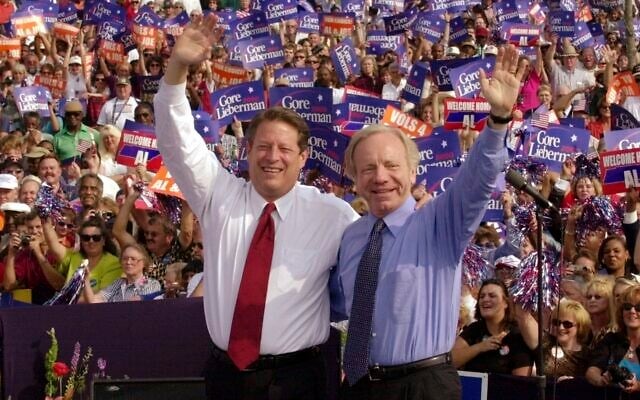
That’s a challenge Lieberman, the Democratic vice presidential nominee in 2000, who had his own short-lived presidential campaign four years later, confronted as well. Lieberman was an Orthodox Jew who likewise felt that his religious adherence gave him something in common with other Americans.
“I wanted to be who I am, and prayer and faith are at the center of my life and of my family’s life,” he is quoted as having written in his own 2003 memoir. “The same is true of many Americans, and I have never understood why some people feel that when you go into public life you lose the freedom to talk about your faith.”
In the past, Shapiro has spoken in these general terms even when he’s been personally hit with antisemitism. The New York Times op-ed, even though it included Hebrew and references to the Passover Seder, did not include the words “antisemitic” or “Jewish.”
And in 2024, when he faced antisemitic attacks while being considered for vice president, he shot back, but did not specify his Judaism.
“I lean on my family and I lean on my faith, which calls me to serve,” he said at a rally shortly after Harris chose another running mate. “And I am proud of my faith.”
In the excerpts of the book that have been quoted, his tone is different. It’s a little combative, and it’s explicit about his Judaism.
When he was asked about being an Israeli agent, he writes that he wondered “whether these questions were being posed to just me — the only Jewish guy in the running — or if everyone who had not held a federal office was being grilled about Israel in the same way.”
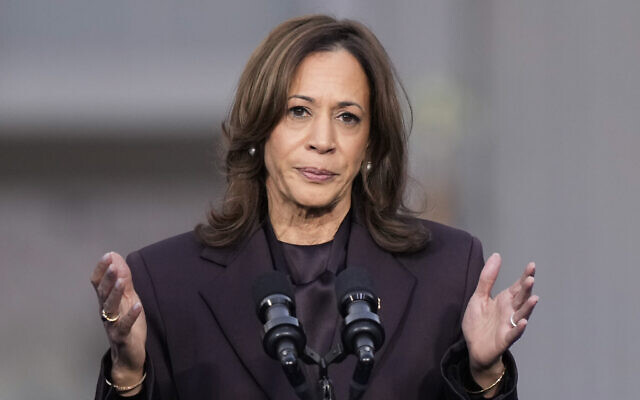
That suggests Shapiro will be willing to respond assertively when criticism of his support for Israel veers into antisemitic territory on the campaign trail. He also faced antisemitism when he ran for governor in 2022, and he called it out, but in that case his opponent was a Republican Christian nationalist. Now, he’ll face the challenge of criticizing antisemitism in his own party, while also seeking the support of that party’s voters.
Lieberman, discussing the 2000 campaign in which he ran for vice president, reportedly said he experienced no antisemitism (though there was some on the early web). Shapiro will almost certainly not be able to say the same. Given the dwindling support for Israel among Democrats, it’s fair to assume that at least some of the antisemitic language he faces will be couched in discourse about Israel.
Shapiro has already made waves when talking about Israel and antisemitism. He raised progressive ire in 2024 when, discussing the pro-Palestinian, anti-Israel campus encampments, he defended peaceful, legal protest but said it can’t “be an excuse for antisemitism or Islamophobia” and asked “whether or not we would tolerate this if this were people dressed up in KKK outfits.”
He also criticized the campaign of New York City Mayor Zohran Mamdani, a staunch anti-Israel activist and Democratic rising star, for having “left open far too much space for extremists to either use his words or for him to not condemn the words of extremists that said some blatantly antisemitic things.”
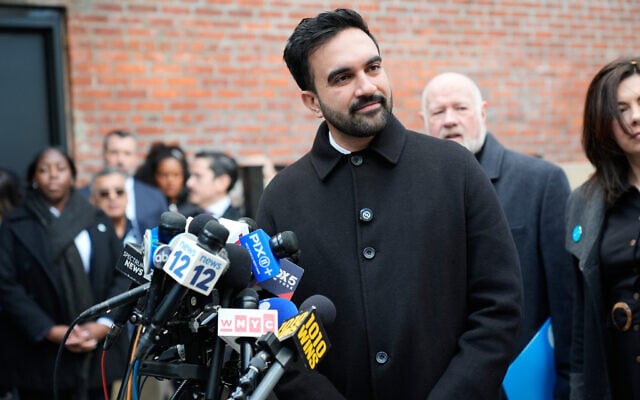
Those situations may well be reprised, in some form, on the campaign trail. How will Shapiro respond? The answer will matter not just for him but for American Jews as a whole.
There’s a world in which a Shapiro presidential campaign is a boon for American Jews, no matter their politics. It could meld the wholesome image of a popular, moderate candidate with the American Jewish experience and, in so doing, remind Americans at a time of rising antisemitism that Jews are an inextricable part of the country’s fabric.
There’s also a potential Shapiro campaign that goes the other way, especially at a time of sky-high polarization and mistrust. In this scenario, being Jewish, instead of being intertwined with wholesome Americana, becomes enmeshed in debates over Israel. Then, the faith that Shapiro has seen as a unifying factor could instead become an instrument of division.
American Jews will continue living their lives, no matter the political fortunes of Josh Shapiro. He may even lose his Pennsylvania reelection race this year, making a 2028 presidential run practically moot.
But it isn’t a stretch to say that when one of the most prominent figures in the country is a Jewish American, his opinions and his experience reflect on the rest of American Jews. And in that sense, the way Shapiro chooses to react to antisemitism will have ripple effects for the rest of his country’s Jewish citizens, for the next two years and beyond.









The Times of Israel Community.