

Kahlon vows to help the poor, the weak and the ‘other’
At Kulanu HQ, party head tells hundreds of excited supporters faction represents hope for disadvantaged
 Add ToI as a Preferred Source on Google
Judah Ari Gross is The Times of Israel's religions and Diaspora affairs correspondent.
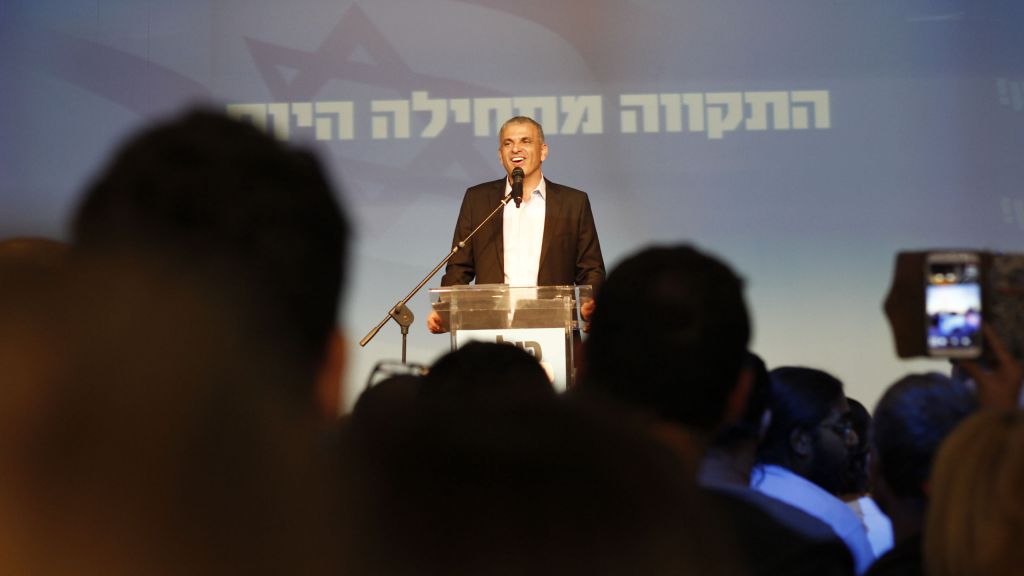
TEL AVIV — One word is used more than any other to describe Moshe Kahlon: modest.
But while his Kulanu party’s post-election celebrations late Tuesday started out that way — with just a few dozen supporters in a half-empty convention hall — once Kahlon arrived, they could be described as anything but.
From the moment the party head stepped out of his car, he was thronged by supporters, journalists and other Kulanu candidates eager to fete the party’s projected 10 seats, according to exit polls, in national elections.
Before Kahlon arrived at the campaign’s rally, the cheer his supporters repeated over and over was “Hoo hah! Who’s that coming? The next finance minister!”
But once Kahlon made his way into the building that quickly shifted into something much more optimistic. “Hoo hah! Who’s the coming?” his supporters yelled, “The next prime minister!”
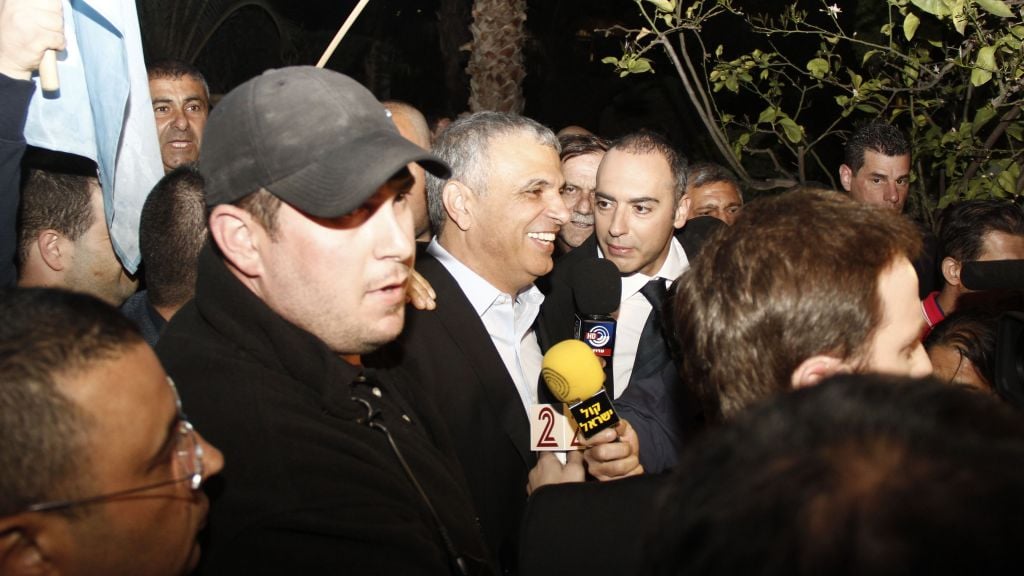
Wishful thinking, perhaps, but even the thought that this was a possibility speaks to the long, impressive journey Kahlon made from the small town of Givat Olga on Israel’s coast to the head of what his supporters called “the most important political party in the election.”
Kahlon grew up in a family of seven children to parents who immigrated from Tripoli, Libya. While the family was poor and the town crime-stricken, his father Yehuda stressed to him and his siblings the importance of education and hard work, Kahlon’s sister, Leah Abutbul said.
“I want you all to succeed,” Abutbul says her father used to tell them, “so that you won’t have to do work like I do: physical labor.”
When he was a teenager, his father, a construction worker, broke his back so Kahlon was forced to work, selling fish in the local market to support his family.
“He grew up in hardship,” Yaffit Teshuva, a resident of Givat Olga who has known Kahlon from birth, said, “and look at what he’s accomplished. ‘Well done’ to him.”
“He knows about scarcity,” his sister said. “They don’t need to tell him about it. He lived it. From that you develop feelings of compassion and caring for the ‘other.'”
In his speech to the hundreds of supporters who gathered at the Kulanu party gathering Tuesday night, Kahlon explained just that. “We will care for the middle class,” Kahlon promises. “We will care for the weaker rungs [in our society].”
But many misunderstood Kahlon’s focus on the “other” and the working class, he says, something that still bothers him. “People would say during our campaign, ‘Don’t be a party for poor people.’ What?!” Kahlon says.
“We are their hope.”
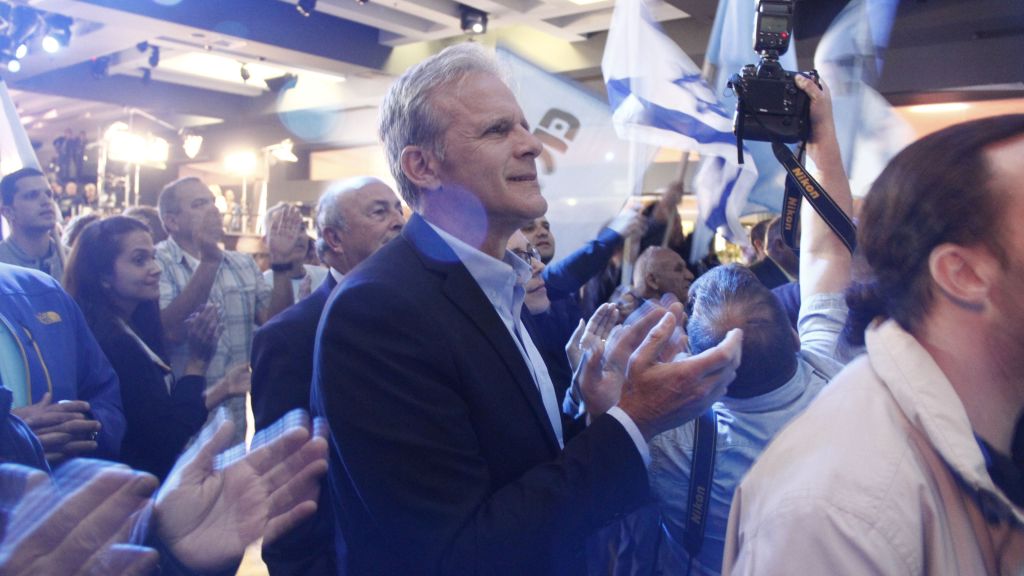
Michael Oren, number four on the Kulanu party list, called Kahlon’s speech “an amazing political Israeli moment.”
“It was a Kennedy-esque moment,” the American immigrant and former Netanyahu-appointed ambassador to the US said.
Oren also stressed Kahlon’s rough beginnings as the source of his party’s mission.
“Kahlon came from nothing,” Oren said. And so did their party, which did not exist until last year.
“We didn’t have coffee,” the New Jersey native joked.
“As someone who came to this country with nothing,” Oren, who immigrated to Israel by himself in 1977, also sees this socio-economic mission as part of the Israel’s identity.
“It’s an inherent responsibility of the Jewish state to care for the poor,” he explained.
When asked how his experience as ambassador to the United States would enable him to help his party achieve their economic goals, Oren paused.
“Everyone in the party contributes in some way. And in the long run, if you are going to create a robust economy, you need good communications with the outside world,” he said.
And that, Oren said, is where he comes in.
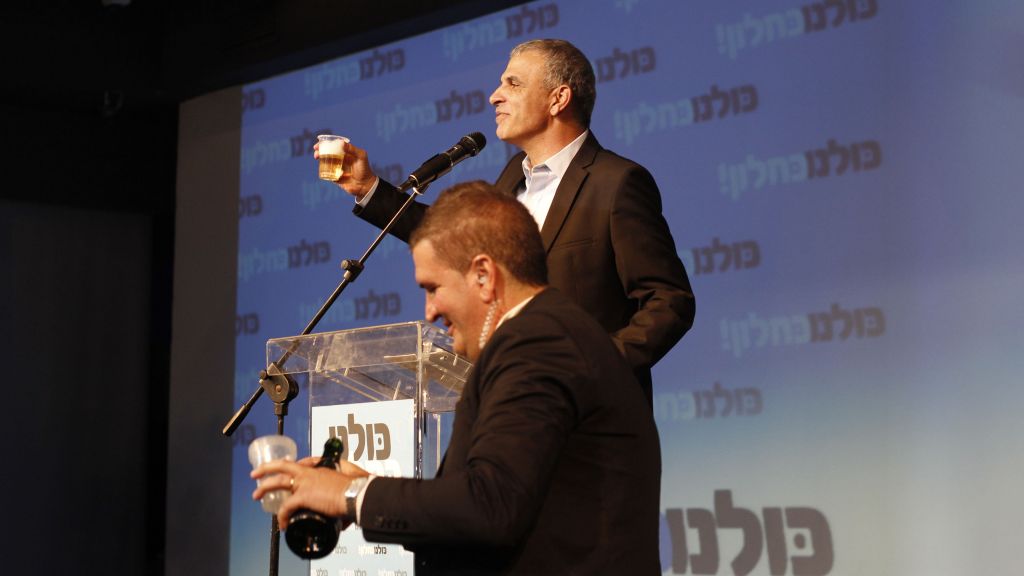
Kahlon told his supporters that while we must worry about what is happening between the US and Israel and with the Islamic State, “our lives here are no less important.”
“This was the first election process that was society-based since 1977,” Kahlon said to the crowd, referring to Menachem Begin’s campaign to enfranchise the sephardic community, which won him the premiership–the first time Israel had a right-wing government since the founding of the state.
“We promise to fight,” Kahlon said, “and win.”
Once Kahlon finished his speech, the remaining nine candidates that are expected to enter the Knesset were called up to the stage.
After the candidates hugged, cheered and had their photographs taken, they planned to finish the evening with the national anthem, “Hatikva.”
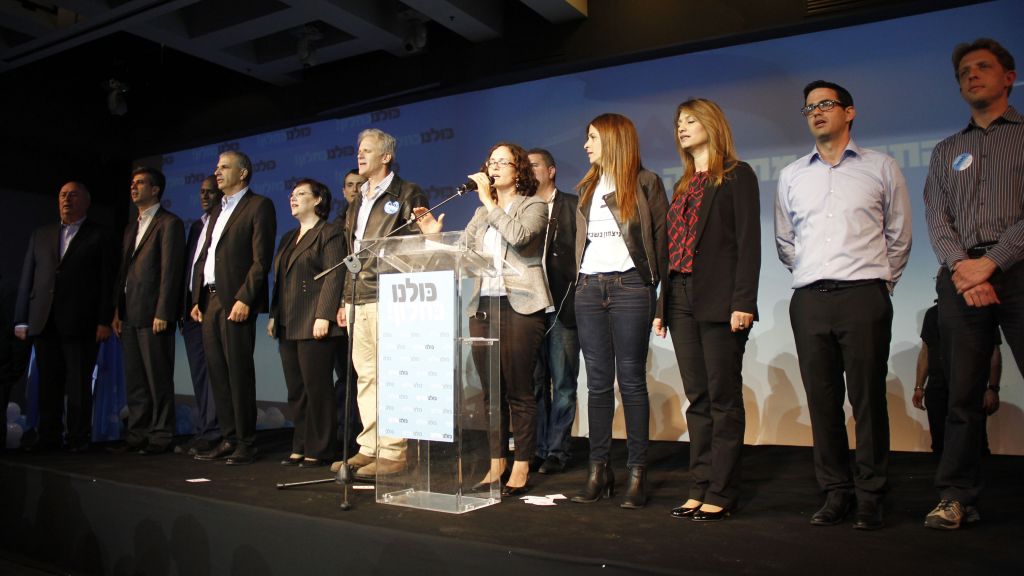
But–apparently–the party that once did not have coffee, now did not have a working sound system.
So after a moment waiting for the music to begin, Rachel Azaria, the deputy mayor of Jerusalem and number five on the Kulanu list, took matters into her own hands.
Azaria, who was closest to the podium, took the microphone and began singing. Her voice was shaky, and not necessarily up to professional standards, but for a scrappy, upstart party that may nevertheless decide who will be the next prime minister of Israel, it was appropriate.



The Times of Israel Community.