

Former IDF chief calls on defense minister to resign over judicial overhaul
MK Eisenkot says Gallant should’ve stepped down before vote, reservists must ‘show more responsibility’ than coalition; Shas newspaper calls for agreement on future judicial bills
 Add ToI as a Preferred Source on Google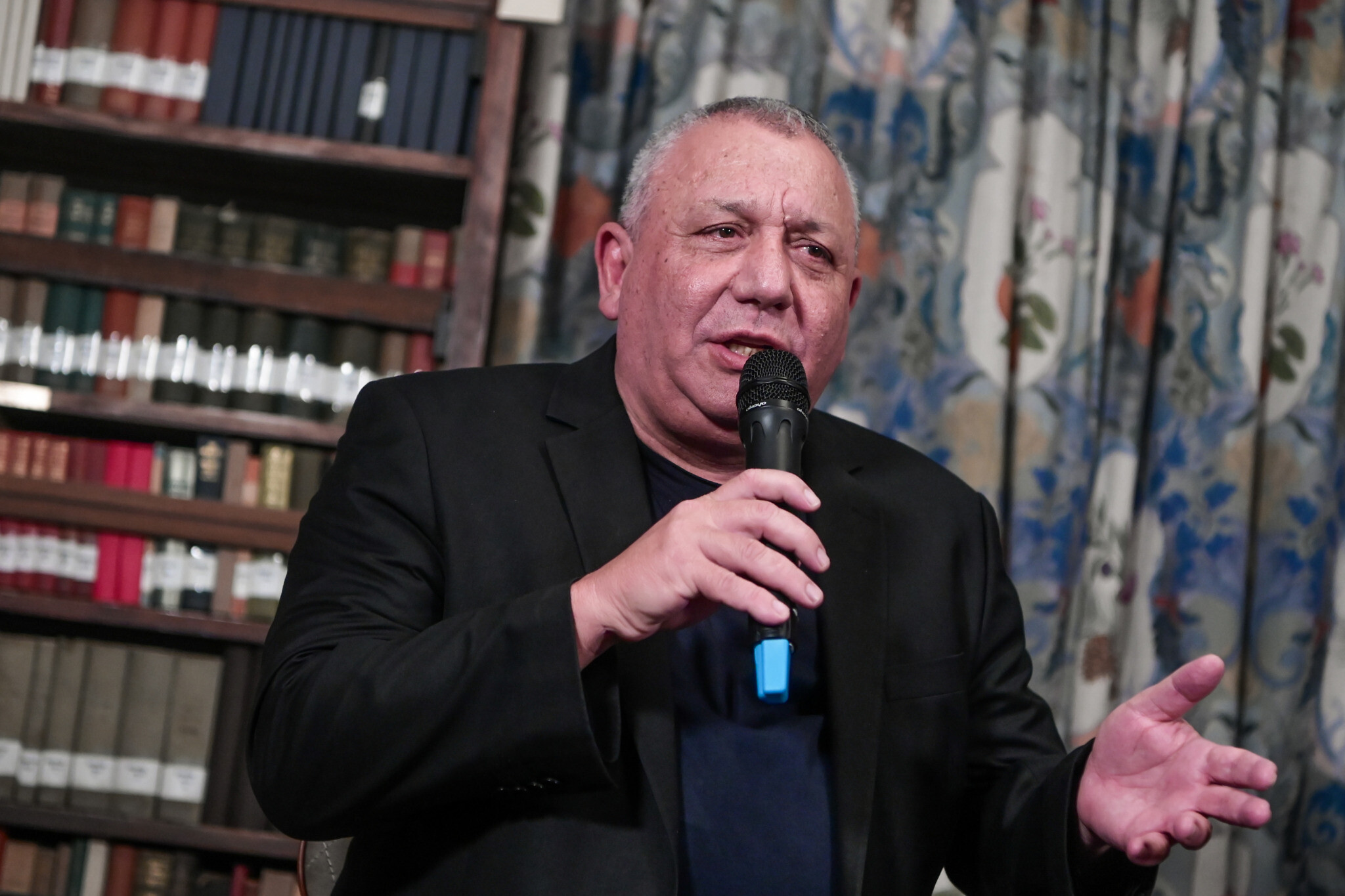
Gadi Eisenkot, a lawmaker for the National Unity party and a past Israel Defense Forces chief of staff, called on Defense Minister Yoav Gallant to resign in protest of the coalition legislating the first part of its controversial wide-reaching overhaul of the judiciary.
The military has been roiled by threats from tens of thousands of reserve soldiers — including pilots — who have said they will not continue to volunteer for service because of this week’s passage of the law curtailing judicial oversight over government decisions, raising concerns that it would impact the IDF’s battle readiness.
Speaking Tuesday to Channel 12 news, Eisenkot said Gallant should have quit before the bill was passed into law.
“I call on him to resign,” Eisenkot said, describing the legislation as causing “serious damage to Israel.”
Despite large protests and continued mass public opposition, the Knesset on Monday ratified a law that prevents the courts from reviewing the “reasonableness” of government and ministerial decisions.
“I would have expected the defense minister to resign yesterday rather than lend a hand to letting the bill pass,” the opposition lawmaker said.
He noted that Gallant had urged a pause in the judicial overhaul process in March, which initially prompted Prime Minister Benjamin Netanyahu to fire him, but then to suspend the legislation and, ten days later, reverse Gallant’s dismissal.

“Four months ago [Gallant] made an impact when he showed courage, which I did not see yesterday. I think he did not prevent this law and it causes serious damage to the State of Israel,” Eisenkot said. He added that he hoped the High Court of Justice “will have its say” and strike down the legislation.
Still, he said, IDF Chief of Staff Herzi Halevi should remain at his post for the sake of the country’s security and military unity, and not resign, even though Netanyahu declined Halevi’s request for a meeting just before the bill was voted on and only met with him afterward.
Regarding the reservists who are threatening to not show up for duty, he called on them to “show more responsibility than the prime minister and the members of the coalition.”
Following the vote on the reasonableness bill, Hebrew media reports cited Gallant as explaining in closed conversations why he voted for the bill and didn’t resign.
“If I had left, it wouldn’t have changed anything. It’s best that I stay at the wheel at such a time,” Gallant was quoted as saying.
Gallant and Eisenkot were military contemporaries. Gallant is also a former senior IDF officer, having served as head of the Southern Command at a time when Eisenkot was leading the Northern Command.
In the interview, Eisenkot also commented on a private bill submitted by an ultra-Orthodox party on Tuesday that aims to protect army exemptions for community members against possible court intervention by legally cementing the status of Torah study alongside that of mandatory military service. The bill drew criticism from both sides of the aisle, with lawmakers slamming its content and the timing.
“This law, if passed as is, is not a Basic Law on Torah study, it is a law that bypasses military recruitment. In fact, this is a fatal injury, or the end of the IDF as an army of the people of my state,” Eisenkot said. He predicted that if legislated, the bill would face an even sharper protest movement than the overhaul plan.
Asked if the National Unity party would be prepared to join negotiations sponsored by President Isaac Herzog during the Knesset’s summer recess to reach an agreement between the coalition and opposition on the overhaul, Eisenkot said it would not.
“The right thing now is to protect Israel’s interests… and increase efforts to overthrow this evil government. I hope there are decent people in the coalition who will join such a move,” he said.
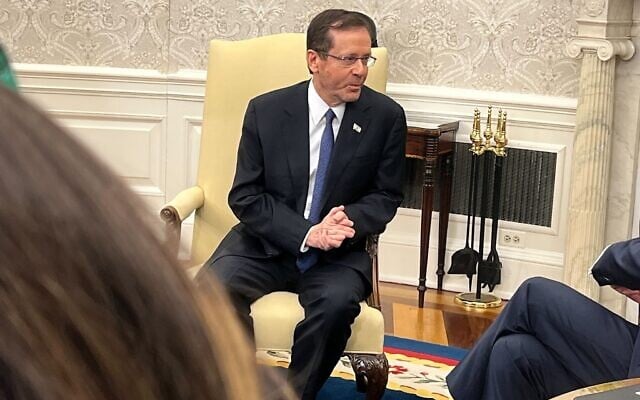
While a previous round of negotiations did not produce an agreement, Channel 12 reported new details of Herzog’s last-minute efforts ahead of the Monday vote.
Immediately after returning from his official visit to the US on Sunday, Herzog headed to Sheba Medical Center to speak with Netanyahu, who was recovering after being fitted with a pacemaker.
The unsourced report said that Herzog came away from the bedside meeting with the impression that it was possible for the coalition and opposition to reach an agreement on the terms of the “reasonableness” bill, but that there would not be agreement on the timeline for freezing legislation of further aspect of the judicial overhaul.
Herzog said in private conversations that Netanyahu would only agree to a five- or six-month freeze, until the end of the year, but no longer than that.
Herzog said that Opposition Leader MK Yair Lapid had “surprised” him by showing willingness in the preceding 48 hours to reach an agreement. By contrast, National Unity Party leader MK Benny Gantz had dug in his heels and was less willing to reach an agreement, though Herzog did not criticize him for that.
After meeting Netanyahu, the president held talks into the night with the chair of the Histadrut labor federation, Arnon Bar-David, and representatives of leading businesses. Talks with the Histadrut, which has faced pressure to call a general strike, continued on Monday amid chaos outside the Knesset, where opponents of the judicial overhaul clashed with police and blocked roads, and as some of the country’s top businesses held a one-day strike.
Histadrut representatives reportedly urged Herzog to take action before voting on the bill took place but he demurred.
“There is nothing more that can be done other than giving speeches or resigning. And what difference will it make if someone else takes my place?” the president said according to the Channel 12 report.
The network assessed that Herzog has not made any public remarks blaming either coalition or opposition for failure to reach an agreement because he wants to leave the door open for future negotiations.

Meanwhile, unnamed senior coalition officials told the network that over the past day they have received messages from at least four coalition lawmakers who want to continue with further overhaul legislation only if there is agreement with the opposition.
Indications that some coalition members are interested in an agreement also came in an editorial published in the Haderech newspaper, seen as a mouthpiece for the ultra-Orthodox Shas party led by Netanyahu ally Aryeh Deri.
Published Wednesday, the opinion piece, titled “Responsibility is mandatory,” criticized those in its camp taking a “frivolous” attitude toward the protests against the overhaul and the potential damage to national security by the reservist protest threats.
It is “stupid childishness,” the piece said, “to ride the waves of populism, to throw out baseless slogans, and to reap easy and quick profits, and then when everything collapses, to disappear and run away from responsibility.”
Though noting that “reform of the judicial system is a necessary thing,” it said that “closing your eyes or burying your head in the sand does not make the problems go away.”
“The ability to conduct dialogue is a basic and necessary condition in the world,” it said.






The Times of Israel Community.