

Latest Health Ministry figures signal further decline in new infections
8.9% of tests on Wednesday come back positive, the lowest rate in three weeks; top health official says restrictions could be eased if downward trend continues
 Add ToI as a Preferred Source on Google
New Health Ministry figures released Wednesday night further suggested the spread of the coronavirus in Israel was slowing amid a weeks-long national lockdown.
According to the Health Ministry, 3,277 people had tested positive for COVID-19 since midnight, bringing the number of infections since the pandemic began to 281,481.
The death toll rose to 1,824, with 18 new fatalities since midnight.
Of the 63,043 active cases, 866 were in serious condition, with 238 on ventilators. Another 306 were in moderate condition and the rest had mild or no symptoms.
The ministry said 36,702 tests had so far been completed Wednesday, 8.4 percent of which came back positive, the lowest rate in three weeks.
Tuesday’s positive test rate was 10.5%, the lowest since September 19, the day after the current lockdown began.
The positivity rate is seen as a key metric for measuring the spread of the virus, given uneven day-to-day testing numbers. During the first wave of the virus, the country rarely saw a positivity rate of more than 3%, though reporting at the time was intermittent.
Israel had seen the percentage rise as high as 15.1% in late September before the trend began to reverse.

While the number of new infections and positive test rates have dropped since a record 9,053 cases were recorded last Wednesday, so too has the number of daily tests, likely due to the holiday period. Testing numbers often slacken considerably on weekends or holidays.
The situation at hospitals also remains dire and could remain bad for weeks.
“We see a downward trend in the number of confirmed patients and a drop in the positive test rate, but at the moment this is only a trend — we need to examine this further,” Chezy Levy, the director-general of the Health Ministry, told Channel 12 news in an interview.
“The guidelines need to be followed without complacency,” he added. “The trend is positive but the achievements may disappear.”
Levy also said some restrictions could be eased if the decline in new infections continues.
“We won’t leave the lockdown completely but we may be able to start opening things that are now closed,” he said, while stressing that any rollback of restrictions would be gradual.
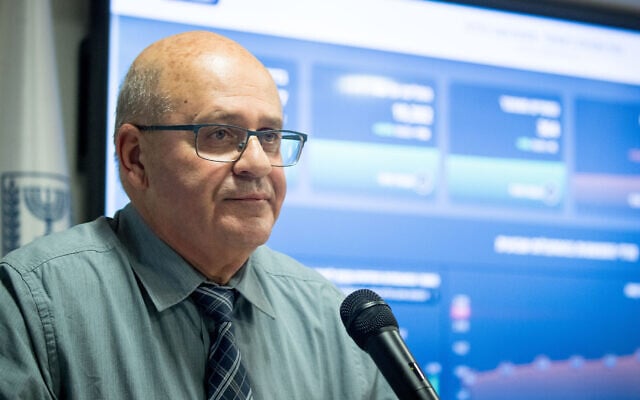
Meanwhile, television networks published leaks from a meeting Finance Minister Israel Katz held on Wednesday, during which he criticized the sweeping restrictions on economic activity as part of the lockdown.
“I won’t let millions of people sink to despair and the shame of hunger because of the Health Ministry’s incorrect decisions to close the economy without differentiation or any health justification,” Katz, a member of Prime Minister Benjamin Netanyahu’s Likud party, was quoted as saying.
“It can’t be that gatherings of up to 10 are allowed, but it’s forbidden to open a business with up to 10 workers. No one will accept this,” he also reportedly said.
Separately, Channel 13 news said Interior Minister Aryeh Deri, who heads the ultra-Orthodox Shas party, now supports differential lockdown measures, with restrictions in a given area depending on local infection rates. Ultra-Orthodox politicians angrily opposed plans to impose local restrictions on virus-hit areas in early September, leading the government to instead put overnight curfews in place and move toward a national lockdown.
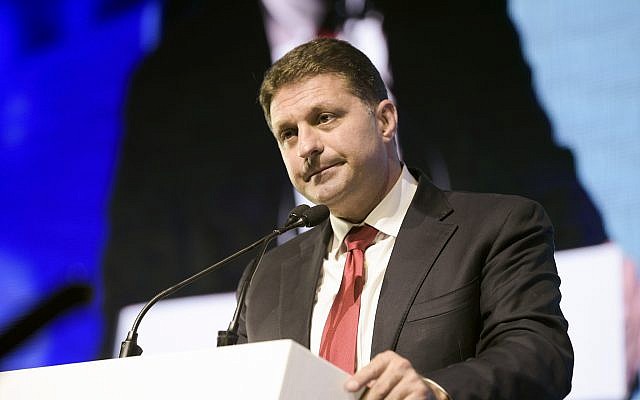
Haim Bibas, the mayor of Modiin and chairman of the Federation of Local Authorities, slammed the government’s management of the second wave of the pandemic and also expressed support for coronavirus czar Ronni Gamzu’s “traffic light” plan for local lockdowns.
“The traffic light [plan] is the best thing here to manage the [daily] coronavirus routine after the lockdown,” Bibas, who was appointed as an observer to the government’s so-called coronavirus cabinet, told Channel 12 news.
Channel 13 said professors from Hebrew University of Jerusalem and Tel Aviv University on Wednesday presented Netanyahu with a proposal for Israel to adopt the “Swedish model,” which would see the government devoting resources to protect the elderly and at-risk while allowing the economy to fully open.
Netanyahu, who has previously pushed for tightening restrictions despite opposition from health experts, was said to be leaning against adopting the plan.
Earlier, Health Minister Yuli Edelstein cautioned against swiftly lifting the current lockdown measures, saying it was too early to draw conclusions from signs that Israel’s efforts to contain the outbreak were starting to pay off.
“We see the initial effect of the lockdown and the number of confirmed cases declining,” Edelstein told reporters during a briefing at Sheba Medical Center outside Tel Aviv. “At the same time, I wouldn’t recommend jumping to the conclusion that it’s over, that we won and we’ll reopen the economy. It’s entirely obvious that we need a lengthy period of time to ensure that the situation is as we want it.”
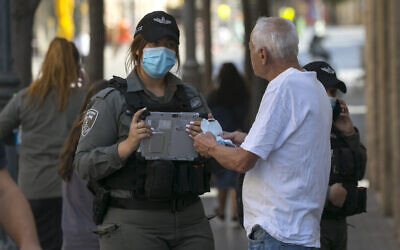
The current lockdown, Israel’s second since the pandemic started, began on September 18 before Rosh Hashanah and was tightened a week later. It is currently set to end on October 14.
“We won’t take steps [to ease the lockdown] just because a certain date has arrived. Today we have very slight, preliminary reasons for some sort of encouragement,” Edelstein said.
He warned against mass gatherings on Simhat Torah, which begins Friday evening and is traditionally celebrated with hakafot, which feature dancing and mass gatherings.
“The hakafot are a joyous event, this year it’s a terrible danger,” he said.
Edelstein also said the Health Ministry’s goal is to increase testing to 100,000 a day by the winter, helping to avoid strict limitations on commerce and public activities that have been put in place to curb the virus’s spread.





The Times of Israel Community.