

Lawyer accuses police of using agent to goad right-wing teen into hate crime
Classified documents indicate accomplice coached youth in how to carry out attack and was in touch with police during event; police deny charges
 Add ToI as a Preferred Source on Google
Jacob Magid is The Times of Israel's US bureau chief
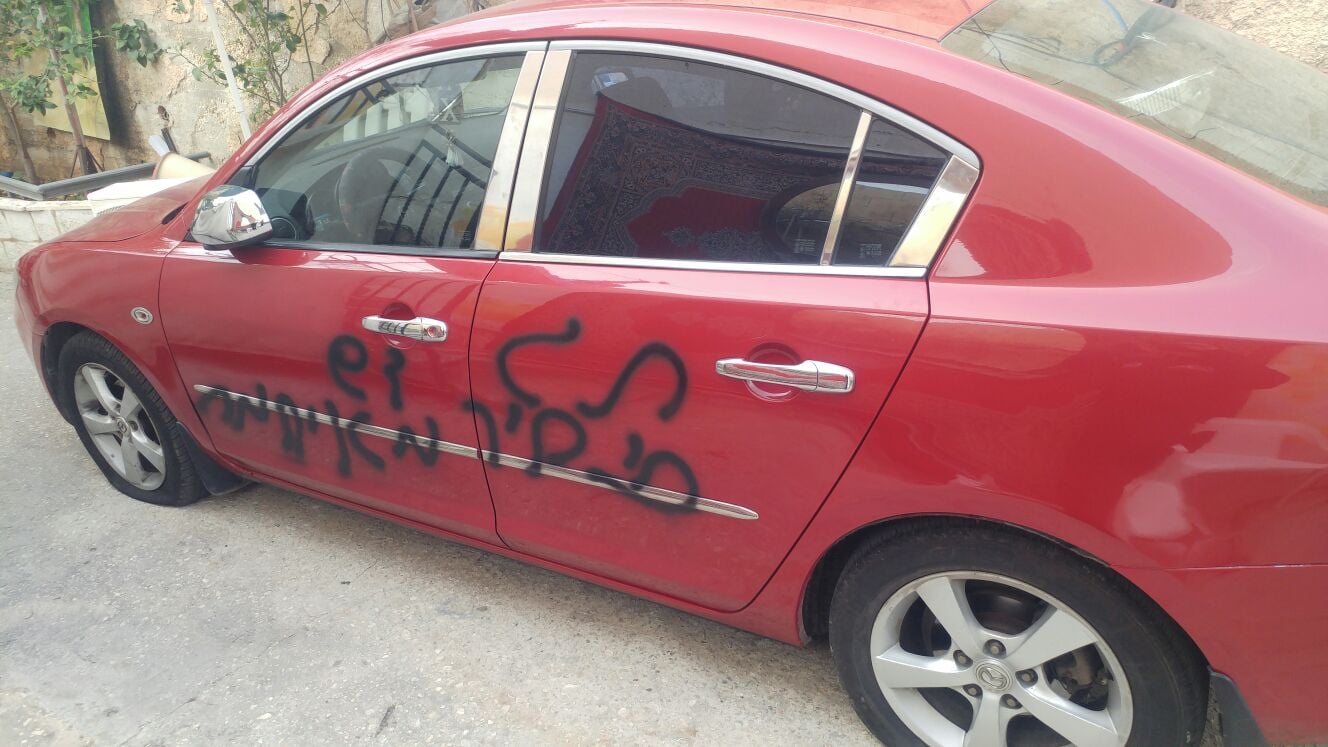
The lawyer for a far-right extremist teen charged with a hate crime said his client was goaded into doing so by a police agent and authorities knew about the attack ahead of time and did nothing to prevent it.
Documents seen Wednesday by The Times of Israel appear to confirm the account that the older accomplice, who is 18, was cooperating with authorities. Police vehemently deny this, pointing out that older man was also in prison and has been indicted.
The accusations come amid a surge in far-right hate crimes against Palestinians and Arabs.
Both the teen, who cannot be named because he is a minor, and the second man were indicted for spray-painting hate slogans in Hebrew on walls throughout the Sheikh Jarrah neighborhood of East Jerusalem in December 2017.
But the minor’s attorney became suspicious of foul play when the indictment against his client made no mention of the older accomplice who provided the younger teen with the necessary tools to carry out the hate crime.
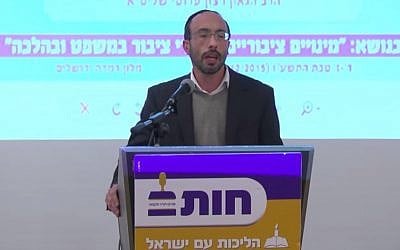
The lawyer, Moshe Polsky from the Honenu legal aid organization, requested to see the indictment submitted against the older accomplice, but was told by police that it was classified.
The Times of Israel managed to uncover the Jerusalem Magistrate’s Court’s indictment against the older accomplice, which states that the suspect prepared a bag of materials necessary for the attack, including a can of spray-paint and a Molotov cocktail.
The older accomplice hid the bag in the Jewish Quarter of the Old City of Jerusalem and told the minor to meet him in the area. According to the indictment, when the teen arrived and opened the bag, he told the older man that he did not want to use the Molotov cocktail.
The suspect tried unsuccessfully to convince the minor to use the arson materials, and the minor ended up only vandalizing a Sheikh Jarrah home with graffiti.
According to classified documents from the Public Security Ministry — also viewed by The Times of Israel — the adult accomplice alerted the police before, during and after the incident and was instructed not to take part.
The classified documents also included a directive from the Public Security Ministry ordering the minor’s attorney not to publicize information on the adult accomplice, which could “expose the police’s working methods… and harm the effectiveness of its activities.”
The indictment against the older accomplice also mentioned another incident where the 18-year-old suspect encouraged the minor to carry out a different hate crime attack in the northern West Bank, again supplying the teen with the materials to do so.
Then too, the classified Public Security Ministry documents showed that the older accomplice updated authorities throughout the planning and execution of the attack, which was not averted.
The police vehemently denied the allegations, saying they were “based on erroneous facts that do not correspond to reality. Contrary to the claim, the prisoner was never used as a police agent.”
The Wednesday statement pointed out that the older accomplice was sitting behind bars along with the minor, suggesting that he was in fact not an informant.
“His detention is the result of the police’s determined action against such crimes,” the statement said.
Police refused to reveal the “intelligence information” corroborating their claims, but asserted that it takes every hate crime allegation seriously.
Polsky blasted the conduct of law enforcement and said the case was reminiscent of ones involving a Shin Bet security service informant known as “Champagne.”
The codename belonged to Avishai Raviv, a radical right-wing activist who became a Shin Bet mole in the 1980s and 90s.
After the assassination of former prime minister Yitzhak Rabin in 1995, Raviv was accused of having known of killer Yigal Amir’s plans to murder the prime minister and of failing to inform the Shin Bet in advance. Raviv was tried but found not guilty.
“Israel in 2018 is waking up to a ‘Champagne’ reality we thought had ended in 1995. This is an earthquake, which should concern every citizen,” said Polsky.
The attorney added that law enforcement’s “obsession with producing results” in the fight against Jewish crime “once again crossed all lines and norms.”










The Times of Israel Community.