

 From the Liveblog of
Friday, October 24, 2025
From the Liveblog of
Friday, October 24, 2025
Debris from Gaza war is 170 times weight of NY’s Empire State Building — UN analysis
 Add ToI as a Preferred Source on Google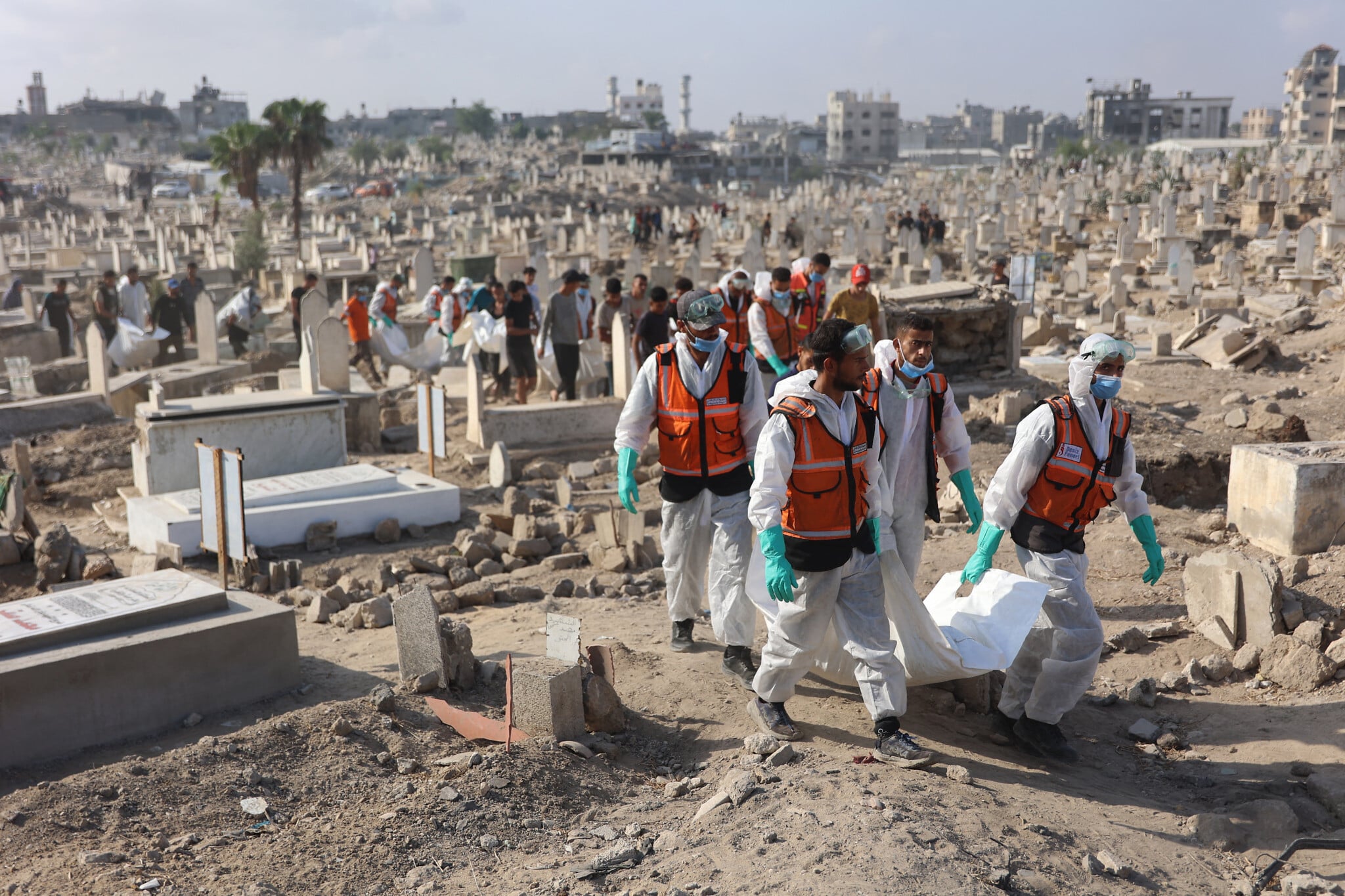
After two years of war, Gaza is buried under more than 61 million tonnes of debris and three-quarters of buildings have been destroyed, according to UN data analyzed by AFP.
As of July 8, 2025, the Israeli army had damaged or destroyed nearly 193,000 buildings in the densely populated territory, representing about 78 percent of existing structures before the conflict began on October 7, 2023, according to satellite analysis by the United Nations’ UNOSAT program.
In an assessment of images from September 22-23 of Gaza City, the UN agency estimates that an even higher proportion — 83 percent — of buildings there had been damaged or destroyed.
The total 61.5 million tonnes of debris is nearly 170 times the weight of New York’s Empire State Building and is equivalent to over 169 kilograms of debris for each square meter of Gaza’s small territory.
Nearly two-thirds of the debris was made in the first five months of the war, according to the UN Environment Programme (UNEP).
The destruction of buildings also accelerated in the months leading up to the current ceasefire.
Eight million tonnes of debris were generated from April to July 2025, mostly in the southern part of the territory between Rafah and Khan Yunis.
A preliminary analysis published by UNEP in August warned that the debris poses a serious health risk to the exposed population.
The UN agency suggests that at least 4.9 million tons of debris could be contaminated with asbestos from old buildings, particularly near refugee camps such as those in Jabaliya in the north, Nuseirat and al-Maghazi in the centre, and Rafah and Khan Yunis in the south.
UNEP also reports that at least 2.9 million tonnes of debris could be contaminated with “hazardous waste from known industrial sites”.










The Times of Israel Community.