

Lying like a rug: An artist finds perspective in the carpets of her Druze village
Fatma Shanan wins a prestigious prize and a solo show in Tel Aviv for her treatment of the revered household fabrics
 Add ToI as a Preferred Source on Google
Jessica Steinberg, The Times of Israel's culture and lifestyles editor, covers the Sabra scene from south to north and back to the center
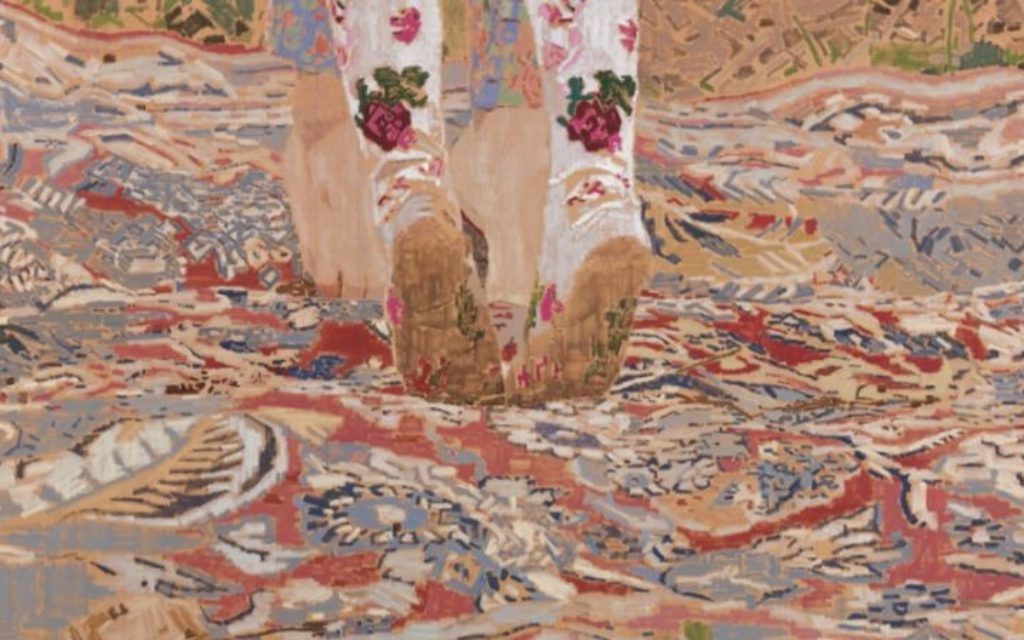
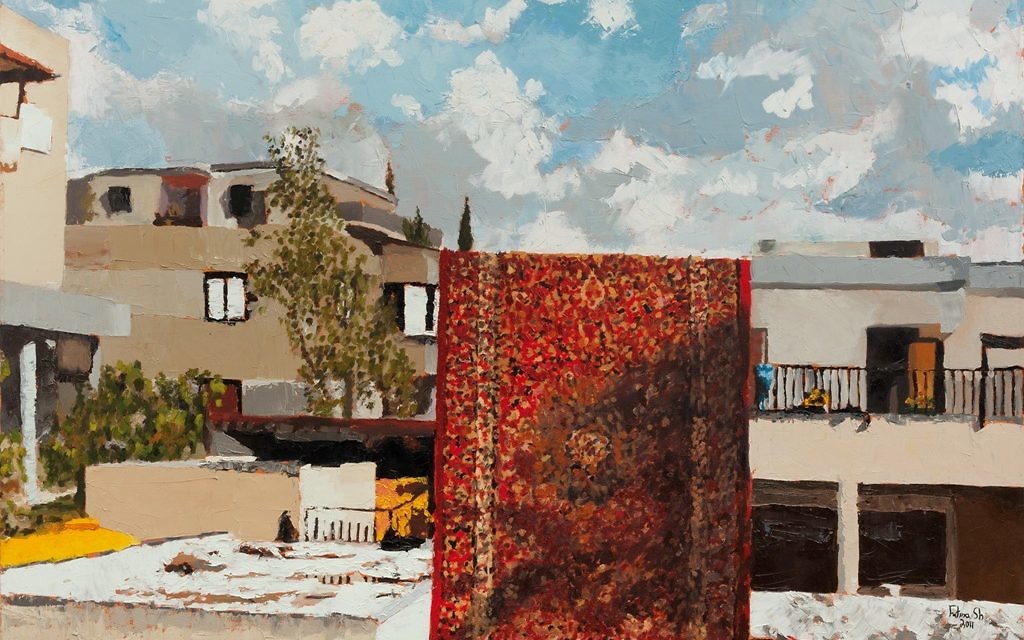
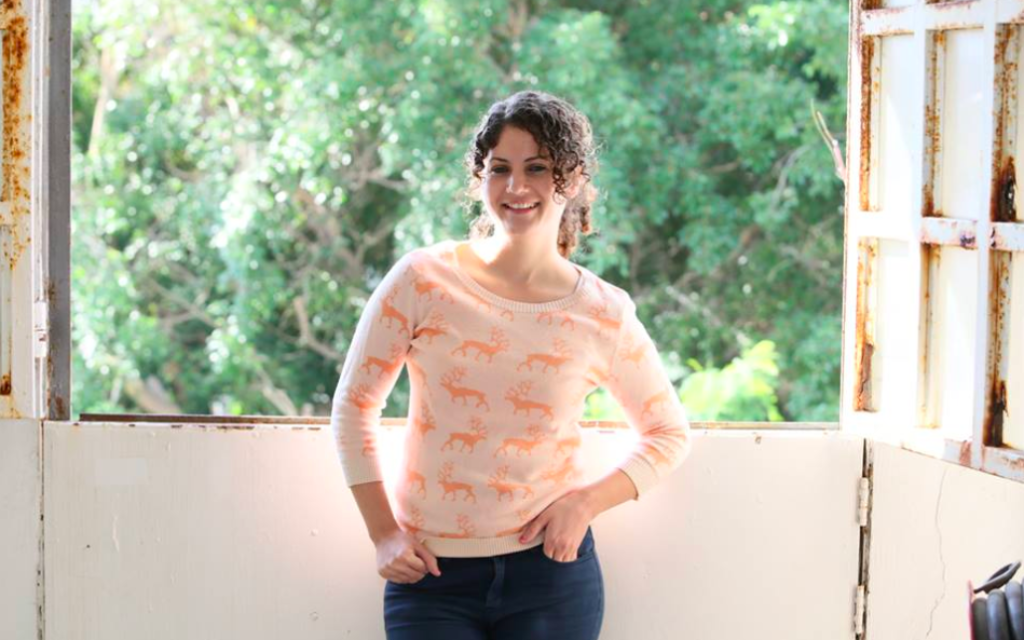
For painter Fatma Shanan, the woven ornamental rug, a fixture of the Druze home, is a symbol of family, tradition and community.
It also features prominently in her body of work, which is currently the subject of a solo show at the Tel Aviv Museum of Art and for which she recently won the 2016 Haim Shiff Prize for Figurative-Realistic Art.
The rugs — laid flat on a balcony, rolled up as a bolster for a young girl’s body, or serving as a picnic blanket in the middle of a field — are ubiquitous, depicted in confident strokes and rich tones.
They are the carpets used in Druze homes and prayer houses and considered precious by the society in which she was raised, in the northern village of Julis.
“These carpets have their own rules, aesthetics and past,” said Shanan in a recent interview at the museum. “The carpet has always been inseparable from the experience of home and family, and is treated with a kind of disproportionate awe. It can’t be stepped on, it must not become soiled. The women attend to it, obsessively: cleaning, shaking, brushing.”
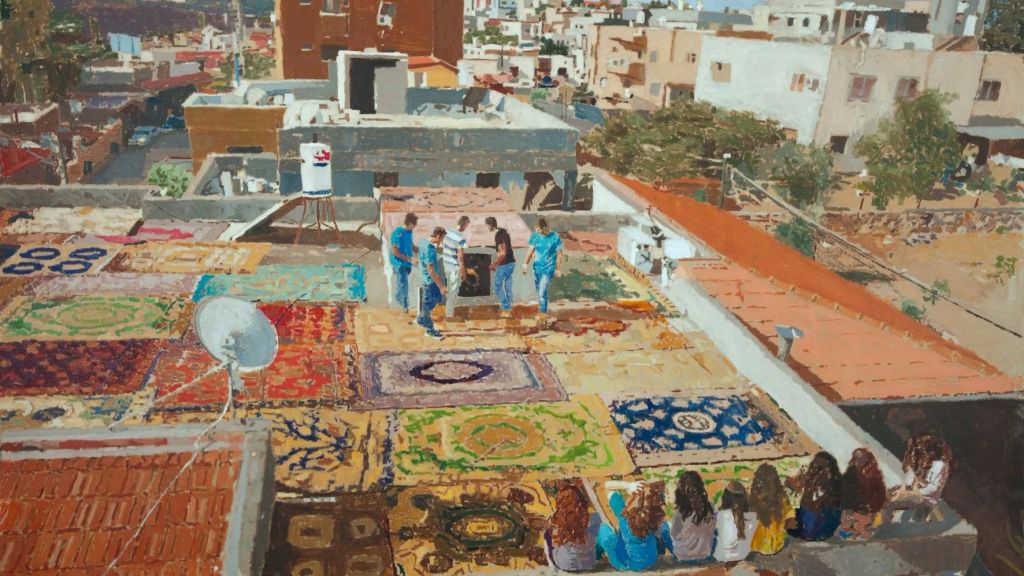
The 31-year-old Shanan, who has been drawing and painting for as long as she can remember, used to paint carpets in great detail, meticulously reproducing flowers and lines.
She would use family members, such as a niece and nephew, or friends as models — on tiptoes on a rumpled rug, or resting a head on it.
Later, influenced by Impressionist works, she began to deconstruct the carpet image. In her more recent paintings she had local teens help her lay out rugs on her family’s roof to create a patchwork of carpets. The Tel Aviv exhibit includes a video of that project, which Shanan saw as a way of involving her friends and neighbors in her artwork.
In the past year, she began cutting rugs and piecing them back together to find a pattern, and inserting herself into the works as a head peering into the rug.
“If before it was the body and the rug, now it’s the rug and the body and the images in the rug itself,” she said.
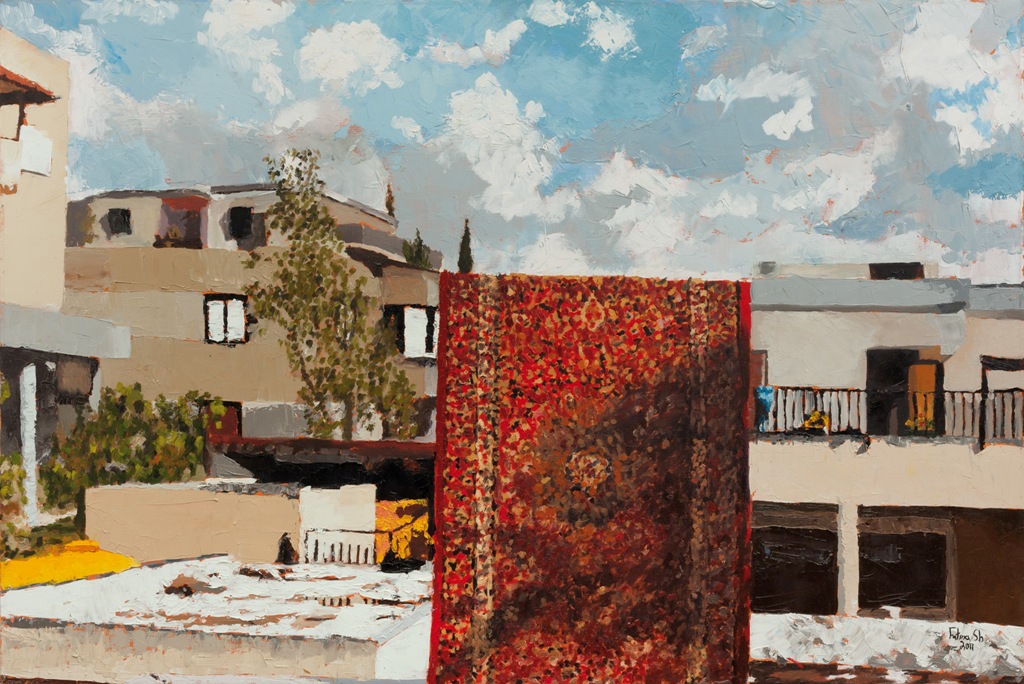
The rugs, she said, link her to her roots while affording her a way to think about her life.
“Growing up in a traditional home was hard on me,” said Shanan, who now lives in Tel Aviv. “You’re part of the community — you’re an inseparable part of it — but it’s hard to run your life according to your own personal needs and desires. I had to find a way to do what I wanted, and still be a part of it. I lived in the community, but wanted this too.”
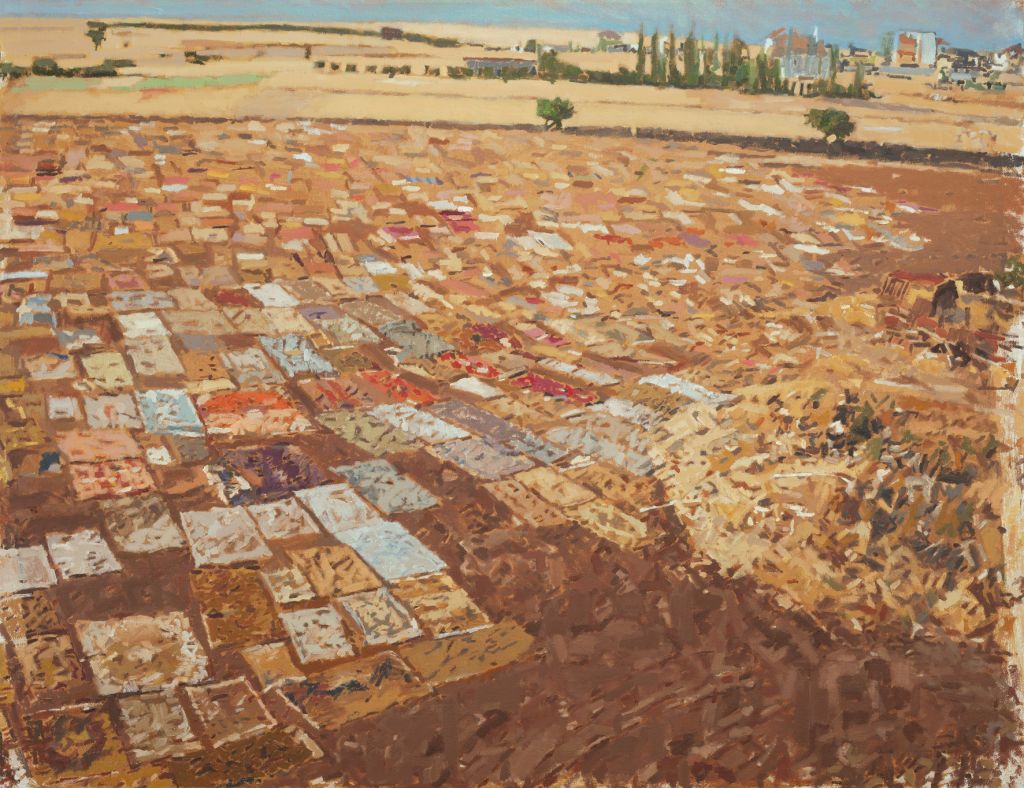
The artist eliminates any spiritual or religious value from the traditional pieces, taking them out of their usual locations — the living room and prayer spaces — and placing them on roofs, in fields, or on the road in order to critique them and see them for what they are.
The rugs are, said Shanan, essentially ephemeral — here today, but easily, and probably, gone in the near future.
“For me, it’s about the relationship of my body and the rug, how the body operates in the space of the rug,” she said. “If the carpet allows me to work from that place, then I’ll continue working with rugs. If not, then that’ll be it.”
Part of Shanan’s research included a stint in the US, where she spent time studying textiles at New York’s Metropolitan Museum of Art. There the rugs were placed on immense surfaces in a completely sterile environment and couldn’t be touched.
“There was a long list of things you couldn’t do,” said Shanan. “It was fascinating in terms of finding my physical boundaries, as the carpet always creates a border. There, it was proven even further, because it wasn’t just physical, but mental, and it made the rugs come alive for me again.”
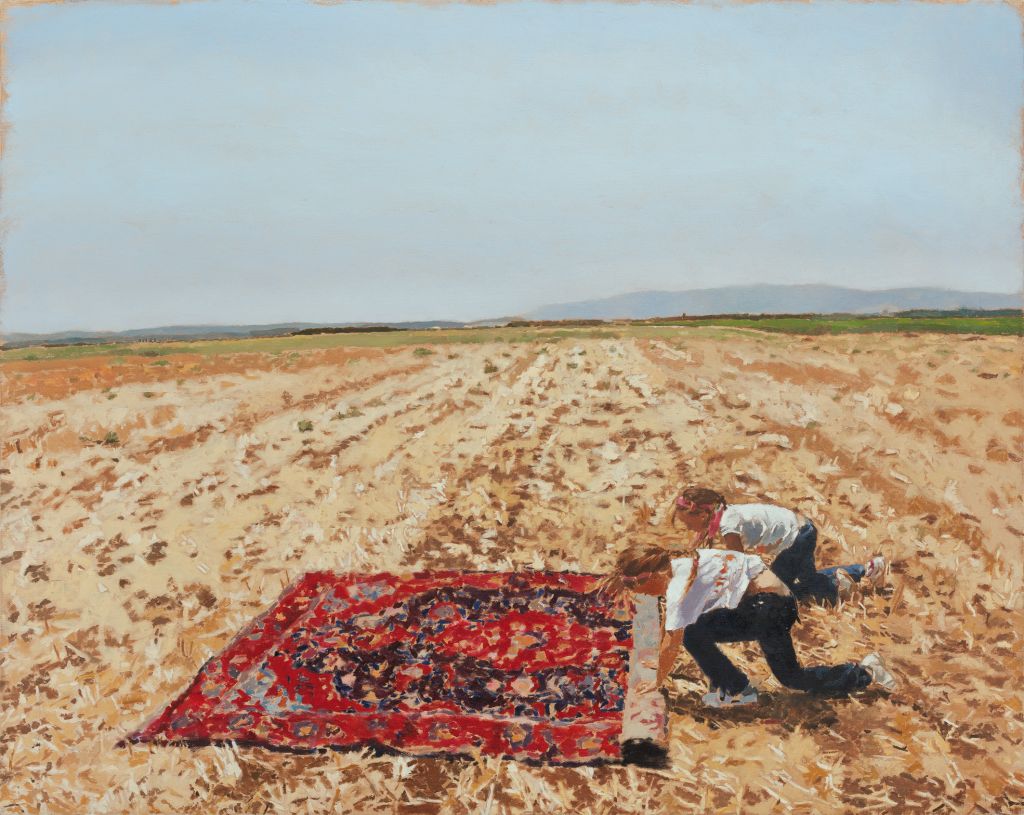
Most of the nearly two dozen artworks displayed at the Tel Aviv Museum exhibit have already been purchased and are part of private collections, which Shanan said is “fantastic” because it makes her work all the more relevant.
“It’s not enough for me to understand my work; I need people to react to it,” she said. “When people stop reacting, there’s no meaning to it.”
Fatma Shanan Works 2010-2017 opened on June 26 and will close on October 28, 2017, in the Herta and Paul Amir Building of the Tel Aviv Museum of Art.









The Times of Israel Community.