

Massive funding influx won’t get East Jerusalem schools out of crisis, NGO says
Left-wing group Ir Amim says state is conditioning funding on adoption of Israeli curriculum, planned additional classrooms won’t alleviate large shortage among Palestinians
 Add ToI as a Preferred Source on Google
Sue Surkes is The Times of Israel's environment reporter
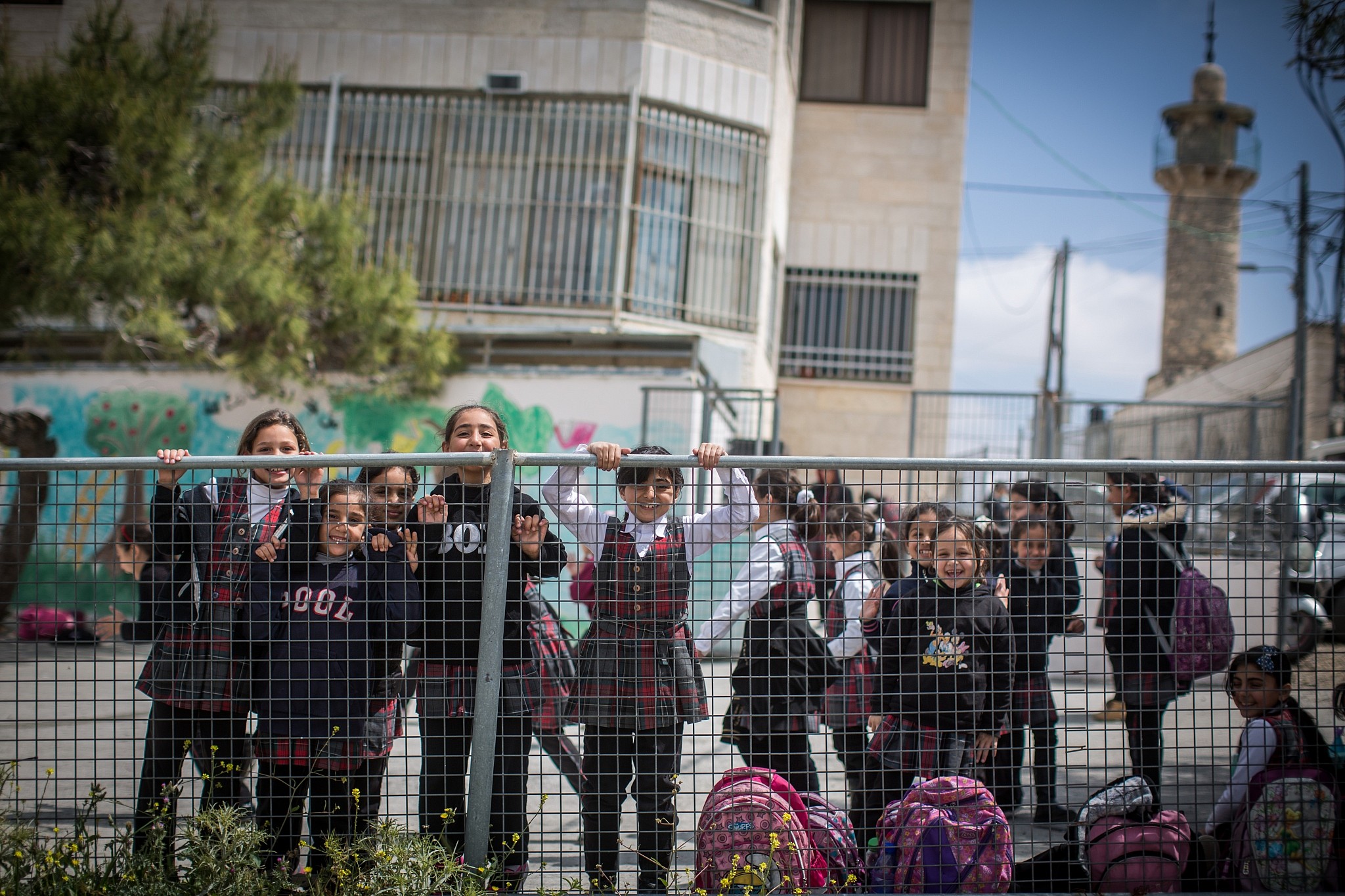
A much-vaunted five-year government plan to improve conditions in Arab East Jerusalem will end up widening educational gaps between Palestinian and Jewish children, the left-wing Ir Amim organization charged Tuesday in an annual report.
The group accused the government of using East Jerusalem’s dire need for funding to force Palestinian schools to adopt an Israeli curriculum, and said that one in seven school-age East Jerusalem Arabs could be missing from the municipality’s official population figure, masking the true depth of a massive classroom shortage.
On May 13, the Prime Minister’s Office announced it would pump billions of shekels into Jerusalem, including a large chunk specifically for East Jerusalem to “reduce social and economic gaps and promote economic development.”
The decision cited the need to “strengthen the ability of East Jerusalem residents to integrate into Israeli society and economy.”
The plan included overhauling East Jerusalem’s education system at a cost of NIS 445 million ($122.8 million) — a figure that represents the biggest investment of its kind since Israel annexed East Jerusalem in 1980 in a move that the international community has never accepted.
According to Ir Amim, nearly 47 percent (NIS 208 million, or $57.4 million) of the funds earmarked by the government for closing educational gaps in East Jerusalem will be conditioned on schools moving to the Israeli education system.
These funds relate to special programs, Hebrew studies, construction, and building rentals.
But the head of the city’s education department, Aviv Keinan, disputed the claims made by Ir Amim.
“Firstly, morally and ethically we have a responsibility to these children,” he told the Haaretz daily. “Secondly, I believe that a good education system will provide stability and hope over the long term. This will also improve the security situation for those concerned about terror attacks.”
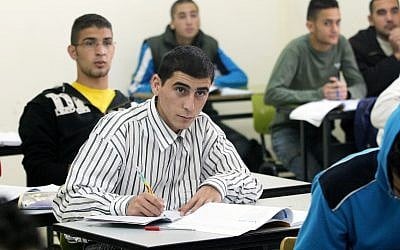
Israel considers East Jerusalem an inseparable part of its capital, but Arab residents say there is a large gap between services in Jewish-majority West Jerusalem and the eastern half of the city.
The Palestinians seek East Jerusalem as the capital of a future state.
Most East Jerusalem Palestinians are not Israeli citizens, and instead hold residency rights that allow them to work and freely travel in Israel.
Palestinians, including in East Jerusalem, followed the Jordanian education system until the 1990s, when they switched to a Palestinian Authority curriculum in accordance with agreements signed under the Oslo peace accords.
Despite repeated moves to encourage the Israeli curriculum in East Jerusalem over recent years, it is currently followed by just 6.6% of Palestinian pupils.
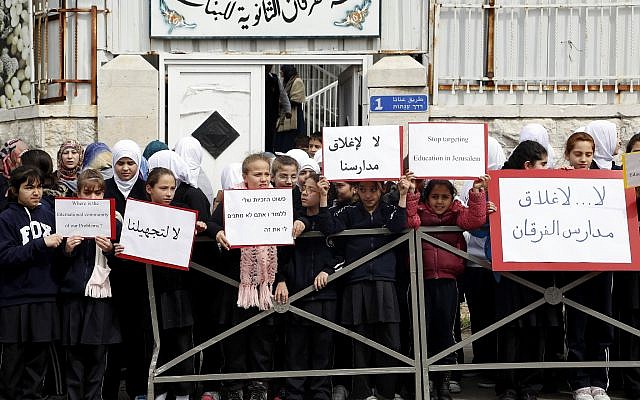
According to Jerusalem Municipality figures, Arab East Jerusalem is short 1,938 classrooms, while in the Jewish sector, the ultra-Orthodox system lacks 1,419 classrooms and the state religious and secular sectors need another 505, for a total of 3,862.
And yet, according to figures provided in a municipal response to a High Court petition submitted by Jerusalem parents worried about classroom shortages throughout the city, officials plan to build only 3,118 classrooms over the next five years. Of those, just 834 will be built for the Arab community.
By contrast, 1,609 classrooms will be built for ultra-Orthodox Jewish children and 675 for those in the Jewish secular and religious systems.
By 2022, the only community with a classroom shortage will be the Palestinian one, the report said.
‘Missing children’
Yet the problem may be far worse than the municipality’s own figures show.
It compared figures from the Central Bureau of Statistics, showing that there were 127,198 youngsters aged 3-18 in East Jerusalem, with data from the Jerusalem Municipality, which only had records for 108,598 — a difference of 18,600, or more than 14 percent.
This suggests that one in every seven school-age Palestinians is not registered as being in any educational framework.
Taking these “invisible” students into account and assuming that high dropout rates at 9th grade could be brought down, Ir Amim estimated that 2,476 classrooms are actually needed to bring East Jerusalem schools up to par.
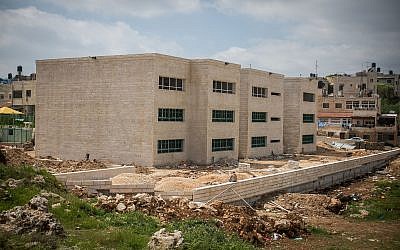
On average, the municipality has built just 36 classrooms a year in Arab East Jerusalem since 2001, according to the report — around half of what is needed just to keep up with Palestinian population growth.
The report criticized the official explanation that the classroom shortage was due to a lack of land, accusing the city of using discriminatory planning policies to keep public lands in East Jerusalem at a paltry 2.6 percent.






The Times of Israel Community.