

Palestinian herders file High Court petition against IDF confiscation of water tankers
Motion demands IDF provide for humanitarian needs of residents of West Bank Bedouin hamlet, since they can no longer sustain themselves or their livestock
 Add ToI as a Preferred Source on Google
Jeremy Sharon is The Times of Israel’s legal affairs and settlements reporter
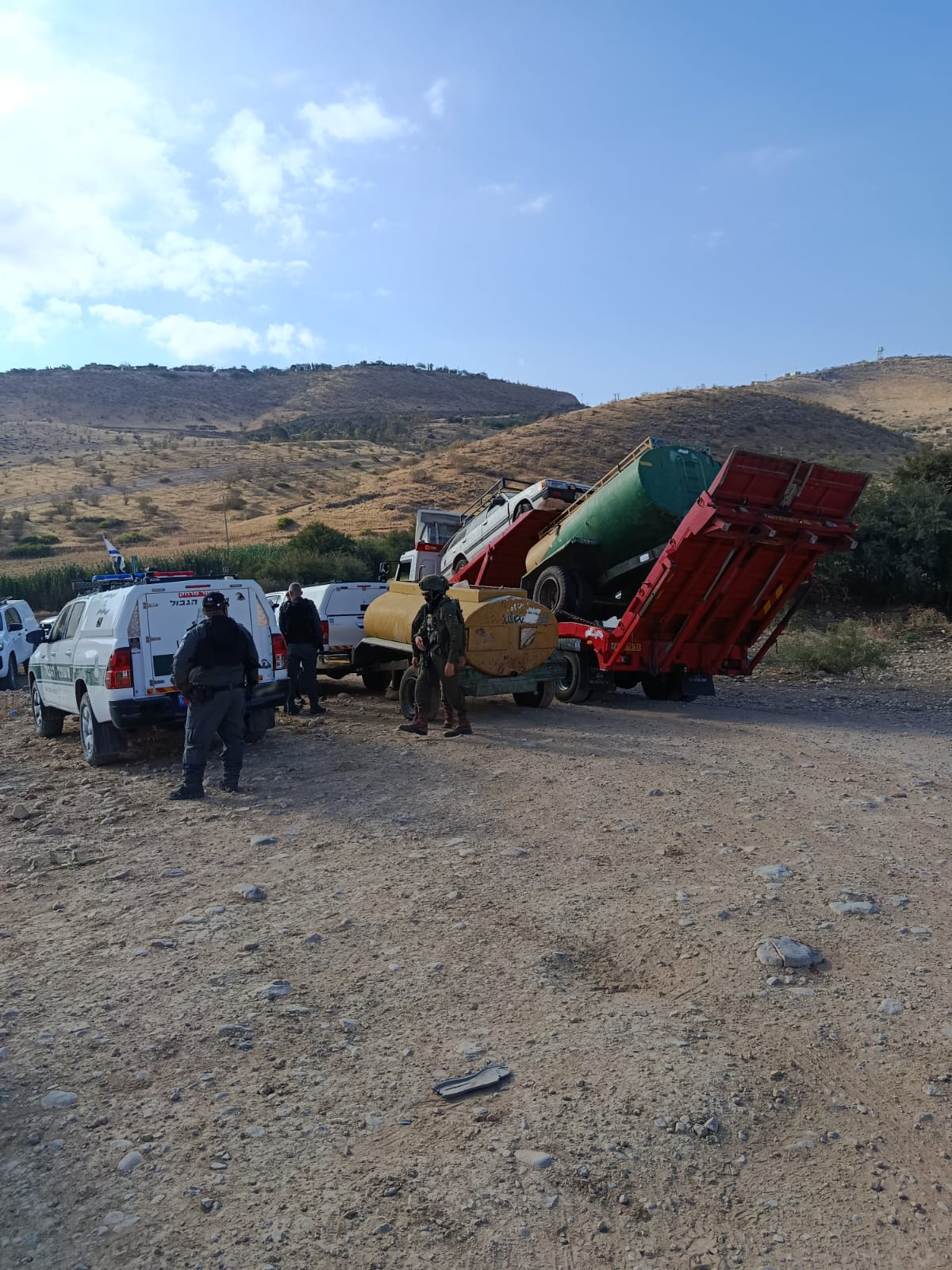
The Association for Civil Rights in Israel filed a petition to the High Court of Justice on Thursday against the Israel Defense Forces, demanding that the military provide for the humanitarian needs of residents of the Palestinian Bedouin hamlet of al-Farisiyah in the northern Jordan Valley.
The petition was filed on behalf of 10 residents of the hamlet following a seizure operation conducted by the IDF on Monday in which the military confiscated tractors, water tanks, and the private vehicles of the residents of al-Farisiyah on the grounds that they were used inside IDF firing zones where the Bedouin are not authorized to enter.
Four similar seizure operations were conducted against other Palestinian communities in the region, which left them, as well, without the basic means of survival.
ACRI asserted in its petition that the seizure of the water tankers and other vital equipment was to all intents and purposes a depopulation order, since it left the residents without the capacity to sustain their lives in their villages.
The IDF Spokesperson’s Unit said in response that the seizures were conducted “in order to prevent entry to firing zones which are necessary for military training and activities,” and that the operations were also focused on “apprehending trespassers, evicting unauthorized residents, removing illegal construction, and confiscating vehicles that were used in violation of orders and procedures in the area.”
The 30 residents of al-Farisiyah have suffered from incessant harassment by radical settlers from illegal settlement outposts in the region, as well as repeated intervention by IDF forces in the area on behalf of the settlers. Al-Farisiyah is one of the last remaining Bedouin villages still populated in the northern Jordan Valley, as a result of settler harassment against other such communities in the region.
On Monday, the IDF confiscated two of al-Farisiyah’s water tankers, a tractor used to pull them, and the private vehicle of one of the residents.
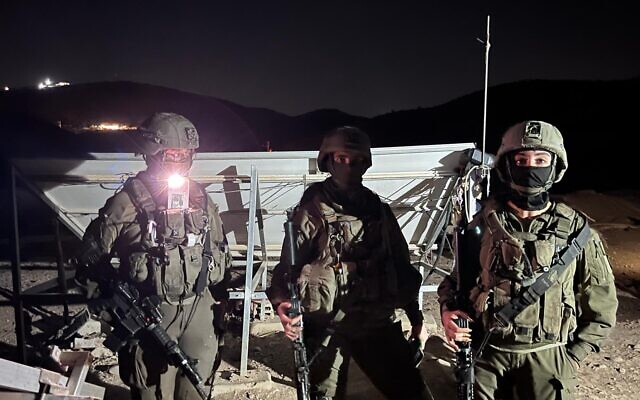
On Tuesday night, an IDF force then conducted a “routine inspection” at 9 p.m. to check water containers that the residents had managed to bring after their water tankers were confiscated.
ACRI’s petition argues that since the residents of the hamlet can no longer access water, feed themselves or their livestock, or travel for humanitarian purposes such as medical requirements, the IDF is responsible for their humanitarian needs since it is the sovereign in the West Bank.
ACRI noted that the IDF and other Israeli authorities have refused to allow al-Farisiyah to be connected to the water network or establish water-filling points in the area, and were therefore dependent on the seized water tankers for their survival and that of their livestock.
“Every day since the confiscation, the residents struggle to obtain water, so that their health and the health of the animals they own, which are their source of livelihood and the center of their way of life, are not harmed,” ACRI said.
“Every day and every hour, they do not know how they will survive the next few hours… They have no alternative place to live, they have nowhere to go.”
According to ACRI, the grazing lands used by al-Farisiyah residents are privately owned, but were declared to be IDF “firing zones” in the 1960s and 1970s. Hundreds of thousands of acres of land in the West Bank were designated as training zones and, in the main, closed off to development or agricultural use.
According to research by the Kerem Navoth organization, however, some 80 percent of firing zones are not used at all for military training.
Additionally, some illegal settlement outposts actually lie inside or partially inside firing zones, while other settlers have been permitted to graze their livestock inside firing zones.
Residents of the West Bank Bedouin hamlet al-Farisiya remonstrate with IDF soldiers against a night-time search, May 26, 2026. (Courtesy Jordan Valley Activists)
One such outpost is Aira Shahar, just west of the southern Jordan Valley region, which lies inside firing zone 906, while three other outposts in the Jordan Valley — Auja Farm, Rosh Tidhar, and Zohar’s Farm — are on the edge of the same firing zone’s borders and pasture their livestock on land inside it, according to Kerem Navoth director Dror Etkes.
Since the IDF has not seized equipment from such outposts, ACRI said in its petition that the IDF was not enforcing restrictions on firing zones in an equal manner, and that the seizure orders against al-Farisiyah were therefore discriminatory and unlawful.
“Not only is the state acting in violation of international law, which obligates it to protect the human rights of the residents of the territories, to live with dignity and equality, it is also discriminating against them and even abetting their expulsion and forced displacement,” said Reut Shaer, an attorney for ACRI who filed the petition.
“The shameful and humiliating confiscation incident serves as a tailwind for violence that is clearly aimed at causing the Palestinian residents to abandon the area,” she said. “And the opposite is also true: Violence against the family as well as against other communities serves as a means of reinforcing attempts to uproot the communities from their place through forceful enforcement and discrimination directed against them.”
The IDF said, however, “It should be emphasized that the evacuation [of unauthorized residents] is being carried out in accordance with the law and operational needs only.”
“Security forces carried out an operation to enforce the ban on entry to many firing areas in the Jordan Valley and to enforce planning and construction laws,” it added, “during which more than 40 vehicles operating in the firing areas and whose presence is against the law were confiscated.”







The Times of Israel Community.