

Shalom, y’all: Jewish country music singer mixes Torah with Texas twang
Bred in America’s Bible Belt, Joe Buchanan converted to Judaism after his wife of 13 years revealed her heritage at a Holocaust museum
 Add ToI as a Preferred Source on Google
Zev Stub is the Times of Israel's Diaspora Affairs correspondent.
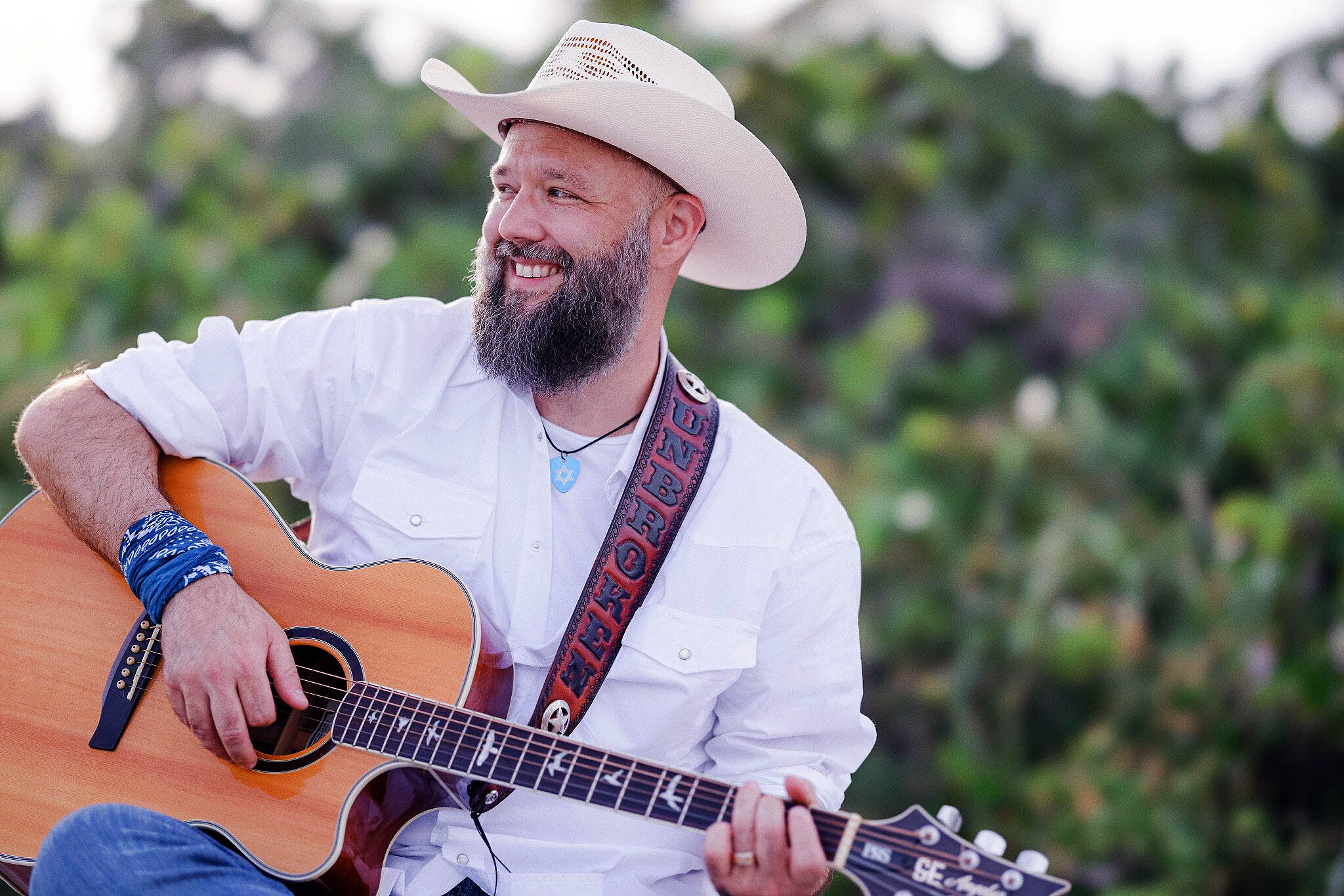
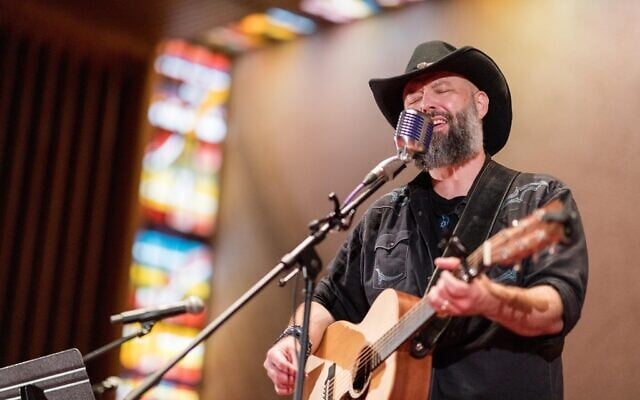
When he’s up on stage wearing his cowboy hat and singing in his baritone Texas twang, Joe Buchanan looks at first like a stereotypical American country music singer. But as his big Star of David belt buckle peeks out from under his shirt, and you hear that his lyrics are full of meditations about Shabbat and spirituality, it becomes clear that he is no honky-tonk redneck.
Nothing about Buchanan’s life journey could have been expected when he converted to Judaism following his wife April’s bombshell revelation after 13 years of marriage.
“We had just come out of visiting the Holocaust Memorial Museum in Washington, DC, standing there processing what we’d seen, and my wife said to me, ‘I want to get in touch with my people’s faith,'” Buchanan recalled in a conversation with The Times of Israel. “And I’m like, ‘What are you talking about?’ and she said, ‘Joe, I’m Jewish.’ That set off a process that changed our lives.”
Eleven years after he completed his conversion to Judaism, Buchanan is in Israel for the second time in his life, with concerts scheduled in Jerusalem, Tel Aviv and Katzrin, in the Golan.
He recently released his third album, Heaven and Earth, which features thoughtful Jewish country music that isn’t all about beer, pickup trucks and heartbreak. It’s “an emotional snapshot” of his struggles with love, faith, antisemitism and other contemporary Jewish themes, Buchanan said.
“To me, country music has always been about storytelling,” Buchanan said. “It’s about people and their struggles, looking honestly at loss and victory and all that stuff. That’s what’s drawn me to it since I was a kid growing up in Texas.”
Competing views of heaven
As Buchanan tells his origin story, it becomes clear that he has had his share of heartache. With the wisdom of someone who has worked to vanquish his inner demons, he uses humor and compassion to brush through rough childhood memories growing up as a troublemaker in the deeply Christian area of America known as the Bible Belt.
“Everyone would tell me that I would never get into heaven, that I was essentially ‘damaged goods,’ ” Buchanan said. “That was very different from the image I had of a loving God, and I walked away from it.”
As he grew up, Buchanan sought spiritual truth, but when his wife, who came from an American military family, said she had no interest in organized religion, he decided it was best to put his quest on hold.
When his wife told him 13 years later that she was Jewish, they both realized that they were clueless about what that meant.
“She told me outside that museum, ‘My mother’s Jewish,’ and I’m like ‘I know that, but you never told me that you were also,” Buchanan recalls, laughing. “Our 12-year-old son didn’t know that he was Jewish either. Neither April nor I had any idea about how this worked.”
Seeking answers, the two eventually met with Rabbi Stuart Federow at the Conservative Congregation Shaar Hashalom in Houston. “We asked him to break it down for us, and he told me something I would never forget,” Buchanan said. “He said, ‘There is one God who loves you regardless of what you do. Your only job is to do good because it puts more good in the world, not for any kind of reward later on or fear of punishment.'”
“I’d never had an adult tell me anything like that,” Buchanan recalled emotionally. “It was like 30 years of therapy for me.”
Like an expert storyteller, Buchanan then shifts the mood. “After he told me that, I was like, ‘Is that it?'” Buchanan recalled with a smile.
“No,” he said, laughing. “There’s a lot more.”
Hearing the music
Buchanan began studying Judaism with his wife and 12-year-old son as they took on religious observance together, and they now maintain a strongly Jewish home following his conversion. Music had always been a hobby for him, but after Buchanan’s rabbi heard him play, word got out around the community, and he scheduled a small concert. From there, he ended up releasing an album, Unbroken, in 2016, followed by another, Back From Babylon, in 2020.
Today, Buchanan tours the United States telling his story, leading a musical Friday night prayer service in synagogues, playing concerts, and giving a workshop called “Choosing to be Chosen,” built around his conversion process.
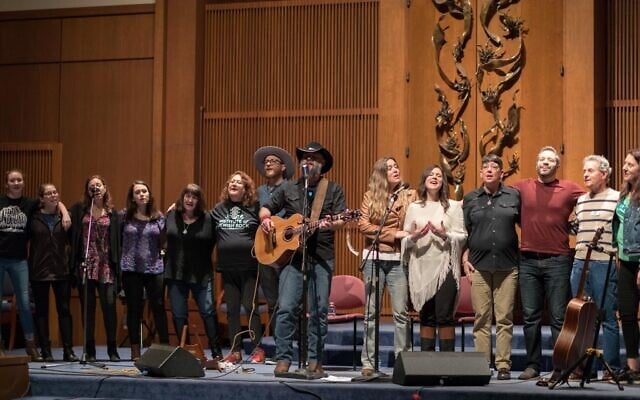
His Friday night show includes the use of musical instruments, so it doesn’t work for Orthodox congregations, but his popularity has grown in other denominations. He performs on Friday night about three times a month, Buchanan estimated.
Country music isn’t usually associated with Judaism or prayer services, but there have been a few precedents. The satirical riffs of Kinky Friedman and The Texas Jewboys may not have represented the Tribe proudly in the 1970s, but New York-based bluegrass group Nefesh Mountain Band has been exploring new horizons with jams dabbling in Jewish themes and liturgy.
Buchanan plumbs the Jewish sources for inspiration and meaning in everyday struggles.
On his newest album, he wrote the song “Hashkiveinu,” a meditation on prayer and struggle, after watching Hurricane Harvey devastate his community in 2017, sending people to seek shelter and safety after their homes were destroyed.
“That song took on even more meaning with audiences after the October 7 massacre,” Buchanan noted.
Another song, “You ain’t got the stones,” is a reaction to antisemitic trolls who make awful comments online, but are afraid to have an open conversation in person, Buchanan said.
“Trolling is easy, but it’s very cowardly,” he said. “Opening up to others takes courage.”
Another, “My beloved,” is a song about the complexities of marriage, framed around the biblical expression of love, “I am my beloved’s and my beloved is mine.”
As a public figure, Buchanan encounters antisemitism, which he counters by showing pride in his identity, not engaging with hate.
“I wear my Star of David, loud and proud, so everybody can see it, and I take questions from people all day,” he said. “The music I play in bars is the same as I play in synagogues. If someone says something antisemitic, we’re just going to show them the door.”
Through his music and story, Buchanan looks to serve as an example of what it means to be Jewish in America today.
“We need more people who are Jewish telling the world what it is to be Jewish,” Buchanan said. “It’s not just the rabbi’s job, it’s also our job.”




The Times of Israel Community.