

Tale of 2 High Holidays: Orthodox Jews go to synagogue, everyone else is on Zoom
Holidays amid the pandemic cast new light on the difference in approach to Jewish law between Orthodox and non-Orthodox congregations in the US
 Add ToI as a Preferred Source on Google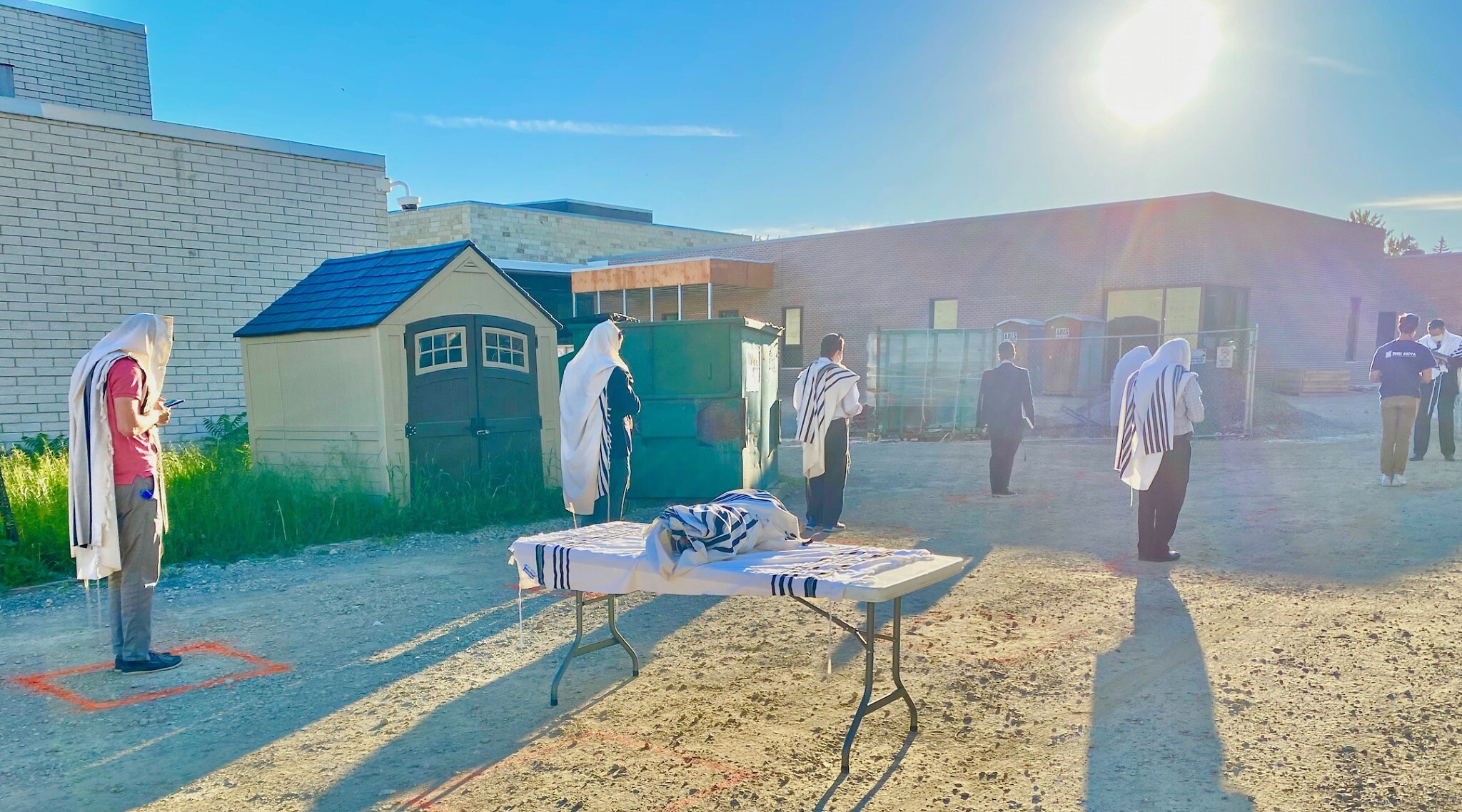
JTA — At the Jewish Center on Manhattan’s Upper West Side, this year’s High Holidays will be anything but normal.
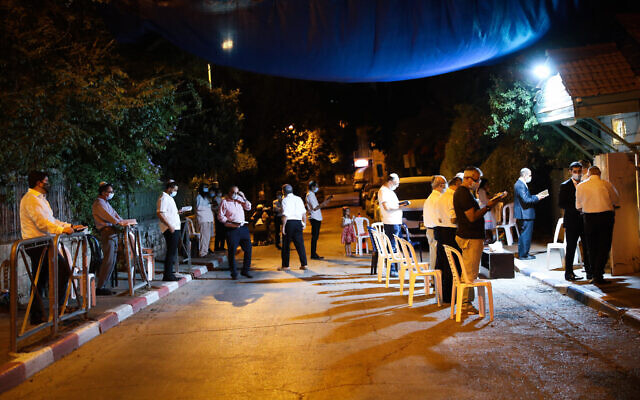
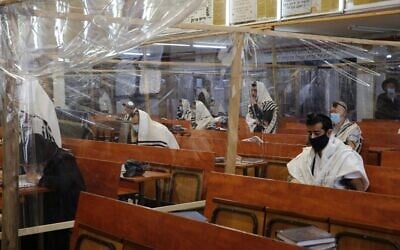
With eight services happening in various spaces throughout the building, on the roof and in the street (which is closed off to facilitate services), approximately 400 people will gather for socially distanced and masked services at the Modern Orthodox synagogue.
Within just a few blocks of the synagogue, members of eight Reform, Conservative, and Reconstructionist synagogues will gather at multiple street corners or lean out their windows to hear the shofar after attending Rosh Hashanah services over livestream.
The different services are emblematic of the starkly divided approaches to the High Holidays that American Jews will experience this year. While for Orthodox synagogues, services will largely be held in person, for most non-Orthodox synagogues, prayer will take place over livestream, with in-person offerings confined to short, outdoor rituals.
Even before the pandemic, the two communities were different in many ways. But this year’s High Holidays have cast new light on the primary difference between Orthodox and non-Orthodox congregations across the country: their approach to halacha, Jewish law.
Jewish law is composed of the biblical and rabbinic texts that guide nearly every aspect of daily life.
For Orthodox Jews, Jewish law is considered binding and is meant to be interpreted by rabbinic experts. For Conservative Jews, Jewish law is also considered binding, though the Conservative movement has shown more flexibility in adapting certain rules to changing circumstances. For the Reform movement, rabbinic answers to Jewish legal questions are seen as more “advisory” than “authoritative.”
During the pandemic itself, the Conservative movement has adopted some new rabbinic decisions, called teshuvot, to adapt Jewish practice to a socially distanced world.
In March, the Conservative movement’s Committee on Jewish Laws and Standards ruled that services requiring a minyan, or a quorum of 10 adults, could be held over video conferencing in a moment of crisis.
In May, the committee ruled that video conferencing could be used for Shabbat and holiday services when electronic devices would generally not be used. Conservative rabbis and congregants even worked with Zoom to make sure streaming would be possible without requiring the violation of other prohibitions.
By contrast, in the Orthodox community, video conferencing is not considered a valid substitute for the 10 adult men needed for an Orthodox minyan. And when it comes to Shabbat and holidays, no major Orthodox rabbis have allowed for the use of video conferencing.
Rabbi Yaakov Robinson, who works at Beis Medrash Mikor Hachaim, an Orthodox synagogue in Chicago, said that for Orthodox Jews, the act of gathering in a synagogue is “essential,” much like the work done by healthcare and grocery store workers.
“In our minds this is as essential of an essential service as possible,” said Robinson.
And for Robinson, the High Holidays won’t be the first time his synagogue returns to in-person services. His synagogue first reopened for Shabbat services in May, with distanced and masked services, meaning the synagogue has had months of practice. While many Orthodox communities first encouraged backyard minyans, many Orthodox synagogues began reopening at their synagogues in late spring and early summer.
“We’ve been doing this for so long and we’ve done well with it,” said Robinson of his synagogue’s services over the last several months.
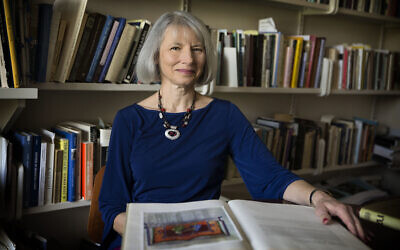
But to Rabbi Vanessa Ochs, a professor of Jewish studies at the University of Virginia, High Holiday services are no less essential for Reform and Conservative Jews.
“Particularly for the thousands of thousands of American Jews who come together once or twice a year for the High Holidays and that’s how they identify themselves – it’s a necessity,” said Ochs.
For them, the non-Orthodox approach to using technology on holidays means a risk-benefit analysis around whether to hold in-person services yields another conclusion. “There is an alternative,” said Ochs.
One place where the two parts of the Jewish world will come together is around shofar blowing, a required component of Rosh Hashanah and Yom Kippur observance. While the Reform and Conservative movements have allowed for High Holiday services to take place over Zoom, many synagogues — in all parts of the Jewish world — have still organized opportunities to hear the shofar in person in an outdoor setting.
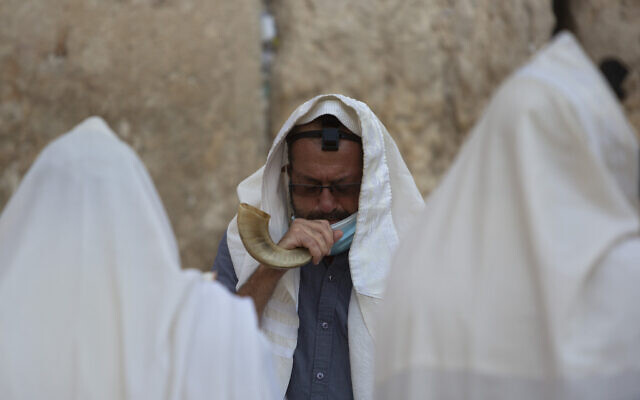
Here, too, halacha may play a role, as Conservative rabbis have not issued formal opinions about whether listening to a shofar over Zoom fulfills the commandment to hear its blast. But even more important for some is the chance to give community members a small in-person experience at a time when more is out of reach.
In addition to the shofar blowings organized by the liberal synagogues on the Upper West Side, local Orthodox synagogues have also organized opportunities to hear the shofar outdoors for those who are not comfortable attending a full in-person service, particularly older people or families with young children.
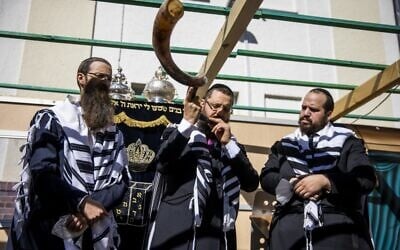
The public shofar blowing may be new for many communities, but the initiative has antecedents in the Chabad movement. Since the 1950s at the direction of the Lubavitcher Rebbe, Rabbi Menachem Mendel Schneerson, Chabad emissaries have blown the shofar in parks, hospitals and other public spaces in communities around the world for those who would not otherwise hear the shofar.
“It’s exciting to me as the rebbe’s student,” said Rabbi Shalom Paltiel of the Chabad Center in Port Washington, New York, “that in 2020, 70 years later, everybody is doing it, every temple from every denomination is taking the shofar to the local park.”



The Times of Israel Community.