

Around the States in 35 days: 50 Mosque Man prays to build bridges across the US
In an increasingly Islamophobic America, Jameel Syed is back on tour discussing his historic journey to spread a message of love and equality
 Add ToI as a Preferred Source on Google
Reporter at The Times of Israel
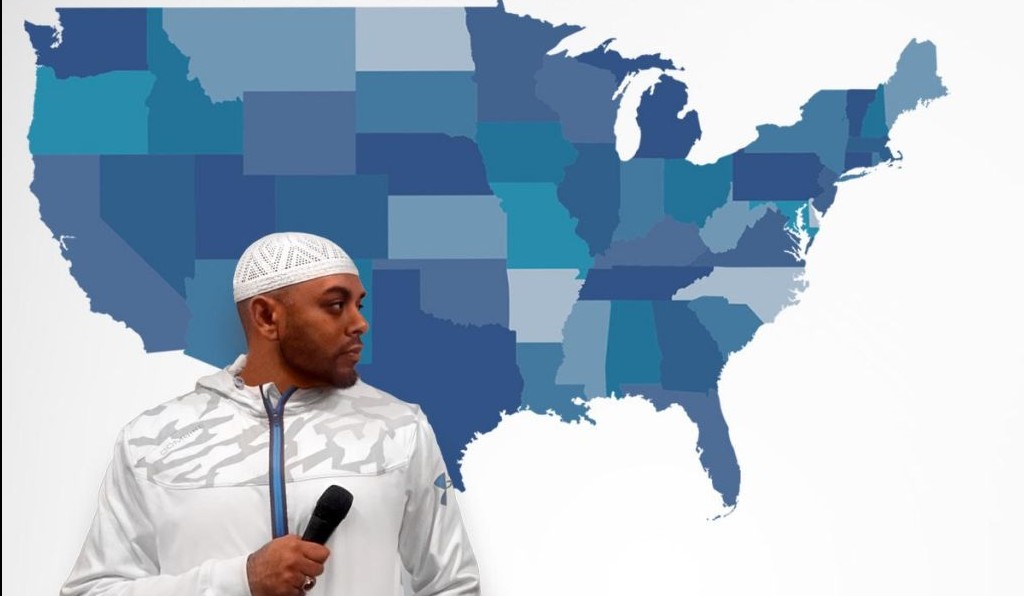
It was an itinerary worthy of the legendary medieval Islamic traveler Ibn Battuta, who in the 14th century wrote about his 30 years of journeys to most of the Islamic world and well beyond.
Last year, 43-year-old Michigan resident Jameel Syed set a goal for himself to recite the Islamic call to prayer, or adhan, across all 50 states in the US. He achieved his goal in his home state on May 8, 2015, finishing the 35-day journey that earned him a new nickname: “The 50 Mosque Man.”
“It wasn’t easy, but it was a great thing to do,” Syed said. “People try to politicize, but it had nothing to do with politics, the Middle East, Europe. It was me going out in celebration.”
In a political climate often charged with misplaced hatred and indiscriminate backlash toward American Muslims for the actions of extremists at home and abroad, such celebration can be rare.
https://www.youtube.com/watch?v=brAifF4YCP8
Indeed, even at the time of writing, Syed is busy mitigating the damage from the horrific shootings at the Pulse nightclub in Orlando, Florida. On Sunday, gunman Omar Mateen opened fire at the club, killing 49 and injuring another 53 in the worst mass-shooting in recent US history. The Islamophobic fallout has been swift.
“The actions of this perpetrator do not reflect the ideals of a religion that represents over 1.6 billion people across the globe and has a very rich tradition of building bridges and making monumental contributions towards the betterment of society,” reads a statement by Syed this week.
“We do not claim this criminal to be a part of our creed or that he represents our community in any way,” the statement continues. “His was a unilateral hate crime specific to himself and the media should classify it as such.”
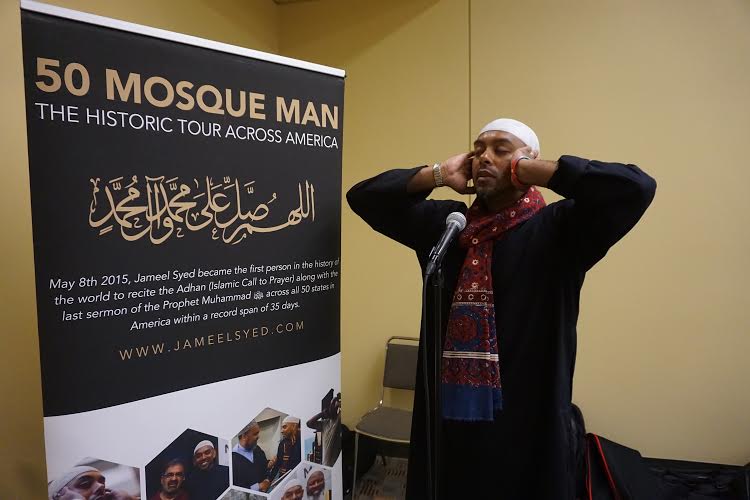
Syed is a muezzin, an individual appointed to lead the call to prayer, at the Islamic Association of Greater Detroit, where he appropriately concluded his tour. The adhan consists of the Taqbir (“God is great”) and the Shehada (“There is no god but God, Muhammad is the messenger of God”).
But it was a retired Catholic nun who inspired Syed’s trademark dramatic prayer style. On his Facebook page he acknowledges his late high school a cappella choir director, Ruth Datz, who during his senior year in 1991 worked with him on such aspects as “vocal pronunciation, open mouth accents, exaggerating my vowels, body language.”
‘It was me going out in celebration’
“Her teachings are integrated into the fabric of my soul, my adhan. Not just the voice training, but her character and persona,” he added.
YouTube viewers can see the results of this training at the Hoover Crescent Islamic Center in Birmingham, Alabama, and the Islamic Center of Central Jersey. Syed has a beautiful, operatic voice that can carry a note and take it through different ranges. It is this voice that called Muslims across the US to prayer last year.
“It was an amazing opportunity,” Syed said. “I saw so many different things, Muslim and non-Muslim, people you would never imagine, at airports, hotels, taxis.”
There were poignant moments, such as when Syed participated in an interfaith ceremony in Newtown, Connecticut, site of the 2012 Sandy Hook elementary school shooting. Eman Beshtawii, president of the Hedaya Islamic Center in Newtown, called Syed “A modern-day Ibn Battuta; I can have my children look up to [him].”
Despite a sometimes-somber backdrop, there were also lighter moments to the tour.
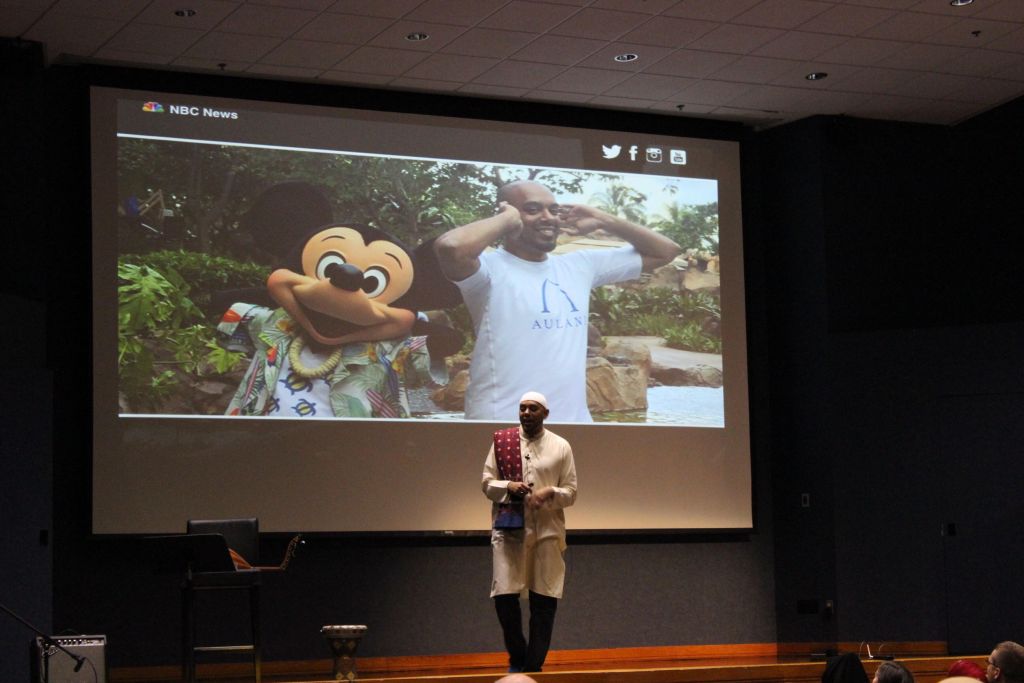
“In Hawaii, I had an opportunity to be in a picture with Mickey Mouse,” Syed said. “He put his hands to his ears, as if in the call to prayer.”
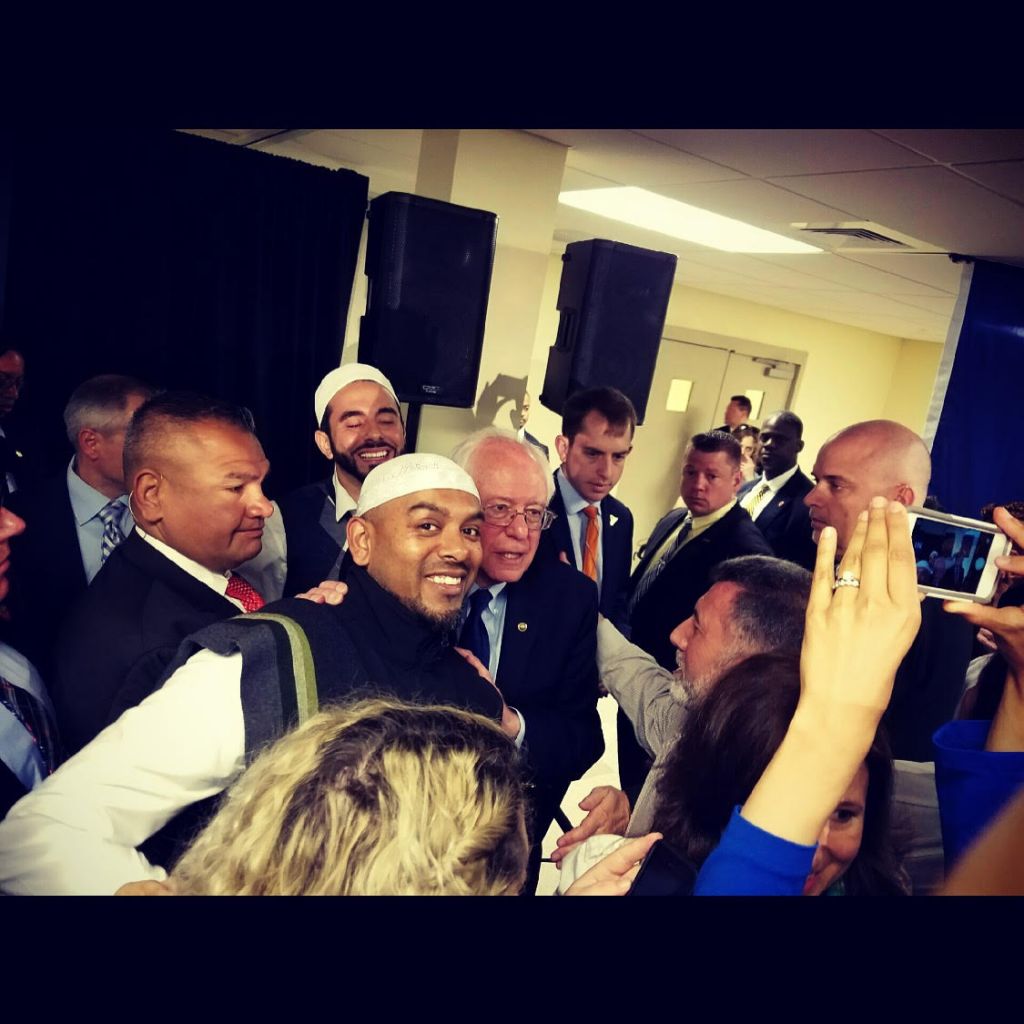
Now Syed is touring again, on a regional scale, to share what he encountered on his historic 2015 journey. At one recent visit in Philadelphia he appeared at an interfaith ceremony with Democratic presidential candidate Senator Bernie Sanders of Vermont.
“[I met] nothing but great people,” Syed said of his record-setting journey. “One wrong person could have ruined the entire thing. It did not.”
Crossroads before a journey
It was December, 2014. Syed, CEO Fluidvisions, a marketing company, and a married father of two, had reached what he described as a pivotal moment in life.
“When you turn 40, interesting things happen,” Syed said. “I had a midlife crisis. I analyzed myself and asked, ‘What have I achieved academically, financially, qualitatively, quantitatively?’”
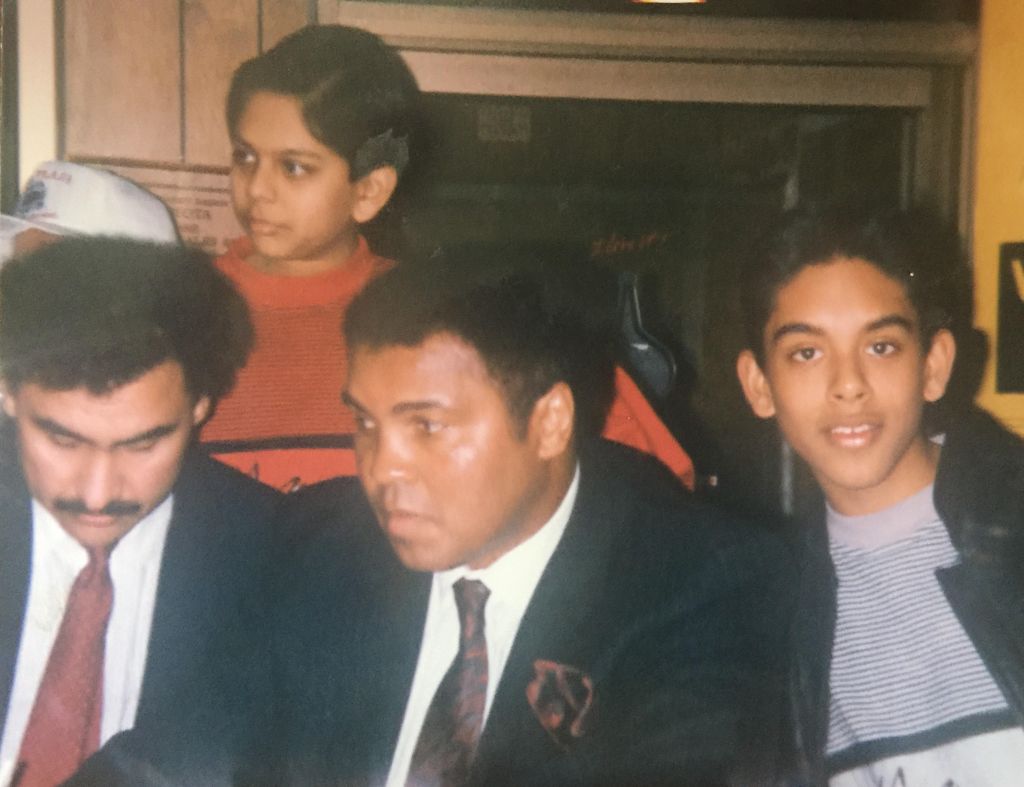
Syed had suffered the loss of his father, Dr. Salam A. Syed, a Pakistani immigrant who died while reciting the congregational prayer in a mosque during Ramadan. The death of his father, who had been one of his spiritual guides, prompted introspection.
Jameel Syed was pleased with the achievements of his own son, Jibril, an honor student who is memorizing the Quran and has an undefeated track and field athlete in the 55-meter hurdles.
“[My father was the] man in front of me and the young man behind me [was my] son,” Jameel Syed said. “I looked at myself and what I had achieved spiritually.”
He found himself wanting.
“I just felt there was more to me, that I have to leave an impression, a legacy, something I can be proud of,” Syed said.
Another of his spiritual teachers reminded him that he did, in fact, have something to be proud of: He was a muezzin.
‘I refuse to stand silently by while the hate continues to fester and spread in our country’
“He went into the sayings of the Prophet Muhammad, the merits of the muezzin, the high level, the station, the status,” Syed said. “I found my salvation.”
He added, “Twenty-three percent of the world’s population are Muslims, from all sorts of different backgrounds. All pray towards Mecca five times a day. The wheels in my head started to turn. All of those skill sets — heart, desire, passion — started to create a project.”
That project would be to recite the adhan in every state in the US.
“I did not plan for a very long time — two months,” Syed said. “Finances, venues, now a calling. I knew it was from God.”
Mapping out the details
Syed set four benchmarks he had to meet at each stop on his tour. First, he had to recite the adhan.
“If I missed one, I would not be able to continue,” he said.
In every mosque he visited, he would also recite the last sermon of Muhammad, the khutbah.
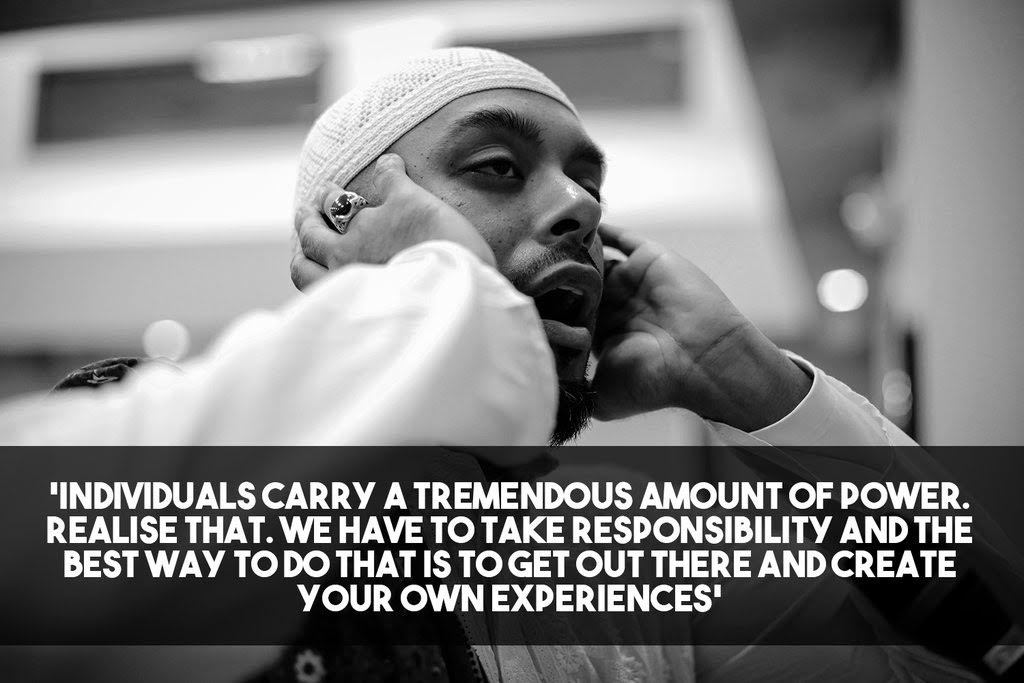
Third, he would request an official certificate from each site that he had made the call to prayer there.
The final requirement was to record a five-minute video with a community member about the history of Muslims in every location he visited, and the good works performed there.
“All four needed to be done before I left,” he said.
Syed found a campaign manager, Yahya Sultan of New Jersey, a Disaster Assistance Response Team member for Islamic Relief USA.
“I was born and raised here, this is my country, and I refuse to stand silently by while the hate continues to fester and spread in our country,” Sultan told the Huffington Post. “I always feel pressured to prove myself to people that I’m as American as apple pie and just as peaceful.
“The fact is I don’t have to prove or defend myself for the actions of people who do not represent my religion,” he said. “I want everyone to see what I see on this trip, I want people, Muslim and non-Muslim alike, to see how awesome Muslims are in every state and provide a platform for them to reclaim their own narrative. We are going to share their stories with the world.”
‘There is a big call for divisiveness, hate mongering, fear mongering, towards Muslims in America’
Syed created a GoFundMe page with a goal of raising $50,000. He received donations ranging from $5 to $500, although he did not meet his goal.
He planned to travel to 34 states by car and fly to 16 in a span of just over a month. The journey began in the Midwest, at the Islamic Center of North America in Plainfield, Indiana, on Friday, April 3.
“I sometimes [visited] three states, four in one day,” Syed said. “[I could do that on the] East Coast, but on the West Coast, there was no chance for that. I had a three-and-a-half to five-hour average stop.”
Finding venues in all 50 states presented a challenge.
“I started off, if I had relatives who knew the leadership in a mosque, I would contact them,” Syed said. “I met them as my family, mentors. [This covered] 20-25 mosques. Then, it was whatever [mosques] came to you. First come, first served, no one gets offended.”
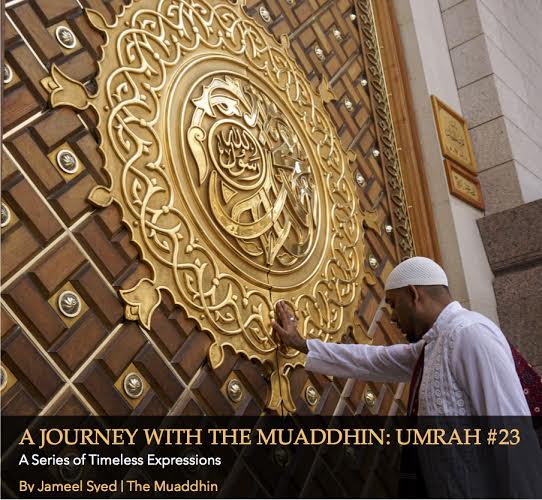
There was a contrast between states such as Texas, New York and his home state of Michigan, all with what he described as an “abundance of mosques,” and states with smaller populations, including South Dakota, Vermont and Montana, where “there were, like, one [mosque] or two or three or none.”
‘We were rejected quite a few times’
In these latter states, Syed said, “it was mission critical. We were rejected quite a few times.”
He added that people at several places said the project did “not make sense.”
“I can understand,” he said. “People are careful and conservative nowadays.”
Impact of Islamophobia
Still, Syed described his tour as an attempt to build bridges.
“This trip of mine was not motivated politically at all,” he said. “Mine was very spiritual in nature, designed to showcase the beauty of my religion, help me learn about the landscape of not just Muslims in America, but America in general.
‘There is a big call for hate mongering, fear mongering, towards Muslims’
“My aim was to showcase whatever I saw and whatever I experienced out into the open so that Muslims and non-Muslims in America and outside of America would be able to learn about one another and appreciate what we as a community have to offer,” he continued.
Yet there was a backlash.
Before he had even started his tour, he said, he received an email with the words “To kill or not to kill a Muslim.”
“There is a big call for divisiveness, hate mongering, fear mongering, towards Muslims in America,” Syed said. “I had a conversation with my wife and family. [The hate mail] took something that was supposed to be very positive and gave it a negative spin.”
He also said that his route was sometimes circuitous to ward off anyone with hostile intentions.
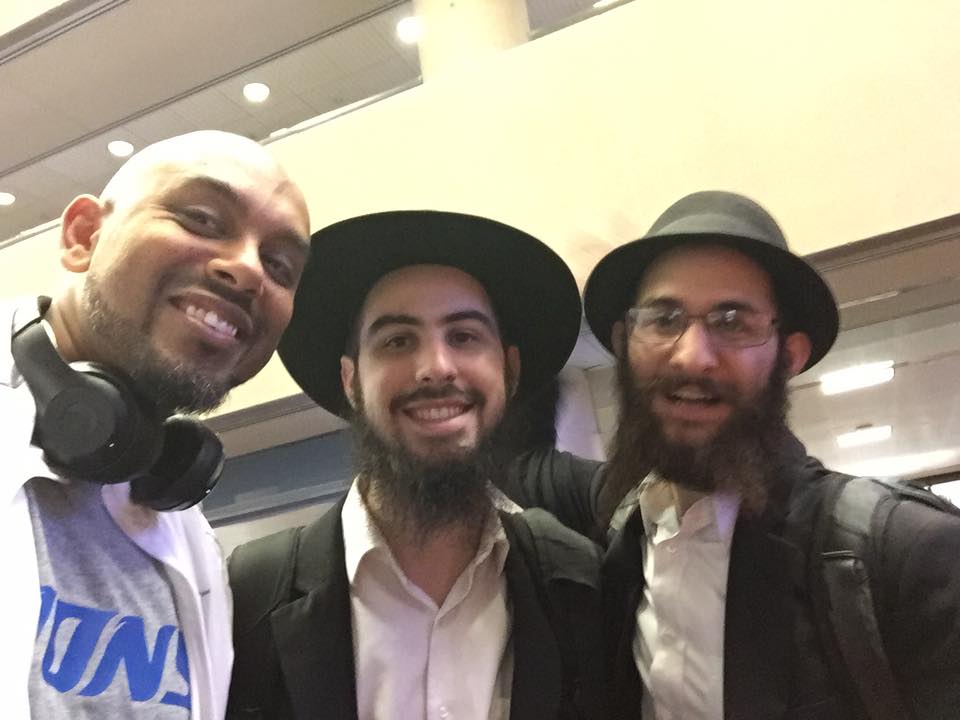
However, during the journey itself, he reported overwhelmingly positive responses.
“I feel that people, Jewish or Muslim or Christian or Buddhist, are very, very, very much alike,” Syed said. “They are good people, generally speaking. All religions preach peace.
“I see what’s shown and propagated in the media. I have no control over the media. I have control over myself,” he said.
“A big part of that is the non-Muslims I met,” said Syed. “I was repeatedly asked if I was ever harassed. I said no, I would not give the opportunity for that to happen. I did not wear traditional garb going through the airport. People said, ‘That was an unfair advantage for you. A woman would have been in a headscarf.’ My point is that I was not trying to make a point.”
Syed began his journey less than two months after suspected gunman Craig Stephen Hicks killed three Muslim students at the University of North Carolina School of Dentistry on February 11, 2015, in a suspected hate crime. During his tour, Syed met with the father of Deah Barakat, one of the slain students.
In April, Syed visited Newtown, Connecticut, site of the mass shooting at the Sandy Hook Elementary School that left 26 people dead, including 20 children.
‘I don’t have to defend myself for the actions of people who do not represent my religion’
In Newtown, Syed participated in an interfaith ceremony at the Hedaya Center involving Muslim, Catholic, Protestant, Jewish and agnostic representatives.
“He has a personal goal of spreading the message of peace by using his voice across America to help educate the public about Islam, praise its prophet, and also honor the memory of his father,” Beshtawii, a co-founder of the Hedaya Center, told CT News.
Not all of the mosques Syed visited were immune from controversy.
The Masjid at-Takwa in Brooklyn is led by Imam Siraj Wahhaj, the first Muslim to lead an invocation for the US House of Representatives, in 1991. Wahhaj was named an unindicted co-conspirator in the 1993 World Trade Center terror attack.
“I don’t know anything about the Imam’s political affairs and in the brief time that we were together, none of that was shared with me,” Syed said. “The focus of my trip in the Masjid was to raise the call to prayer and include a very diverse, yet modest community in Brooklyn.”
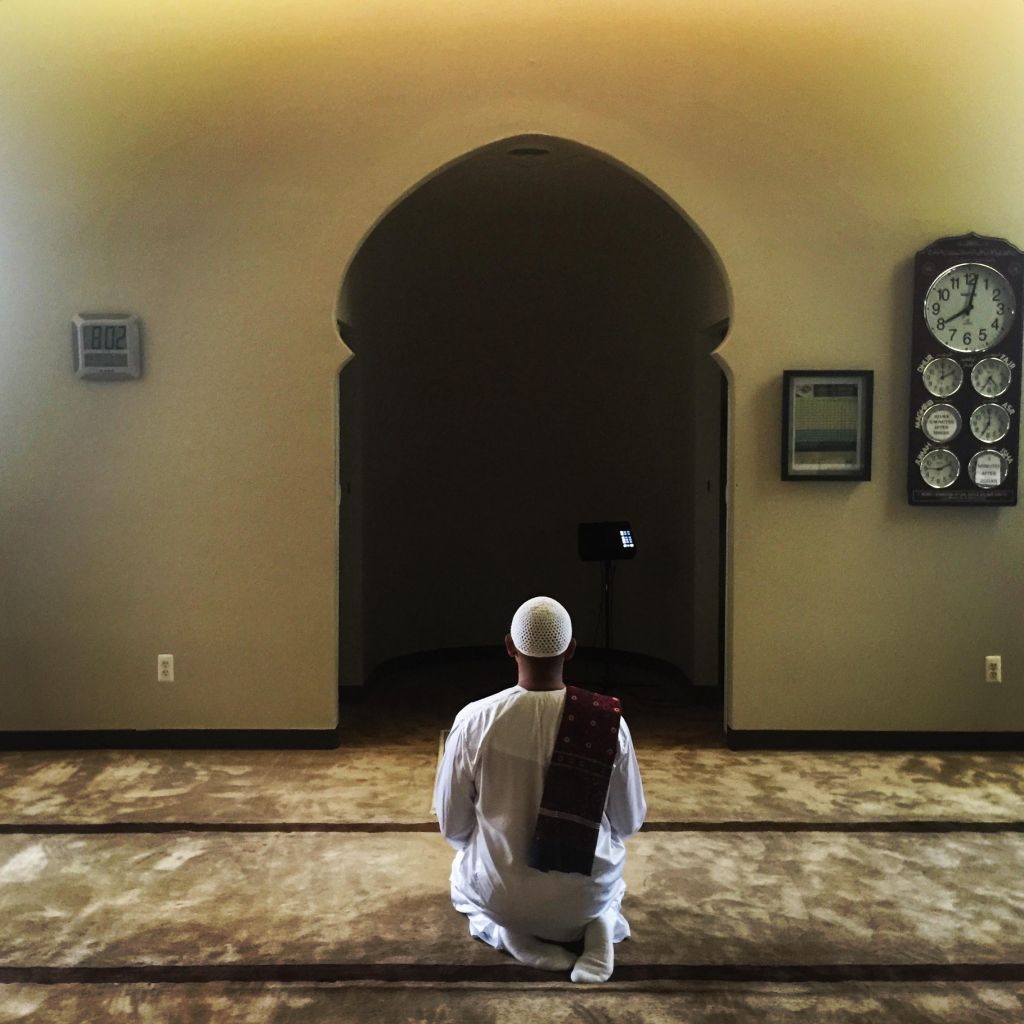
When Syed visited the mosque last May, he had failed to gain enough funding for his project 65 percent through his trip. He credited the community for contributing enough money to help him finish.
“There were hundreds of people,” Syed said. “They all pitched in a little to take me through the entire rest of the trip. They were poor people who could not afford to give. I will never forget their pride and brotherhood, wanting to see this get completed.”
One journey ends, another begins
Syed had to complete the trip without campaign manager Sultan. The relief worker was asked to leave the US to assist victims of the Nepal earthquake, which killed over 8,000 people and injured over 21,000 on April 25.
“I gave permission,” Syed said. “He felt he needed to go.”
Sultan left with the project about two-thirds complete. In addition to New York, the final stretch included the two states not part of the continental US: Hawaii and Alaska.
In Hawaii, Syed recited the adhan at a Disney resort, thanks to a friend who worked there. Syed, a self-described Disney fan, had a photo taken of himself with Mickey Mouse. Both of them held their hands over their ears as if making the call to prayer.
“The picture I took was very important,” Syed said. “Mickey Mouse is arguably the most recognized icon in the entire world. Disney has its hands in everything. They could easily have said, ‘We’re not getting involved.’ But that’s not what they did. They stepped up and said, ‘This is awesome.’ The staff pulled out every single amenity and luxury they could to make my trip memorable.”
Alaska was the second-to-last stop. Syed received a warm welcome in the cold climate from the president of the local Muslim community in Anchorage.
“The president smiled at me and said, ‘I will show you Alaska, all of Anchorage,’” Syed recalled.
Syed saw members of the Alaska Native community, as well as glaciers, mountains and whales.
‘Every single step, [I thought] something was going to go wrong’
Before coming to Alaska, Syed said, in other locations he had been able to see national monuments such as the Statue of Liberty, Yellowstone or the Grand Canyon (“I’m sure my voice would have carried over,” he said). But getting to see Alaska made up for this.
“The Quran says, ‘We plan, and God is the best planner,’” Syed said.
On May 8, 2015, at his hometown mosque in the Detroit suburbs, the planning paid off when Syed recited the adhan for the 50th time in his own state.
“Every single step, [I thought] something was going to go wrong,” Syed said. “I had enough adrenaline, I was moving through time zones, but I thought I would lose my voice. It did not happen till the day I finished. I hit a wall. I was very, very tired, but survived enough. Two days later, I lost my voice.”
He said the fact he did not lose his voice during the tour was a “miracle from God.”
His voice came back — accompanied by the idea of sharing what he had experienced.
“My mentors pulled me aside,” Syed said. “They said, ‘You had an opportunity. You have your name in the paper. You made history. Great job. Good for you. But how does the community benefit — not the Muslim community, but the community at large?’”
‘Show the beautiful side of humanity, the glue that builds a bridge between people of different faiths’
Syed said that based on this discussion, he saw his mission as to “go out there, motivate people, inspire people, the lives of other people, show the beautiful side of humanity, the glue that builds a bridge between people of different faiths, different backgrounds.
“I was tired by that time. I took a little bit of time, the summer off, to test the whole thing out,” he said. “NBC did me a favor. They coined a term for me, ‘The 50 Mosque Man.’ I did not want to be conceited.”
The result was the “50 Mosque Man Tour,” regional visits across the US in which Syed gives presentations about his original journey through all 50 states.
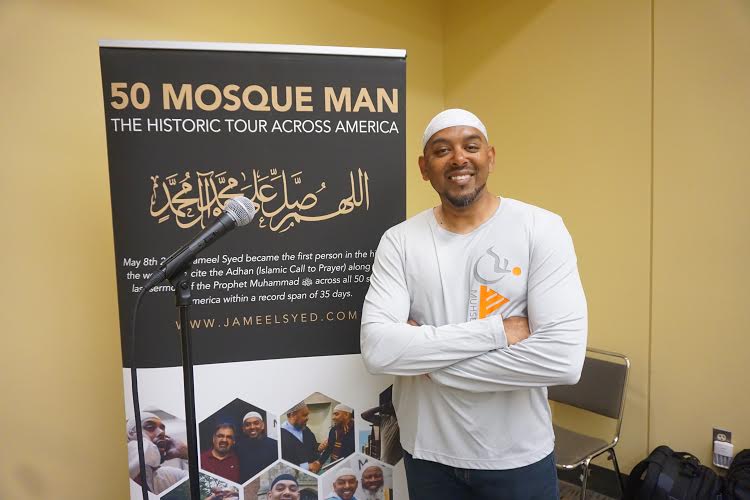
“I lined up presentations,” Syed said of his first 50 Mosque Man Tour in late 2015. “I had my metrics: Was I able to build some bridges? Did I like traveling? I would respect and be responsible for my family.”
“Expectations were not just met, they were exceeded,” he said. “People recognized this for what it is, so many different people. 33 percent of people [who attend the presentations] are non-Muslims.”
The tours have continued. Earlier this year, as part of a spring tour, Syed visited Pennsylvania, New Jersey and Maryland.
Syed will also be holding speaking engagements during Ramadan — including at Disneyland. He has assembled a 22-page booklet for mosques interested in hosting him for a fall tour this year. And he hinted at setting another record, possibly next year.
“Once you do something like this, you realize you were holding yourself back the entire time,” the 50 Mosque Man said. “There’s more to you than this. It’s what humanity is about.”


The Times of Israel Community.