

Can tolerance be taught to Israeli students?
With the Education Ministry’s call to teach tolerance, several principals talk about what that means in their schools
 Add ToI as a Preferred Source on Google
Jessica Steinberg, The Times of Israel's culture and lifestyles editor, covers the Sabra scene from south to north and back to the center
It was day three of the school year, and most secondary school principals weren’t quite ready to talk about the Education Ministry-prescribed classes on tolerance.
“Try us next week,” said a ministry spokesperson for the Tel Aviv district.
Ditto for many of the Jerusalem schools.
The lessons in question are part of the Education Ministry’s current plan to devote the first week of the school year to a lesson plan on violence, racism and tolerance, following a summer marked by bloody terror attacks and racist rhetoric.
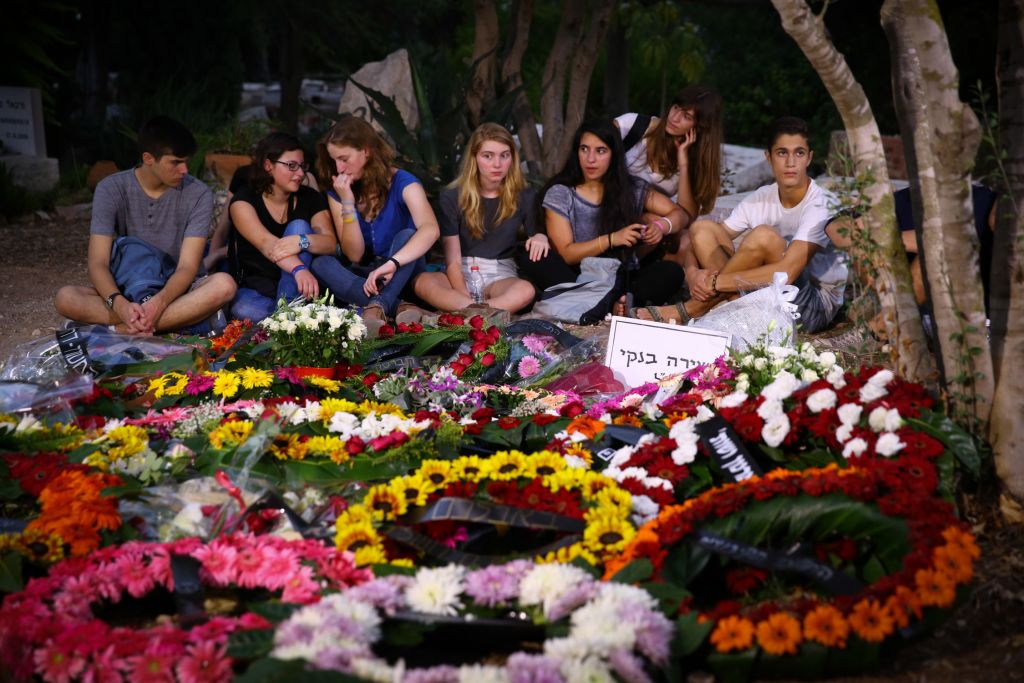
Those recent events included the murder of Palestinian toddler Ali Saad Dawabsha and his father, Saad Dawabsha, in a West Bank terror attack, most probably perpetrated by Jewish extremists, and the murder of 16-year-old Shira Banki at Jerusalem’s Gay Pride Parade.
There are some schools, however, where tolerance is always part of the discussion.
At Leyada, the prestigious Jerusalem high school where Shira Banki would have begun her junior year, the school held a ceremony in her memory on the first day.
Formal tolerance classes, however, are unnecessary, said Rena Gampel, coordinator of the high school.
“We’re not conducting formal classes in tolerance, because tolerance is part of our everyday conversation, it’s part of who we are,” she said.
Ditto for Nisui, an experimental school in downtown Jerusalem for kindergarten through high school students, which is known for its pluralistic tone.
According to Uri Geva, the principal of Nisui, the very idea of tolerance classes made no sense for his institution, where “tolerance is discussed all the time. It’s part of who we are,” he stated.
At Jerusalem’s religious Himmelfarb public school for middle school- and high school-aged boys, however, principal Yirmi Stavisky told me he spent much of the summer thinking about tolerance.
Stavisky, who has been deeply troubled by the events of the summer, wanted to do more than hold classes in tolerance. He began thinking about Shirin Natour Hafi, principal of the Arabic High School in Lod, whom he met several years ago at a professional gathering, and was “blown away” by what she had to say.
“She’s trying to create pride in her Muslim students, making them proud so that they don’t have to be violent, and she’s fighting radical Islam,” he said.
He brought her to speak to his faculty last year, and now Stavisky wants to spend a few hours teaching English each week to her students. In return, he hopes she’ll come to Himmelfarb to teach Hebrew literature to his students.
The students and parents, he claimed, seem interested.
“We held a PTA meeting the other night with all the parents and I tried to explain how this thing evolved,” said Stavisky. “I told them that this school does not have a political line but has a moral, religious line — which means any human is created in God’s image. That human is to be respected, unless he is trying to harm us. If he’s seeking peace, we want to seek peace with him.”
Himmelfarb school, according to Stavisky, has a “big, mixed body of Zionist, committed Jews who are more religious or less religious. They send their boys to the school because that’s what they’re looking for, some form of religion that isn’t absolute.”
It’s also a school with one family whose soldier son was killed in Gaza last summer, and another student who was nearly murdered by a Palestinian last year, said Stavisky.
“It’s not as if we’re living in la-la land,” continued the principal. “But all the parents clapped in applause and said this is what we want to happen. We don’t want to hear all this racist talk and bigotry.”





The Times of Israel Community.