

Islamic State blows up three of Palmyra’s famed tower tombs
Syria’s antiquities chief says ‘best preserved and most beautiful’ of sites destroyed, including Tower of Elahbel
 Add ToI as a Preferred Source on Google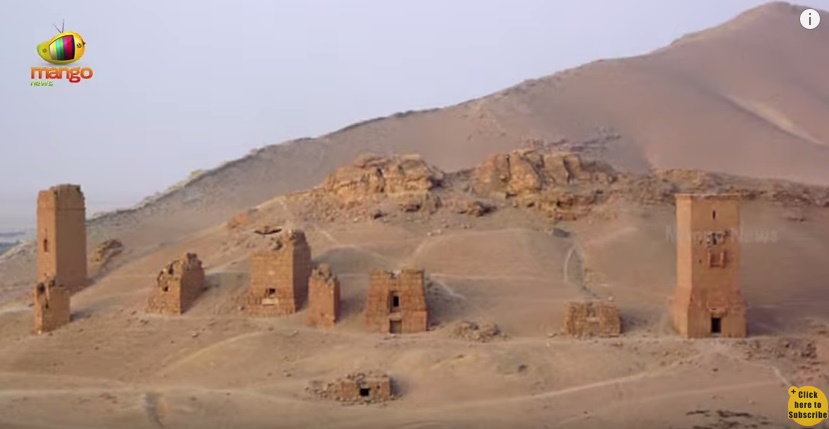
Jihadists of the Islamic State group have blown up three of the famed tower tombs of Syria’s ancient desert city of Palmyra, the country’s antiquities chief said Friday.
“They blew up three tower tombs, the best preserved and most beautiful,” Maamoun Abdelkarim told AFP.
News of the destruction at the world-renowned site, captured by the jihadists in May, follows their demolition of the ancient shrine of Baal Shamin and the 2,000-year-old Temple of Bel.
“We received reports 10 days ago but we’ve just confirmed the news,” Abdelkarim said.
“We obtained satellite images from the US-based Syrian Heritage Initiative, taken on September 2.”
He said the tombs destroyed by IS included the most celebrated — the Tower of Elahbel.
The whole of Palmyra, including the four cemeteries outside the walls of the ancient city, has been listed as a World Heritage Site by UNESCO since 1980.
In its listing, the UN agency singles out the tower tombs as the “oldest and most distinctive” of Palmyra’s funerary moments — “tall multi-story sandstone buildings belonging to the richest families.
“On the fronts of those that survive, foremost among them the Tower of Elahbel, there is an arch with sarcophagus halfway up, which in ancient times supported a reclining statue,” it says.
“Corridors and rooms were subdivided by vertical bays of loculi [niches for the dead] closed by slabs of stone carved with the image of the deceased and painted in lively colors.”
Gruesome violence and the destruction of priceless artifacts have become hallmarks of IS as it has expanded its so-called “caliphate” straddling Iraq and Syria.
In addition to damaging sites in Syria, IS has destroyed statues, shrines, and manuscripts in the Iraqi city of Mosul, and demolished the ancient Assyrian city of Nimrud.








The Times of Israel Community.