

Politicians weigh in on what Obama said and didn’t, and why he came
Bennett praises president for stressing Jewish connection to the land, and says there’s more to the US-Israel relationship than the Israeli-Palestinian conflict
 Add ToI as a Preferred Source on Google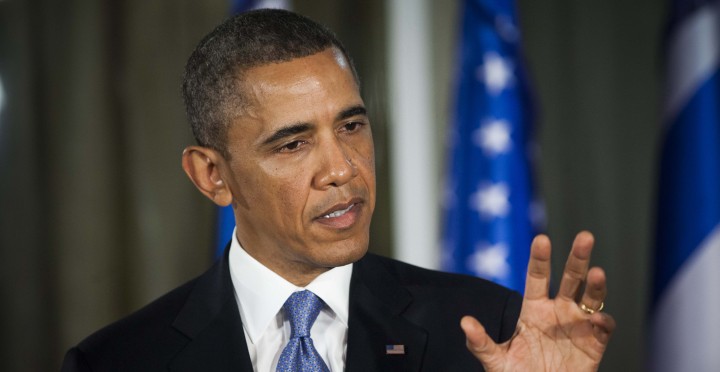
Israeli politicians weighed in Wednesday on US President Barack Obama’s arrival in Israel — some with praise, and others with even more praise.
The president, who’s on his first visit to the country as commander-in-chief, made a short, upbeat speech at the airport upon landing — in which he didn’t mention the Israeli-Palestinian conflict but stressed Israel’s connection to the land — and then, following more pomp and revelry, met with Prime Minister Benjamin Netanyahu for marathon talks.
The two leaders popped out for a brief press conference, in which Obama pledged to work closely with Israel to prevent Iran from obtaining nuclear arms, while Netanyahu gave his explicit support to the idea of “two states for two peoples.”
Minister of Economy and Trade Naftali Bennett (Jewish Home) lauded Obama’s speech and said the connection between the two countries is based on many mutual interests.
“It was an important speech [in which Obama] recognized the deep historical connection between the people of Israel to the land of Israel and their return to Zion.”
On the president’s non-reference to the Israeli-Palestinian conflict, Bennett stated, “People miss that the connection between Israel and the US is not only about the conflict, but also about our cooperation in security and the economy, and about our shared history.”
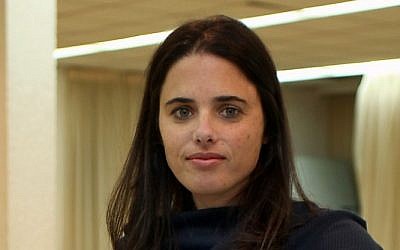
MK Ayelet Shaked, also from the Jewish Home, said on Channel 2 News that Iran was the main reason Obama came — and that the Israeli-Palestinian issue didn’t have to take center stage.
Earlier Wednesday, Tzachi Hanegbi, a politician and close Netanyahu confidante, said that it was the premier’s speech — on Iran’s nuclear ambitions and Israel’s plans to thwart them — at the UN last fall that brought Obama to Israel.
Iran is the key reason for the visit, said Hanegbi, and the key section in Netanyahu’s airport speech was the early paragraph when the prime minister said: “Thank you for unequivocally affirming Israel’s sovereign right to defend itself by itself against any threat. Thank you for enhancing Israel’s ability to exercise that right through generous military assistance, revolutionary missile defense programs, and unprecedented security and intelligence cooperation.”
Meanwhile, Nachman Shai, a former MK from Labor, countered Shaked’s remarks on Channel 2 by alluding to the idea that, given the president’s trip to Ramallah to meet with Palestinian Authority President Mahmoud Abbas and other leaders Thursday, the absence of peace talks are what’s on everyone’s mind.
During the press conference in Jerusalem, Obama had said that “Israel’s security will be enhanced” and the Palestinian people would benefit, and the region would flourish, with a resolution to the conflict.
Earlier Wednesday, Uri Orbach, also from the Jewish Home, claimed that Obama came to Israel “to enchant us,” and to assure Israelis that he cares about them, a sentiment echoed widely by pundits, who claimed the US leader was making up for omitting the clause about Israel’s claim to the land in his Cairo speech four years ago.
Labor’s Isaac Herzog put it more gently. “He’s here to embrace us,” he said, adding that he hopes that the president makes clear in his speech to young Israelis that “we’re going to be committing suicide” if Israel doesn’t separate from the Palestinians and pursue peace talks.
Obama was set to address over 1,000 attendees at his main public address in Jerusalem Thursday.

Meanwhile, at an annual gathering of Jewish groups in Paris, French President Francois Hollande commended Obama on his trip to Israel and called for an immediate resumption of peace talks.
“The president’s visit will advance the the peace process,” Hollande said, adding that “peace is the greatest challenge Israel faces.” He reiterated his call for the parties to begin peace talks immediately, without preconditions, and with the international community’s support.
After discussing Europe’s possible deeming of Hezbollah as a terror organization, the French leader said that he was committed to fighting Islamic extremism as well as anti-Semitism on the Internet, and implementing Holocaust remembrance programs in education systems and France’s public sector.




The Times of Israel Community.