

Families of 179 missing soldiers still looking for a place to mourn
One IDF unit, composed largely of reservists, searches for troops whose final resting places are unknown — and succeeds, sometimes
 Add ToI as a Preferred Source on Google
Judah Ari Gross is The Times of Israel's religions and Diaspora affairs correspondent.
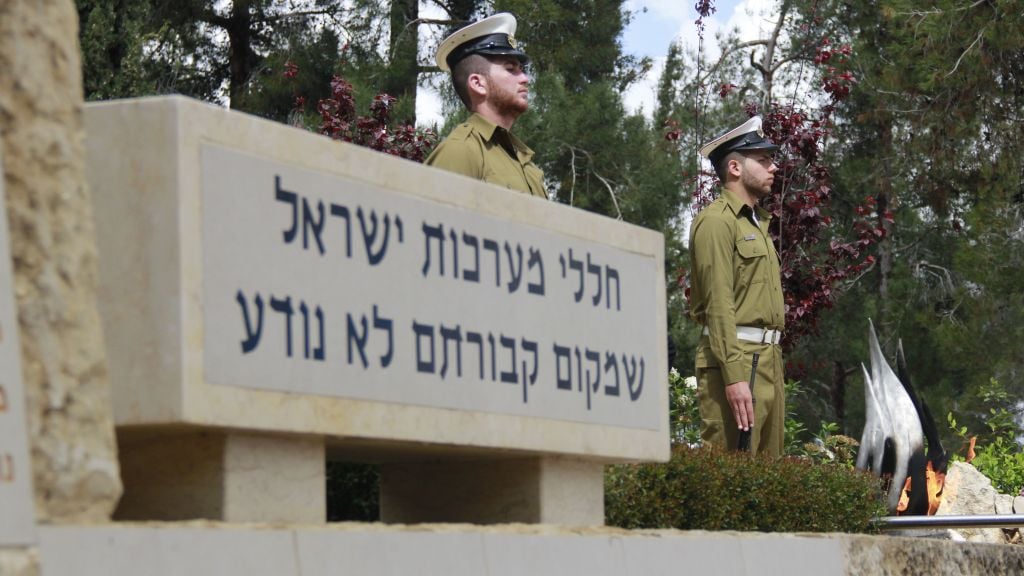
For nearly 100 Israeli families, the 1948 War of Independence never really ended.
Ninety-nine brothers, husbands and fathers who took up arms to defend the fledgling Jewish state were never seen again.
In total — from all of Israel’s wars, operations and missions — there are 179 IDF soldiers whose final resting places are unknown, according to Lt. Col. Yossi Shemesh, head of the IDF unit dedicated to locating those lost soldiers.
Many of the 179 were pilots, and some were sailors, including 16 from the INS Eilat, which was sunk off the coast of Port Said by the Egyptian Navy in October 1967.
On Remembrance Day day, the families of those 179 lost soldiers have no grave to visit, nowhere to light a memorial candle or leave flowers.
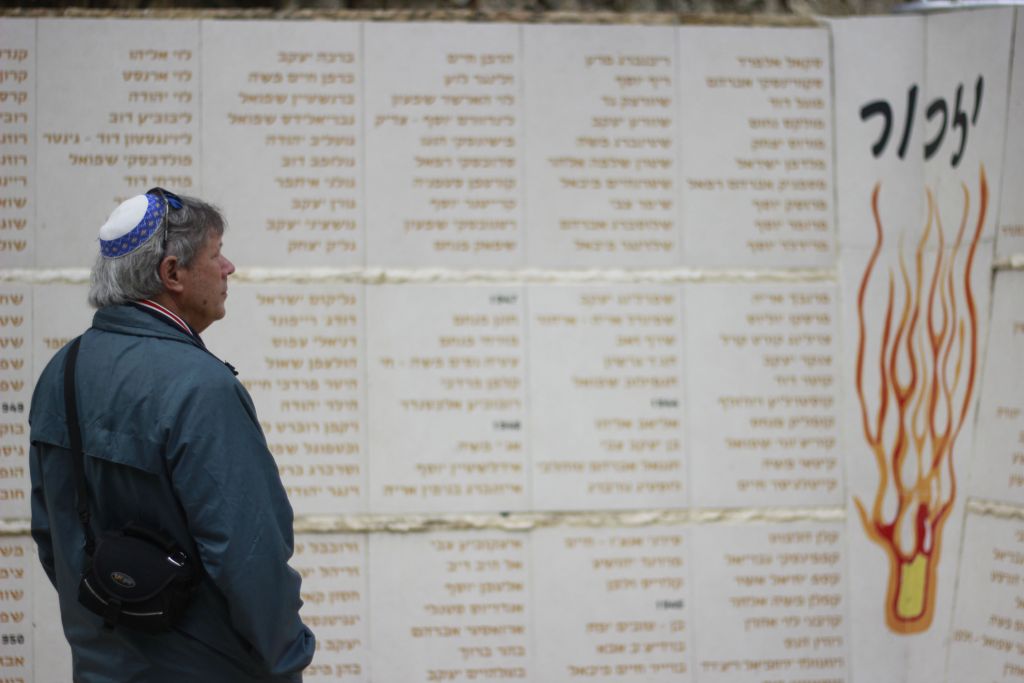
Instead of a burial place, those soldiers have a memorial — a stone wall with their names inscribed on it — and a special day of mourning, which was observed on Thursday with a public ceremony at Mount Herzl, Israel’s national cemetery, in Jerusalem.
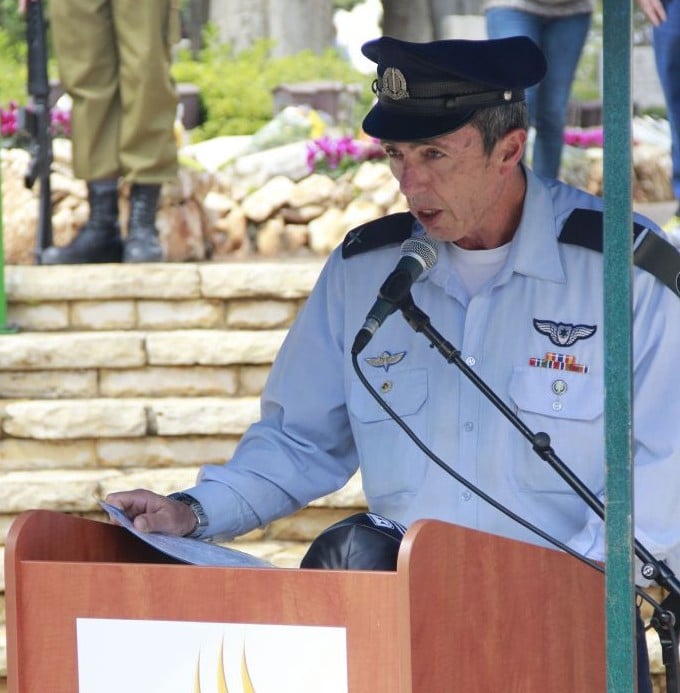
A light rain fell during the ceremony, yet some blue peeked through the clouds overhead.
“It isn’t March 17, it’s the Hebrew date: The seventh of Adar, which is known as the date of death for the first Jew whose burial place is unknown, Moses, our teacher, may his memory be blessed,” Shemesh said.
According to the Bible, Moses was buried in a valley near Mount Nebo, in present-day Jordan, but “no man knoweth of his sepulchre unto this day.”
“We ask of you, IDF soldiers, forgiveness and absolution that we did not succeed in bringing you to be buried in Israel,” IDF Chief Rabbi Brig.-Gen. Rafi Peretz said during a benediction for the ceremony.
‘A charming uncle’
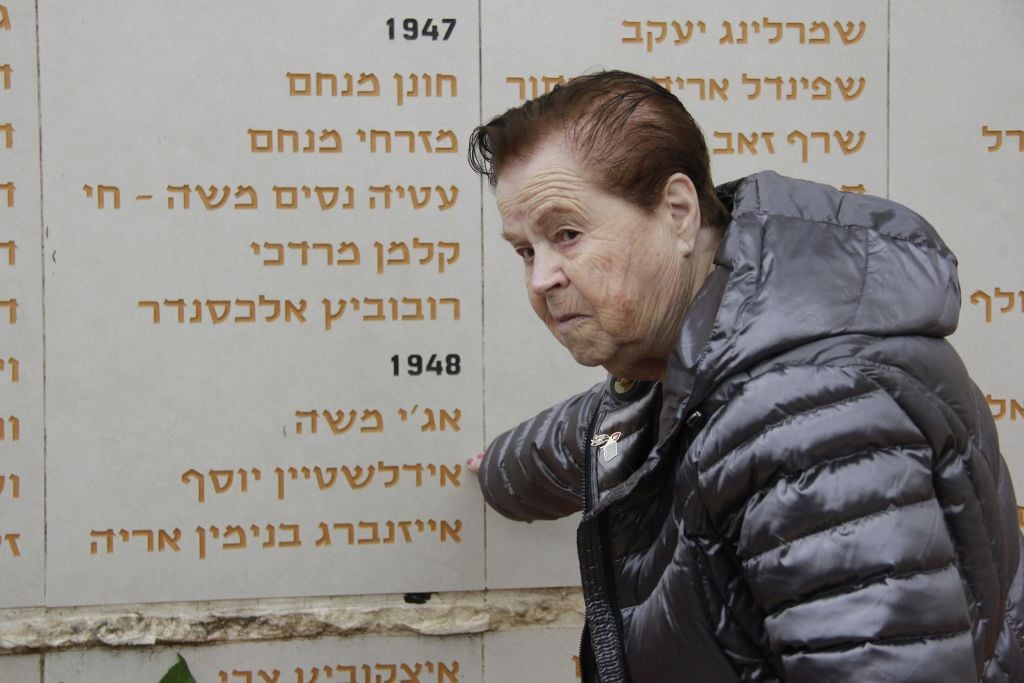
Ilana Milken came to the ceremony with her mother Zehava Limor, whose 20-year-old brother Yosef Edelstein died in the battle of Tira on May 30, 1948.
“He was tall and handsome, a charming uncle who used to ride a horse from Zichron Yaakov to Atlit where we lived in order to bring us treats,” Milken said, recalling a man she last saw when she was six years old.
Edelstein and other members of the Alexandroni Brigade tried to take over the village of Tira a number of times in the preceding days, but were turned back at each attempt.

On one of their last charges, Edelstein was hit. “His friends saw that he was hurt, but they couldn’t get him out,” Limor said.
Edelstein died outside Tira and was reportedly buried by some local Arabs there, his sister and niece said.
After 1967, Limor’s husband and the army returned to the area east of Tira in the West Bank where Edelstein was believed to have died in order to search for his body, but to no avail.
“They think that since he was buried near a riverbed, that rain might have come and washed away the body,” Milken said.
Limor, 92, used to come to the Mount Herzl memorial four times a year — on the seventh of Adar, on Remembrance Day, on Edelstein’s birthday and on the date of his death. “But each year it gets more difficult for her,” her daughter said. And now they normally only come on the seventh of Adar.
From England to Iraq-el-Suweidan
Lily Meyerson nee Sugarman’s children grew up with a sense that they had two fathers, she said.
Dov Sugarman, Lily’s first husband, came to Israel from England in the early days of the War of Independence and joined up with the burgeoning Israeli Air Force as a member of Mahal, an overseas volunteer program.
Both he and Lily served in the IAF’s 103rd Squadron, he as a navigator and she in the air force’s administration.
On October 20, 1948, Dov and two other foreign-born air force personnel — Leonard Fitchett and American Stanley Andrews — took off from the Ramat David airbase in a Bristol Beaufighter, a heavy attack airplane, to bomb an Egyptian police fortress in the Arab town of Iraq-el-Suweidan, northwest of the Gaza Strip.
Their bombs missed their mark on their first attempt, and during their second pass over the station, they were hit with flak and their plane crashed.
“We’d been married for two and a half years. The shock of it. At the time there were loads of stories and rumors that he’d been captured and tortured. I didn’t know what to think,” Meyerson said.
Fitchett’s body was found a few days later, after the Egyptians were pushed out of the city.
‘Until this day, nobody really knows what happened. There was no trace of the body.’
“Later, they brought me a letter from [former prime minister David] Ben-Gurion, who said that their plane had opened the gateway to the Negev,” she said.
Their mission was a part of Operation Yoav, which drove a wedge in the Egyptian line and allowed Israeli forces to move from the center of the country south into the Negev desert.
“Until this day, nobody really knows what happened. There was no trace of the body, the only one was Len Fitchett, the pilot. Stanley Andrews is also missing,” she said. “For years I had hope.”
Because of that hope, it was difficult for Meyerson to move on with her life, she said.
“My mother came over to visit. She saw that the man who is now my second husband was very, very much in love with me. I wasn’t interested because I still had hope that Dov would return. She said to me, ‘Lily, you need a lot of love, and he can give it to you. And he understands how you feel about Dov and accepts that,'” she said.
They went to the rabbinate three times to get married — “Each time I got cold feet,” Meyerson said — but eventually they settled down and had two daughters.
“My daughters were brought up with the story of Dov. In fact, my oldest daughter, when she went to kindergarten, her teacher said to me, ‘I don’t understand. Tanya says that she’s got two fathers,'” she said.
“My children and their husbands, and their grandchildren and last year even my great-grandson came with us to the Remembrance Day ceremony,” she said. “At least I was able to keep his name alive.”
‘There will not be an unknown soldier’
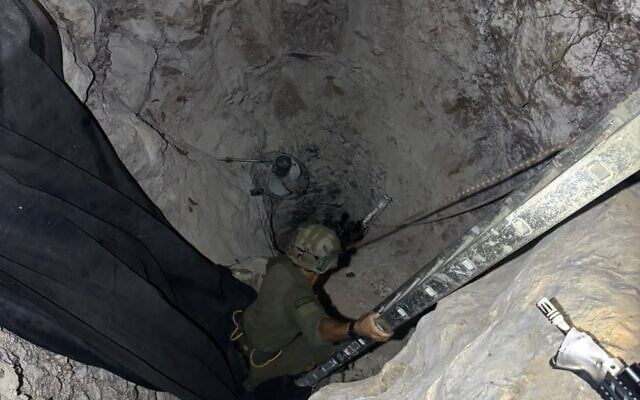
The IDF unit that searches for lost soldiers is known by the acronym “Eitan” for the Hebrew itur ne’edarim, or finding MIA soldiers.
It employs just three full-time soldiers but has “hundreds” of reservists, some of whom have served in the unit for decades, Shemesh, the unit’s commander, said.
Some of them work on cold cases like Edelstein’s and Sugarman’s, while others are spread throughout the IDF’s various divisions and brigades for real-time incidents.
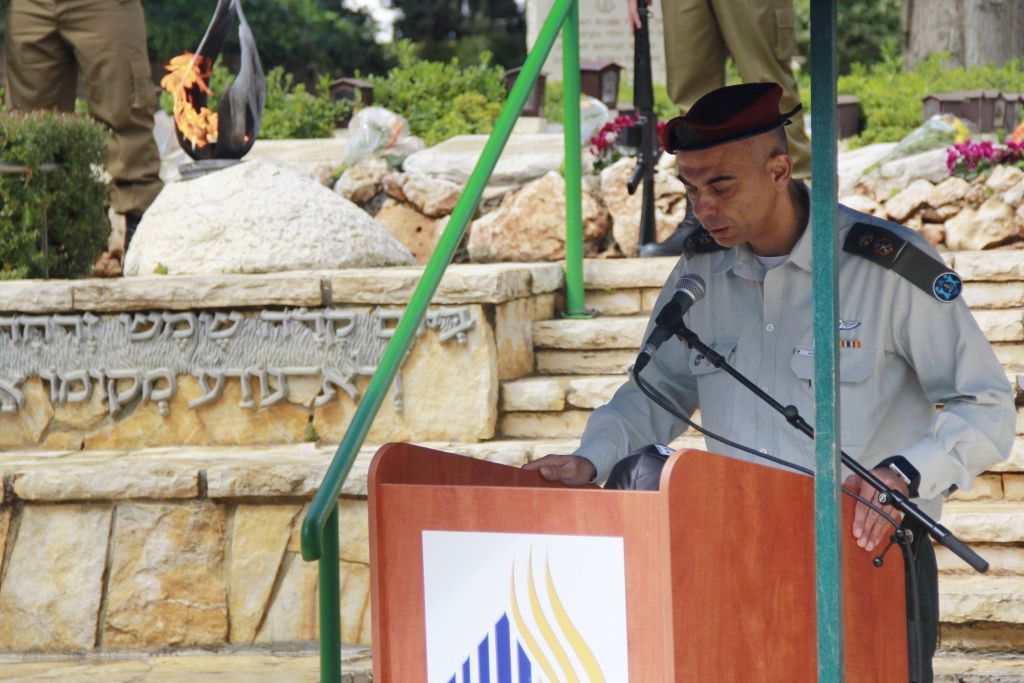
“There are professors and doctors of history, archaeology and geography; there are people with backgrounds in investigations, like accountants and tax collectors; there are attorneys and people who served on the police force; and more than a few former officers, company and battalion commanders,” Shemesh said.
“They are the salt of the earth,” he said of the reservists who serve in the unit.
Members of his unit helped amass the information and evidence that led Israel to pronounce dead Lt. Hadar Goldin and Staff Sgt. Oron Shaul, despite the fact that their bodies were never recovered after they were killed in Gaza during the war there in 2014, and are believed to still be held by Hamas in Gaza, Shemesh said.
(Shaul’s family did not come to the ceremony and has been fighting with the army for months to have him listed as missing in action instead of killed in action.)
The unit was formed in 1973 following the Yom Kippur War, but carries out a mission that was laid down in the early days of the IDF.
“In 1948, they asked David Ben-Gurion where we should set up the Grave of the Unknown Soldier, like they have in Arlington in the United States,” Shemesh said. “David Ben-Gurion said, ‘In the Israel Defense Forces, there will not be an unknown soldier. Every casualty has a name.'”
Success and perseverance
Since 1973, the unit has located over 200 soldiers whose burial places were previously unknown, “and we’ve located 26 in just the last five or six years,” Shemesh said.
One of the last cases in which the Eitan unit located the burial place of a formerly missing soldier was that of Yehoshua Haver, who died fighting in Operation Danni in Ramle on July 10, 1948.
On November 30, 2014, a grave at the Nahalat Yitzchak cemetery outside Tel Aviv was switched from “Anonymous’ to “a grave with a name, Yehoshua Haver, with the date of his death, his rank,” Shemesh said. “He was found by one of my investigators, a man named Ari Tibbon, a dear man. He’s 78 years old, a retired judge.”
Ilan, Haver’s nephew, recalled his mother, on Remembrance Day, staying at home to cry, with no grave to visit, Shemesh said.
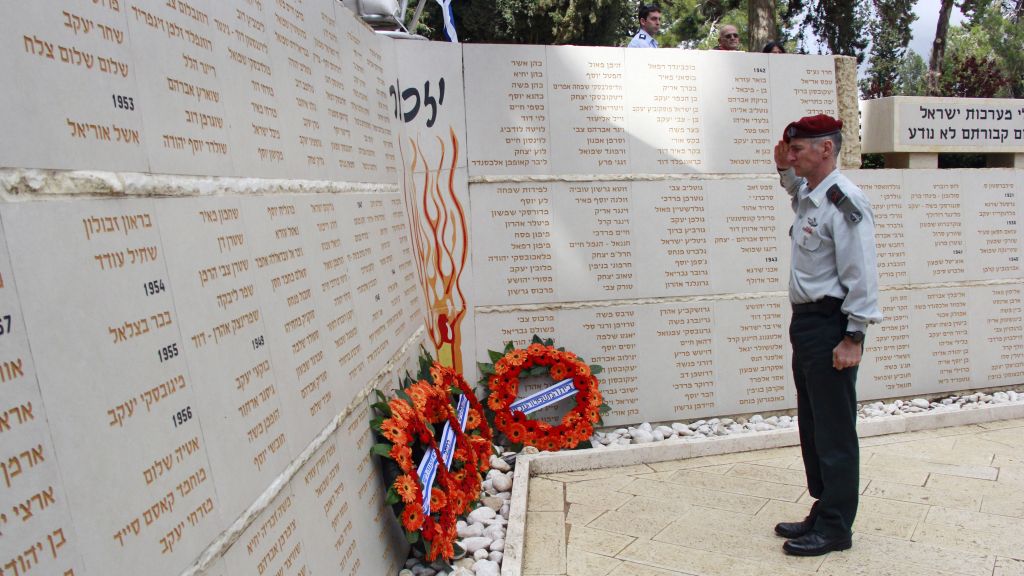
“He told me, ‘You don’t know what you did for our family. After 67 years, we have a grave to visit, to leave a wreath, to light a memorial candle,'” Shemesh said.
The IDF continues to investigate and search for the burial places of the remaining 179 missing soldiers.
Earlier this year the army announced that it had resumed the search for Yakir Naveh, an Israeli pilot who went missing over the Sea of Galilee in 1962.
Both the Israeli Navy and the Air Force will take part in the search, which began on February 28 and will last approximately two months, the IDF said.
“Every year they find somebody, and that’s amazing,” Lily Meyerson said. “What other country in the world does that?”



The Times of Israel Community.