

Jewish presence in East Jerusalem up 40% since 2009 — NGOs
Data collected by left-wing Israeli groups Peace Now, Ir Amim published as UN Security Council meets on ‘illegal settlements’
 Add ToI as a Preferred Source on Google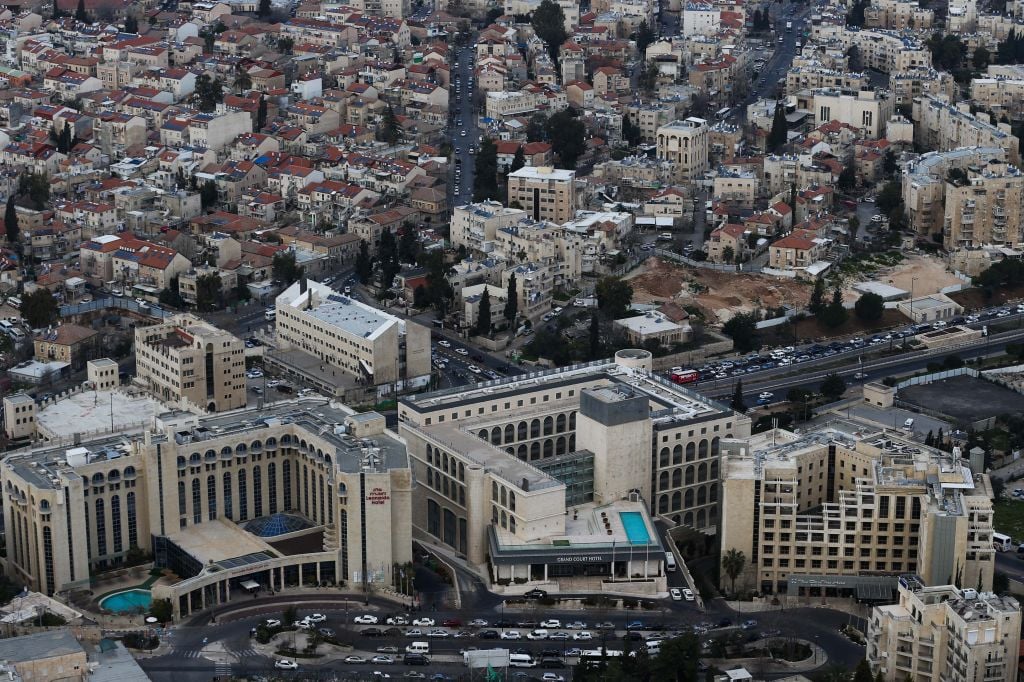
A report by two left-wing Israeli NGOs reportedly claims the number of Jewish residents in Palestinian neighborhoods in East Jerusalem has grown by almost 40 percent over the past seven years.
According to advance data from the report, to be published jointly by Peace Now and Ir Amim, the number of Jewish residents in the so-called Holy Basin area of the Old City of Jerusalem has grown by 70% since 2009, and the number of housing units earmarked for Jews has doubled during that time.
The report will also reportedly claim the number of Jewish residents in Palestinian neighborhoods of East Jerusalem has grown by 40% since 2009, while the number of housing projects in Eastern Jerusalem intended for use by Jews has grown by a parallel 39%.
The data was published Friday by the Hebrew-language Walla website ahead of the release of the report, as the UN Security Council was meeting to discuss Israel’s “illegal settlements” in a special session co-sponsored by Egypt and Malaysia.
According to Peace Now and Ir Amim, until 2009 — when Prime Minister Benjamin Netanyahu was elected for his second term — there were 102 compounds inside Palestinian neighborhoods, housing some 2,000 Jewish residents. Since then, another 40 compounds have been added for an additional 778 Jewish residents. Thirty-one of the new compounds are inside the Holy Basin, four are in the Old City and five more are in other neighborhoods. In the Holy Basin specifically, there was an increase of 60% in the number of new “settlement compounds,” as they are called in the report.
According to the two NGOs, some 68 Palestinian families were evicted from the homes they lived in – 60 in East Jerusalem’s Sheikh Jarrah neighborhood and eight others in the Muslim Quarter. Some 55 of evacuations took place over the past two years, and there remain an additional 300 families in the Holy Basin who are under constant threat of being evacuated or their homes being demolished, the NGOs say.
The report also says the Housing Ministry budget to secure Jewish residents of East Jerusalem has risen from NIS 37.6 million ($9.8 million) in 2009 to NIS 82.4 million ($21.5 million) today. The security budget per capita grew in Jerusalem by 54%, and the sum allotted to defending each Jewish resident in a Palestinian neighborhood today stands at NIS 2,750 per month ($720).
The NGOs also say settler organizations use different strategies to turn Batan al-Hawa, a predominantly Arab area of Silwan in East Jerusalem, into “the largest settlement compound in the heart of a Palestinian neighborhood in the Old City, while uprooting a hundred Palestinian families from the area.”
“Uprooting families from Batan al-Hawa is another violent move by the authorities against the Palestinian population of East Jerusalem,” the organizations were quoted by Walla as saying. “Together with collective punishment, selective enforcement and policing of the Palestinian population in East Jerusalem, the state’s institutions, whether directly through the general custodian or indirectly by turning a blind eye to what is going on with land registrations at the Justice Ministry, are helping to expel dozens of families and to leave them homeless.”
“The settlers’ moves in Silwan, near the Old City and the Temple Mount compound, aided by the state, escalate the conflict in Jerusalem even more, increase desperation and frustration, push the chance to reach a diplomatic agreement further away and only serve to put Jerusalem again and again in a cycle of violence,” the organizations said.









The Times of Israel Community.