

 From the Liveblog of
Wednesday, June 18, 2025
From the Liveblog of
Wednesday, June 18, 2025
‘Not so sure’: UN nuclear watchdog chief says can’t verify the safety or whereabouts of Iran’s near-weapons-grade uranium stockpile
 Add ToI as a Preferred Source on Google
Nava Freiberg is The Times of Israel's deputy diplomatic correspondent.
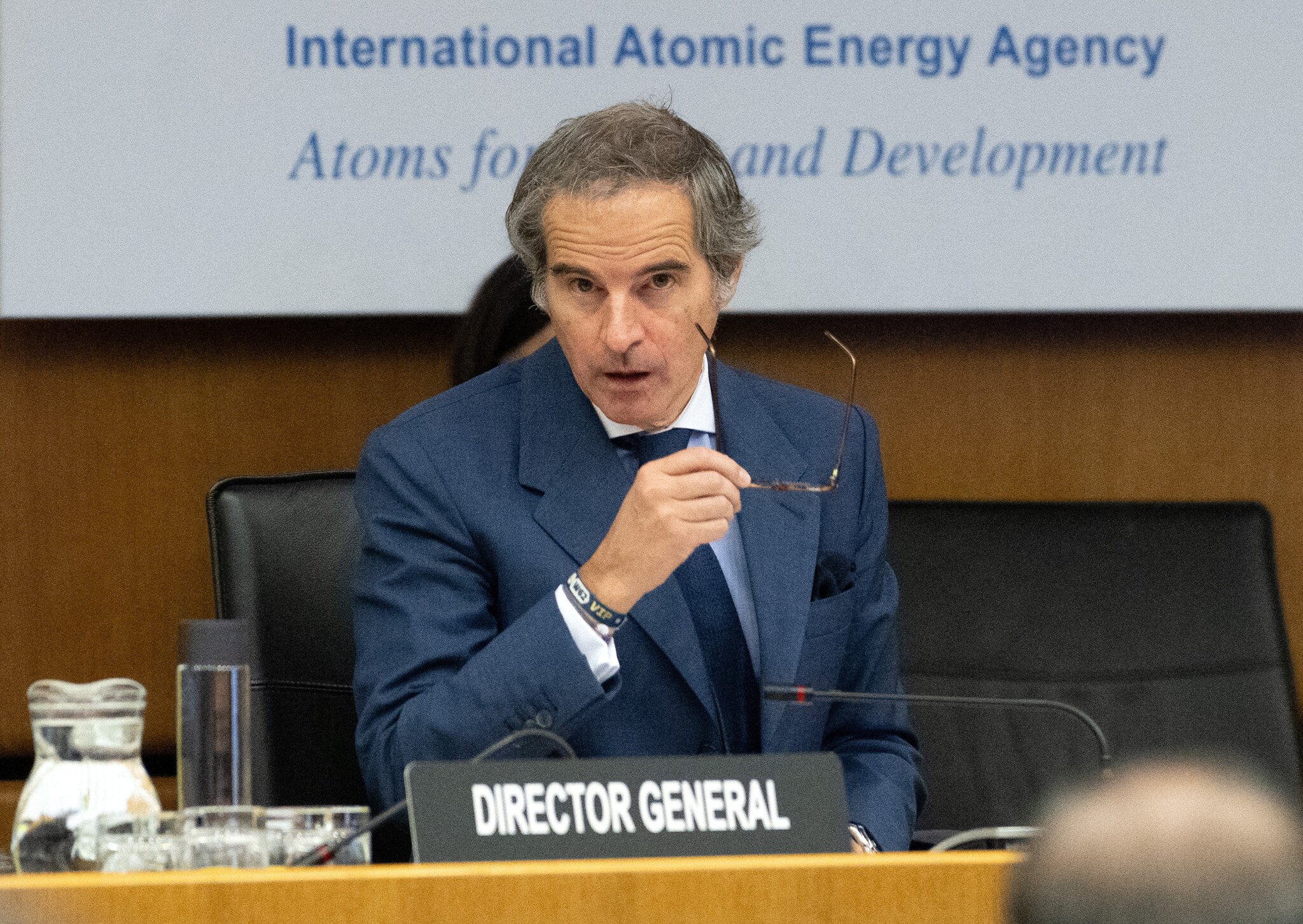
As Israel’s strikes on Iranian nuclear and military sites continue, the director general of the International Atomic Energy Agency, Rafael Grossi, says in an interview with Bloomberg that the UN nuclear watchdog cannot currently verify or guarantee the safety or even the whereabouts of Iran’s highly enriched uranium stockpile.
Asked whether Iran’s supply of 60% enriched uranium remains safely located at the underground Isfahan facility, which Israel has repeatedly struck since it began its campaign on Friday, Grossi replies: “To say safely, I’m not so sure.”
Some 400 kg of uranium, enough for 10 nuclear warheads, was previously stored under an IAEA seal in Isfahan. “In principle, it is stored there,” he says.
“At a time of war, all nuclear sites are closed,” Grossi continues, saying “all our inspectors who are still in Iran… are not inspecting, no normal activity can take place.”
Grossi adds that “No country in the world is enriching uranium at this level of 60% – which is technically almost equivalent of 90%, which is needed to have a nuclear weapon…Many high officials have said Iran has all the pieces of the puzzle. There has been a lot of ambiguity, and this is never good.”
Before Israel’s pre-emptive strike on the Islamic Republic, IAEA inspectors visited Iranian nuclear sites more than once a day. However, Grossi says Iran did not inform the IAEA of any “special measures” it planned to take to protect its uranium stockpile from being damaged in an attack.
“We haven’t been informed of anything in detail,” he says. “We don’t know what these protective additional measures to be.”
The IAEA is relying on satellite imagery and has seen no sign the uranium has been moved—which would be a violation of the Non-Proliferation Treaty, according to the Bloomberg report.
“It’s important to return to the diplomatic table as soon as possible because what’s at stake is very serious,” Grossi tells the news network.








The Times of Israel Community.