

Never mind the Hezbollocks, here’s the royal baby
The labor pains of Princess Kate lead the Hebrew press to decide another royal mouth to feed is more important than Hezbollah landing on the terror list
 Add ToI as a Preferred Source on Google
Joshua Davidovich is The Times of Israel's Deputy Editor

What could push the European Union’s blacklisting of Hezbollah’s armed wing off the front page? Of course, the royal explusion of a baby, followed by royal amniotic fluid and the royal placenta. Congratulations, it’s an unwarranted media circus! (In Haaretz’s case, an A1 ad for erectile dysfunction also gets better play than the Hezbollah story.)
Maariv is the only paper with the bollocks to leave the royal birth (mostly) off the front page and to actually lead with the Hezbollah decision. The paper’s Mordechai Kedar unleashes a snarknado and writes that by only declaring the armed wing a terror group, Europe is acting “as if the educational institutions of Hezbollah don’t prepare young hearts for jihad. The Europeans don’t see the connections between the different limbs of the octopus. So what happens? The Hezbollah terrorists can’t reach Europe. Wow, don’t they have the ability to get fake passports through the interior ministry which is run by the civilian, non-terrorist Hezbollah? And envoys from the military wing can’t go around Europe looking for tax-free donations. But wow, the good, nice civilian Hezbollah can continue to get donations for their schools and hospitals, which — as all Europeans know — are righteous and charitable in every regard, and Europe can ensure that the money will get to the institutions but will never reach Hezbollah’s militant wing.”
Haaretz takes a look back at the Burgas bombing a year ago and how Israel and the Europeans were able to turn the tragedy into Monday’s diplomatic victory, which, according to an unnamed Foreign Ministry official, was the goal from the start: “The task force knew the biggest obstacle would be translating the accumulated intelligence about Hezbollah into evidence that would stand up in a European court. Several EU countries, first and foremost Germany, said they wouldn’t support listing Hezbollah as a terrorist organization unless they were sure their domestic courts wouldn’t overturn the decision for lack of evidence. Consequently, the task force put together a 150-page document detailing all the evidence, as well as its legal significance.”
However, the paper’s bigger EU scoop is about the blacklisting of another group — settlers. A letter from EU foreign policy czar Catherine Ashton obtained by Haaretz notes that Europe is looking into passing guidelines for labeling settlement goods by the end of the year. The paper cites Ashton writing that “the need to properly label produce from the settlements is ‘closely linked’ to the EU’s general stance opposing the settlements.”
Forget the queen. God save the rest of us.
And of course how could we forget the biggest, most important story of the century: the announcement of Moshe Lion as a candidate for Jerusalem mayor the birth of a human in Britain. The fruit of the royal loins gets top billing in both Yedioth Ahronoth and Israel Hayom, which have clearly forgotten that Israel is now more windsurf and less Windsor. “A prince is born,” Yedioth gushes, while Israel Hayom, resplendent with Union Jacks, announces the coming of “a little prince.”
Class warrior Boaz Bismuth hails the cheery comeback of the British royal family, who are just like us, and expel babies from their nether regions just like us, and are middle-class working princesses just like us (and Yair Lapid). Oh, do tell us more, guvn’r.
“The British royal family may have charmed with its power at first, but today it’s because of the relative modesty it transmits, especially the younger generation. Kate Middleton has a central role in this. She is a flesh-and-blood princess. One of us. There’s no doubt that one of her secrets is that KATE MIDDLETON is so MIDDLE CLASS. No wonder the whole world is so excited by the next king of the middle class.”
(For the record, the middle class Kate grew up in a million-pound house, one of two her family owns, and attended some of the most expensive and exclusive schools in Britain. But I guess when the royal family, which lives in a castle, is considered middle class, anybody can be.)
Should we stay or should we go?
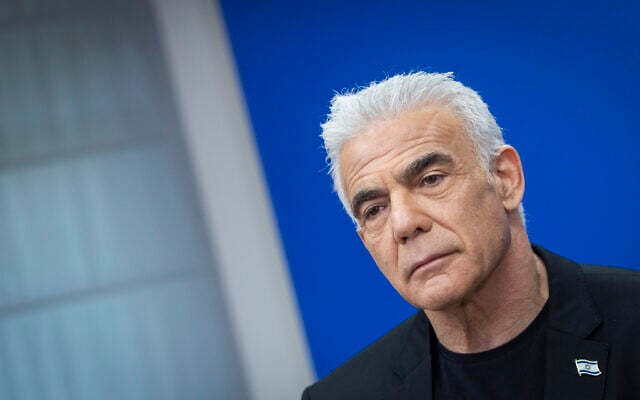
England may have a king of the people, but in Israel, the people are the king, and thus it is that King Bibi is drawing up his own plan to have any peace deal with the Palestinians put before the plebes. Yedioth reports that with the addition of Lapid and his Yesh Atid faction on the referendum bandwagon, Prime Minister Benjamin Netanyahu should have a wide majority in the cabinet for such a measure. The paper also reports that the measure would enjoy a wide majority in the Knesset, assuming that the vote goes by coalition-opposition lines. Should Tzipi Livni, who is against a referendum, and Hatnua insist on voting against it, though, the measure would only clear by a slim four votes.
Never mind that there is no peace deal yet (or even talks), the paper writes that the Justice Ministry is already hard at work drafting a bill, including a question to be put to the people when peace is finally on the doorstep. Within 90 days of a Knesset approval, all eligible voters would get to answer the question: “Are you for or against the agreement between the State of Israel and other parties approved the Knesset.” The paper also reports that using a referendum as a basis for returning lands that were never part of Israel could be problematic legally, though it does not explain any further.
In Haaretz’s op-ed section, Aeyel Gross tries to get at the heart of the problem, writing that the referendum will have to deal with the fate of land that Israel never fully controlled, and which Israelis in Tel Aviv should have no say over: “We are asking the wrong people. Even if the majority of Israeli citizens will want to continue to rule the territories, this will not be a legitimate decision, since the residents of the territory are those who must decide on their future. It is impossible to justify, in the name of a so-called democratic process, the continued rule of occupation that is not democratic. The proposals that are calling for asking Israel’s citizens about the future of the territories, not the residents of the territories, expresses a way of thinking in which the rights of the Palestinians do not matter.”







The Times of Israel Community.