

Opposition leader, MKs embrace restart of peace talks
Yesh Atid, Hatnua and Labor politicians hope Kerry’s declaration on renewal of negotiations will lead to an agreement
 Add ToI as a Preferred Source on Google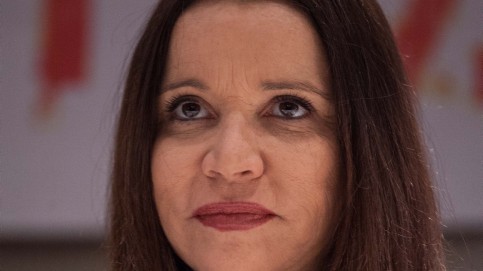
Opposition leader and Labor party head Shelly Yachimovich welcomed US Secretary of State John Kerry’s announcement Friday regarding the renewal of peace talks between Israel and the Palestinians, and expressed hope that the upcoming negotiations will yield a lasting agreement for both sides.
“The resumption of talks is the result of an American effort, but first and foremost it is our issue,” Yachimovich said. “We should not just settle for a renewal of negotiations, but do everything possible to work towards real accords,” she added
Yachimovich called on Prime Minister Benjamin Netanyahu to clearly announce his approval of Kerry’s initiative and express his willingness to achieve an agreement with the Palestinians.
“I hope that Prime Minister Netanyahu, who declared loud and clear that he supports the two-state solution, will make the necessary decisions.”
Last month, Yachimovich said she would back Netanyahu by considering to join the coalition if such a step were necessary to advance talks for a political peace agreement with the Palestinians.
Yachimovich’s guarantee of a parliamentary “safety net” was meant as an assurance that despite the proliferation in Netanyahu‘s government of hardliners who oppose a two-state solution, any peace initiative presented by the prime minister would gain the Knesset’s approval.
Justice Minister Tzipi Livni (Hatnua) addressed Kerry’s announcement as well, stating that “four years of political stalemate” were about to end. The justice minister further stated that any agreement would include a clause that guaranteed that, at any rate, the future Israeli state would remain both Jewish and democratic.
“I’m sure with all my heart that this is the right thing for our future, our security, economy and the values of Israel,” Livni wrote on her official Facebook page.
Kerry said on Friday that Livni, Netanyahu’s envoy Isaac Molcho and Palestinian negotiator Saeb Erekat would meet in Washington within the next week or so to resume negotiations.
MK Ofer Shelah of Yair Lapid’s Yesh Atid party also commented on the US secretary of state’s statement, and urged the prime minister “not to waste time” and to take advantage of the “solid majority,” which he claimed wishes to advance a two-state solution.
“The outline of possible agreement has been known for a long time and requires decisive leadership that will lead to it soon,” Shelah said.
Shelah went on to assure Netanyahu that the Yesh Atid party would stand alongside any government that strived for peace.
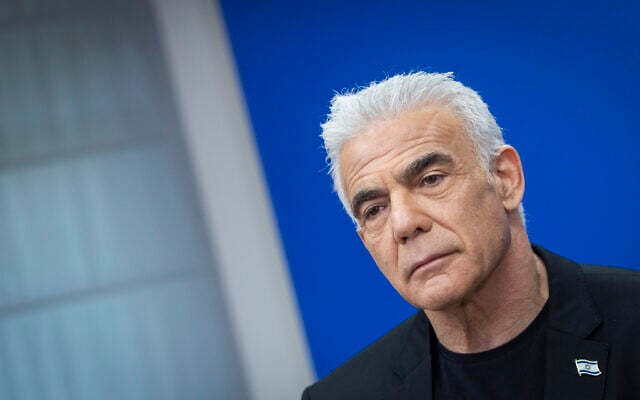
Earlier Friday, Finance Minister Lapid told Channel 2 that he hoped results will be achieved.
“I would not turn off the radio in the coming hours [for news on progress]. I really want this to happen, it’s important for Israel. I hope we will see results,” said Lapid.
On Friday, Kerry announced that Israel and the Palestinians have agreed to resume peace talks without preconditions, after a more than a three-year freeze on progress.
At a stormy late-night meeting of their leadership Thursday, Palestinians had balked at dropping a main condition for talks with the Israelis. They demanded a guarantee that negotiations on borders between a Palestinian state and Israel would be based on the cease-fire line that held from 1949 until the 1967 war, when Israel captured the West Bank, Gaza Strip, and east Jerusalem. Israel withdrew from Gaza in 2005.
Israel rejected preconditions on the talks, and the split cast a cloud of uncertainty over months of US mediation efforts.
Hoping to push Israelis and Palestinians toward talks, President Barack Obama asked Netanyahu to work with Kerry “to resume negotiations with Palestinians as soon as possible,” according to a statement released by the White House late Thursday.
Previous Israeli governments twice negotiated on the basis of the 1967 lines, but no peace accord was reached. Besides disagreeing over how much land to trade and where, the two sides hit logjams on other key issues, including dividing Jerusalem and the fate of Palestinian refugees.
Netanyahu gave a lukewarm endorsement to the idea of a Palestinian state but has not delineated his vision of boundaries, while demanding that the Palestinian recognize Israel as the Jewish state. Palestinians reject that, concerned that it would undermine their claims that millions of refugees and their descendants have the right to return to their original homes, lost in the 1948-49 war surrounding Israel’s creation. Israel has rejected that claim outright.
After their late-night meeting, the Palestinians did not bring up their often-repeated demand that Israel stop building in Jewish settlements in the West Bank and east Jerusalem before talks could resume. One official said that if Israel accepts the 1967 lines as a basis, that would make most of the settlements illegitimate.








The Times of Israel Community.