

Peres to visit Latvia, Lithuania
President to express gratitude for EU decision to blacklist Hezbollah’s military wing, attend Holocaust memorials
 Add ToI as a Preferred Source on Google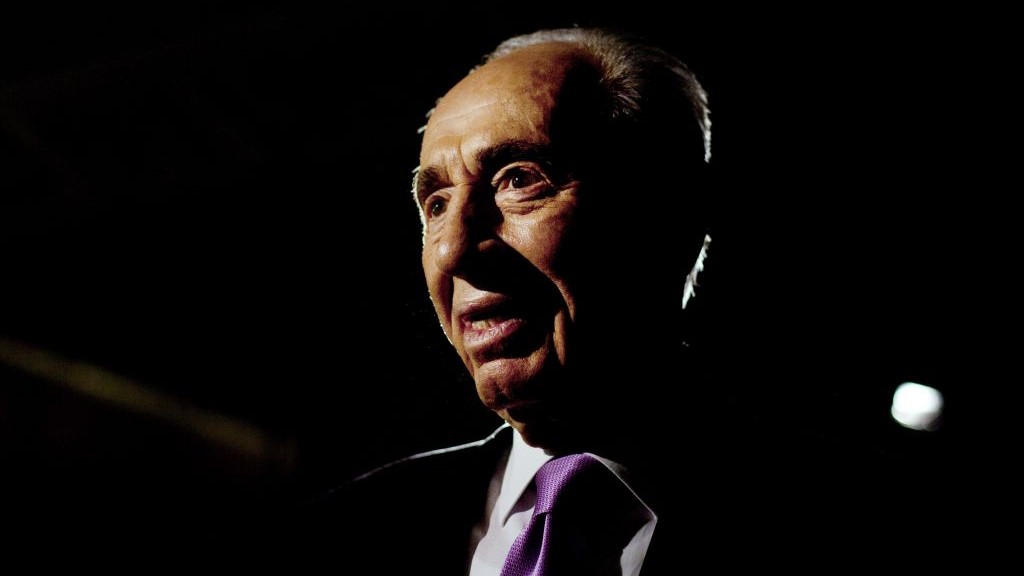
President Shimon Peres was set to depart for a four-day official trip to Latvia and Lithuania on Sunday afternoon.
In Lithuania, which currently serves as temporary president of the European Union, Peres is expected to thank his hosts for advancing the EU’s decision last week to blacklist the military wing of Lebanon-based terror group Hezbollah. He is also expected to urge the leaders to increase European sanctions on Iran.
According to Army Radio, Peres will also discuss the recently disclosed restriction on EU funding of Israel institutions active in the West Bank.
During his visit, Peres will take part in two Holocaust memorial ceremonies.
While in Lithuania, Peres will attend a ceremony in Ponar, where approximately 100,000 people – mostly Jews – were killed during the Holocaust. Lithuanian President Dalia Grybauskaite is also scheduled to take part in the memorial.
Peres will also pay tribute to 25,000 Latvian Jews murdered during the Holocaust at a ceremony near Riga. Latvian President Andris Berzinjs will also attend the ceremony despite previous reports that he had refused to attend.
Israeli officials cited by Haaretz last week speculated that Berzins’s refusal to join Peres at the ceremony is consistent with the Latvian unwillingness to be seen as acknowledging complicity with the Nazi atrocities in their country. The Latvian government has never accepted that its citizens collaborated with the Nazis in wiping out the Latvian Jewish community.
The President’s Residence last week released a statement saying, “There is an important educational message in both presidents attending the memorial ceremony marking the massacre in the killing fields of Rumbula.”
Some 25,000 Jews from the Riga Ghetto were slaughtered by Nazi soldiers in the Rumbula Forest on November 20 and December 8, 1941. When Latvian officials finally allowed a small monument to be erected at the site in 1965, the inscription read (in German, Russian and Yiddish) “To the Victims of Fascism,” and made no reference to the fact that majority of victims at the site were Jewish.



The Times of Israel Community.