

Russian troops ‘reluctant’ to engage in urban warfare due to heavy losses, says UK
Britain’s defense ministry says Moscow instead resorting to ‘indiscriminate use of air and artillery bombardments’ and sieges on Ukrainian cities
 Add ToI as a Preferred Source on Google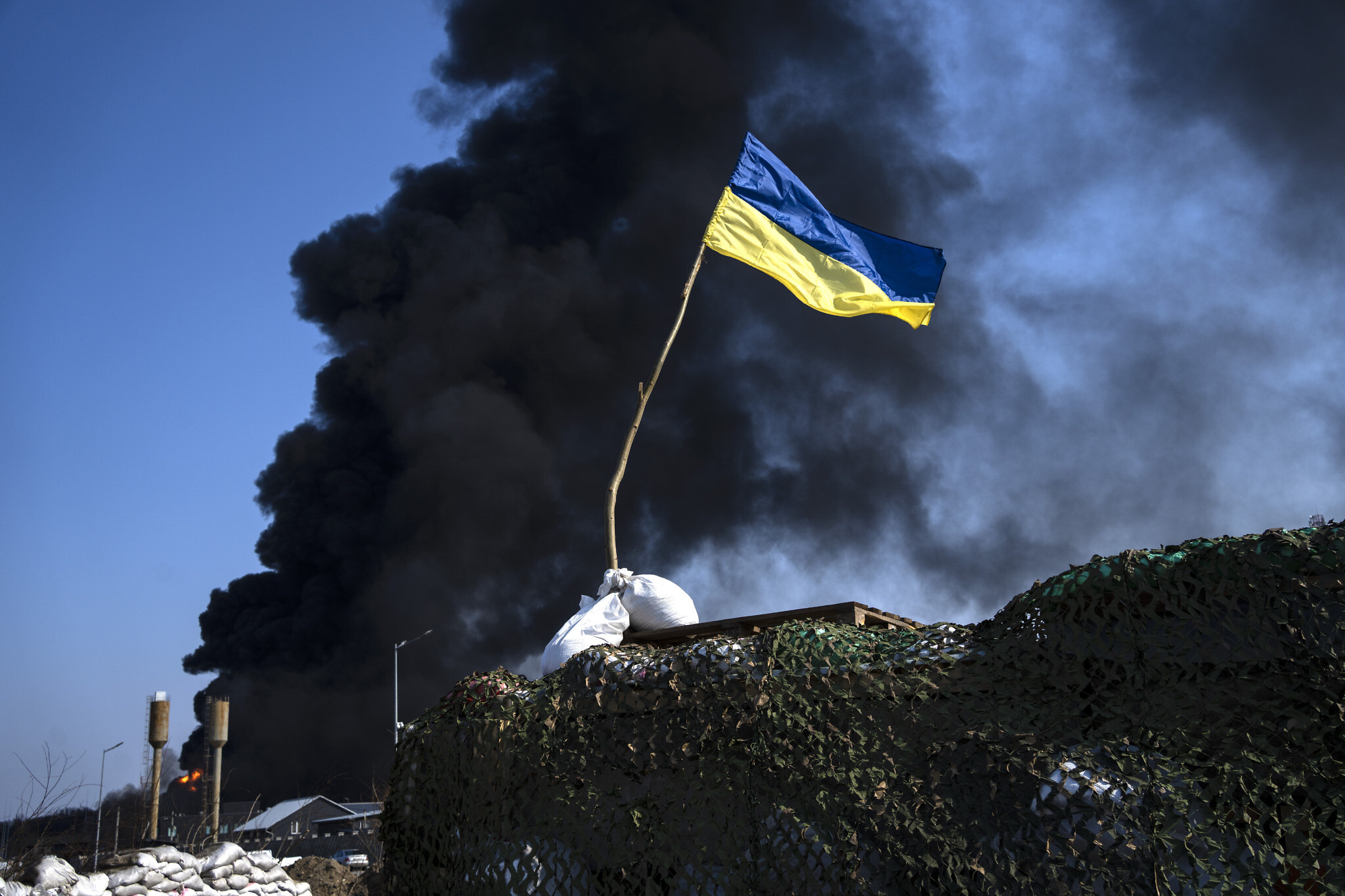
The United Kingdom’s Defense Ministry said Saturday that Russian troops were “reluctant” to enter Ukrainian cities and fight in urban areas, and were instead relying on continued indiscriminate bombardments and sieges.
“Russia continues to besiege a number of major Ukrainian cities including Kharkiv, Chernihiv and Mariupol,” the ministry said in a new intelligence report early Saturday.
“Russian forces are proving reluctant to engage in large scale urban infantry operations, rather preferring to rely on the indiscriminate use of air and artillery bombardments in an attempt to demoralize defending forces,” according to the briefing.
The assessment said it was likely Russia would continue to use its heavy firepower on urban areas “as it looks to limit its own already considerable losses, at the cost of further civilian casualties.”
The US said Friday that Russian forces appear to have halted, at least for now, their ground offensive aimed at capturing the capital, Kyiv, and are concentrating more on gaining control of the Donbas region in the country’s southeast — a shift the Kremlin appeared to later confirm.
While the Russians continue to pound the capital from the air, they appear to have gone into a “defensive crouch” outside Kyiv and are focused more on the Donbas, a senior US defense official said, speaking on condition of anonymity to discuss the Pentagon’s assessment.
“They don’t show any signs of being willing to move on Kyiv from the ground,” the official said.
In comments that seemed to corroborate a change in Moscow’s military goals, Col.-Gen Sergei Rudskoi, deputy chief of the Russian general staff, said the main objective of the first stage of the operation — reducing Ukraine’s fighting capacity — has “generally been accomplished,” allowing Russian forces to focus on “the main goal, liberation of Donbas.”
The Donbas is the largely Russian-speaking eastern part of the country where Russian-backed separatists have been fighting Ukrainian forces since 2014 and where many residents desire close ties to Moscow. Its coal-mining and industrial Donetsk and Luhansk regions are recognized by Russia as independent.
Britain’s Defense Ministry said Friday that Ukrainian forces have been counterattacking Russian troops and have been able to reoccupy towns and defensive positions up to 35 kilometers (22 miles) east of Kyiv as Russian troops fall back on their overextended supply lines. In the south, logistical problems and Ukrainian resistance are slowing the Russians as they look to drive west toward the port of Odesa, the ministry said.
In his nightly address Friday, Ukrainian President Volodymyr Zelensky again appealed to Russia to negotiate an end to the war, but pointedly said Ukraine would not agree to give up any of its territory for the sake of peace.
“The territorial integrity of Ukraine should be guaranteed,” he said. “That is, the conditions must be fair, for the Ukrainian people will not accept them otherwise.”
The Russian military said 1,351 of its soldiers have died in Ukraine and 3,825 have been wounded, though it was not immediately clear if that included the separatists in the east or others not part of the Defense Ministry, such as the National Guard. Earlier this week, NATO estimated that 7,000 to 15,000 Russian soldiers have been killed in four weeks of fighting.
The most recent figure for Ukraine’s military losses came from Zelensky on March 12, when he said that about 1,300 Ukrainian servicemen had been killed in action.
The UN rights office said Friday that it had confirmed over 1,000 civilian deaths in Ukraine and close to 2,000 injuries, though it warned that the actual numbers could be much higher.






The Times of Israel Community.