

Three-quarters of UK voters disapprove of May handling of Brexit talks
Similar number of respondents to survey also express disappointment in British PM, whose cabinet was rocked earlier month over her ‘soft’ proposal
 Add ToI as a Preferred Source on Google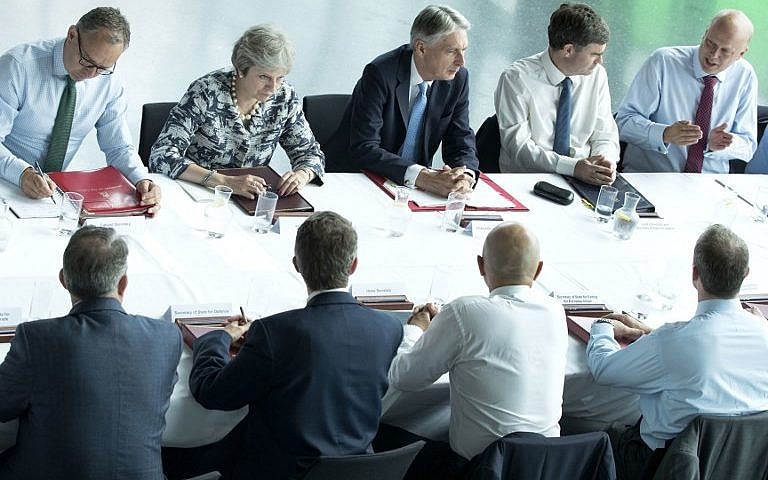
A new poll released Monday indicated over three-quarters of the British public disapproves of the government’s handling of Brexit negotiations, while a similar number also disapprove of Prime Minister Theresa May’s performance.
The survey, conducted by the polling unit of Sky News, marked a sharp drop in the public’s confidence in the government to secure a favorable trade deal for the United Kingdom when it exits the European Union in March 2019.
Asked to rate the government’s performance on negotiating a Brexit agreement with the EU, 78 percent of respondents said it was doing a bad job with only 10% expressing approval.
Sky News said the disapproval rating was up by 23% since the same question was asked for a poll in March, while the approval score was down by 13% since then.
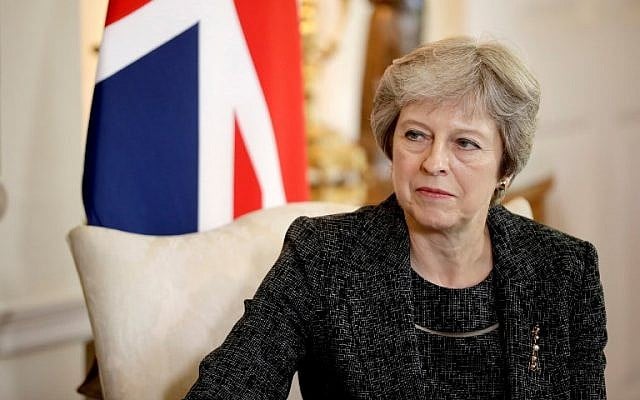
The high disapproval rating for the government’s handling of negotiations mirrored respondents’ feelings toward May, with 74% saying they were dissatisfied with her as prime minister, up 14 points from March.
Only 24% of respondents approved of May’s performance, a 17-point drop.
In light of these high disapproval marks, the poll said 65% of respondents believe the Brexit deal the government negotiates will ultimately be a bad one — including 51% of voters who backed leaving the EU in June 2016 referendum.
Half of respondents also said they would support holding a referendum on whether the UK should approve the Brexit deal negotiated by the government, leave the EU without an agreement or remain in EU. Among these options, 48% supported staying in the EU, 27% backed leaving the bloc without an agreement and only 13% said they would support the government’s Brexit deal.
The poll said 40% of respondents, on the other hand, said they would not support such a referendum.
The survey’s release comes after May’s government published a white paper earlier this month with long-awaited proposals for Britain’s relations with the EU after it leaves the bloc next year. The document proposes keeping Britain and the EU in a free market for goods, with a more distant relationship for services.
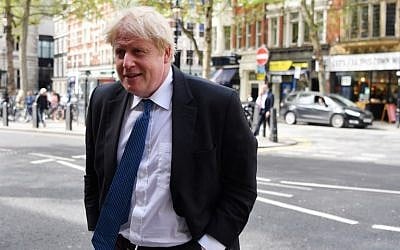
The plan has infuriated fervent Brexit supporters, who think sticking close to the bloc would limit Britain’s ability to strike new trade deals around the world. Foreign secretary Boris Johnson and Brexit secretary David Davis both quit the government in protest and May has been struggling to quell rebellions within her own ranks ever since.
Last week, Johnson’s replacement warned that the country could crash out of the EU next year without an agreement on future relations with Brussels because of the hard line taken by EU negotiators.
Foreign Secretary Jeremy Hunt told reporters in Berlin after meeting German counterpart Heiko Maas that “there is now a very real risk of a Brexit no deal by accident.”
“This is because I think that many people in the EU are thinking they just have to wait long enough and Britain will blink,” he said. “And that’s not going to happen.”
Big differences remain between Brussels and London over the terms of a new trade setup and the issue of how to regulate the UK’s only land border with the EU, between the UK’s Northern Ireland and the Irish Republic.
A substantial number of lawmakers in May’s Conservative Party party favor a complete break with the EU — a so-called “hard” Brexit — rather than the “soft” option proposed by May, which calls for a “common rule book” with European nations that would govern trade in goods.









The Times of Israel Community.