

Trump’s Gaza push is a recipe for Hamas’s revival, but Netanyahu is unwilling to stir the pot
As phase 2 coalesces with Turkey and Qatar in key positions, disarming the Gaza terror group seems increasingly unlikely, but the PM is betting it’s smarter to go along than go against the US president

 Add ToI as a Preferred Source on Google
Lazar Berman is The Times of Israel's diplomatic reporter
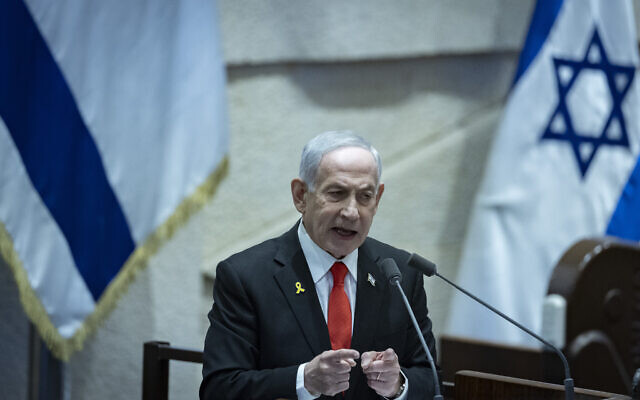
Standing at the Knesset rostrum on Monday, Prime Minister Benjamin Netanyahu shrugged off any concerns that control over the future of Gaza might be slipping from Israel’s grasp.
Days earlier, the White House had announced that it was moving ahead with the second phase of US President Donald Trump’s 20-point plan for Gaza, and invitations were zooming around the world for the Board of Peace and Gaza Executive Board, which will oversee the Strip’s transition away from Hamas rule and the disarmament of the terror group.
“What is phase two?” Netanyahu asked rhetorically. “Phase two says something simple — Hamas will be disarmed, and Gaza will be demilitarized.”
“We are sticking to those goals, and they will be achieved,” he pledged, “either the easy way, or the hard way.”
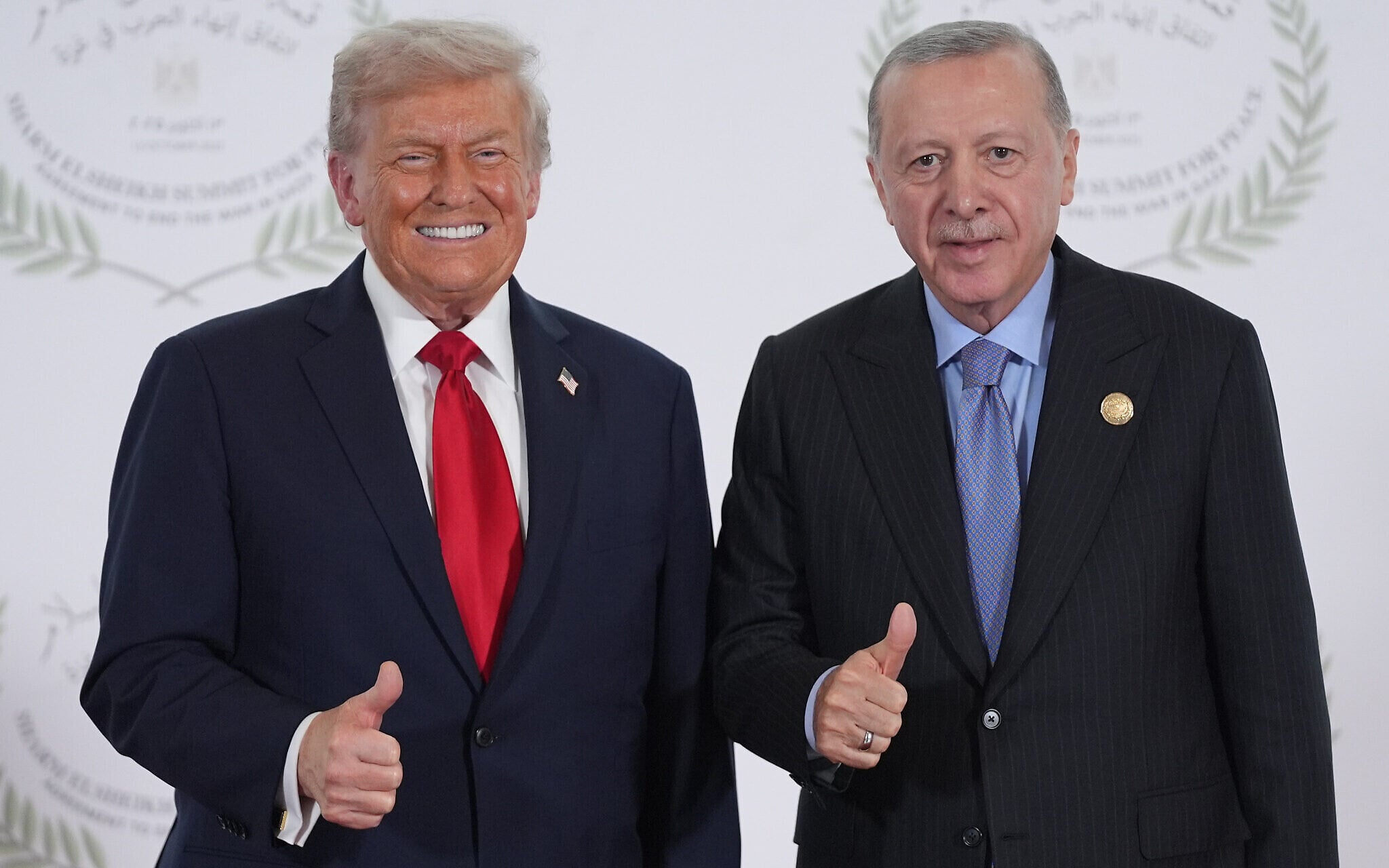
Among those slated to sit on the Gaza Executive Board, which looks to be a decisive body determining what happens moving forward in the war-torn Strip, are Israel’s regional rivals and close Trump friends Turkey and Qatar.
On Saturday night, Netanyahu’s office publicly condemned the inclusion of Ankara and Doha.
But in the Knesset, Netanyahu downplayed the significance of having the two Hamas-backing countries on the panel, insisting rather disingenuously that Qatar and Turkey “are barely members of an advisory committee of one of the three commissions, in which they don’t have any authority or any influence or any soldiers.”
Netanyahu finds himself in a difficult bind. The prime minister recognizes that the coming stage of Trump’s plan, with hostile actors in key roles, is not a recipe for success. It might even be the first stage of Hamas’s rehabilitation, not its demise.
At the same time, he can’t oppose the plan. Ever since it became clear that Trump was returning to the White House, Netanyahu has embraced the president and his policies, including the 20-point vision for Gaza. The Saturday night message was the first direct criticism of a Trump policy all year, but he is not about to try to get Trump to overturn his decision or suspend the plan’s advancement.
By going along with Trump, Netanyahu is taking a gamble, and not an outrageous one. He is as aware as any that the president’s elaborate plans for decision-making bodies and peacekeeping forces for Gaza are unlikely to rid the world of Hamas or protect Israel.
But the compromise is worth it to the premier in order to maintain his direct line to the Oval Office, where crucial decisions about Hamas and Israel’s freedom of action to confront it are being made.
If he’s wrong, however, and Trump and his senior advisers ice him out in favor of the Board of Peace project, then Hamas will be sticking around to threaten the future of Israel, and Netanyahu’s own political fortunes will be imperiled as well.
The two goals
For the two difficult years between the invasion of southern Israel by Hamas and the ceasefire Trump announced in October, Netanyahu repeatedly made the case that freeing the hostages held in Gaza and defeating Hamas were not mutually exclusive war aims.
He faced plenty of angry opposition to that claim, both domestic and international. Protesters at weekly marches in Tel Aviv insisted that rescuing the hostages was the more urgent task and that decapitating Hamas could come after. Netanyahu’s political allies pushed the idea that taking out Hamas should be the main goal.

Throughout the war that broke out on October 7, 2023, Netanyahu managed to make progress — albeit in lurching, uneven steps — on both badly weakening Hamas and getting the majority of the hostages home.
Yet, it seemed like the tension between the goals would inevitably come to a head once Hamas understood it was down to the final group of hostages last year. They seemed to represent the terror group’s ticket to survival, and there appeared to be no way to free them without acknowledging in practice that Hamas would remain a powerful, and armed, force in Gaza.
But Netanyahu persisted. He overruled top generals who consistently called for a more phlegmatic approach in Gaza, and settled on an aggressive push into Gaza City over the summer of 2025, even as the international community pressured him to call it off.
In October, it appeared that Netanyahu had been vindicated. Trump offered his vision for Gaza that met both of Israel’s primary war aims. All hostages were to be released in the first 72 hours, and the second phase would see Hamas disarm and be replaced as the governing body of Gaza.
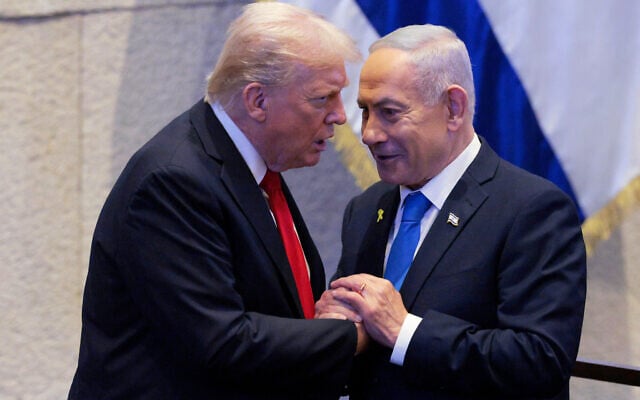
A raucous Knesset session honoring Trump in the first days of the ceasefire was effectively a victory celebration. “You’ve won,” said the US president. Netanyahu thanked Trump for his “proposal that ends the war by achieving all our objectives.”
All 20 living hostages were indeed released on time, and eventually all but one of the slain hostages as well, though Israel is convinced Hamas intentionally dragged out the process.
As the second phase gets rolling, the remains of Israel Police Master Sgt. Ran Gvili have yet to be returned to Israel, in blatant contravention of the agreement. It’s unlikely to be the last time that Jerusalem is forced to make peace with a provision of Trump’s vision failing to come to fruition.
Netanyahu, it turns out, may have effectively secured the release of the hostages instead of ensuring the defeat of Hamas, though it was not at the demand of the Tel Aviv protesters but rather in deference to the White House.
Relinquishing control
Last week, US special envoy Steve Witkoff announced the launch of phase two of Trump’s 20-point plan, including the establishment of a new technocratic Palestinian administration for the Strip.
Trump also unveiled the members of the Board of Peace’s powerful Gaza Executive Board.
The list isn’t especially encouraging.
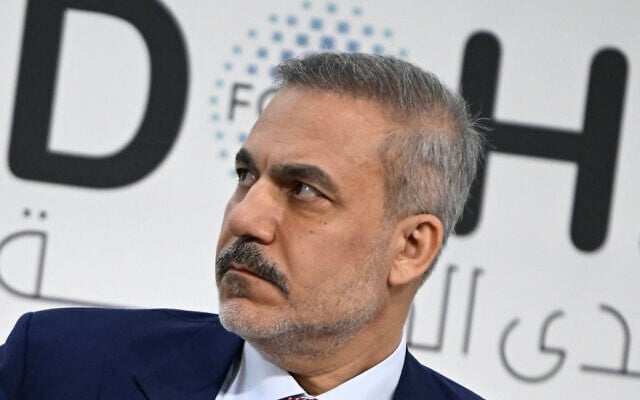
Turkish Foreign Minister Hakan Fidan, a former Turkish spymaster, will represent Turkish President Recep Tayyip Erdogan, a proud Hamas backer. Another Hamas safe haven, Qatar, will also sit on the panel, represented by senior diplomat Ali Thawadi.
The Gaza Executive Board isn’t a symbolic panel. It will oversee the group of Palestinian technocrats that will be responsible for providing basic services to Gazans and that represents the core of a future government for Gaza.
Israel has always insisted on maintaining responsibility for its own security and protecting its freedom to act when it deems it necessary against threats, especially those on its borders. Netanyahu has said that approach would apply to Gaza as well.
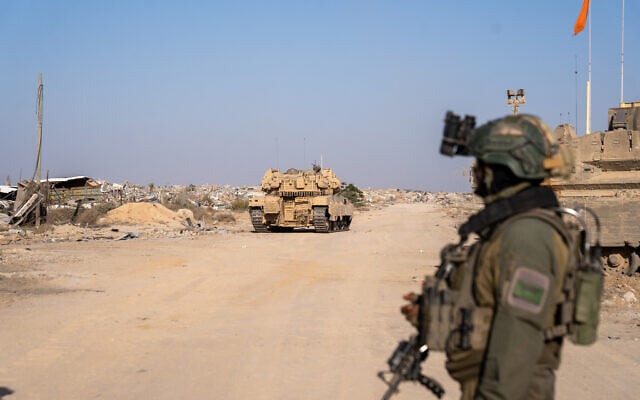
“IDF forces will remain in control of the Strip; we will not give it to international forces,” he promised weeks after the October 7 Hamas-led attack. “I want to make it clear — we will make our own decisions, and the State of Israel will do everything necessary to defend itself,” Netanyahu stressed in April 2024.
It’s hard to imagine Netanyahu being in a position to fulfill those pledges now. With the new committees announced last week set to decide the future of the Gaza Strip, Israel’s ability to control what happens just across its border is being drastically watered down.
There is no Israeli official on the Gaza Executive Board, and if Netanyahu accepts the invitation to sit on the largely symbolic Board of Peace, he will be just one of a group of world leaders that includes Erdogan and Russian President Vladimir Putin.
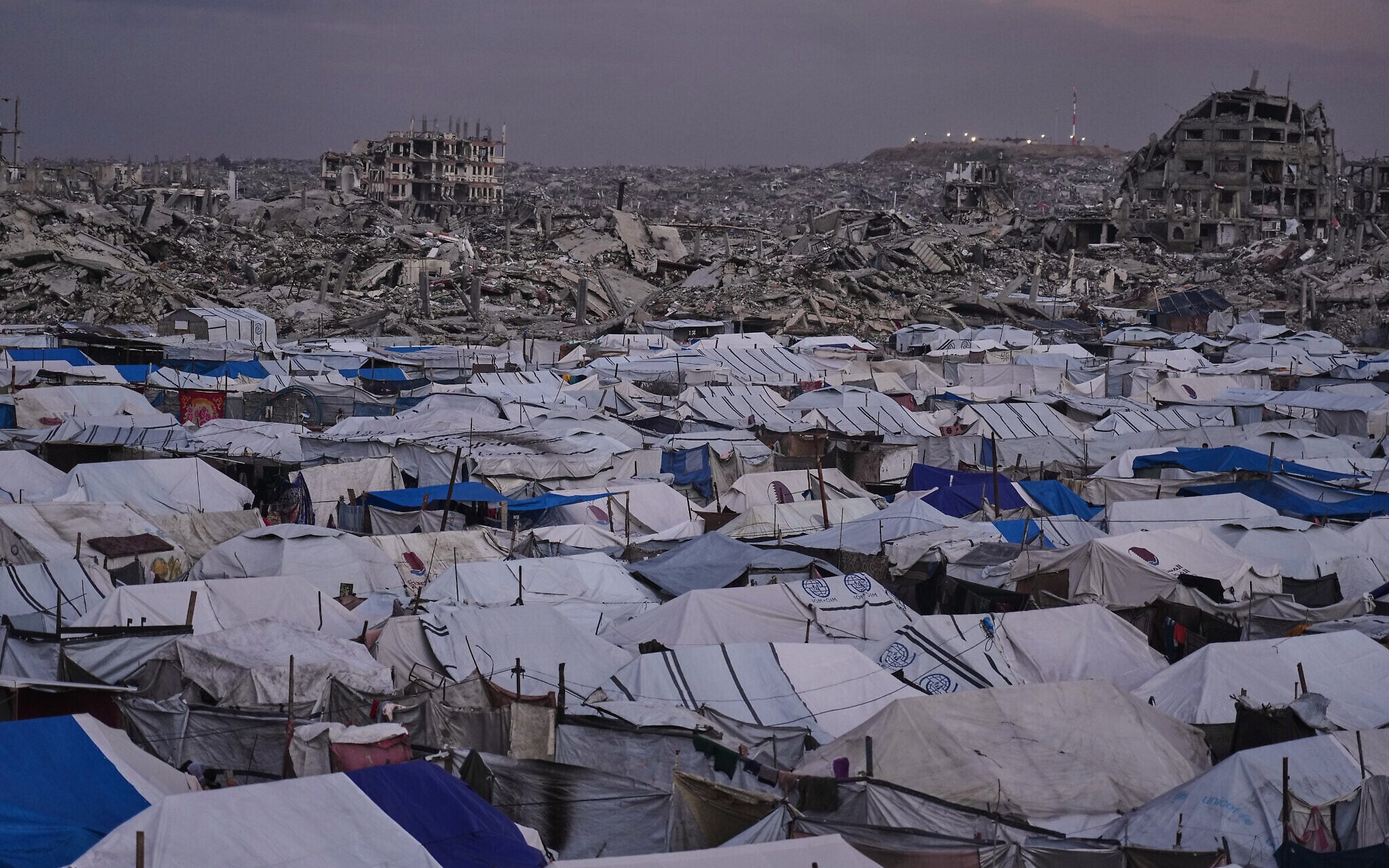
Netanyahu might threaten Hamas with being disarmed “the hard way,” but with every passing day, the legitimacy for the kind of massive Israeli operation in Gaza that could break Hamas dissipates. It will only get harder if and when international forces deploy in the Strip.
And, worryingly for Netanyahu himself and his inner circle, the prime minister is facing election day later this year with the hostages out, but — in all likelihood — Hamas controlling half of Gaza and holding on to its weapons.
Still, he is betting that, when all is said and done, the benefits of staying in Trump’s good graces outweigh the risks of going along with a phase two that doesn’t seem to be creating much stress among Hamas’s leadership.
‘Hamas just wants what everyone wants — a good life’
One might take solace in the fact that the entire effort is being managed by Trump and his inner circle, the same team that has made bold decisions over the past year that exceeded Israel’s wildest hopes. The order to join the Israeli attacks on Iran last June stands out in this regard.
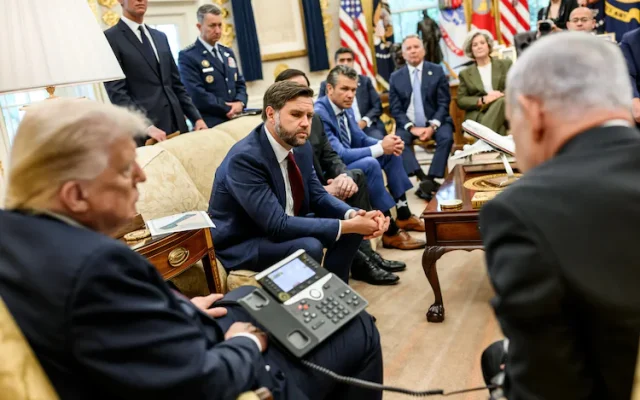
But in a briefing to reporters over the weekend, two top White House officials expressed optimism around the chances for a peaceful future for Gaza that critics are characterizing as stunningly naive.
“For the first time in Gaza in a long time, there’s no Palestinian Authority and no Hamas is governing it. This really has the potential to be the beginning of a new era,” said one of the officials.
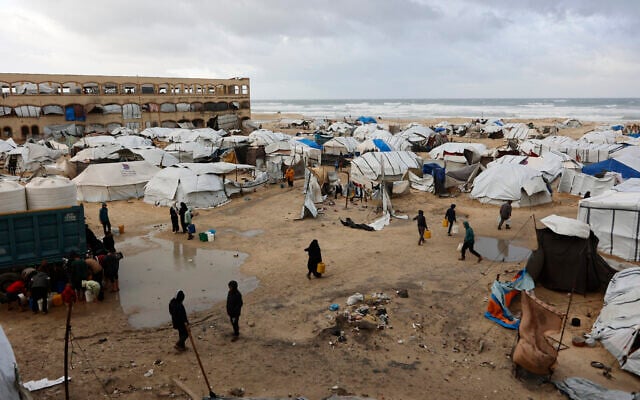
In reality, the formal establishment of the Palestinian technocratic committee is occurring with Hamas still holding onto a complex web of institutions governing all aspects of life for the vast majority of Gazans.
They want what everybody else in this world wants — just a good life, and a good life doesn’t occur through military means.
The second official went even further, describing Hamas as if it were an honest broker that had turned from its brutal ways. “We’ve talked to a number of Hamas people, and we’re hearing throughout the Arab world that people don’t want to be at war anymore. They want peace. They want a better economic future for their families. They want credible homes.”
“They want what everybody else in this world wants — just a good life, and a good life doesn’t occur through military means,” continued the US official.
But it will take more than words to convince Israelis, or anyone else, that the messianic terrorists who murdered and kidnapped Israelis at a music festival while shouting praises to their God, and who have ruled the Strip for nearly two decades using vicious repression while spending international aid money on tunnels and rockets rather than developing the Strip into the peaceful enclave it could be, want what everybody else wants.
On disarmament, the officials indicated that Hamas would be moved to give up its arms through dialogue, and seemed to cast the US as neutral arbiters between two feuding parties of equal standing.
“We will be engaging in conversations with Hamas on the next phase, which is demilitarization and [we will be engaging] with Israel on what amnesty program can be given to Hamas [fighters] if they do this,” said one. “There’s clearly not a lot of trust between both sides after decades of conflict, but… believe that there is a good chance that everyone will try to keep their word in the agreement, and we will be able to move things forward.”
The official said that Hamas leaders “are indicating that there’s a real possibility that [demilitarization] will happen, so we’re pushing very hard to make it happen.”
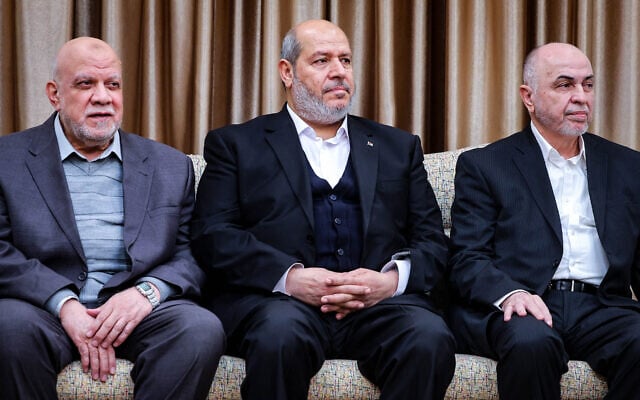
But now that the threat of Israel’s military campaign isn’t hovering over Hamas any longer, and there is no credible return to war for Israel in the foreseeable future, there is no incentive for Hamas to play along with the Trump vision and give up the political or military control it still wields.
The Turks and Qataris aren’t going to push Hamas to disarm, and are more likely to ensure that the terror group holds on to some of its weapons to give them an important means of pressuring Israel.
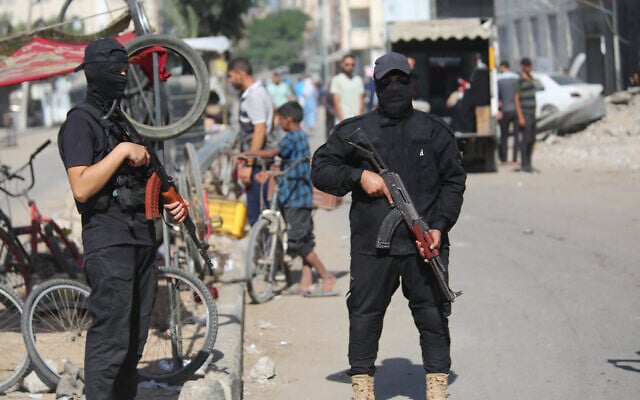
The International Stabilization Force that can’t seem to actually recruit anyone to its ranks — certainly no countries have expressed willingness to have their soldiers engage in combat with Hamas — isn’t about to claw AK-47s out of the clutches of the tens of thousands of Hamas fighters.
Even the US officials seem to think that disarming Hamas does not mean stripping the group of its rifles.
“Gaza needs to have basic policing so that they can keep control of their populations,” said one of the US officials. “People should be able to make sure that it’s a place free of crime, where people can live freely and safely.”

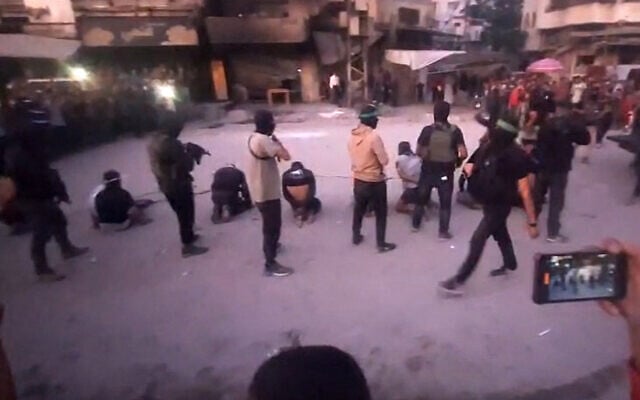
Portraying Hamas weapons as a guarantor of Gazans’ freedom and safety is a novel stance indeed, after the terror group gunned down alleged dissidents in public executions immediately after the October ceasefire began.
And it’s hard to ignore the fact that Hamas’s rifles sufficed to gun down hundreds of people in Israel on October 7, killing people huddling in their homes and their cars, in shelters and in bed, as the group that’s supposedly now reformed took its biggest step yet toward advancing its program of ultimately destroying Israel.










The Times of Israel Community.