

With friends missing and relatives trapped, Israelis worried by ‘apathy’ in Ukraine
Russian invasion caught many families with Ukrainian links by surprise; ensuing uncertainty is compounded by fake reports, poor communication
 Add ToI as a Preferred Source on Google
Carrie Keller-Lynn is a former political and legal correspondent for The Times of Israel
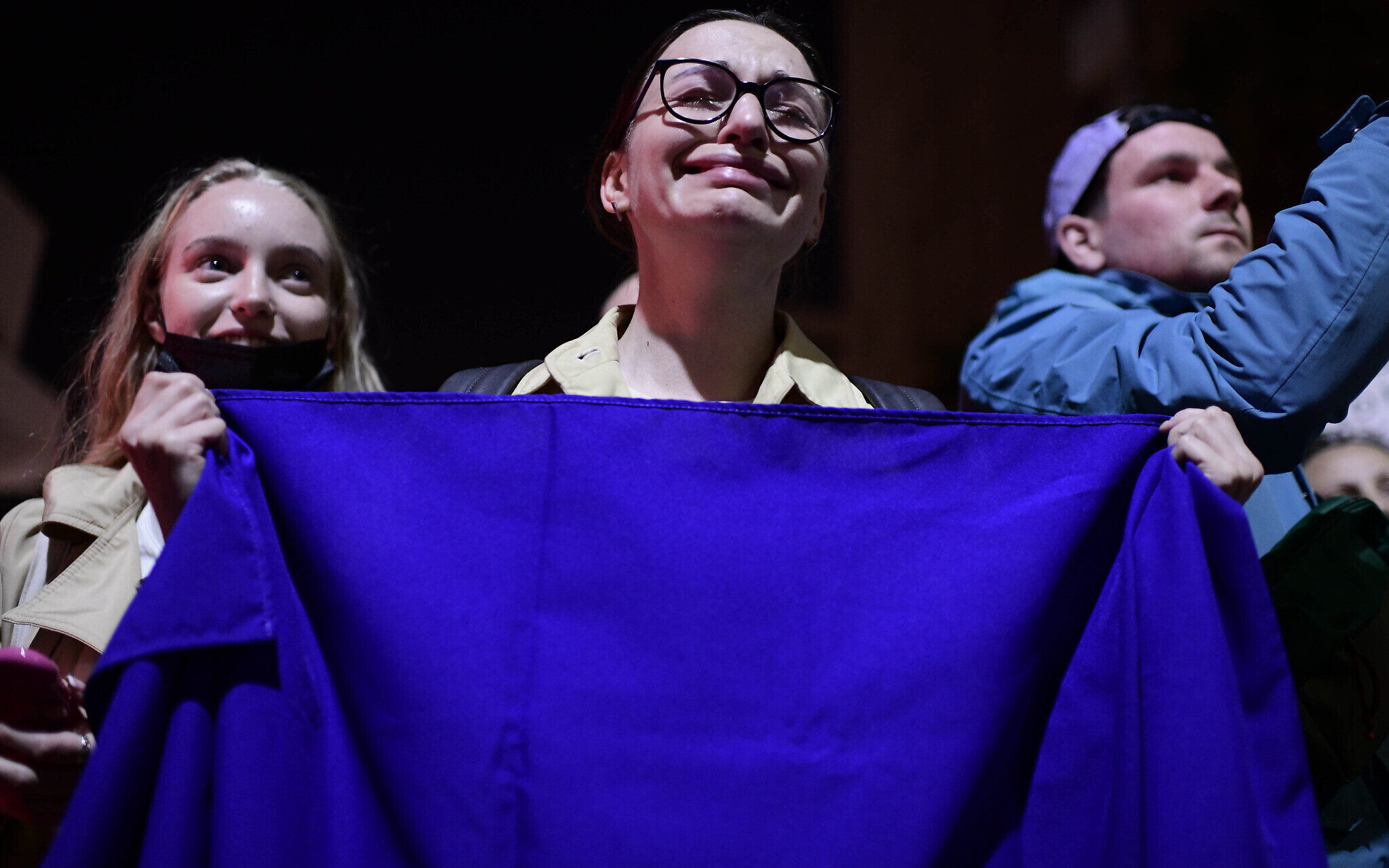
Israelis with Ukrainian roots and family say they are worried for relatives who cannot — or will not — leave Ukraine after Russia invaded Thursday.
They described a surreal situation of emotional shellshock from a Russian offensive that was well-telegraphed but dismissed by many as posturing, coupled with the difficulty of getting credible information in an age of fake news and with loved ones that are hard to reach.
“My family friends in Ukraine are all in shock,” said a Tel Aviv-based Israeli who was born in Donetsk, who withheld her name for privacy. “People from Ukraine don’t think there’s going to be a war. People work in hi-tech in Kyiv. The idea of an old-fashioned war is mind-blowing… I’m in shock.”
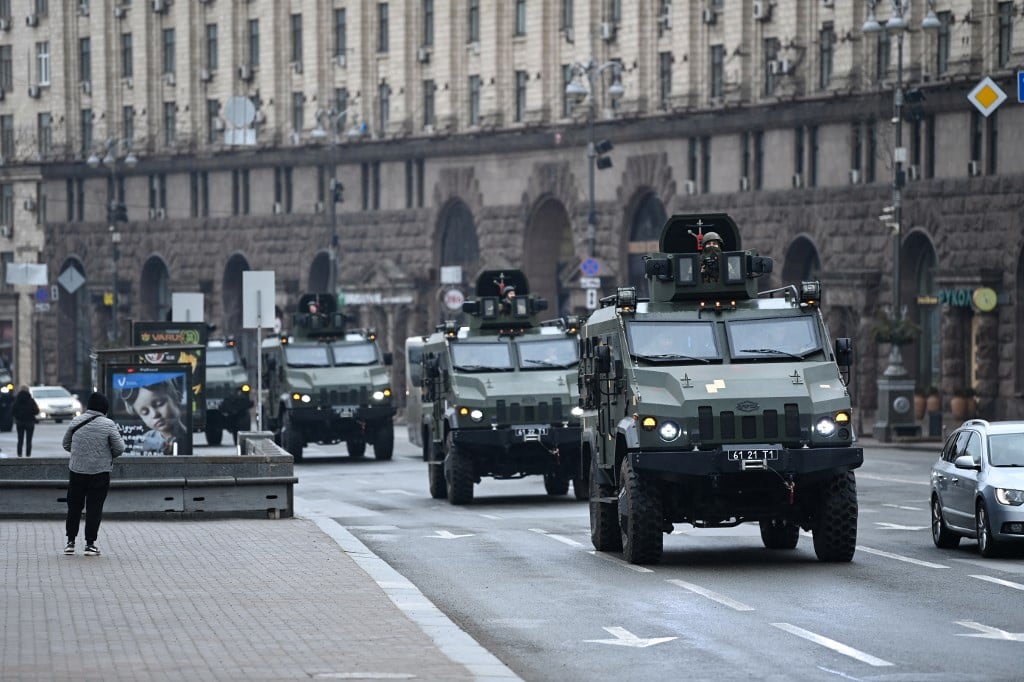
Russian forces commenced their attack early Thursday morning and air raid sirens were heard in the Ukrainian capital of Kyiv throughout the day. Only days ago, the capital city was adhering to business as usual; on Thursday, reports described it as a ghost town.
“A good friend was supposed to come to Israel with her 5-year-old son, [neither her brother nor I] have heard from her since Tuesday,” said Biana Kleyner, an Israeli also born in Ukraine. “We hope that she already fled somewhere and just crossed the border and that’s why her phone isn’t working.”
“I can’t focus on anything today, I’m exploding with worry,” she said.
In part due to the perceived surreal nature of the situation, many Israelis are grappling with their Ukraine-based family members’ decision to stay in the country.

“My [Kyiv-based] family’s apathy is freaking me out,” said Kleyner, who moved to Israel with most of her family thirty years ago. “I can’t understand it, when the threat is so clear, you take everything and run.”
Her remaining family in Ukraine, including cousins and her great-uncle, are currently staying put at their Kyiv homes.
“They live in the neighborhood of Pozniaky Station [in Kyiv], which isn’t in the center of the city, so maybe they think they’re safer there,” she said.
“Patriotism, naivety. ‘It won’t happen to me.’ I don’t know why they won’t leave but it was clear something was going to happen and now it’s too late.”
Tel Aviv-based American software engineer Daniel Anderson is struggling to find a safe solution for his Ukraine-based wife and stepson. Anderson and his wife met in Israel, but they’ve been separated for much of the past year due to visa issues, as neither of the pair is Israeli.
“[My teenage stepson] is of a generation of Ukrainians who feels differently about his country. He is passionate about his country and didn’t want to leave.” Anderson is currently mobilizing an effort to get his family out of the country, but like many, is facing logistical and safety roadblocks.
His wife and stepson are currently in Vinnytsia, about 3.5 hours east of Kyiv. Even there, Anderson said, his wife awoke to air raid sirens.
“It’s been a pretty anxious couple of days,” Anderson said.
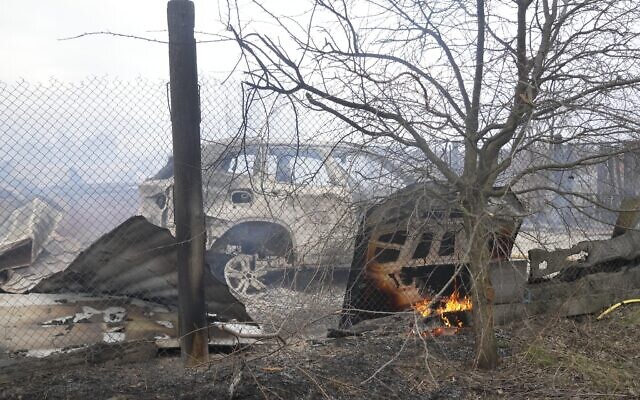
In addition to the difficulties Israelis face in reaching relatives, false reports are a pervasive problem complicating efforts to understand the true status of events on the ground.
Vyacheslav Feldman, one of the founders of the Israeli Friends of Ukraine — a network for pro-democracy activism and support to Ukraine — said he cannot get a clear picture of the threats facing his mother and brother in central Ukraine because news is often suspect.
“The information war continues, there is a lot of fake news in the social networks,” he said. “Russian bots are posting items that the Ukrainian army is running, that large cities are falling, all to create panic.”
According to Mykola Murskyj, an American of Ukrainian origin who teaches political science at Ukrainian Catholic University, the Russian fake news campaign is a significant obstacle.
“We don’t know for sure [what is happening on the ground] because the information coming out of Ukraine is difficult to parse right now,” he said. “I have seen things on Twitter that analysts have determined to be fake, many things are getting debunked.”
“You have to be really careful because the Russian military has been preparing for a military operation against Ukraine for the last 8 years,” he added, referring to the 2014 protests in Ukraine that overthrew a pro-Russia president and the subsequent Russian invasion of the Crimean Peninsula and Donbas region.
“We know that Russians like to shoot videos far in advance,” Murskyj cautioned. “If you’re not totally familiar with the region, you won’t notice that the weather is great today, but the film you’re looking at has an overcast sky, full of sleet.”
Murskyj, an American of Ukrainian origin whose family fled the Soviet Union during World War II after fighting for Ukrainian sovereignty, said he was “terrified” by the threat to Ukrainian democracy that the invasion poses.
“It’s just scary because your parents’ life work and your grandparents’ life work is now being erased and we’re just watching it live on Twitter,” he said.
https://cdn.jwplayer.com/previews/wqRU06H7-U4CTA3JQ
Partially organized by Feldman’s Israeli Friends of Ukraine, hundreds of protesters braved intermittently pouring rain to gather outside the Russian embassy in Tel Aviv on Thursday evening, objecting to Russian aggression and what they saw as Israel’s lackluster response to protect Ukrainian sovereignty.
Sheltered under giant Ukrainian flags and exposed to the elements alike, protesters — many of whom have Ukrainian roots — shouted slogans in Russian, Ukrainian, and Hebrew, directed both at Putin and recalling past Ukrainian struggles for independence.
Several also bore placards, including “Putin is the new Hitler” and “Stop Putin, stop war.”
Michael Oren, a former deputy minister for diplomacy, told The Times of Israel that Jews caught up in the current conflict are Israel’s concern.
“There are about 200,000 Jews in Ukraine and 800,000 in Russia,” said Oren, who is a current candidate for the Jewish Agency chairmanship.
“Along with our strategic considerations — like the presence of the Russian army across our border [in Syria] — we have to take immediate responsibility for those Jews.”
Ukraine has about 43,300 self-identified Jews and about 200,000 people eligible for Israeli citizenship under Israel’s Law of Return.
On Thursday morning, Minister of Immigration and Absorption Pnina Tamano-Shata said that Israel is ready to take in Jewish immigrants from Ukraine in light of the Russian invasion.
The Foreign Ministry had opened several emergency lines and is currently providing consular services to Israelis and Ukrainian Jews evacuating the invaded country.






The Times of Israel Community.