

Iran, powers seek to narrow divide as nuke talks resume
Significant differences remain between Tehran and the P5+1 countries over the Islamic Republic’s nuclear program
 Add ToI as a Preferred Source on Google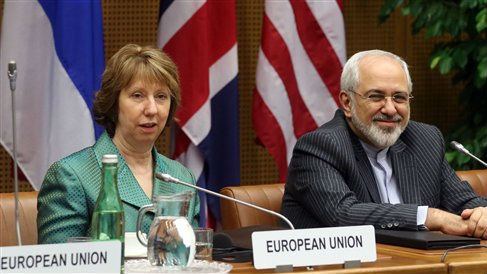
Iran and six world powers are hoping to narrow differences at a new round of nuclear talks, less than three months before an informal July deadline for a deal.
Negotiations resumed Tuesday, and substantial differences remain.
The scope of Iran’s uranium enrichment program is the toughest issue. Iran argues it needs robust enrichment capacities to make low-enriched reactor fuel. The US, Britain, France and Germany want significant cuts to limit any potential effort to turn the program into making high-enriched material for nuclear arms. Russia and China are somewhere in the middle.
Both sides want to transform an interim deal struck in November by foreign ministers in Geneva into a permanent agreement by the time the temporary accord lapses on July 20.
Iranian Foreign Minister Mohammad Javad Zarif said the sides would seek to air views ahead of drafting a permanent accord at the next round of meetings, scheduled for mid-May, according to Iran’s Press TV.
Zarif said on Tuesday that Tehran’s negotiators were being assisted by experts in international law during the “difficult” nuclear talks being held in Vienna.
The Vienna meeting, which began on Tuesday, is aimed at reaching a lasting accord to end a decade-long standoff over Iran’s nuclear program.
“In the next round, we will start writing the text of a final agreement which will be a complicated, difficult and slow task,” Zarif, who leads the Iranian negotiating team, wrote on his Facebook page.
“Therefore, I formed an advisory group in legal affairs which comprises many prominent and well-known professors specialized in international law … to assist the negotiating team in that important matter,” he said.
So far the mood at the talks has been positive, with the powers’ chief negotiator, EU foreign policy chief Catherine Ashton, hailing the last monthly round in mid-March as “substantive and useful.”
“There are signs that an understanding is possible that respects the rights of the Iranian nation,” Zarif told Iranian media afterwards.
A senior US official involved in the talks said Friday she was “absolutely convinced” a deal could be reached and that both sides were “looking toward beginning drafting (a deal) in May.”
But “the real issue is not about whether you can write the words on paper, do the drafting. It’s about the choices that Iran has to make, and some of them are very difficult.”
Under the November deal, which took effect on January 20, Iran froze certain nuclear activities for six months in exchange for minor relief from sanctions hurting its economy.
Now the powers want Iran to reduce permanently, or at least long-term, the scope of its program in order to make any dash to make the bomb extremely difficult and easily detectable.
This may involve Iran slashing the number of centrifuges — machines “enriching” nuclear material — changing the design of a new reactor at Arak and giving UN inspectors more oversight.
One issue is proving to be particular thorny — that of Iran’s desire to research and develop newer and faster centrifuges, which November’s deal allowed them to continue, one diplomat said.
Iran denies any interest in atomic arms. It is seeking an end to economic sanctions in return for any nuclear concessions.



The Times of Israel Community.