

UN, Arab officials raise alarm on jihadist threat to monuments
UNESCO chief calls IS razing ancient Iraqi city last month ‘a war crime’
 Add ToI as a Preferred Source on Google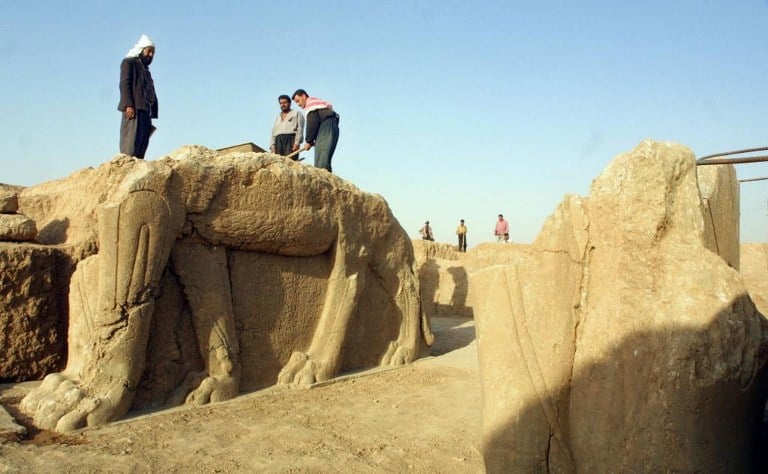
UN and Arab officials began a two-day conference on Wednesday to seek ways to combat the “unprecedented” destruction of heritage sites by jihadist groups in the Middle East.
The Cairo conference comes amid an international outcry after the jihadist Islamic State group circulated a video last month showing its militants bulldozing the ancient Assyrian city of Nimrud in northern Iraq.
“The looting of archaeological sites has reached an unprecedented scale,” Irina Bokova, the head of UN cultural agency UNESCO, said at the opening session of the conference at a Cairo hotel.
“This cultural cleansing is being used as a tactic to terrify people… it is a war crime.”
Egypt’s Antiquities Minister Mamdouh Damaty also warned that heritage sites in the region were under threat.
“The region is suffering from this challenge of direct and indirect destruction of antiquities and human heritage,” Damaty said.

“There are attempts to demolish the human heritage of the region…. be it in Iraq, Libya, Yemen or in Egypt.”
Foreign affairs and antiquities officials from 11 Arab countries including Saudi Arabia, Iraq, Libya, Kuwait and Sudan were among those attending the conference.
The meeting is an effort to “fight against those who are taking away from us our common history,” said Deborah Lehr, the chairwoman of the Antiquities Coalition, a non-governmental group formed to fight the destruction of heritage sites.
“The world is appalled” at the destruction, she told the conference, adding that the meeting aims “to unite efforts to seek solutions to this threat”.
IS, which has captured territory in Iraq and Syria, has claimed the destruction of numerous artifacts in the region, especially in Iraq.
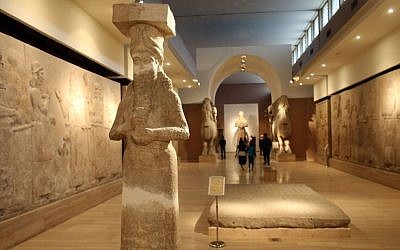
The IS-circulated video of Nimrud’s destruction showed the group’s militants using sledgehammers and power tools to break artifacts before rigging the site with explosives.
Subsequent footage showed a massive explosion and its aftermath, suggesting the ruins of Nimrud — which lie on the Tigris about 30 kilometers (18 miles) southeast of the city of Mosul — were largely destroyed.
Nimrud, founded in the 13th century BC, is one of the most famous archaeological sites in Iraq, a country often described as the cradle of civilization.
Bokova had on Tuesday condemned “severe damage” to heritage sites in Yemen — including the old city of the capital Sanaa — amid a Saudi-led air war against Shiite rebels, but made no mention of the campaign in her remarks at the conference.










The Times of Israel Community.