

Ben Gvir pans AG for opposing expansion of power over cops: ‘Raises major questions’
Far-right MK set to become national security minister ‘deeply disappointed,’ complains Gali Baharav-Miara did not hear him out before objecting to proposed legislation
 Add ToI as a Preferred Source on Google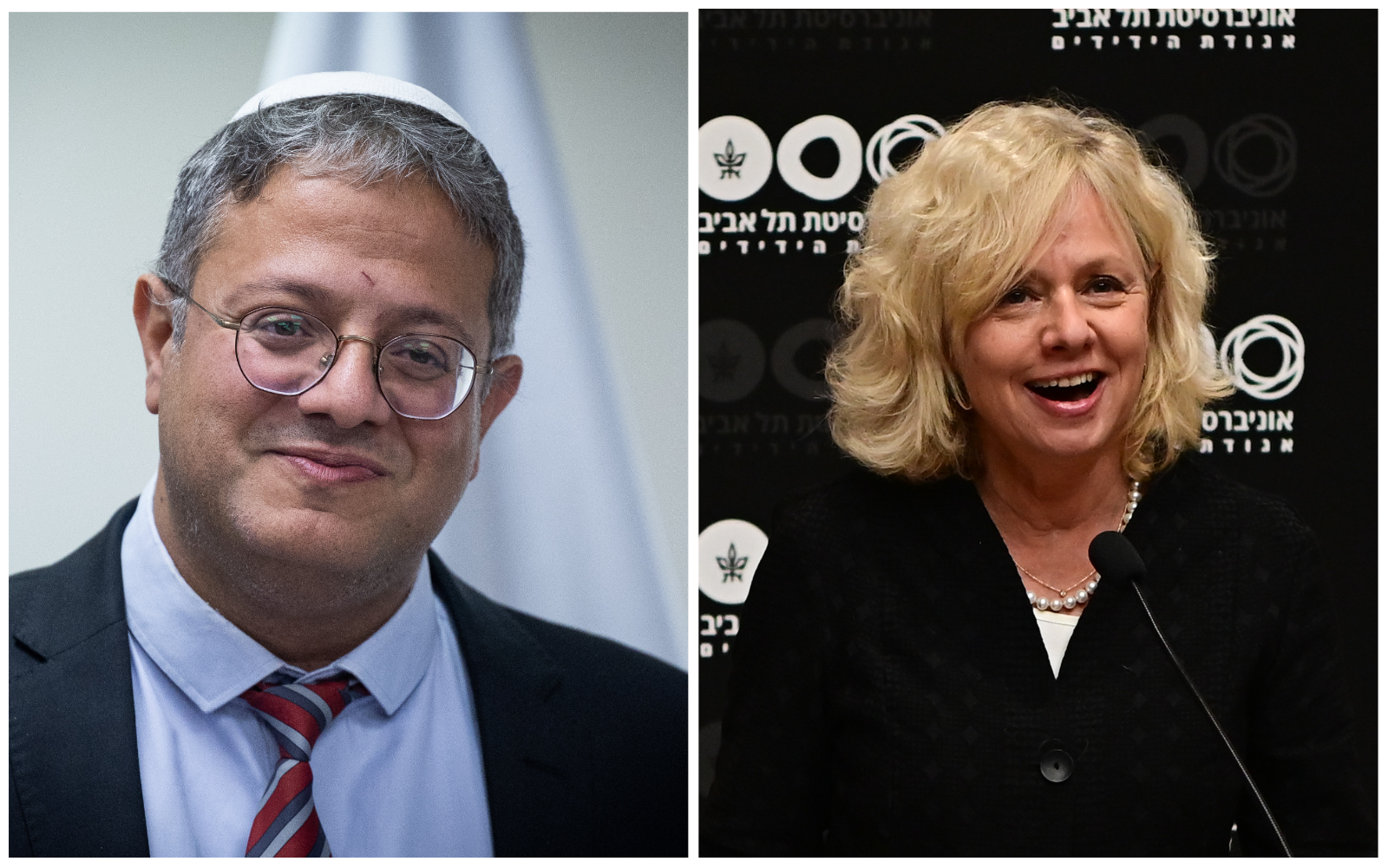
Otzma Yehudit party chief Itamar Ben Gvir, the intended incoming police minister, slammed the attorney general on Saturday over her reported intention to oppose a bill that would give him unprecedented authority over the police force as national security minister.
In a television interview Saturday evening, Ben Gvir said he was “deeply disappointed” by Gali Baharav-Miara’s alleged intention not to defend such a bill if and when it is challenged in the High Court of Justice. In a separate statement, he added that it “raises major questions about her professional positions.”
Several unsourced Hebrew media outlets on Friday reported Baharav-Miara’s position on the matter. She has not made any official comment.
“It is difficult to understand how an attorney general is quick to formulate a position on a bill submitted only on Thursday,” Ben Gvir said.
In an interview with Channel 12 news, Ben Gvir lamented that the attorney general had not contacted him to discuss her concerns over the bill and accused her of “cooperating only with the left,” in reference to the current outgoing government that includes parties from across the political spectrum.
Ben Gvir is set to become national security minister in the new government — a newly created role replacing that of public security minister — which will give him oversight of police. The new ministry that he’ll head will also control the Border Police force in the West Bank, which currently answers to the military.
The new bill proposed by Otzma Yehudit and Likud dictates that it is the minister who will set police policy, apparently relegating the police commissioner to the role of administrator charged with carrying out said policy. Currently, the commissioner sets policy in consultation with the minister, and the shift will seemingly give Ben Gvir, a far-right activist with prior criminal convictions, broad control over a police force he has long been at odds with.
It also provides the minister broad powers to decide which issues do or do not merit tougher investigation and enforcement.
“The same attorney general that allowed [current minister] Omer Barlev to make political decisions in the Public Security Ministry, and gave her approval to every destructive and illegal move advanced by the government, like the appointment of an IDF chief of staff and approval of political agreements during an election period… managed to form a negative position against my bill in just one day,” Ben Gvir said.
The bill stipulates that the minister will not be able to dictate the opening or closing of specific probes, such as investigations into politicians suspected of wrongdoing. However, the minister will be authorized to set general policy on investigations and the handling of cases.
The Friday Hebrew media reports said that Baharav-Miara opposes the bill’s effort to subordinate the police chief to the national security minister and rejects the involvement that Ben Gvir seeks in police investigations, arguing that such probes need to be free from political interference and that law enforcement must remain independent.
“I don’t want to intervene in investigations. I do want to set policy,” Ben Gvir told Channel 12. “I intend to restore forces to the south and regain control there… restore governance.”
Ben Gvir did not directly respond to a suggestion by interviewer Dana Weiss that the authorities provided by the bill could “turn Israel into a police state,” where the authorities are subject to the whims of the government, but noted earlier in the interview that the minister responsible for police sets policy for the force in many democracies.
Pressed about his potential ability to interfere in corruption probes, Ben Gvir said “police will continue to act against political corruption, and I’ll give full backing.”
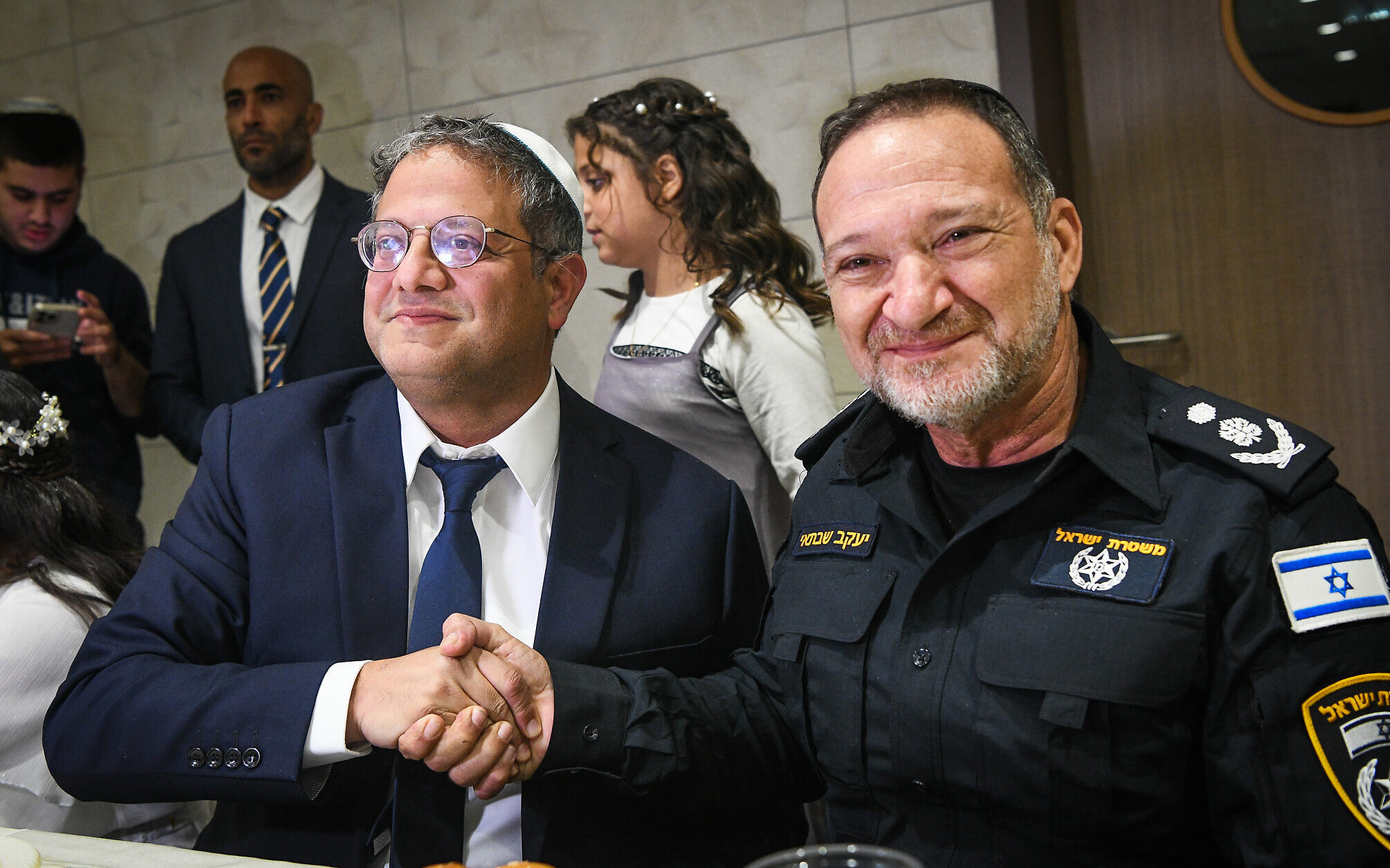
Asked about his relations with Police Commissioner Kobi Shabtai, Ben Gvir said that as long as he “carries out the policies I want — quiet in the streets, fighting terror… if he does that, I’ll be with him.”
Ben Gvir and Shabtai have been at odds in the past. The far-right MK has been a frequent critic of the police chief’s enforcement efforts against Jewish nationalists and what he considers a too-soft approach toward non-Jewish suspects, while Shabtai has been reported to accuse the lawmaker of fomenting violence in recent years with incendiary visits to East Jerusalem.
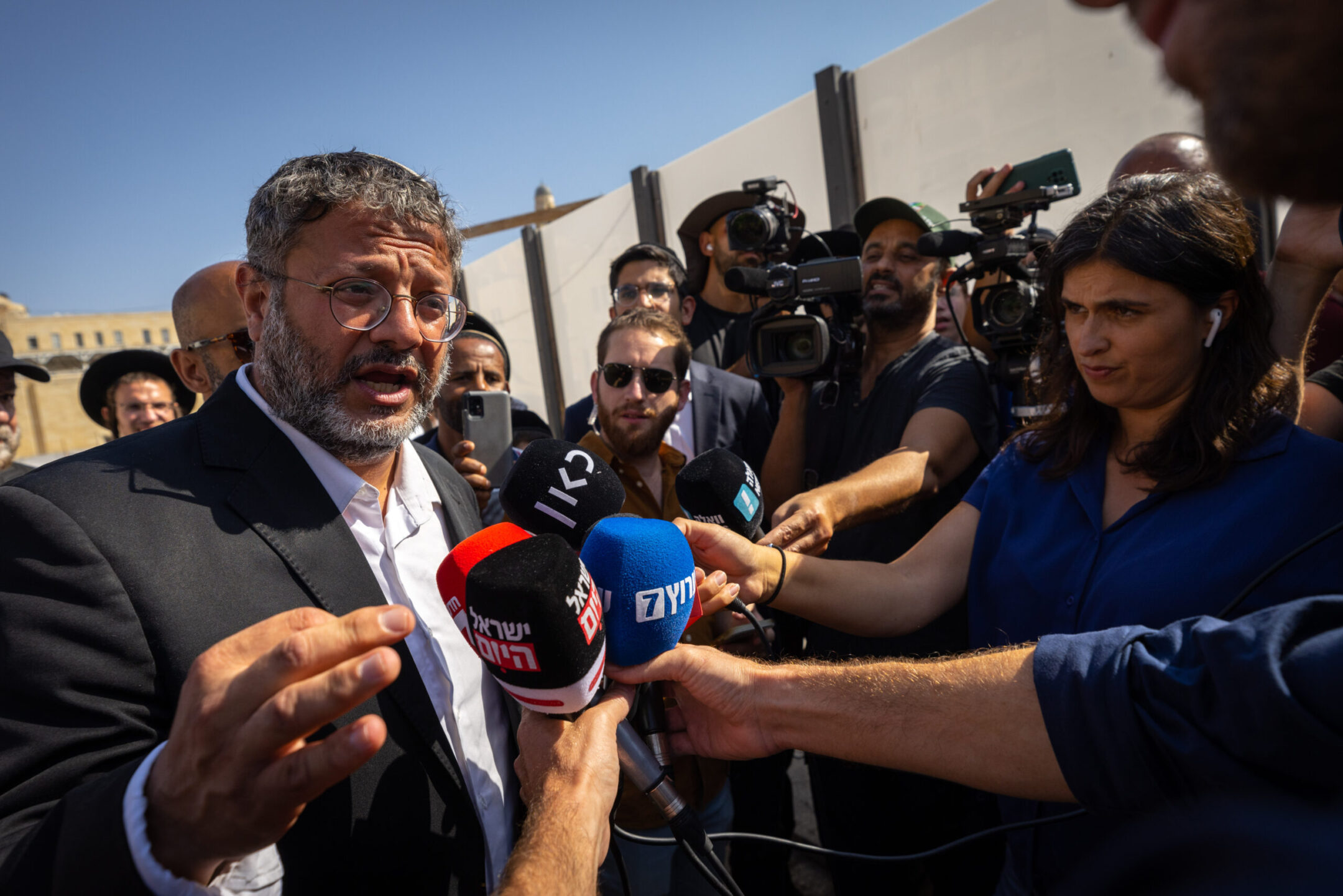
Ben Gvir did not say when he would next ascend the Temple Mount but vowed to tackle “racism against Jews” at the site, charging that they are not even allowed to drink from water taps there.
“Are Jews eighth-class citizens?” he asked.
Ben Gvir, among other far-right figures, has long called for changing the so-called status quo at the Temple Mount, under which Muslims can pray and visit the site freely while Jews can only visit during shorter, designated time slots and are barred from praying (though police have increasingly let quiet, unofficial prayers slide).
A disciple of the late extremist rabbi Meir Kahane, Ben Gvir kept a picture of the perpetrator of the 1994 Tomb of the Patriarchs massacre on his wall until he began to rise in national politics. He was convicted in 2007 of the crimes of support for a terrorist organization and incitement to racism, though he insists he has moderated in recent years.





The Times of Israel Community.