

Crisis averted as Netanyahu tells Ya’alon to back down on draft bill
PM tells Defense Minister Ya’alon to drop opposition to automatic criminal penalties for ultra-Orthodox draft dodgers
 Add ToI as a Preferred Source on Google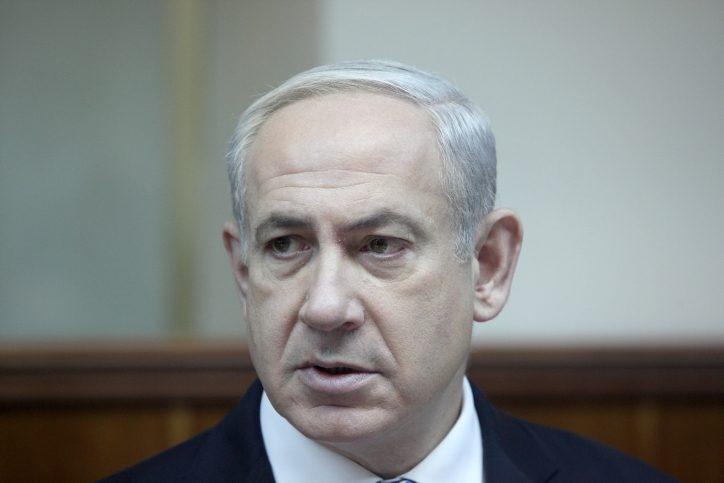
Prime Minister Benjamin Netanyahu on Monday asked Defense Minister Moshe Ya’alon not to hinder the ultra-Orthodox conscription bill drafted by the Peri Committee, essentially ending a crisis that briefly threatened to fell the ruling coalition.
Earlier in the day, Ya’alon had expressed opposition to automatic penalties for ultra-Orthodox draft dodgers, leading to a heated argument that stopped the panel short of approving the draft bill.
The Yesh Atid party, which considers the criminal penalties for draft dodgers a central part of the planned new conscription rules, threatened to pull out of the coalition if the bill was not approved.
Netanyahu told Ya’alon to drop his opposition to the bill, despite disagreeing with a clause stipulating that those who evade conscription will automatically be penalized.
“If need be, we’ll discuss that clause further on down the road,” Netanyahu said, according to media reports. “It wouldn’t be right to hinder the bill now.”
The prime minister said the coalition crisis was “imagined,” stressing that the differences of opinion between Yesh Atid party head Lapid and himself “weren’t big to begin with.”
Lapid had vowed to leave the ruling coalition if the universal draft recommendations drawn up by the Peri Committee, headed by minister Yaakov Peri (Yesh Atid), were not implemented, propelling the coalition into its first crisis.
“There will be an equal burden, or this government will fall to pieces,” Lapid said during a Yesh Atid meeting at the Knesset. “Every effort to appease the ultra-Orthodox will destroy the coalition… From the first moment we took it upon ourselves to be the responsible ones in the government… I took on the difficult and unpleasant tasks in the coalition, but if anyone thinks I went into politics only to solve the economic catastrophe of the previous government, they are confused,” he said.
Lapid called the new bill “a historic opportunity to fix a gaping hole” in Israeli society.
“Anyone who thinks we will give up the idea of an equal sharing of the burden does not know us. …I call on Likud-Beytenu to act as a ruling party should, and stop the games. This endangers the government’s very existence,” Lapid added.
If Yesh Atid’s 19 MKs were to exit the coalition, Prime Minister Benjamin Netanyahu would be left with 49 seats, 12 fewer than the 61-seat majority needed to govern, a virtual guarantee of new national elections.
Lapid’s remarks came hours after Education Minister Shai Piron, also of Yesh Atid, said that “we have no reason to remain” in the coalition if a universal draft was not implemented.
While Yesh Atid is seeking to include clauses in the new conscription law that will stipulate how draft dodgers can be prosecuted under criminal law, Ya’alon (Likud) wanted those measures to be left solely to him or those who followed him in the defense minister post.
Yesh Atid says such a situation would in effect enable ultra-Orthodox youth to avoid national service without fear of serious repercussions.
In the disputed clause of the draft proposal, individuals who do not register for the draft would be subject to criminal prosecution, as would yeshiva heads whose institutions do not comply with the new law. The bill also mandates incentives and penalties for yeshivas according to their compliance with the registration rules.
Speaking during a meeting of the Likud faction in the Knesset, Ya’alon said Yesh Atid was trying to “inflame the Haredi street, and I won’t lend a hand.”
Sources close to Ya’alon told the Hebrew media that in earlier meetings it was clearly understood that criminal sanctions were not to be pursued and there was general agreement to avoid any provocative measures.
The termination of the Peri Committee meeting followed several hours in which the panel found broad consensus over other points from its recent draft proposal.
During the meeting the panel agreed on most of the draft proposal’s clauses, including a limited number of exemptions for top young Torah scholars and a quota to be filled for Arab youths to perform national service.
Economics and Trade Minister Naftali Bennett, the head of the Jewish Home party, which also supports the universal draft, played down the seriousness of the divide between the parties, assessing that a solution would be reached soon.
“I’m sure that we will get together in a room and work on this for a day, or two, or three, and we’ll find a gradual solution without any swordplay,” he told Army Radio.
The proposal mainly deals with how to draft the ultra-Orthodox, after the High Court last year ruled that the Tal Law, which gave ultra-orthodox yeshiva students nearly full exemptions, was unconstitutional.
According to the draft proposal, 18-year-old yeshiva students engaged in full-time Torah study would be allowed to defer service until age 21, at which point they would have to choose either to enlist in the IDF or register for national or civil service. Those who defer their service would have to be registered at yeshivas whose student bodies are subject to regular government auditing. Yeshivas that receive state funding and register their students for service deferment would also be required to introduce vocational training into their curriculum.
The bill allows for 1,800 top Torah scholars to be entirely exempted from service per year, far below the estimated 7,000-8,000 ultra-Orthodox 18-year-olds who do not currently register each year.
The proposed legislation also features changes to the general conscription framework, including a shortening of service for all males from 36 to 32 months, and an extension of service for females to 28 months, up from 24.
Most of the changes would roll out in 2016, including the criminal prosecution of individuals who do not register for the draft, allowing for a transitional period in which to build up the bureaucratic and logistical infrastructure needed to implement the changes.
The bill sets gradual, increasing recruitment goals for the ultra-Orthodox, beginning this year with the goal of 2,000 registrations for the IDF and another 1,300 for national and civil service. It also sets a 6,000-per-year recruitment goal for Israeli Arabs into national service.








The Times of Israel Community.