

Greece, Cyprus keep battling wildfires amid one of the longest heatwaves on record
With sustained temperatures above 40°C, Greek firefighters still battling fires on several islands, evacuating 20,000 people, while Cyprus puts out its worst blaze of the summer
 Add ToI as a Preferred Source on Google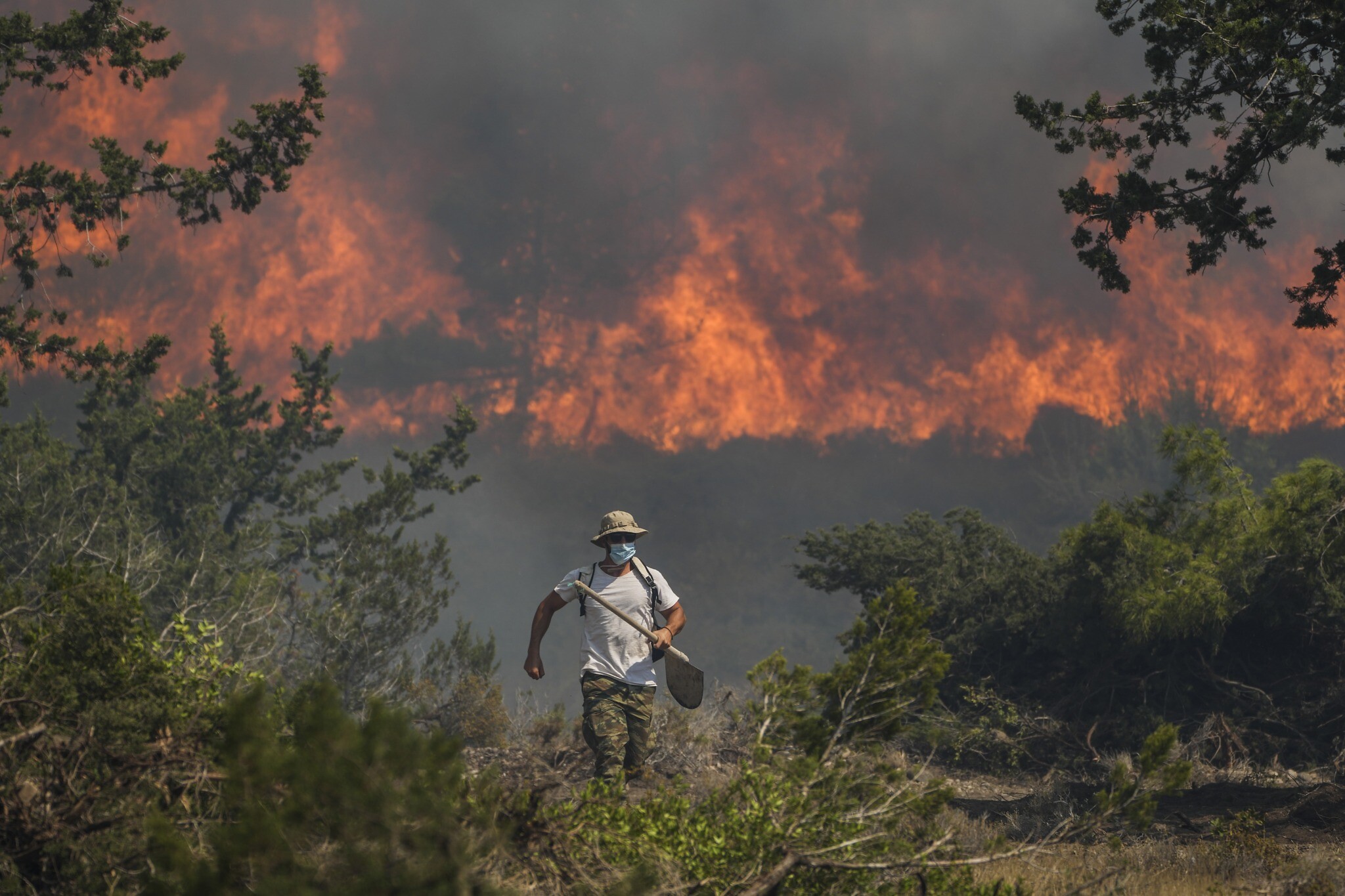
The eastern Mediterranean region continued Tuesday to suffer one of the longest heatwaves in recorded history, with Greece still battling fires that have raged out of control for days, and Cyprus managing to put out a blaze that destroyed nearly 50 acres of forest.
A third successive heatwave in Greece pushed temperatures back above 40 degrees Celsius (104 degrees Fahrenheit) across parts of the country Tuesday following more nighttime evacuations.
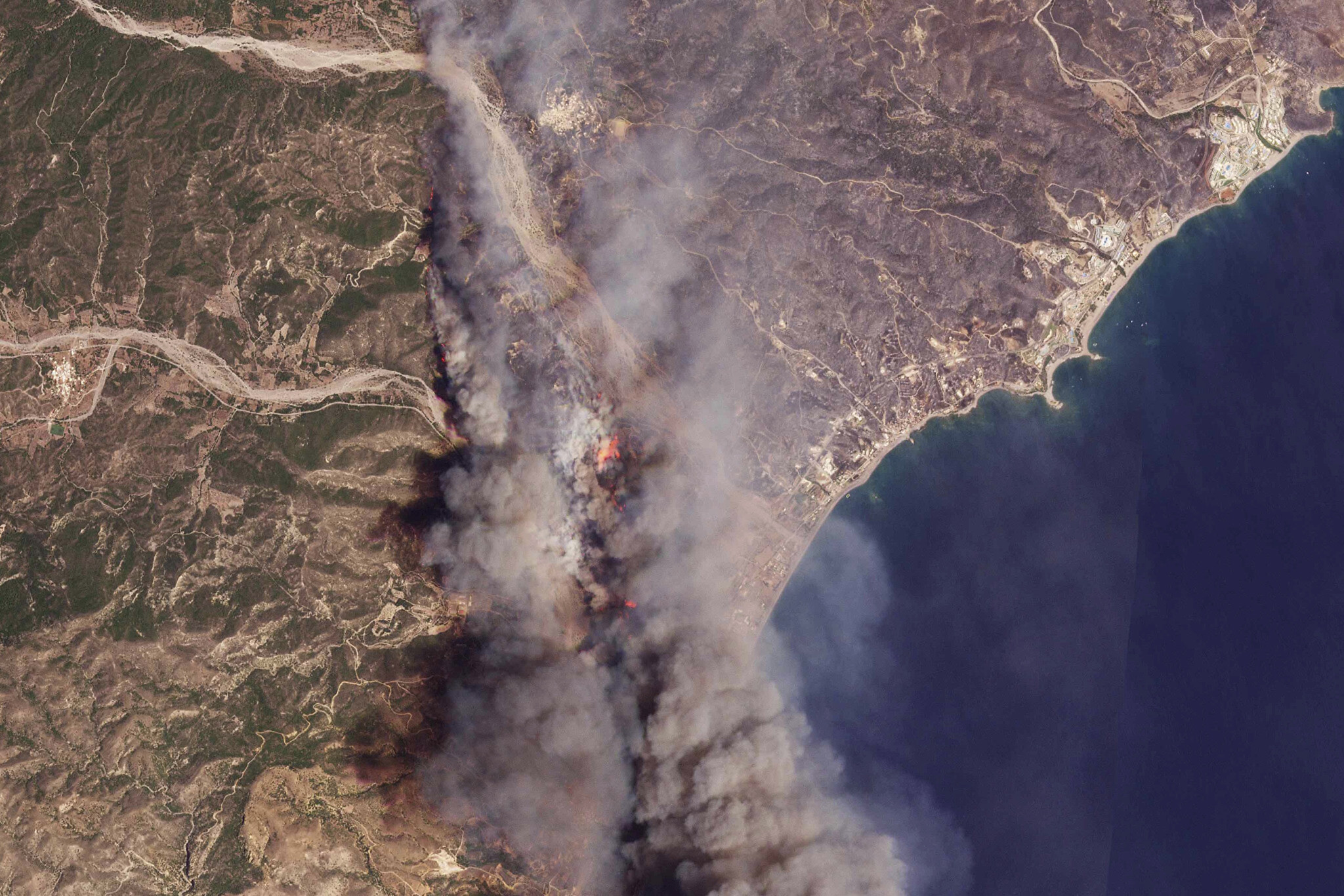
The latest evacuation orders were issued on the islands of Corfu and Evia, while a blaze on the island of Rhodes continued to move inland, torching mountainous forest areas, including part of a nature reserve.
Desperate residents, many with wet towels around their necks to stave off the scorching heat, used shovels to beat back flames approaching their homes, while firefighting planes and helicopters resumed water drops at first light.
Authorities said that more than 20,000 people had been involved in successive evacuations on the island over the weekend, mostly tourists, when fire swept through two coastal areas on the southeast of Rhodes.
The European Union has sent 500 firefighters, 100 vehicles and seven planes from 10 member states, while Israel, Turkey, Egypt and other countries have also sent help.
“For the 12th day, under extreme conditions of heat and strong winds, we are fighting nonstop on dozens of forest fire fronts… The Greek Fire Service has battled more than 500 fires — more than 50 a day,” said Vassilis Kikilias, the minister for climate crisis and civil protection.
On Evia, a firefighting plane crashed during a mission, a fire service spokesperson told AFP.
“A Greek Canadair plane with at least two people on board crashed near Platanisto,” spokesman Yannis Artopios said.
In Athens, authorities resumed afternoon closing hours at the ancient Acropolis, as part of broader measures to cope with the high heat.
Meanwhile in Cyprus, officials said Tuesday that firefighters had put out a major forest fire amid one of the longest heatwaves in the island’s history.
It was the worst fire Cyprus has faced this summer as it swelters under temperatures that have remained at 40°C or above since July 12.
Met Office data shows it threatens to be the longest heatwave in recent history, as highs of more than 40°C are expected to continue through the week.
Forestry department official George Constantinou said that the blaze –- in the remote and uninhabited Elitzies area of the island’s forested central mountains — was brought under control in an all-night effort after the fire started on Monday evening.
More than 100 firefighters, dozens of vehicles and seven aircraft were deployed to prevent the fire from spreading through the Paphos Forest, which contains some of the island’s largest cedar stands as well as pines and oaks.
A nearby British Royal Air Force base was put on standby to offer assistance, as it usually does during large fires.
Heading home from a delicious meal out and this is what meets us. Not what you want to see from your holiday villa in Cyprus! Fire is literally 2 villas away. pic.twitter.com/3tuTof31fZ
— Belinda Tee (@BelindaTee2) July 22, 2023
Constantinou said luckily there were no flareups due to a lack of wind.
Forestry department chief Charalambos Alexandrou said he suspected an overhead electricity cable was the source of the blaze.
During the prolonged hot spell that has gripped the island, power demand has reached record levels. One person has died of heatstroke.
The severe heatwave has also been reflected across much of southern Europe and North Africa.
Scientists from the World Weather Attribution group said Tuesday that the heatwaves that have hit parts of Europe and North America this month would have been almost impossible without human-caused climate change.
EU officials have similarly blamed climate change for the increasing frequency and intensity of wildfires across the European continent, noting that 2022 was the second-worst year for wildfire damage on record after 2017.
Israeli experts have voiced similar a sentiment, saying this year’s climate events have plunged the world into “uncharted waters.”









The Times of Israel Community.